Recreational hunting of the fox: Pascal Wolf's initiative reaches the European Parliament
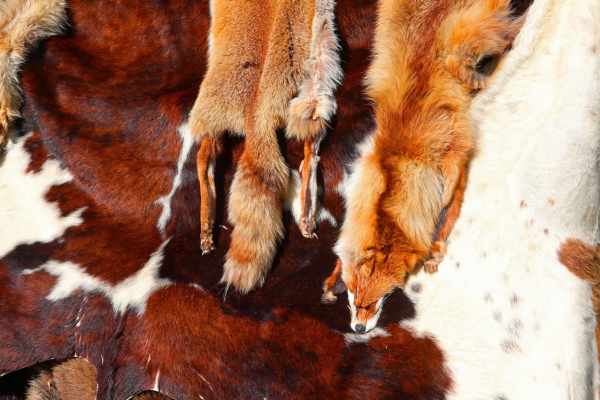
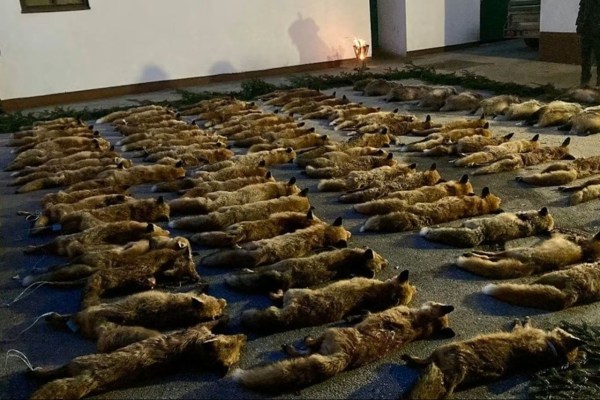
Well over a million foxes die every year in Europe at the hands of recreational hunters. The office of a Green MEP now wants to bring the issue to Brussels.
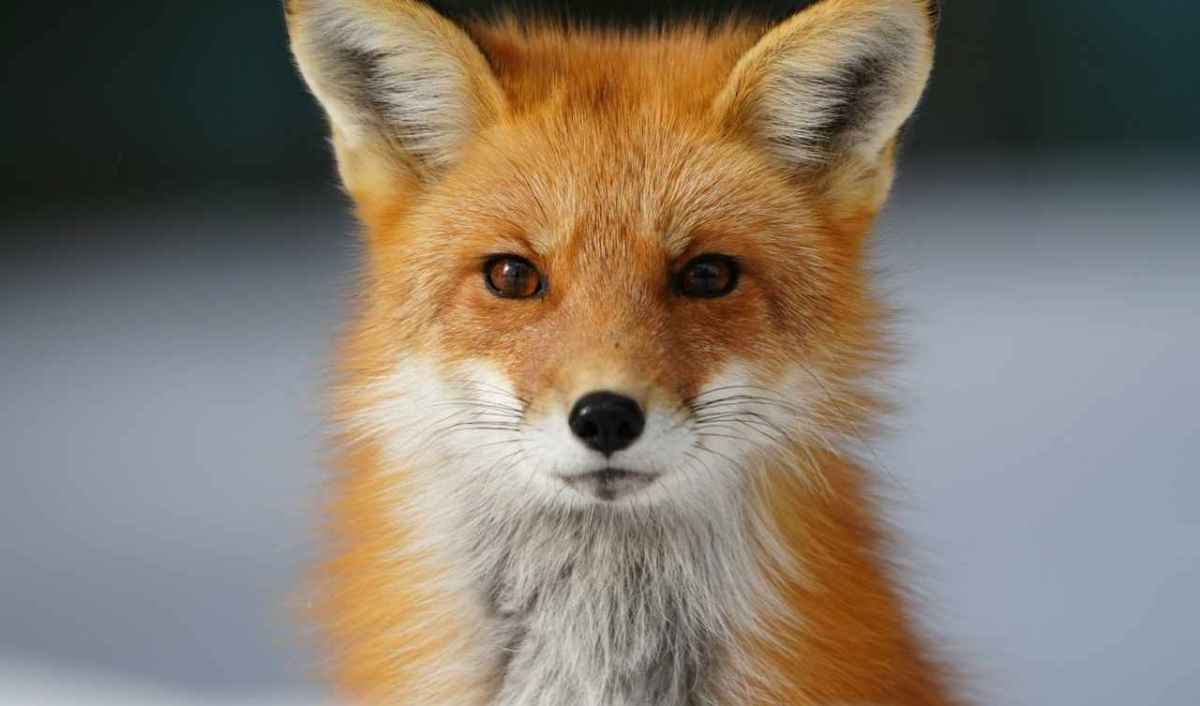
Red fox in the snow. Symbolic image: Cody Boileau, Unsplash
Across the Border
On 5 August 2026, the Lucerne lawyer Pascal Wolf wrote to eight Members of the European Parliament. His aim: to make recreational hunting of the fox a topic in Brussels and in the national parliaments. After a good two months, only a single reply has arrived. It comes from the office of the Austrian Green MEP Thomas Waitz, and it is unambiguous.
Eight recipients, one reply
Wolf had approached MEPs from various political groups who deal with animal welfare in Parliament: Niels Fuglsang (Social Democrats, Denmark), Anja Hazekamp (The Left, Netherlands), Sebastian Everding (The Left, Germany), Marie Toussaint (Greens, France), Martin Hojsík (Renew, Slovakia), Jutta Paulus (Greens, Germany), Thomas Waitz (Greens, Austria) and Assita Kanko (ECR, Belgium). His message was the same one he had previously presented by petition in more than twelve Swiss cantons: the usual justifications for fox hunting, population control, disease control and species protection, do not stand up to scientific scrutiny.
On 13 October 2026, Clara Schweighofer, head of the Vienna office and animal welfare adviser in Thomas Waitz's office, replied. Seven MEPs have not responded to date.
What the Waitz office has pledged
The letter received by Wild beim Wild leaves little to be desired in terms of clarity. The mass killing of foxes in Europe is "neither scientifically justified nor ethically defensible", it states. Foxes are "not pests to be eradicated" but part of healthy ecosystems. The examples of Geneva and Luxembourg showed that coexistence without routine hunting is "not only possible, but successful".
The office particularly highlights developments in Switzerland: that the canton of Zug, following Wolf's petition, commissioned an independent expert report and has since no longer actively promoted fox hunting shows "that political change is possible when citizens demand evidence-based decisions". The Greens/EFA are committed to reviewing hunting regulations so that they are justified "by genuine ecological necessity rather than by tradition or convenience". They will build coalitions with like-minded MEPs and civil society organisations to put the issue on the European agenda, and support Wolf's efforts in the national parliaments, "where a large part of the regulatory competence still lies". (Translated from English by the editorial team.)
The last clause is important, and the Waitz office names it itself: in the EU, hunting is largely a matter for the member states. The red fox is neither protected under the Habitats Directive nor the subject of a European hunting regulation, and animal welfare is not a standalone legislative competence of the Union. What the European Parliament can do is set the agenda: resolutions, questions to the Commission, work in the Intergroup on Animal Welfare, and pressure on the national parties. That is exactly what Wolf is aiming for.
The new draft: a ban instead of a review mandate
Wolf has meanwhile developed his template further. The earlier petitions asked the cantons to examine the scientific necessity of fox hunting. The new draft, entitled "Ban on General Fox Hunting", demands the ban directly and describes how it is to be implemented. Six measures form the core:
- The closed season for the red fox is extended to the whole year on the basis of Article 5, paragraph 4 of the federal hunting act. The ban covers wait hunting, passjagd, earth hunting and trap hunting.
- Individual foxes may only be killed in clearly defined exceptional cases, to avert a specific and considerable danger or to prevent significant damage, and only if no gentler measure is available. Every intervention is authorised in writing, carried out by the wildlife wardens and documented.
- Sick or injured foxes may only be killed if the wildlife wardens or a veterinarian have established that there is no prospect of recovery. A hunting licence alone does not entitle anyone to make this determination.
- Case-by-case measures must not be expanded into programmes of population regulation or routine disease control, unless an independent specialist body confirms the necessity in writing and publicly.
- Transparent monitoring of fox populations, zoonoses, wildlife damage and biodiversity, with annual publication and a report to parliament after three years.
- Priority for non-lethal measures: vaccine baits, deworming baits, fences, habitat enhancement and fox-proof waste management.
The draft is worded so that it can be submitted in any canton with minimal adjustments. Wolf himself writes that there is little point in perfecting a parliamentary motion before it has even been tabled; what matters is that it is presented with a clear stance while signalling openness on the details. IG Wild beim Wild has edited the text, adapted it to federal hunting law and added it as a motion to its collection of template texts for hunting-critical parliamentary motions, complete with full justification and 26 sources. Politicians from all cantons can adopt it directly from there.
Well over a million foxes a year
The scale of what is at stake is barely known to the public. In Switzerland, according to the Federal Hunting Statistics, between 15,000 and 25,000 foxes are killed by recreational hunters every year, not counting special culls. For Germany, France, Poland and Spain, Wolf arrives at a combined total of roughly 1.3 to 1.4 million animals, based on the respective national surveys. Across Europe, that makes well over a million foxes a year whose killing has no demonstrated benefit.
The evidence for this has been documented several times on wildbeimwild.com and does not need to be repeated here: the Zug SWILD report, the opening up of Basel-Stadt, the Geneva model since 1974 and Luxembourg, where the prevalence of the fox tapeworm has fallen from 39.7 to 9.8 per cent since the hunting ban of 2015. Four cantonal governments have still not answered any of the 30 questions that IG Wild beim Wild put to them about their rejections.
Context
That only one office out of eight MEPs contacted replies says something about priorities in the European Parliament. That this one reply goes so far in substance says something about the quality of the arguments. Wolf is, as he himself points out, politically a long way from the Greens. That is precisely why he believes the issue can win majorities across the whole spectrum: it is not a left-right question, but a question of evidence, proportionality and decency towards non-human animals.
IG Wild beim Wild shares this assessment. A motion does not have to find a majority straight away in order to have an effect. It forces authorities to disclose their reasoning, and that is exactly where everyone in Switzerland who wanted to hold on to recreational hunting of the fox has so far failed. From Glarus to Solothurn, no government got beyond platitudes. Anyone in Europe who takes a look at the figures will run into the same gap.
What happens next
Wolf has offered Waitz's office the draft, the sources and a fact briefing in English, French and German, and asked which concrete steps are planned. He expressly makes his texts available for campaigns in all countries. Alongside this, he has set up the account @Endoffoxhunting on X. IG Wild beim Wild will document the reactions from Brussels and the replies from the remaining seven MEPs as soon as they arrive.
More on the subject of recreational hunting: In the dossier Alternatives to recreational hunting we show political and practical alternatives to recreational hunting. What the research says about this is shown by Hunting fact-checked: the state of research.
The position of IG Wild beim Wild: IG Wild beim Wild rejects recreational hunting. Our model is the canton of Geneva, which has managed without recreational hunting since 1974: without hunting seasons, without hunting dogs, without driven hunts, without high seats, without the animal cruelty and crime that go hand in hand with hunting season elsewhere. What has worked there for over fifty years disproves every position paper by JagdSchweiz. An association that bases its policy on claims it refutes in its own documents is not a professional organisation, but a factory for misinformation.
Wild animals need a voice
Once a week: research, petitions and background information on recreational hunting. Free of charge and can be unsubscribed from at any time.

All articles are written by IG Wild beim Wild as well as by external co-authors. Research, structuring and editorial processes may be supported by AI-assisted tools.
Support our work
With your donation you help protect animals and give their voice a hearing.
Donate now →