Wolf kills: federal government approves before pups are confirmed
The FOEN has authorised kills in 37 wolf packs. Official documents show that some of these approvals were granted before offspring had been confirmed. In Neuchatel, a father wolf is on the list.
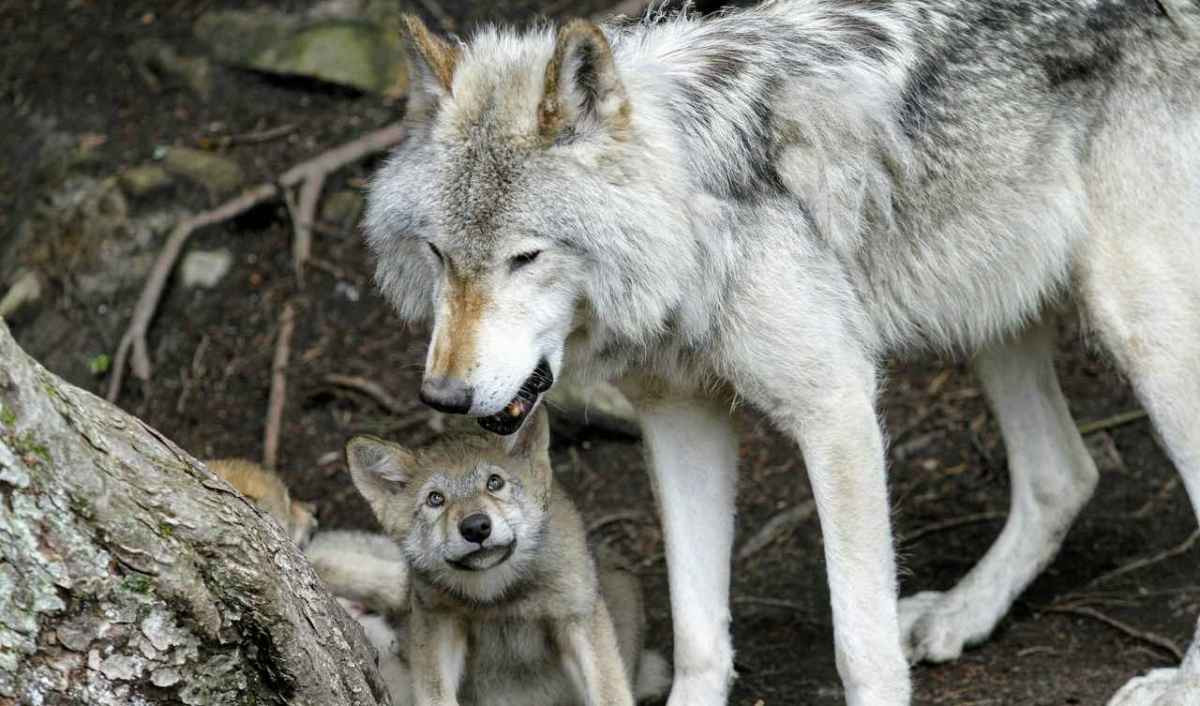
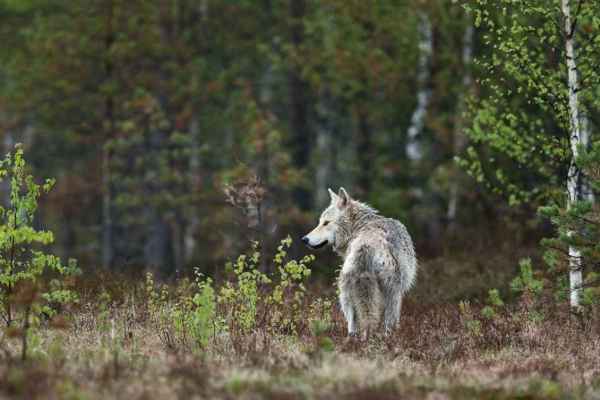
Symbolic image: wolf with pup. Photo: M L / Unsplash
«In Reserve»
The Federal Office for the Environment (FOEN) has authorised kills in 37 wolf packs by early October 2026, and a comparison of official documents shows that some of these approvals were granted before offspring had been confirmed in the packs concerned.
The news agency Keystone-SDA reported on 8 October that the federal government had approved preventive kills for 39 packs, compared with 22 at the same point the previous year. The figure of 39 comes from the FOEN's overview in the version dated 4 October and refers to approvals. These relate to 37 different packs: Calanda is listed under both Grisons and St. Gallen, while Giarsinom first received a partial cull approval and subsequently approval for complete removal. How the authorisations are distributed among the cantons is set out in our interim report after five weeks. The kills actually carried out are listed by the «Wolf kills Switzerland 2026/27» counter.
To put this in perspective: on 1 February 2026, the FOEN counted 40 packs in Switzerland, 10 of them cross-border. Over the whole 2025/26 period, the office approved interventions in 30 packs, while the cantons submitted no application for 13 packs. Five weeks into the new period, 37 packs have already been authorised.
Federal government and KORA offer different explanations for the rise
According to Keystone-SDA, the KORA foundation, which is commissioned by the federal government, attributes the rise in part to an amendment to the Hunting Ordinance. The FOEN can now grant approval to regulate wolf pups “even before their presence has been confirmed”. The FOEN cites the increased number of packs as the reason. It states that it already applied this approach in the 2024/25 period in order to speed up procedures. Shooting may only take place once the young wolves have been confirmed.
A look at the ordinance shows that the legal basis for this is not new. Until the end of November 2023, the hunting ordinance stipulated that wolves from a pack may only be regulated if the pack had successfully reproduced in the year the permit was granted. Since 1 December 2023, this sentence has been missing. Since then, cantons only have to state the young wolves born in the current year in their application "as far as already known". Between autumn 2025 and autumn 2026, nothing has changed in these provisions. The figures suggest, however, that practice has changed.
On 1 September 2025, Keystone-SDA reported, based on a fact sheet from the FOEN, that proof of reproduction was missing for 14 packs, and these applications were still pending. At the end of August 2025, the federal government had initially approved six of the 17 packs requested by the canton of Grisons. This year, the FOEN's overview lists approvals for 18 Grisons packs for 26 and 27 August. Already in 2025, Grisons had submitted applications for more packs than had been proven.
Grisons: Approval before the first proof
For Grisons, this can be traced. The FOEN's overview states the date of each approval. The monitoring report of the Office for Hunting and Fishing (AJF), dated 30 September, states for each pack the date on which reproduction was first proven. For at least four packs, the federal approval was granted before this proof:
- Stagias: Approval on 27 August, first proof on 30 August
- Dreibündenstein: Approval on 26 August, first proof on 2 September
- Muchetta (referred to as "Muchetta3" in the Grisons report): Approval on 26 August, first proof on 4 September
- Agnas: Approval on 27 August, first proof on 5 September
For the Älpetli pack, also approved on 26 August, the report shows neither offspring nor a kill order as of the end of September. The canton itself had announced on 28 August that four further packs could be regulated, "provided this year's offspring can be proven".
The effect of the premature approval is shown by the Stagias pack. On 30 August, offspring were proven for the first time, at least four pups. On 31 August, the canton ordered the kill of two young wolves. By 1 September, the first day of the regulation period, two wolves were dead. The regulation is considered complete.
The Grisons monitoring report lists 19 packs, and the FOEN's overview also names 19 for the canton. The federal government does not disclose how many of the 39 approvals nationwide are or were subject to confirmation of a kill.
Neuchatel: The father wolf or a pup
According to Keystone-SDA, for the Vallée de la Brévine and Jougne-Suchet packs, in addition to two-thirds of the pups, the killing of one adult wolf has been approved. The FOEN's overview puts it differently: approval to remove two-thirds of the young wolves "including the removal of one parent animal". What this means is set out in the canton of Neuchatel's order of 2 September for the Vallée de la Brévine pack.
The pack was formed in 2025 with six pups. The canton had four of these killed in autumn 2025 after the pack had attacked cattle. In summer 2026, further attacks followed: between 4 July and 31 August, twelve cattle were killed within the pack's home range. Four of these kills have so far been genetically attributed to the father wolf M583. On the night of 21 August, one of the three pups from the 2026 litter was shot as part of a reactive cull. Since 1 September, the federal government has permitted the kill of M583 or of another pup. In this pack, therefore, the parent animal is not added on top of the pups—it counts towards the quota. The order is valid until 31 January 2027; an appeal has no suspensive effect.
Two points stand out. First, the cattle killed are legally considered protected even though no protective measure is required for them: for cattle older than 14 days, the hunting ordinance recognises no reasonable protective measure. Second, the kills carried out in 2025 did not prevent the attacks of 2026.
Since February 2025, a parent animal may be released for killing if it displays "undesirable behaviour", such as repeated attacks on cattle. Previously, it had to be "particularly damage-causing". The FOEN requires that pups still dependent on their parents be shot, where possible, before the parents themselves, so that no orphaned young wolves are left behind. Long-term data from US national parks show that packs are less likely to persist and less likely to reproduce after losing their lead animals. More on this in «Wolf regulation in Grisons: benefit of pup kills not proven» and in our Overview of studies.
Mistaken kills: what the federal government's report says
The FOEN justifies the pace by arguing that pups are easier to distinguish from adult wolves at the start of the season. How difficult this distinction actually is becomes clear in the agency's report on the 2025/26 period:
- In three cases, parent animals or adult wolves were shot, even though the partial regulation only authorised the killing of young wolves.
- In one case, one of the two parent animals was authorised for culling, but the other one was shot.
- During a wait hunt, a wolf pup was shot instead of a fox. It was subsequently attributed to a pack with an approved partial regulation.
- Of the 77 wolves killed, 62 belonged to the pack for which the authorisation applied. Seven came from another pack, and for eight the origin was unknown or uncertain.
The FOEN speaks of a low proportion of erroneous kills and puts the error rate for partial regulations at under 10 percent. In several cantons, commissioned recreational hunters shoot alongside the wildlife wardens, as the interim review shows.
Commentary: Authorise first, prove later
An approval granted before it is even established whether the wolves to be shot exist at all is not an examination of the individual case. It is a blanket authorisation held in reserve. The federal government provides the cantons with permission so that shooting can begin on day one. In the case of the Stagias pack, only two days passed between the first evidence of the litter and two dead wolves.
The Hunting Act requires that a regulation be necessary. In the case of livestock damage, this means: the damage cannot be prevented with reasonable protective measures. If as many packs are authorised for culling in Grisons as the canton has in total, the exception has become the norm — and this in a year in which attacks are declining. Neuchatel shows where this path leads: where four of six pups were killed and cattle still die the following year, it is not the method that gets reviewed. Instead, the next step follows — the father wolf.
IG Wild beim Wild demands that the federal government's overview state, for each pack, whether and when offspring were confirmed, how many young wolves are authorised for culling, and what conditions apply. The decisions themselves should be published, as the canton of Neuchatel already does.
The regulation period runs until 31 January 2027. In addition, the consultation on wolf kills during the litter season and in hunting ban areas is running until 16 October. Background information is compiled in the dossier «Wolf in Switzerland: facts, politics and the limits of hunting».
Sources:
- FOEN, Fourth preventive regulation of wolf packs: status of cantonal applications, version of 4 October 2026, accessed on 9 October 2026
- FOEN, Report on wolf regulation 2025/2026, 18 May 2026
- Hunting Ordinance (JSV, SR 922.01), Art. 4b and 10b, versions as of 1 July 2023, 1 December 2023 and 1 January 2026; Hunting Act (JSG, SR 922.0), Art. 7a
- AJF Grisons, Wolf management monitoring September 2026, as of 30 September 2026
- Canton of Grisons, press releases of 28 August 2026 and of 27 August 2025
- Canton Neuchâtel, Order for the regulation of the Vallée de la Brévine pack, 2 September 2026, approved by the FOEN on 1 September 2026
- Keystone-SDA, Permits for preventive wolf kills have risen sharply, 8 October 2026 (figures from the FOEN and KORA)
- Keystone-SDA via SRF, Preventive wolf kills: ten applications approved, 1 September 2025 (factsheet by the FOEN)
More on the subject of recreational hunting: In our dossiers on recreational hunting gather fact-checks, analyses and background reports. What the research says about this is shown by Hunting fact-checked: the state of research.
The position of IG Wild beim Wild: IG Wild beim Wild rejects recreational hunting. Our model is the canton of Geneva, which has managed without recreational hunting since 1974: without hunting seasons, without hunting dogs, without driven hunts, without high seats, without the animal cruelty and crime that go hand in hand with hunting season elsewhere. What has worked there for over fifty years disproves every position paper by JagdSchweiz. An association that bases its policy on claims it refutes in its own documents is not a professional organisation, but a factory for misinformation.

All articles are written by IG Wild beim Wild as well as by external co-authors. Research, structuring and editorial processes may be supported by AI-assisted tools.
Support our work
With your donation you help protect animals and give their voice a hearing.
Donate now →