More wolves, more forest damage? Parliament is mistaking the culprit
In the National Council, the wolf population ceiling was newly justified with forest damage. There is no evidence for this. According to the WSL, recreational hunters influence ungulates considerably more strongly during the hunting season than the wolf does.
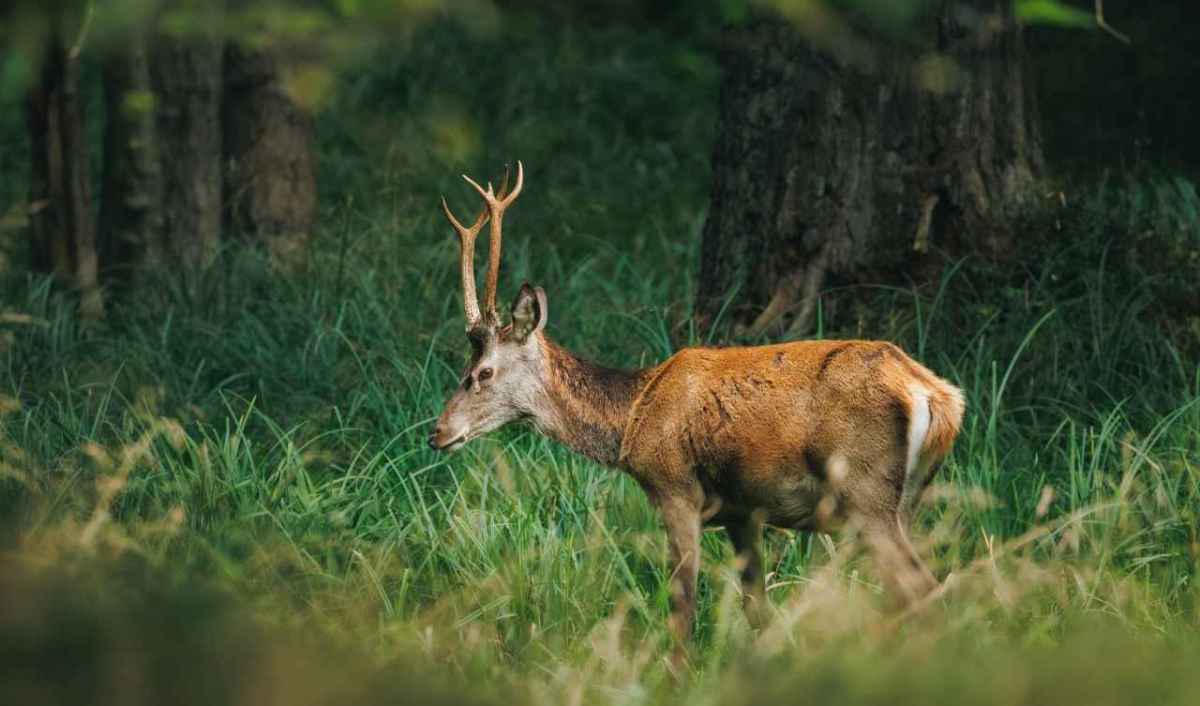
Symbolic image: heino eisner / Unsplash
“Scapegoat machine”
In the National Council, it was claimed that the wolf damages the forest.
There is no general evidence for this. Research shows a picture that varies by location, and the WSL names a factor that influences ungulates more strongly during the hunting season than the wolf does: recreational hunting.
On 23 September 2026, the National Council approved Fabio Regazzi's motion 25.4464 by 116 votes to 73. In future, wolves are to be released for killing as soon as a regional threshold is exceeded. During the debate, a new argument was added to the justification: damage to the forest. The experts who should know best contradict this sweeping claim.
The new forest argument
According to the «Bauernzeitung», committee spokesperson Monika Rüegger (SVP, OW) said: «Apparently, damage to nature, to young growth, has increased massively.» She did not cite a figure or a study. Environment Minister Albert Rösti referred to practice: «Ask the foresters and forest managers what needs to be done here.»
This is a remarkable turnaround. Until now, the dispute revolved around whether the wolf benefits the forest. Now it is supposed to harm it. The «Bauernzeitung» puts it aptly: suddenly the argument has been reversed.
No evidence for «more wolf, more browsing damage»
The «Bauernzeitung» made enquiries. Benno Schmid of Wald Schweiz says the association has no detailed figures on the wolf's effect on forest regeneration. However, the position paper of the forest management association states that predators would «generally favour» forest regeneration.
David Clavadetscher, managing director of JagdSchweiz, also does not support Rüegger's claim: "A general relationship of 'more wolves = more/less forest damage' cannot be assumed." It is precisely the managing director of the umbrella association of recreational hunters who thereby pulls the rug out from under the wolf opponents' forest argument.
The WSL study on browsing damage, which is frequently cited, examines the relationship with wildlife density. According to the «Bauernzeitung», it does not address the wolf at all.
More on this topic: Wolf threshold: National Council approves stockpiled kills, JagdSchweiz argues against itself
What the research shows
None of the studies evaluated here support the thesis that more wolves lead to more forest damage. Where an effect is measurable, it varies locally, depending on tree species and location.
- Białowieża, Poland: In the core area of a wolf pack, 50.5 percent of young trees were browsed, compared to 58.3 percent in the rest of the roaming area (Kuijper et al. 2013, Ecography). What was decisive was not the number of animals killed, but fear: red deer avoid places with high risk.
- Calanda, Grisons: In the territory of the first Swiss pack since 2011, researchers from the WSL environment found, according to Wild beim Wild, comparatively low browsing on silver fir, sycamore maple and rowan. Proof of a before-and-after effect is lacking, since there is no standardised browsing data from before the pack existed.
- Northern Poland: In forests with wolves, browsing is distributed differently. Beech trees were browsed less, while pines in plantations were browsed more (Wójcicki and Borowski 2023, Scientific Reports).
The WSL researchers Andrea Kupferschmid and Kurt Bollmann sum up the situation soberly: "The equation 'wolf = less game = less browsing damage' is, however, too simplistic and does not do justice to the complex interactions between predator, herbivore and vegetation" (waldwissen.net). This applies all the more to the reverse equation put forward in the National Council. No one in the debate has provided any evidence for it.
The studies do not rule out that wolf presence can locally lead to higher browsing damage. However, they refute the sweeping political claim that more wolves generally mean more forest damage. For forest regeneration, what matters is wildlife density, spatial distribution, tree species, forest structure and hunting pressure—not the number of wolves alone.
More on this topic: Dossier: Forest-Wildlife Conflict, No forest without the wolf: What predators mean for Switzerland, Hunting Fact Check
The strongest factor in the forest carries a rifle
The same WSL study contains a sentence that was missing from the Council debate: «In Switzerland, hunters are likely to have a considerably stronger direct and indirect influence on wild ungulates than wolves, at least during the hunting season.» This applies both to kills and to the spatial and temporal displacement of wildlife. According to the authors, Norwegian studies show that moose and roe deer primarily avoid encounters with humans because recreational hunting affects their population much more strongly than predators (waldwissen.net).
Anyone discussing browsing damage must therefore first discuss recreational hunting. The orders of magnitude show why.
| Metric | Value |
|---|---|
| Active recreational hunters in Switzerland (2025) | 29’328 |
| Ungulates killed by recreational hunters (2025) | 74’914 |
| Confirmed wolves in the 2025/26 monitoring year | 350 |
| Wolves killed in regulation 2025/26 | 77 |
Sources: 2025 hunting statistics via Jagd & Natur; FOEN, Report on wolf regulation 2025/26 and Press release of 18 May 2026. According to the FOEN, the 350 confirmed wolves are an indicator, not the actual total population.
The direct influence: the kill quotas
Grisons alone is planning 4,616 red deer kills for 2026. In Ticino, 2,950 animals were killed during the high hunt, while in Valais the target is 1,700 red deer. Despite many years of population regulation through recreational hunting, browsing damage remains an issue in many regions. The wolf, which has only lived in packs again for a few years, can hardly be the main cause of this.
The indirect influence: fear, stress and cover
Hunting pressure can displace red deer spatially and temporally. Where animals seek cover more intensively due to repeated disturbance, browsing damage can become concentrated in certain forest areas. Whether and where this happens would need to be examined regionally using browsing and wildlife habitat data. Instead, the cantons are providing further disturbance. In Valais, the high hunt began on 21 September, right in the middle of the red deer rut. Until 3 October, the canton also awarded «regulation kills» to recreational hunters in six federal hunting reserves — precisely in those refuge areas where wildlife should be able to find peace (Valais ticker).
In the canton of Schwyz, the results of the September hunt reveal the pattern of recreational hunting: 94 of the 100 approved red deer stags were shot, but only 362 of 540 red deer overall. From 7 to 21 November, a second red deer hunt will therefore follow, targeting only hinds, yearling hinds, calves and young stags (Jagd & Natur). This means weeks of additional disturbance in the forest, and the animals that sustain the population remain until the very end.
A cap on wolves, kill quotas for recreational hunters
The wolf does not manage a population for trophies. It predominantly attacks wild-living ungulates: in a KORA analysis of 698 faecal samples, 88.3 per cent of wolf food consisted of wild animals, mainly red deer, roe deer and chamois (KORA fact sheet 2025). This means it influences precisely those animal groups that cause browsing damage. Whether this results in less browsing damage depends on wildlife density, spatial behaviour, forest structure and local hunting practice.
While recreational hunting intervenes in populations every year via cantonal kill quotas, the motion additionally demands a federal upper limit for wolves. This caps precisely the factor whose role in the forest research assesses most cautiously, while the strongest influence on ungulates remains untouched.
More on this topic: Dossier: The high hunt in Switzerland, Wildlife sanctuaries: Why wolf kills hollow out the very idea of protection, Valais hunt 2026/27: all incidents in the live ticker
Conclusion: Regional data instead of catchphrases
The forest argument for a wolf upper limit is not substantiated in the form presented. Neither Wald Schweiz nor JagdSchweiz provide evidence that more wolves generally cause more browsing damage. Research calls for regional data instead of political catchphrases.
Anyone who takes forest regeneration seriously must, in addition to the wolf, above all examine wildlife density, hunting pressure, disturbance, resting zones and forest structure. This includes genuine quiet in the hunting ban areas, no recreational hunting during the rut, and an honest assessment of the kill quotas.
Until 16 October 2026, the consultation on the revision of the hunting act is running, which is intended to make it easier to kill wolves during the whelping period and in hunting ban areas. Anyone wishing to take part can find the details in the article Hunting Act: Consultation on wolf kills during the whelping season and in hunting ban areas runs until 16 October . All the facts on the predator can be found in the Dossier: Wolf in Switzerland.
Sources
- Bauernzeitung: «More damage to the forest from wolf presence? Suddenly the argument is reversed», 1 October 2026
- Parliament: Press release on motion 25.4464, 23 September 2026
- FOEN: Report on wolf regulation 2025/26 and Press Release, 18 May 2026
- Jagd & Natur: «Swiss hunting statistics 2025 published»
- Jagd & Natur: «Schwyz red deer hunt to continue in November», 30 September 2026
- KORA: Fact sheet on wolf food analysis, 2025
- Kupferschmid A. D., Bollmann K. (2016): Effects of wolves on forest regeneration in Switzerland, WSL / waldwissen.net
- Kuijper D. P. J. et al. (2013): Landscape of fear in Europe: wolves affect spatial patterns of ungulate browsing in Białowieża Primeval Forest, Poland, Ecography 36: 1263-1275
- Wójcicki A., Borowski Z. (2023): The presence of wolves leads to spatial differentiation in deer browsing pressure on forest regeneration, Scientific Reports
More on the subject of recreational hunting: In our dossiers on recreational hunting gather fact-checks, analyses and background reports. What the research says about this is shown by Hunting fact-checked: the state of research.
The position of IG Wild beim Wild: IG Wild beim Wild rejects recreational hunting. Our model is the canton of Geneva, which has managed without recreational hunting since 1974: without hunting seasons, without hunting dogs, without driven hunts, without high seats, without the animal cruelty and crime that go hand in hand with hunting season elsewhere. What has worked there for over fifty years disproves every position paper by JagdSchweiz. An association that bases its policy on claims it refutes in its own documents is not a professional organisation, but a factory for misinformation.

All articles are written by IG Wild beim Wild as well as by external co-authors. Research, structuring and editorial processes may be supported by AI-assisted tools.
Support our work
With your donation you help protect animals and give their voice a hearing.
Donate now →