Wildlife sanctuaries: Why wolf kills hollow out the very idea of protection
The revision of the hunting act would allow wolves to be killed even in wildlife sanctuaries. The ancient goddess Artemis stood for a boundary that Switzerland has lost.
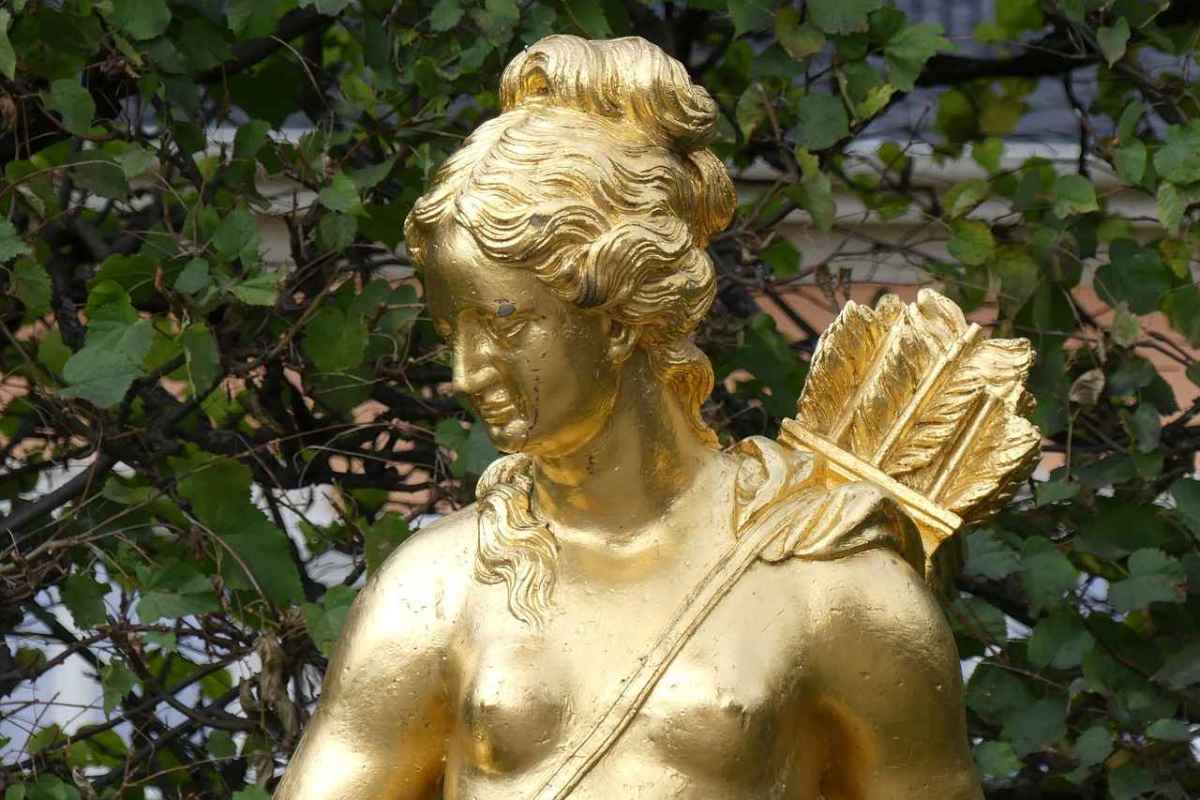
“Ban Broken”
A wildlife sanctuary ought to be a promise: that human dominion ends here.
Here, wild animals should be allowed to live, rest, roam, give birth and die without being treated as prey, as damage, or as a mere population figure.
Yet this promise is broken again and again in Switzerland. Within wildlife sanctuaries, animals are regulated, land is grazed, developed and disturbed. Now even the wolf – a predator that belongs to any functioning ecosystem – is to be killable there too, under certain conditions. This finally turns the sanctuary into an administrative zone: protected only for as long as no human interests stand in the way.
The name remains. The protection disappears.
The old boundary
The ancient goddess Artemis was no animal welfare advocate in the modern sense. Her cult knew hunting, sacrifice and violence. It would be wrong to turn her into an early vegan or a defender of equal rights for all animals.
And yet her figure contains an idea that modern Switzerland has almost entirely lost: wilderness is not simply human property. A non-human animal does not exist merely to be counted, tended, managed, fed, hunted or «regulated».
Artemis was the mistress of animals, of forests, springs and inaccessible places. She stood at the boundary between settlement and wilderness, between the controllable human realm and that which escapes it. Whoever disregarded this boundary committed hubris: the arrogance of wanting to master everything.
It is precisely this hubris that shapes our treatment of wild animals today.
The sanctuary without sanctuary
Federal hunting ban zones are intended to protect rare and endangered wild animals and their habitats. Recreational hunting is fundamentally prohibited there. But the word “fundamentally” is the catch: regulatory killings remain possible, and even integrally protected areas can be opened in exceptional cases.
Now the wolf, too, is in the crosshairs. With the revision of the hunting act, which is under consultation until 16 October 2026, wolves are to be allowed to be killed even in hunting ban zones if repeated attacks occur despite herd protection, or if a threat to humans is claimed. In precisely the areas that were supposed to offer wild animals safety.
This is not merely a legal detail. It reveals a political hierarchy: pastoral farming and its economic claims are treated as self-evident. The lives of wolves, roe deer, red deer, foxes, chamois and other wild animals, by contrast, remain negotiable.
A protected area in which wild animals are only protected as long as they bother no one is not a protected area. It is a stage set.
The wild animals must give way
The conflict is readily portrayed as “wolf versus livestock farming”. That is already a false narrative. The wolf did not decide to migrate into a hunting ban zone and encounter herds there. It was humans who divided the landscape into pastures, fences, access roads, summer grazing areas and usage zones.
Livestock claim not only the land on which they stand. They claim fodder cultivation, transport, infrastructure, protective measures and political consideration. Where herds graze, wild animals are frequently displaced, paths and refuge areas lose their tranquillity, and predators are declared a problem.
This creates an absurd logic: first, the habitat of wild animals is restricted by agriculture, settlements, roads, tourism and recreational hunting. Then the wolf is blamed for seeking prey in the remaining spaces.
The question ought to be different: why are livestock kept in the last refuges of wild animals at all?
The wolf is not a disturbance
Wolves are not foreign elements in the alpine landscape. They belong to the natural relationships between plants, herbivores and predators. Where they can live, they influence the behaviour of ungulates. Roe deer, red deer and chamois distribute themselves differently, do not remain in the same places indefinitely, and can locally reduce the pressure on young forests. The body of research on this is nuanced, but clear on one point: the predator is an ecological factor, not a pest.
This is not automatic, nor is it a romantic natural idyll. Ecosystems are complex. But the wolf is part of this complexity, not its flaw.
Swiss wildlife policy nevertheless treats it above all as a disturbance of an order that has long been artificial: humans breed and place livestock in the landscape, recreational hunters kill wild animals as a leisure activity, authorities regulate the consequences. And the wolf is shot because it does not abide by this man-made order.
A different order
The decisive question is not whether Artemis would be “happy” today. Goddesses do not solve political problems. But her ancient boundary is, as an idea, more relevant than ever: not everything that lives may be subjugated to humankind.
Wildlife protection begins where humans stop treating every square metre as usable land. Hunting ban areas would therefore need to be genuine spaces of tranquillity: free of recreational hunting, without regulation as the default, without livestock summer grazing in the core zones, and without wolf kills. What hunting-free zones achieve has been demonstrated for decades by the Swiss National Park and the canton of Geneva.
Non-human animals do not need symbolic protected spaces that are opened up at the first political demand. They need places where they are not merely tolerated, but protected.
More on the subject of recreational hunting: The scientific evidence is presented in the overview Studies on the Effects of Recreational Hunting.
The position of IG Wild beim Wild: IG Wild beim Wild rejects recreational hunting. Our model is the canton of Geneva, which has managed without recreational hunting since 1974: without hunting seasons, without hunting dogs, without driven hunts, without high seats, without the animal cruelty and crime that go hand in hand with hunting season elsewhere. What has worked there for over fifty years disproves every position paper by JagdSchweiz. An association that bases its policy on claims it refutes in its own documents is not a professional organisation, but a factory for misinformation.

All articles are written by IG Wild beim Wild as well as by external co-authors. Research, structuring and editorial processes may be supported by AI-assisted tools.
Support our work
With your donation you help protect animals and give their voice a hearing.
Donate now →