Who owns the forests and mountains, and who is allowed to kill animals there
Grisons has no system of personal hunting grounds. Yet some hobby hunters still claim entire valleys as their «traditional» territory.
«Confession from the high seat»
Sometimes an unfamiliar car at the trailhead is enough.
Anyone newly arriving in a hunting area of Grisons quickly notices that certain valleys, patches of forest, and mountain slopes mean more to some hobby hunters than mere landscape. They are treated as private hunting grounds, even though the law recognises no such private claim.
Grisons operates under the licence hunting system. A hunting licence is personal and non-transferable. There is no individual entitlement to a particular high seat, stalking route, or valley. Anyone who meets the legal requirements and obtains a licence may, in principle, hobby hunt throughout the entire canton, subject to hunting seasons, protected areas, kill quotas, and other regulations.
Tradition can create a sense of connection. But it does not create ownership of wild animals, mountains, or hunting spots. And it certainly does not justify keeping other entitled persons away through pressure, intimidation, or informal claims of possession.
Belonging to no one – but administered by the state
Free-living wild animals do not belong to hobby hunters. Nor do they belong to the people who own the forest, meadow, or alpine pasture. Legally, they are traditionally treated as res nullius, belonging to no one. The Swiss Civil Code does state that animals are not things. However, insofar as special provisions are lacking, the rules of property law are applied by analogy. This means that free-living wild animals are not privately owned by any one person.
The canton of Grisons is likewise not the owner of every living red deer, roe deer, or wolf. However, it holds the hunting regalia and, with it, the sovereign authority to plan, regulate, and oversee hobby hunting. It thus decides when hobby hunters are permitted to pursue and kill wild animals.
Under current hunting law in Grisons, private ownership only arises once an animal has been lawfully killed: «Lawfully killed game belongs to the person who killed it.» A living animal does not become prey because of some special bond with a hobby hunter. It is appropriated through a killing authorised by the state.
This makes the notion of a «traditional hunting ground» especially questionable. No one can turn a valley, a pack, or a red deer population into their own property through years of hobby hunting. Hobby hunters do not acquire a right of possession over wild animals, but rather a state permit, limited in time and space, to kill ownerless wild animals under certain conditions and to appropriate them afterwards.
The many high seats found in the forests of Grisons show how hunting grounds that do not formally exist can nonetheless become entrenched in practice. A high seat grants no personal right to a valley or a game trail. But it marks a shooting position, establishes habit, and after years of use can create the impression that a piece of forest is reserved for hobby hunting. Especially where high seats are erected without clear authorisation, or where trees are felled and cut back to create shooting lanes, a mere hunting tradition turns into an intrusion on forest, property, and habitat. Shooting lanes are not a private matter for hobby hunting: they require the consent of the landowner and a forestry permit.
Property without a safe haven
Forests, meadows, and alpine pastures in Grisons belong to various owners: private individuals, municipalities, civic communities, corporations, or the canton. The guarantee of property is enshrined in Art. 26 of the Federal Constitution. Freedom of belief and conscience is likewise protected under Art. 15 of the Federal Constitution.
Nevertheless, a person who deliberately wants to keep their private forest or meadow as a safe haven for wild animals cannot, under current law, simply exclude hobby hunting from it. Current hunting law gives priority to state-authorised hunting use over the wish of landowners not to have animals killed on their land.
This is not merely an abstract question of property. Hobby hunting brings gunshots, armed people, hunting dogs, follow-up searches, and disturbance into the habitat of wild animals. For people who reject hunting on ethical grounds, being forced to tolerate it means a direct conflict of conscience.
The European Court of Human Rights has repeatedly ruled that states may not blanketly require people who ethically object to hunting to tolerate hunting on their own property. The landmark rulings in Chassagnou and others v. France, Schneider v. Luxembourg and Herrmann v. Germany all concerned exactly this issue of compulsory hunting.
Germany responded to the ruling in Herrmann: Section 6a of the Federal Hunting Act allows land to be «neutralised» for ethical reasons. Anyone who genuinely objects to hobby hunting can apply to have it suspended on their own land. Exceptions remain possible where specific, weighty public interests are at stake, such as disease control, significant damage, or safety risks.
Switzerland has no comparable, generally accessible regulation. It has not ratified the First Protocol to the ECHR, on whose property guarantee the aforementioned ECtHR rulings are based. Nevertheless, the Swiss guarantee of property and freedom of conscience still apply. Anyone wishing to keep their land free of hunting therefore urgently needs a transparent, legally regulated procedure, rather than having to depend on the goodwill of authorities close to hunting interests.
Kills held in reserve
The same political logic is at work with the wolf: prevention is too often confused with pre-emptive killing.
For the regulation period from 1 September 2026 to 31 January 2027, the canton of Grisons has received authorisation to kill young animals in twelve wolf packs. In four further packs, this is to become possible as soon as offspring are confirmed. In each affected pack, up to two-thirds of the confirmed young wolves may be killed. In addition, the Calderas pack in central Grisons is to be killed in its entirety.
These kills are not merely a response to damage that has already occurred. They are carried out proactively, that is, before significant damage arises. The result: wolf pups are released for culling because an administrative model calculates possible future conflicts.
Yet the situation in the alpine summer of 2026 was precisely not one of an escalating toll of damage. By the end of July, 30 livestock kills had been recorded in Grisons, compared with 68 in the same period the previous year – a decline of more than half. The canton had reported a total of 217 livestock kills for 2025, roughly the same as the year before, while the number of packs remained stable at 11.5.
The federal government itself acknowledges that herd protection is a central pillar and contributes substantially to preventing damage to livestock. The Federal Office for the Environment attributes the decline in damage figures to the expansion of herd protection and increased wolf regulation. However, this official attribution does not establish what share each individual measure actually contributes.
What is comparatively well documented is that herd protection can significantly reduce livestock kills. A KORA analysis of attacks on alpine pastures found that livestock guardian dogs, under otherwise identical conditions, reduced the average number of livestock killed per alpine summer by 75 percent.
Protection instead of hobby hunting
In a letter to the editor, Jasmine Candrian from Chur put into words what politics in Grisons overlooks: public funds should go first into herd protection and education, not into an ever-expanding culling policy. This is not a romanticised view of the wolf. It is a call for a sensible order of priorities: preventing damage wherever possible, rather than killing animals afterwards or pre-emptively dismantling entire pack structures.
The canton must disclose whether GPS data from radio-collared wolves was ever used to plan kill operations. Its own response to parliament confirms that telemetry data helps the wildlife wardens carry out kills. What is not proven, however, is that such data was passed on to external hobby hunters. Precisely for this reason, access rights, data flows and operation logs must be made publicly verifiable.
The conflict over imaginary hunting grounds shows how strongly hobby hunting is shaped by tradition, access and power. The wolf kills show how quickly this very same attitude translates into state practice: wild animals are not protected as beings in their own right, but managed as populations to be reduced under political pressure.
Grisons needs a change of course:
- Private individuals must be able to have their land exempted from hobby hunting on ethical grounds.
- Herd protection, advice and fair funding must come before kills.
- Every wolf regulation requires an independent scientific review of its effects on damage, packs and the ecosystem.
- The public must learn which animals are being killed, why, and whether milder measures have been exhausted.
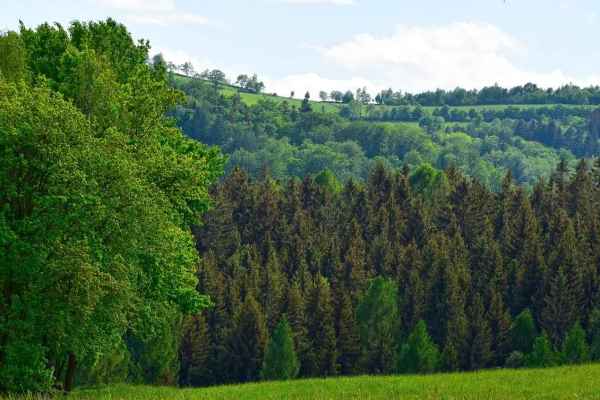
Forests and mountains are not a private club for hobby hunters. They are habitats for wild animals, property belonging to various people, and recreational spaces for the public. Anyone who treats them as a shooting range is not defending tradition, but an outdated power structure.

All articles are written by IG Wild beim Wild as well as by external co-authors. Research, structuring and editorial processes may be supported by AI-assisted tools.
Support our work
With your donation you help protect animals and give their voice a hearing.
Donate now →