
Hobby hunting’s costliest illusion: when killing makes the problem bigger
A new study in «Biological Conservation» calculates what the killing of 1.7 million foxes, mustelids and corvids per year in France actually achieves: no demonstrable benefit, but costs of up to 123 million euros annually
Since mid-August, several associations in France have been calling for a hunting moratorium.
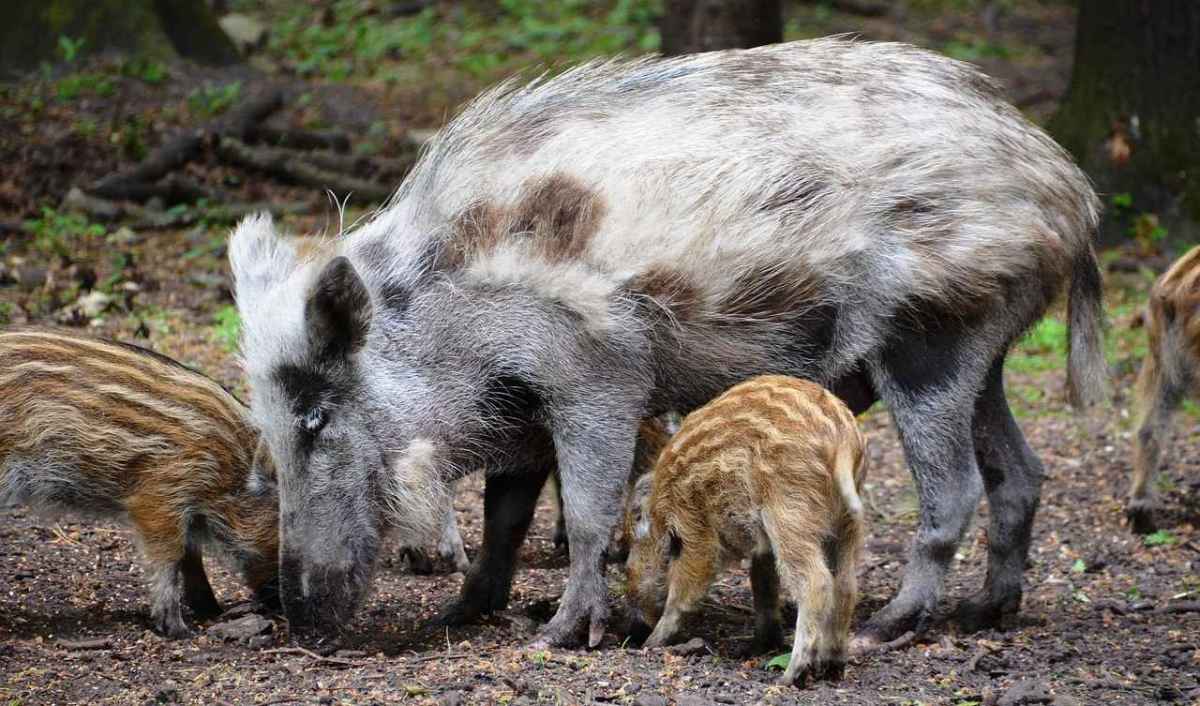
The reason: drought and forest fires have severely damaged nature this summer, and a citizens’ petition gathered over 473’000 signatures. The response from hobby hunting was the same as ever. The spokeswoman for the Haute-Vienne hunting association warned of «catastrophic consequences for farmers» if no «population control» of wild boars were to take place from September onwards. Without hobby hunters, so the perennial argument goes, nature would spiral out of control.
Only a few weeks earlier, the journal «Biological Conservation» published a study that puts this argument to the empirical test. A team led by the ornithologist Frédéric Jiguet of the Muséum national d’Histoire naturelle in Paris analysed seven years of official data, hunting season by hunting season, department by department. The result is as clear as it is uncomfortable: for the species examined and the nationwide killing practice in France, the study finds no evidence that state-authorised «regulation» reduces damage or lastingly diminishes populations.
The contradictions on the hobby hunters' side are laid bare in the process. The very same association spokeswoman who warns of «catastrophic consequences» concedes in the same breath that the wild animals have been observed and that she sees «no particular problems», that there is «no indication whatsoever that wildlife is under threat». If no problem is visible, the question arises as to what exactly is to be shot at in September. Pierre Rigaux of the animal welfare organisation Nos Viventia sums it up:
Hobby hunters are not wildlife experts; it is not for them to decide on wildlife management or to declare the forest healthy.
12.4 million dead animals, no demonstrable benefit
Between 2015 and 2022, hobby hunters and trappers in France killed some 12.4 million animals: foxes, stone martens, pine martens, polecats, weasels, carrion crows, rooks, magpies, jays and starlings. Roughly 1.7 million animals every year, declared as a measure against damage to agriculture and poultry.
The researchers examined whether more animals are killed in places where particularly high levels of damage had previously been reported, and whether the killings reduce the damage in the following year. For the species as a whole they found no link between the damage recorded in the preceding three-year period and the subsequent killing effort. Admittedly, for the carrion crow, rook and starling more animals were killed in the same year in areas where more damage was reported. Yet the damage did not fall in the following year as a result. Across all species it was in fact higher where more animals had been killed the year before.
Nor did the populations decline. Using data from the French breeding bird monitoring scheme, the researchers examined whether more intensive killing goes hand in hand with lower spring populations. It did not. For the jay and the starling, as well as across all five bird species, higher kill figures were in fact associated with higher spring populations. The study discusses as a plausible explanation that the killings often do not affect the resident breeding birds but rather passing or younger animals. Added to this is a well-known compensation effect: when animals are removed, the reduced competition gives the remaining individuals more food and better chances of survival. The hoped-for reduction in numbers fails to materialise.
Unwittingly, the hunting side confirms this itself. As an argument against a postponement, the hunting association claims that «births continue to proceed without problems» and that wild boars and red deer are plentiful. It is precisely this unchecked reproduction, despite decades of intensive hobby hunting, that is the best evidence that killing does not reduce populations.
A pattern known to wildlife biology
The French study concerns foxes, mustelids and corvids. However, it sits alongside a broader body of wildlife biology literature which shows the same for other species too: untargeted or intensive hunting can trigger compensatory responses and destabilise social structures. In the fox, the effect has been documented for decades. Even the killing of three quarters of a population is made up again the following year, as at least eighteen wildlife biology studies over three decades show. The more heavily foxes are hunted, the more offspring there are. For a deeper look, see our dossier Hunting and wildlife diseases as well as the fact check Why hunting creates more problems than it solves.
In the wild boar, which in France belongs to a different legal category and was not part of this analysis, the mechanism is particularly clear. Older, experienced sows shape the social structure of a sounder. If such lead animals are shot out of the group selectively or repeatedly, this can destabilise the groups. Sabrina Servanty's long-term study compared a heavily hunted and a lightly hunted area over 22 years and found markedly higher fertility and earlier onset of sexual maturity under high hunting pressure, in some cases already in piglet sows under one year old. Strong hunting pressure is therefore associated with earlier reproduction and higher fertility, particularly where food is abundantly available and social groupings are broken up. We have described this in detail in the animal portrait The wild boar and in Wild West in eastern Switzerland.
The damage complained of in the Haute-Vienne is therefore no evidence for the effectiveness of further killings. On the contrary, the large-scale French analysis argues against the notion that more killing reduces damage in the following year.
How far practice is removed from animal welfare is shown by a second arena. The bird protection league LPO called for the waterfowl hunt, which opened on 21 August, to be postponed in the wetlands – in vain. Shooting continues at migratory birds which, trapped in the dried-out wetlands, are seeking to cool off. «That is truly absurd,» Rigaux comments.
Up to eight times more expensive than the damage
The study lights the real fuse with a calculation that has never existed in this form before: the first economic assessment of «pest control» in France. The researchers put the outlay for the killing at 103 to 123 million euros a year, calculated conservatively with one hour of working time and 20 kilometres of travel per animal killed. Set against this are officially reported damages of merely 8 to 23 million euros.
So the «regulation» costs up to eight times what it supposedly prevents. Even in the most frugal variant, in which the hobby hunters’ working time is valued at zero and the travel costs are halved, the costs still exceed the damage by a factor of 1.66. There is, the authors conclude, no economic justification in France for shooting foxes, mustelids, corvids and starlings.
On top of this come lost ecosystem services. Predators and corvids provide a benefit that nobody puts on the balance sheet. The jay, for instance, disperses acorns and thereby gives rise to entire oak woods. For the 62’278 jays killed in seven years alone, the study puts the loss of this sowing service at 100 to 454 million euros. A fox, in turn, devours thousands of mice a year and spares agriculture the use of poison.
It is remarkable who is presenting this assessment. Lead author Jiguet has sat since 2014 on the Conseil National de la Chasse et de la Faune Sauvage, the national advisory body that reviews the kill decrees. The criticism comes from within.
The government sticks with the instrument
The debate is having political consequences, albeit different ones from those hoped for. France renegotiated the ESOD rules — the classification of «species liable to cause damage» — in 2026. The public consultation ran until the end of July and produced predominantly negative submissions. On 21 August 2026 the government nonetheless published the new decree for the period 2026 to 2029. Court rulings had removed the polecat, and for a time also the pine marten, from the list because of an inadequate data basis; the pine marten now reappears in fourteen departments. The government is sticking with the instrument of ESOD classification, despite the new study that fundamentally calls into question its ecological and economic justification.
What the data show — and what they do not
The French study does not show that every local conflict with wild animals disappears once animals are no longer killed. It shows something politically decisive: the killing of foxes, mustelids and corvids in their millions, across the entire country, does not demonstrably reduce officially reported damage, does not lastingly diminish the bird populations studied, and costs several times the amount of the reported damage.
What is effective against concrete damage is prevention and precisely tailored measures: secure fencing, protection of poultry holdings, adapted management, seed protection, vaccine baits in the case of the fox tapeworm, and, in justified exceptional cases, professionally supervised and narrowly limited interventions. What the data do not provide is a free pass for killing in the millions under the label of «regulation». More on effective approaches in our dossier Alternatives to hobby hunting.
LET'S STAY IN TOUCH!
We would like to send you the latest news and offers in our newsletter.

All articles are written by IG Wild beim Wild as well as by external co-authors. Research, structuring and editorial processes may be supported by AI-assisted tools.
Support our work
With your donation you help to protect animals and to give their voice a hearing.
Donate now →