
Hunting and Wildlife Diseases
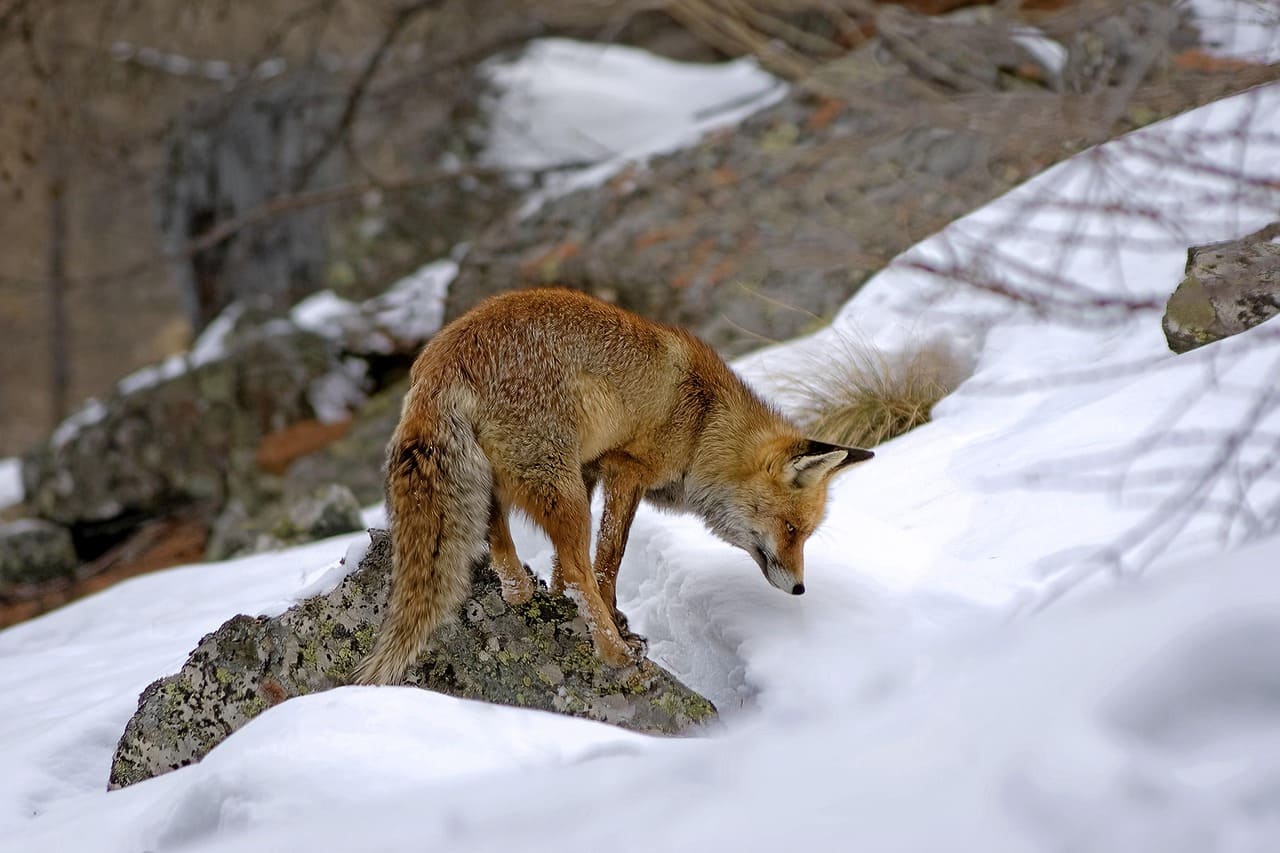
Recreational hunters have claimed for decades that hunting foxes and other predators protects the population from diseases like rabies, echinococcosis, mange and Lyme disease. Science says the opposite: More intensive hunting destabilizes population structures, increases migration movements and spreads diseases faster, not slower. What hunting associations sell as health management is an empirically refuted narrative that primarily serves to legitimize a recreational activity.
Legally problematic in this regard: According to Art. 26 of the Animal Protection Act, there must be a 'reasonable cause' for killing an animal. For fox hunting, neither legal culling plans nor scientifically recognized regulatory necessity exist. For more than 30 years, there have been at least 18 wildlife biology studies proving: fox hunting does not regulate and is not suitable for disease control. On the contrary.
What awaits you here
- Echinococcosis: The most well-known hunter's tale. How the Nancy study shows that intensified fox hunting increases infection rates from 40 to 55 percent instead of reducing them.
- Lyme disease: Fewer foxes, more ticks. Why hunting foxes causes mouse populations to explode and increases Lyme disease risk.
- Rabies: How the argument imploded. Why bait vaccines defeated rabies, not shooting, and how the hunting lobby simply exchanged the legitimization argument.
- Hunting pressure promotes diseases: The biological mechanism. What stress hormones, immunosuppression and destroyed social structures have to do with disease spread.
- Mange and distemper: counterproductive interventions. Why recreational hunting undermines natural resistance development and actively produces disease outbreaks.
- Hunting methods that create suffering and promote disease. Why den hunting, driven hunts, trap hunting and pass hunting structurally promote disease.
- Hantavirus, leptospirosis, botulism: What really provides protection. Why the fox as health police is not an image, but a biological mechanism.
- Arguments. Responses to the most common claims of the hunting lobby regarding disease control.
- Quicklinks. All relevant articles, studies and dossiers.
Fox tapeworm: The most well-known hunters' tale
Fewer foxes, less fox tapeworm, lower infection risk for humans: This sounds plausible at first glance. On second glance, it is simply wrong. In a study from the Nancy region, scientists investigated over four years whether intensified fox hunting contains the spread of Echinococcus multilocularis. The result: 1700 working hours, 15,000 kilometers of nighttime car journeys, 776 shot foxes, a 35 percent increase in hunting pressure, and yet the fox population was not reduced.
Even more serious: The infestation rate with fox tapeworm rose in the intensively hunted area from 40 to 55 percent, while it remained constant in the comparison area without intensified hunting. The study bears the programmatic title "Echinococcus multilocularis management by fox culling: An inappropriate paradigm". What the hunting associations sell as a health protection measure is, according to current science, not only useless but counterproductive. The alternative is evidence-based: deworming baits that can reduce the infestation rate of foxes to nearly zero percent without killing a single animal.
More on this: Recreational hunters spread diseases and Fox hunting without facts
Lyme disease: Fewer foxes, more ticks
Another current study shows that hunting foxes increases the risk of infection with Lyme disease through ticks. The mechanism is biologically comprehensible: Foxes are important mouse hunters. A fox eats around 4,000 mice per year. Where foxes are absent or decimated, mouse populations explode. But mice are the main hosts for ticks: Dozens of tick larvae and nymphs can simultaneously infect themselves on one mouse and directly exchange pathogens.
Those who hunt foxes indirectly hunt their own immune system: more mice mean more ticks, more ticks mean more Lyme disease, more tick-borne encephalitis, more hantavirus. The cantons that have the most foxes shot statistically have the most problems with wildlife-related diseases. This connection is not mentioned in the official communication of hunting authorities. It disrupts the narrative.
More on this: Studies on the impact of hunting on wildlife and Hunting and biodiversity: Does recreational hunting really protect nature?
Rabies: How the argument imploded
Rabies is the historically most important argument for fox hunting. It was what legitimized the massive hunting of foxes in the post-war period. The problem: Rabies was not defeated through shooting, but through vaccine baits. The Swiss rabies center already concluded that a hunting reduction of fox populations was "obviously not possible and hunting for rabies control even counterproductive". Since 1998, terrestrial rabies has been considered eradicated in Switzerland, not thanks to hunters, but despite their fox hunting.
Psychologically interesting is what happened afterwards: The argument "rabies control" disappeared, but fox hunting remained. They simply switched the legitimization argument, first rabies, then fox tapeworm, then mange, then Lyme disease. The narrative adapts to scientific refutations, the hunting practice does not. This is how a system works that is designed for continuation and not for truth.
More on this: Small game hunting and wildlife diseases and Hunting myths: 12 claims you should critically examine
Hunting pressure promotes diseases: The biological mechanism
Hunting increases diseases not only indirectly through mouse populations, but also directly through stress hormones. It is known from other species, including humans, dogs and other animals, that with intensive hunting a chronically high level of stress hormones leads to immunosuppression: The animals are more susceptible to diseases and less equipped for the everyday challenges of life.
Added to this is the disruption of social structure: In undisturbed fox packs, only the highest-ranking vixen reproduces. When the community breaks apart due to hunting, virtually every female fox is impregnated, litter sizes increase, and a research team found elevated progesterone levels as an indicator of an unusually high proportion of reproducing females. The result: more young animals, more migration movements, more disease transmission. Exactly the opposite of what hunting associations claim.
More on this: Recreational hunting promotes diseases and Hunting and animal welfare: What the practice does to wild animals
Mange and distemper: counterproductive interventions
Mange flares up locally and extinguishes itself again naturally. Especially where it has spread particularly strongly, foxes develop increasing resistance to new infections. Hunting destroys this natural selection advantage: A recreational hunter cannot see a fox's mange resistance.
Intensive hunting stress can also function as a trigger for mange itself: Every animal latently carries mites on its skin, but they only break out when the immune system is weakened by stress. Anyone who puts foxes under permanent stress with corridors, driven hunts and trap hunting actively produces the disease outbreaks that they subsequently use as legitimation for further hunting. This is not wildlife management, this is a self-generating problem system.
More on this: Why recreational hunting fails as population control and Geneva and the hunting ban
Hunting forms that create suffering and promote diseases
Not all hunting forms are equal. Some structurally increase disease risks:
Den hunting: Trained dogs are sent into fox dens to drive out foxes. Underground fights occur where dog and fox bite into each other. Injuries promote infection risks in both animals. 70 percent of the population would favor a ban on den hunting according to a survey by the Swiss Animal Protection.
Driven hunt: In hunted wild animals, health-damaging stress hormones are released in fear situations, which manifest in the meat and are consumed by humans in game meat. Shot is fired, contaminating the forest floor with lead and transferring lead into the food chain through carcasses as unfound pieces.
Trap hunting: Animals wait for hours or days in traps, under extreme stress, which demonstrably weakens the immune system and increases disease susceptibility.
Pass hunting: Foxes and other predators are lured with bait and shot at feeding sites. The targeted killing of leading sows and boars destroys social structures and increases migration movements, which spreads diseases.
More on this: Den hunting and Trap hunting
Hantavirus, leptospirosis, botulism: What really protects
A fox eats around 4,000 mice per year. Mice give birth to 10 to 15 young every 30 days and are already sexually mature after 6 to 8 weeks. The connection is mathematically clear: Where foxes are absent, mouse populations explode and with them the risks for hantavirus, leptospirosis and borreliosis.
Hantavirus is transmitted through mouse droppings and causes flu-like illness up to kidney failure. Leptospirosis survives in puddles for weeks and infects dogs and humans. Botulism develops in carcasses that accumulate in silage and hay; in an advisory leaflet to farmers, it was recommended to mow fields the evening before so that foxes as scavengers would eat the dead animals, which significantly reduces botulism risks in silage. The fox as health police is not a metaphor, it is a biological mechanism.
More on this: Wildlife deterrence and Arguments against recreational hunting and for wildlife wardens
What would need to change
- Stop fox hunting: At least 18 wildlife biological studies over three decades prove that fox hunting does not regulate populations and promotes diseases instead of containing them. Switzerland should follow Luxembourg's example and suspend fox hunting. Model motion: Model texts for hunting-critical motions
- Use deworming baits instead of culling: The Nancy study and further research show that oral deworming baits can reduce fox tapeworm infestation rates to nearly zero without killing a single animal. This method must be financed and implemented comprehensively.
- Ban den hunting and trap hunting: Both forms of hunting cause extreme animal suffering and promote disease outbreaks through stress and immune suppression. 70 percent of the population support a ban on den hunting.
- Decouple wildlife disease monitoring from recreational hunting: Wildlife disease monitoring must not be in the hands of those who have an interest in continuing hunting. Independent veterinary medical institutions must take over data sovereignty.
- Professional wildlife management following the Geneva model: State wildlife wardens with veterinary medical support can manage wildlife diseases evidence-based without destabilizing the population structures that enable natural disease resistance. Model motion: Hunting ban following Geneva's example
Arguments
«Without fox hunting, fox tapeworm would become an epidemic.» The Nancy study shows the opposite: Intensified fox hunting increased the infestation rate from 40 to 55 percent, while it remained constant in the comparison area without hunting intensification. The authors describe fox hunting for disease control as an «inappropriate paradigm». What actually works are deworming baits that reduce the infestation rate to nearly zero without killing a single animal. Fox tapeworm is the argument, not the solution.
«Fewer foxes means fewer diseases for humans.» Fewer foxes means more mice, more mice means more ticks, more ticks means more Lyme disease, more tick-borne encephalitis, more hantavirus. A fox eats 4,000 mice per year. Where foxes are absent, populations of the main hosts for ticks and zoonotic pathogens explode. This is not an activist argument, this is food chain biology.
«Rabies control proves that fox hunting works.» Rabies was not defeated by culling, but by vaccination baits. The Swiss rabies center itself determined that population reduction through hunting was «obviously not possible» and «even counterproductive». Since 1998, terrestrial rabies has been eradicated in Switzerland, not thanks to recreational hunting, but despite it. The rabies argument is a historical admission, not proof.
«Mangy foxes must be shot to stop the spread.» Mange flares up locally and dies out on its own. Where it spreads, foxes develop increasing resistance. Recreational hunting destroys this natural selection advantage because a recreational hunter cannot see the mange resistance of a fox. Hunting stress also weakens the immune system and activates latently present mites, so recreational hunting actively produces the disease outbreaks it subsequently uses as legitimation.
«Hunting is disease prevention.» Hunting is the opposite of disease prevention. Hunting destabilizes social structures, increases migration movements, suppresses immune systems through chronic stress and destroys natural regulatory mechanisms. What would be disease prevention: stable predator populations, intact social structures, deworming baits, independent veterinary monitoring. All measures that do not require recreational hunting.
Quicklinks
Posts on Wild beim Wild:
- Lowland hunting and wildlife diseases
- Recreational hunters spread diseases
- Recreational hunting promotes diseases
- Studies on the impact of hunting on wildlife
- Why recreational hunting fails as population control
- Geneva hunting ban
- Deterring wildlife
Related dossiers:
- Hunting and wildlife diseases
- Night hunting and high-tech hunting: How thermal cameras, night scopes, drones and digital lures expose the myth of fair hunting
- Hunting dogs: Use, suffering and animal welfare
- Lead ammunition and environmental toxins from recreational hunting: How a toxic legacy burdens birds of prey, soils and humans
- High hunting in Switzerland: Traditional ritual, violence zone and stress test for wildlife
- African swine fever: How an animal disease becomes justification for recreational hunting
- Hunting accidents in Switzerland
- Hunting and animal welfare: What practice does to wildlife
- Hunting and weapons
- Driven hunting in Switzerland
- Stand hunting: Waiting, technology and risks
- Earth hunting
- Trap hunting
- Pass hunting
- Special hunting in Graubünden
Our claim
The claim that recreational hunting protects against wildlife diseases is not only false, it is empirically refuted. At least 18 wildlife biology studies over more than three decades consistently document the same thing: hunting destabilizes population structures, increases migration movements, suppresses natural immune resistance and spreads diseases faster. Those who shoot foxes generate more mice, more ticks, more borreliosis, more hantavirus. This is not an activist argument, this is biology.
What actually protects is the opposite: stable predator populations, intact social structures, deworming baits instead of shooting, professional wildlife management instead of armed recreational entertainment. The canton of Geneva has shown for 50 years that this model is cheaper, more animal welfare-friendly and epidemiologically more effective than any militia hunting. This dossier is continuously updated when new studies, data or political developments require it.
More on recreational hunting: In our hunting dossier we bundle fact-checks, analyses and background reports.