Why hunting creates more problems than it solves
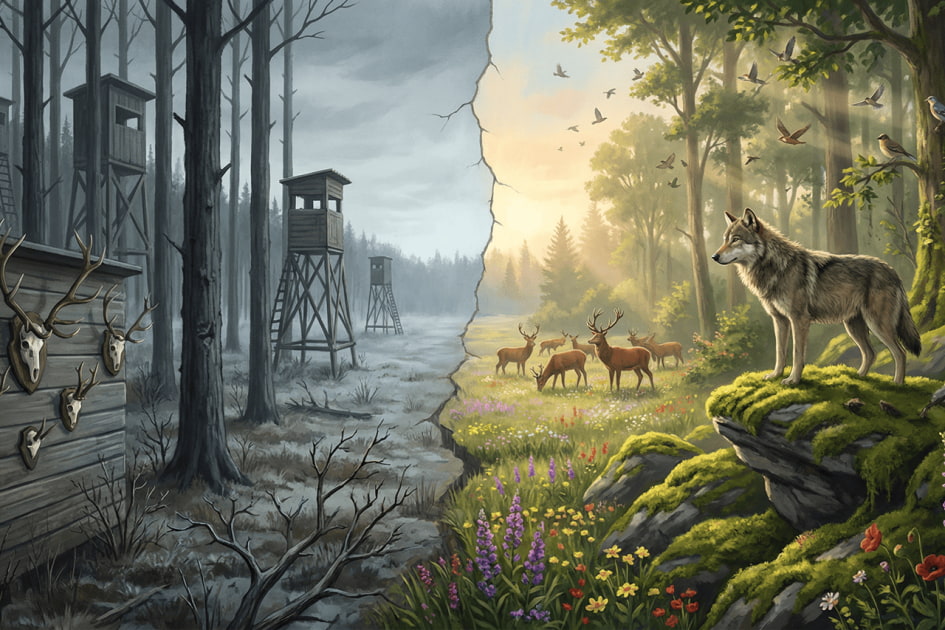
Recreational hunting is still widely regarded across much of Europe as an indispensable tool for regulating wildlife populations. It is meant to prevent damage, ensure ecological balance, and curb the spread of so-called invasive species.

Yet a look at data, studies, and international comparison regions reveals: hunting does not achieve these goals and in many cases produces the opposite effect.
Hunting associations have claimed for decades that without hunting, foxes, wild boar, or raccoons would “explode” in numbers. The figures tell a different story. Hunting bags for raccoons, for instance, have risen sharply for years, while the species continues to spread. The same applies to foxes and wild boar. Recreational hunting does not reduce populations on a lasting basis.
The reason is biologically straightforward: many wildlife species respond to hunting pressure with compensatory reproduction. The heavier the cull, the stronger the offspring yield. Pack structures are destabilised, social hierarchies destroyed, and juvenile animals displaced — a state that maximises reproduction. Recreational hunting thus produces precisely the populations it claims to prevent: young, productive, and unstable.
Where hunting is absent, nature finds its balance
The counter-examples are unambiguous:
- Luxembourg banned fox hunting in 2015. The predicted epidemics, collapse scenarios, and mass proliferation failed to materialise. The population stabilised on its own.
- The Canton of Geneva banned recreational hunting as early as 1974. To this day, studies show more stable wildlife populations and higher biodiversity than in the surrounding areas where hunting takes place.
- National parks worldwide operate almost universally without recreational hunting. Regulation is achieved through habitat, competition, predation, and resource availability — not through gun barrels. The result is functioning ecosystems with natural population cycles.
These examples refute the central narrative of the hunting lobby: wildlife does not need human “population management”, but rather intact habitats and undisturbed social structures.
Invasive Species: The Next Myth
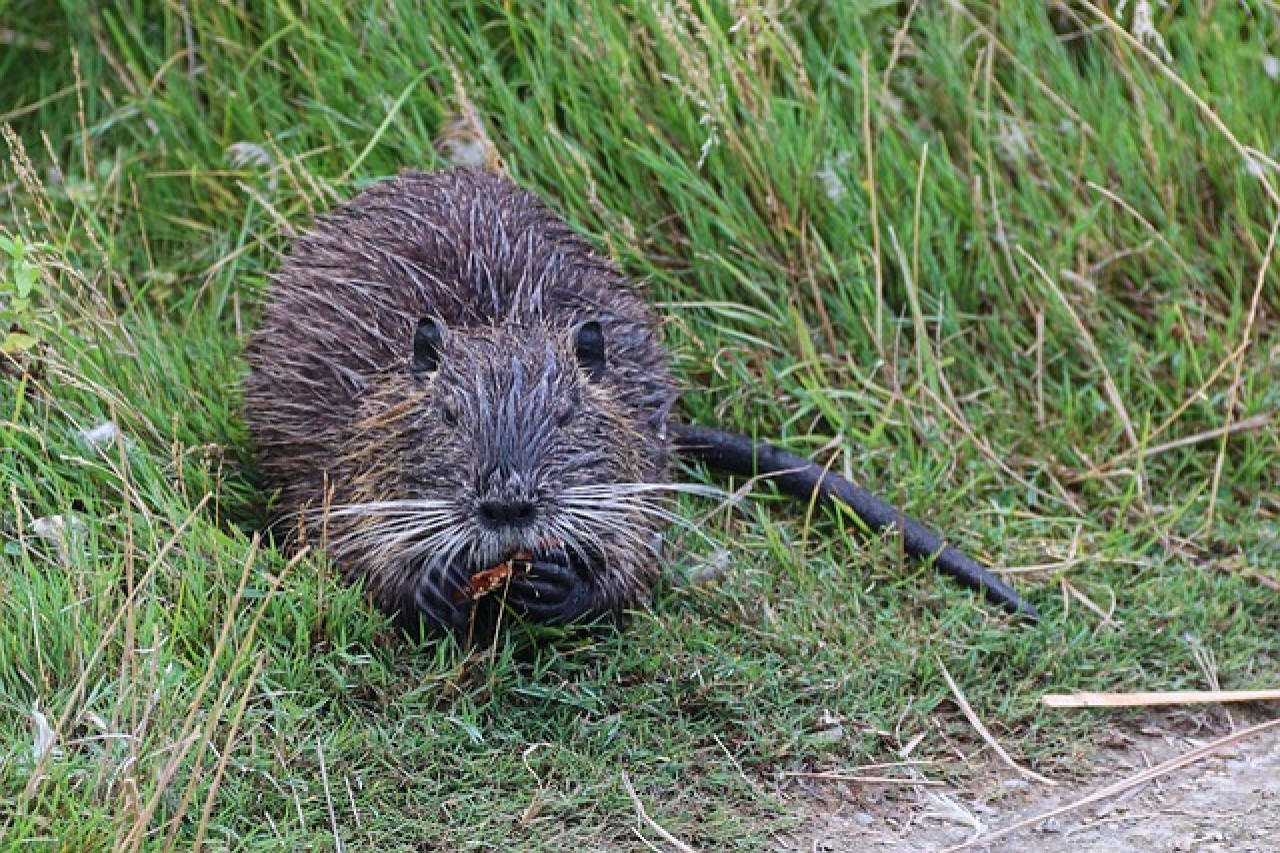
When it comes to invasive species, hunting is often portrayed as a necessity. Yet the data shows: neither raccoons nor nutrias can be sustainably controlled through hunting. In many regions, intensive culling even leads to faster spread, because gaps are immediately filled by immigration from neighbouring areas — a classic “Sisyphus effect”.
Furthermore, scientifically sound management plans are frequently lacking. Instead, whatever is within reach is shot, without evaluating the ecological impact.
Hobby Hunting as a Cultural Relic
Modern hobby hunting likes to present itself as a scientifically grounded tool of nature conservation. In reality, it is often a traditional ritual of a recreational nature that retroactively legitimises itself in ecological terms. The alleged ecological necessities, upon closer examination, prove to be a pretext for an outdated system.
Shooting figures have been rising for years — not because nature is out of control, but because hobby hunting is to be kept alive. The ecological reality often plays a subordinate role in this.
Time for a New Wildlife Management Approach
A contemporary wildlife management is based on data, ecosystem research, and internationally proven approaches. This includes:
- Promoting natural regulation through habitat improvement.
- Reducing disturbances, particularly through hunting pressure.
- Monitoring instead of ritualised kill quotas.
- Deployment of professional wildlife wardens only in clearly defined exceptional cases, not as standard practice.
Hunting as a leisure activity is neither ecologically necessary nor scientifically tenable. Nature functions when it is left alone. Modern management must be guided by this — not by traditions, myths, or lobby interests.
The facts are clear: hobby hunting does not solve the problems. In many cases, it is the very cause of them.
In the view of IG Wild beim Wild, hobby hunters annual medical-psychological fitness assessments modelled on the Netherlands, as well as a binding upper age limit. The largest age group among hobby hunters today is 65+. In this group, age-related limitations such as declining vision, slowed reaction times, lapses in concentration, and cognitive deficits increase significantly in statistical terms. At the same time, accident analyses show that the number of serious hunting accidents involving injuries and fatalities rises significantly from middle age onwards.
The regular reports of hunting accidents, fatal errors of judgement, and the misuse of hunting weapons highlight a structural problem. The private ownership and use of lethal firearms for recreational purposes largely escapes continuous oversight. From the perspective of IG Wild beim Wild, this is no longer justifiable. A practice based on voluntary killing that simultaneously generates considerable risks for humans and animals forfeits its social legitimacy.
Recreational hunting is furthermore rooted in speciesism. Speciesism describes the systematic devaluation of non-human animals solely on the basis of their species membership. It is comparable to racism or sexism and can be justified neither culturally nor ethically. Tradition is no substitute for moral scrutiny.
Critical scrutiny is indispensable precisely in the area of hobby hunting. Hardly any other field is so thoroughly shaped by euphemistic narratives, half-truths, and deliberate disinformation. Where violence is normalised, narratives frequently serve the purpose of justification. Transparency, verifiable facts, and an open public debate are therefore essential.