Spain clears 67 wolves for killing, even though courts have overturned exactly that three times
The highest quota of the current Asturian management cycle follows three court rulings that clearly limited or annulled earlier plans and their legal basis.

A reader from Spain contacted IG Wild beim Wild this week.
In Asturias, she wrote, the regional government had decided to kill 67 wolves. She asked for help for these animals. We looked into the case. It is confirmed, and it is more serious than a mere kill figure would suggest.
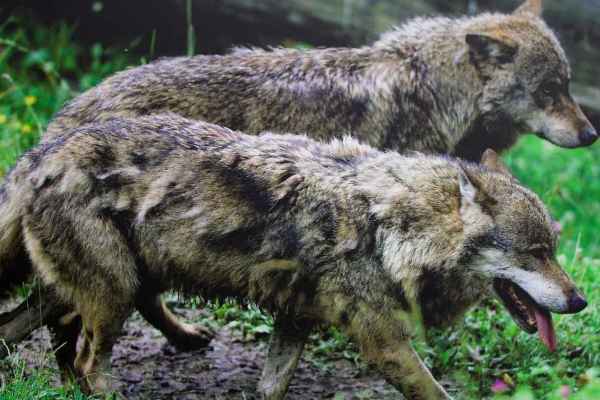
Asturias plans to kill up to 67 wolves by the end of 2027, 14 more than under the previous programme. The new maximum quota follows three court rulings that clearly limited or annulled earlier plans and their legal basis. The case shows how an administration creates new legal foundations after defeats in court in order to continue lethal control measures.
What Asturias has decided
The Consejería de Medio Rural y Política Agraria has approved its annual control programme under the II Wolf Management Plan. A maximum of 67 wolves is permitted, valid until 31 December 2027 and extendable to March 2028 should the quota not be exhausted by then. That is fourteen animals more than under the previous plan (53) and the highest quota of the current management cycle.
The authority bases its decision on an estimated population of 412 to 460 animals in 50 identified packs, 46 of them reproducing. The justification given is 3,893 livestock animals harmed in 2025 and compensation payments of 1.9 million euros, an increase in damage of around 30 per cent compared with 2021.
The kills are distributed across eight management zones:
| Zone | Maximum kills | Livestock damage 2025 |
|---|---|---|
| Centro-oriental | 9 | 421 |
| El Palo-Esva | 8 | 1022 |
| Centro-occidental | 8 | 540 |
| Central | 8 | 365 |
| Noroccidental | 7 | 278 |
| Picos de Europa (outside the national park) | 5 | no data |
| Suroccidental | 4 | 31 |
| Areas without specific management | 18 (extendable) | 1066 |
| Total | 67 | 3893 |
The reserve of up to 18 animals outside specific management zones makes the quota look more like a flexible removal allowance than a strictly case-by-case response to individual instances of damage. The Suroccidental zone is also striking: four wolves released for killing in the face of just 31 livestock animals harmed over the entire year. The precise distribution of damage per zone comes from the official and media figures published so far; the full programme resolution as a primary source was still outstanding at the time of publication.
The methods provided for are selective wait hunting by environmental agents, support during authorised hunts of other species, coordinated driven hunts and live capture. The controls run mainly from January to April and from September to December, and occasionally in between.
The point the authority treats as open: the courts have drawn narrow limits
Asturias treats the legal situation as open to redesign, even though the courts have drawn narrow limits for lethal interventions.
On 29 July 2024, the Court of Justice of the European Union ruled in case C-436/22, brought by the Asociación para la Conservación y Estudio del Lobo Ibérico (ASCEL) and referred by a Spanish court, on the legal situation in Castile and León. Its findings, however, apply generally under EU law: a region may not classify the wolf as a huntable species if its conservation status at national level is unfavourable. And this holds even where the wolf no longer enjoys strict protection in the region concerned. Management measures such as hunting must instead be geared towards maintaining or restoring a favourable conservation status. The basis was Spain's own report for the period 2013 to 2018, which classified the wolf as «unfavourable-inadequate» in every region it inhabits.
Spain's highest court, the Tribunal Supremo, followed suit in February 2026 and, again on an action brought by ASCEL, annulled the Asturian control plan of 2022. The key finding: a kill is only permissible if it is the only solution for preventing damage to livestock, and lethal measures must be subject to strict conditions. Killing is always the last option, only once all preventive measures have failed.
And the Asturian regional court itself, the Tribunal Superior de Justicia de Asturias, declared the immediately preceding 2025/2026 programme void in April 2026. The programme had «no effect whatsoever» and lacked a valid legal basis.
Three instances, the same message. Asturias argues that it amended the II Wolf Management Plan following the Supremo ruling and thereby created a new legal basis, with the quota now founded on population, damage, conflicts and available wild prey. Whether this amendment actually satisfies the strict conditions set out by the CJEU and the Supremo has not yet been clarified in court.
31 wolves shot before the unlawful predecessor programme was stopped
A look at the annulled 2025/2026 programme shows why this is no academic question. By the time it was suspended, 31 wolves had been shot under the control measures. A further eleven animals were recorded in the same programme's tally as having died from other causes. In total, the administration counted 42 animals, around 80 per cent of the planned quota of 53. Under a plan that a court subsequently declared unlawful.
This was possible because interim measures were refused. The lawyer for Fondo Lobo, Sara González Merinero, put it succinctly: it had been unavoidable that the regional court would apply the guidance of the supreme court, but she regretted that wolves had been killed at all under the now annulled plan because interim legal protection had been denied.
The case shows how quickly irreversible facts can be created when culls begin before courts have ruled on a requested suspension. According to media reports, ASCEL has announced that it will also challenge the new plan and apply for its suspension. Until such a decision is made, however, shooting can go ahead from September onwards. No ruling can bring dead wolves back.
The scientific dispute
The substantive core of the dispute is the conservation status. ASCEL documents a long-term retreat: in 1987 around 1,500 wolves lived in Spain across some 100,000 square kilometres; between 2012 and 2014 the second national survey counted only 297 wolf packs across 91,620 square kilometres. For ASCEL, the conservation status of the wolf in Spain is therefore clearly unfavourable.
The dispute came to a head on 22 June 2026, when the Conferencia Sectorial de Medio Ambiente, the coordinating body of the central state and the regions, adopted an agreement declaring the conservation status of the Iberian wolf in the Atlantic and Mediterranean biogeographical regions to be «favourable». It was tabled by Galicia, Castile and León, Asturias and Cantabria, against the vote of the environment ministry MITECO, whose own technical report classified the species as unfavourable in all three regions. Ecologistas en Acción and the Fondo Lobo are challenging the decision before the Audiencia Nacional. Their spokesman Theo Oberhuber argues that this is not a legitimate technical difference of opinion, but the imposition of a political majority against the scientific evidence. Whether a species loses its protection, he says, must not be decided by a vote of the autonomous communities, but on the basis of data.
The contradiction becomes all the more tangible when one recalls that the wolf had been placed under protection throughout Spain in 2021. The political lever for the about-turn was a legislative amendment of April 2025 (Ley 1/2025), which removed the wolf north of the Duero from the national protection register LESPRE, inserted by way of parliamentary amendments to a law against food waste. In July 2025, following 278 citizens' petitions, among them applications from ASCEL and PACMA, the Defensor del Pueblo, the Spanish ombudsman's office, lodged a constitutional complaint against these provisions, which the Constitutional Court accepted for examination.
Why this concerns Switzerland too
Anyone following the Asturian debate will immediately recognise the Swiss pattern. It is the same mechanism: first the downgrading of the protection status, then ramped-up kill quotas, then rewritten hunting acts, and in the end courts that have to clear up after the worst excesses of a politicised hunting policy. At EU level, the wolf was downgraded under the Bern Convention at the end of 2024 from «strictly protected» to «protected», a step that was criticised even at the time as legally and scientifically questionable. With the revision of its hunting law, Switzerland long ago introduced preventive and reactive regulation measures that allow cantons to shoot parts of packs and entire packs.
The Asturias case shows two things. First, courts can set clear limits on lethal wolf management plans: the ECJ requires a favourable conservation status, the Tribunal Supremo requires an examination of milder alternatives, and the TSJ of Asturias declared the previous programme unlawful, just as the Court of Appeal in Sweden definitively halted licence hunting in 2026. Second, judicial legal protection remains too slow when kills begin before a decision on suspension has been taken.
Under the programme that was later annulled, 31 wolves had already been shot. No ruling can bring these animals back. What would be decisive, therefore, is genuinely giving priority to preventive herd protection and non-lethal measures, and suspending lethal interventions until their lawfulness has been clarified. That is the lesson from the whole of European wolf policy: the most effective protection against livestock kills is not shooting, but the consistent protection of herds.
LET'S STAY IN TOUCH!
We would like to send you the latest news and offers in our newsletter.

All articles are written by IG Wild beim Wild as well as by external co-authors. Research, structuring and editorial processes may be supported by AI-assisted tools.
Support our work
With your donation you help to protect animals and to give their voice a hearing.
Donate now →