When rescue becomes a trap: what endangers orphaned grizzlies after release
In the cohort studied in British Columbia, hand-reared grizzly orphans had a very low chance of survival after release. It is not the wilderness alone that becomes the danger, but also the manner of the rescue.
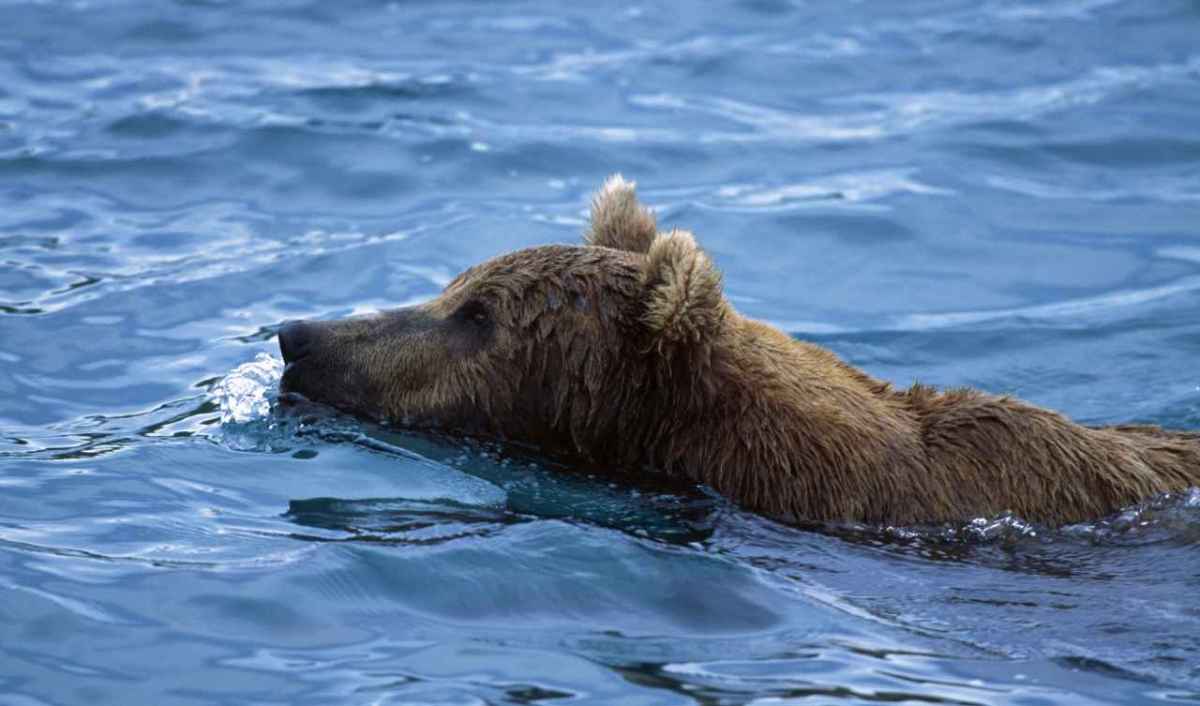
An orphaned bear cub, rescued and lovingly raised, returns to the wild strengthened: it makes a good story. However, a new five-year study from British Columbia shows that, in the cohort studied, it usually ended differently.
Between 2019 and 2023, wildlife biologist Dr Lana M. Ciarniello followed 14 orphaned grizzly bears as part of «Project Rewild», animals that grew up in human care as cubs. One female died before the actual release, during the helicopter transport. The remaining 13 were released the following spring as yearlings and monitored via satellite transmitter; for 12 of them the outcome could be clearly established. The finding of the study, published on 3 August 2026 in Frontiers in Conservation Science: two bears survived, ten died – nine of them before their first independent overwintering, the tenth shortly after leaving the den.
The sample is small, but according to the author it comprises the complete stock of suitable orphans taken in in British Columbia during this period, and it is one of the few programmes with systematic tracking through to a confirmed outcome.
The study does not prove that the rehabilitation of grizzly orphans must fundamentally fail. However, it does show that the rearing conditions examined apparently placed the animals in a twofold risk situation: they became physically far larger than wild-raised yearlings and continued to associate humans with food.
The causes of death among the ten deceased animals: five conflict or management killings following human-bear conflicts (50 per cent), two illegal killings (20 per cent), three killings by other bears (30 per cent).
The «metabolic trap»
The study's actual finding is more uncomfortable than the mere mortality rate. Ciarniello identifies a mechanism she calls the «metabolic trap»: the juveniles raised in human care weighed on average 127.4 kilograms, compared with 36.1 kilograms for wild-raised yearlings – roughly 3.5 times as much. Body length, chest girth and neck circumference were also considerably higher than the comparative values of wild-raised yearlings. «They are not simply small, round balls of fat,» says Ciarniello. «It is skeleton. And once you have that large frame, you have to maintain it too.»
That is precisely what the released animals often fail to do. Two females, released into areas without access to salmon, lost an average of 0.48 kilograms per day. Even in regions with a rich food supply, some bears were unable to meet the caloric needs of their oversized bodies – without the maternally learned foraging experience available to wild-raised yearlings.
On top of this comes the second cause: habituation. The assumption that a two-week break in contact before release would reverse the animals' habituation to humans did not hold true in practice. Half of all deaths were connected to human-bear conflicts. Several animals continued to associate humans, infrastructure or settlement areas with food and safety rather than danger.
A question that can be asked, but rarely is
Ciarniello puts it openly in her publication: does the rehabilitation of orphaned grizzlies work as an ethical conservation tool – or primarily as «sympathetic management», a measure that above all serves human compassion? The figures suggest that a rescue without scientifically grounded, species-specific protocols can easily become the prolonging of a risk, rather than a viable return to the wild. According to the Grizzly Bear Foundation, which funds «Project Rewild», the study is to feed into a best-practice report intended to inform future rewilding programmes in British Columbia and other regions.
The same lesson with the foxes
This pattern is no isolated case in North American bear rescue. It touches on the same fundamental question that was also central to Mikayla Raines and her fox rescue SaveAFox: Mikayla Raines and SaveAFox: The short life of a fox rescuer and what it tells us about fur. The foxes that found a home there came from fur farms or failed pet-keeping situations. They were captive-born, born in captivity, and precisely for that reason could not be released back into the wild, either legally or ethically. SaveAFox accepted this consequence from the outset: the rescue did not consist of returning them to the wild, but of a permanent, supervised existence.
The comparison here does not concern biology, threat status or legal frameworks, which are fundamentally different for captive-born fur foxes and wild-born grizzly orphans. It concerns the fundamental ethical question: when does rescue genuinely serve a return to a self-determined life in the wild, and when does it demand a permanent responsibility in human care? The grizzly study shows that even wild-born animals can, through a period in human care, end up in a state that makes a successful return to the wild more difficult. In the foxes' case, closeness to humans was irreversible from birth. In the grizzlies' case, it arises only through the rearing itself, measurable in overweight and behavioural patterns – and, in the view of the study's author, could at least be reduced through consistently low-contact rearing, remote feeding and more natural growth targets. Whether such protocols actually achieve better survival rates was not examined by the study itself.
What this means for the debate on predators
For the Swiss debate on predators and in particular on the brown bear the study is relevant, even though no bear rescue or rewilding programme currently exists in this country. Switzerland faces the reverse problem: bears that became habituated through feeding or proximity to settlements and were therefore shot as “problem bears”, such as JJ3 (2008) and M13 (2013). The Canadian study addresses a different starting point, but sheds light on a related mechanism: where bears associate humans, infrastructure or settlement areas with food and safety rather than with danger, the risk of conflict rises considerably – regardless of whether this habituation arises through feeding in the wild or through rearing in human care. Habituation thus primarily increases the risk that a bear will seek out human settlement areas and consequently be classified as a problem bear and killed.
The consequence is the same as in Swiss bear policy: it is not the bear that becomes the problem, but the human proximity that promises it food, safety or normality and then turns it into a conflict animal. Anyone who wants to rescue wild animals must keep this contact as minimal as possible, even when the rescue itself is well intentioned.
LET'S STAY IN TOUCH!
We would like to send you the latest news and offers in our newsletter.