Careli study in the Doubs: what the figures really show
A French hunting magazine celebrates the Careli study as proof of sensible recreational hunting. The study itself says something different.
«In progress»
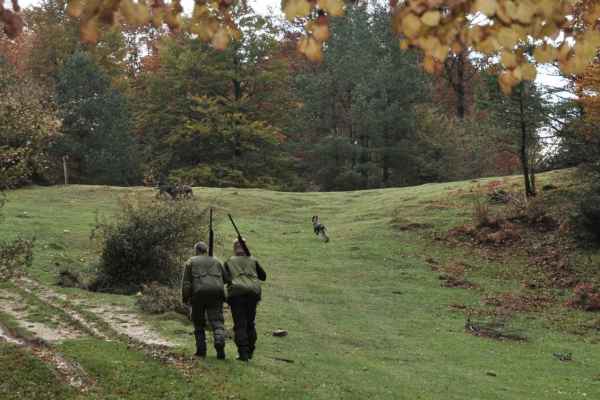
At first the study sounds like good news for all sides: in the French département of Doubs, recreational hunters, agriculture, conservation associations and science jointly carried out the «Careli» programme from 2021 to 2025 to examine the benefits of fox hunting.
The hunting portal «Chassons» celebrates the result as evidence that recreational hunting faces up to science and takes responsibility. A look at the data actually published shows: the study is far more clear-cut than the article portrays.
What Careli really shows
The programme is scientifically supervised by the Chrono-environnement laboratory of the Université de Franche-Comté, coordinated among others by Patrick Giraudoux. On two study areas in the Doubs, fox hunting and trapping were suspended for 3.8 years in one sub-area, while hunting and trapping continued in the comparison area. Alongside this, damage was recorded in 231 poultry holdings from 6 April 2021 to 6 January 2025.
The result, published in the specialist journal «Scientific Reports», is unequivocal for the two questions examined: the ESOD status, which allows hunting and trapping measures going beyond regular hunting, led in the studied sub-areas neither to a significant reduction in fox abundance nor to a significant difference in poultry damage. In one of the two study areas, even more damage was recorded, although the fox continued to be hunted there — a finding that relates to this one zone and is not to be read as a general effect of hunting.
Of the 1,105 birds killed during the study period, 628 cases, that is 48.3 percent, were attributed to the category «fox» or «probable fox», and not exclusively to cases confirmed beyond doubt. For the remaining share, other predators or unclear causes were possible. 41 percent of the reported damage was due to human negligence, such as coops left open, and 36 percent to inadequate structural protection. To date, Careli provides no evidence that hunting adds any benefit to the protective measures. The study, by contrast, identifies inadequately secured coops and runs as the decisive, practically influenceable risk factors.
Careli does not settle every debate about foxes. The programme also collects data on voles, hares, ticks, ground-nesting birds and health issues, the analysis of which, according to Chassons and the regional reports, is still largely pending; only around 20 percent of the overall results have so far been published. Careli, however, is already examining the two justifications used to defend the ESOD status against poultry farms: population reduction and damage prevention. For both, the analysis published to date found no statistically demonstrable effect.
The framing of «Chassons»
The Chassons article does adopt this central finding, but immediately qualifies it with the remark that the study «does not condemn recreational hunting» and merely shows that it did not have the expected effect «in this protocol». This is rhetorically clever, but factually a trivialisation: the parameters examined, fox population and poultry damage, are precisely those with which the ESOD classification of the fox in France has been justified for years. If both core arguments do not hold up empirically, little of the justification remains.
The «true lesson» from the Doubs is said to be not the renunciation of hunting, but «measuring instead of caricaturing»: recreational hunting remains «one tool among several». However, the Careli results published so far on fox abundance and poultry damage do not support this conclusion. They provide no evidence that hunting and trapping add any benefit to the protective measures. For the two questions examined – population and poultry damage – little of the justification remains.
Assessment: not an isolated case
That the targeted hunting of so-called «problem species» effectively regulates neither populations nor damage is consistent with a further recent study in the specialist journal «Biological Conservation». It evaluated the costs and benefits of the French persecution of fox, marten and corvids nationwide over seven hunting seasons. The result: the control costs exceed the reported damage by up to eightfold depending on the calculation scenario, and a statistical link between hunting pressure and damage reduction could not be demonstrated. More on this in the article «Killed by the million for nothing: new study exposes hunters' tall tales».
For Switzerland, too, a comparably clear investigation is now available. A SWILD study (Dr Claudia Kistler, Dr Fabio Bontadina) commissioned by the canton of Zug in May 2026 reaches the same core finding as Careli: licence hunting of foxes does not regulate populations sustainably, because hunted populations compensate for losses through increased fertility, better survival rates and immigration. The disease argument widespread in hunting circles also fails to withstand the study: in the case of rabies, it was only the oral vaccination campaign from 1978 that brought success, not hunting, and in the case of the fox tapeworm a comparative French area with 35 per cent higher hunting pressure showed a rising rather than falling infestation rate. In June 2026 the Zug hunting commission drew initial consequences from this and will in future refrain from proactively promoting fox hunting. The study uses as benchmarks the cantons of Geneva, which has done without militia hunting since 1974, and Luxembourg, where fox hunting has been banned since 2015, both without the negative consequences feared by recreational hunters. More on this in the article «Canton of Zug: authorities curb fox hunting following study».
This pattern — acknowledging incriminating findings and yet continuing to defend hunting as necessary — is also evident at JagdSchweiz. In its November 2025 position paper on fox hunting, the umbrella association maintains the necessity of fox hunting without engaging with the experiences from regions where fox hunting does not take place. Luxembourg, where fox hunting has been banned since 2015, records no population explosion and a reduced proportion of animals infected with the fox tapeworm. Since abolishing militia hunting in 1974, Geneva has managed without any documented ecological problems. As Chassons did in the Doubs case, JagdSchweiz likewise refrains from testing its own position against these counterexamples. More on this in the article «Fox hunting without facts: JagdSchweiz invents problems».Fox hunting without facts: JagdSchweiz invents problems».
Conclusion
Careli is indeed a remarkable project, because a recreational hunting federation embarked on an experiment whose outcome could refute its own narrative. That is exactly what happened. The interpretation that «Chassons» draws from it — that hunting nonetheless remains a legitimate «tool» — is not backed by the study's own data. Anyone who demands «measuring instead of caricaturing» should also take their own measurement results for the questions examined seriously, even if Careli does not yet provide conclusive answers to other aspects of the fox debate.
More on the subject of recreational hunting: In our dossiers on the criticism of recreational hunting gather fact-checks, analyses and background reports. The scientific evidence is presented in the overview Studies on the Effects of Recreational Hunting.
The position of IG Wild beim Wild: IG Wild beim Wild rejects recreational hunting. Our model is the canton of Geneva, which has managed without recreational hunting since 1974: without hunting seasons, without hunting dogs, without driven hunts, without high seats, without the animal cruelty and crime that go hand in hand with hunting season elsewhere. What has worked there for over fifty years disproves every position paper by JagdSchweiz. An association that bases its policy on claims it refutes in its own documents is not a professional organisation, but a factory for misinformation.
Support our work
With your donation you help protect animals and give their voice a hearing.
Donate now →