
Fact check: «Hunting in Switzerland protects and benefits»
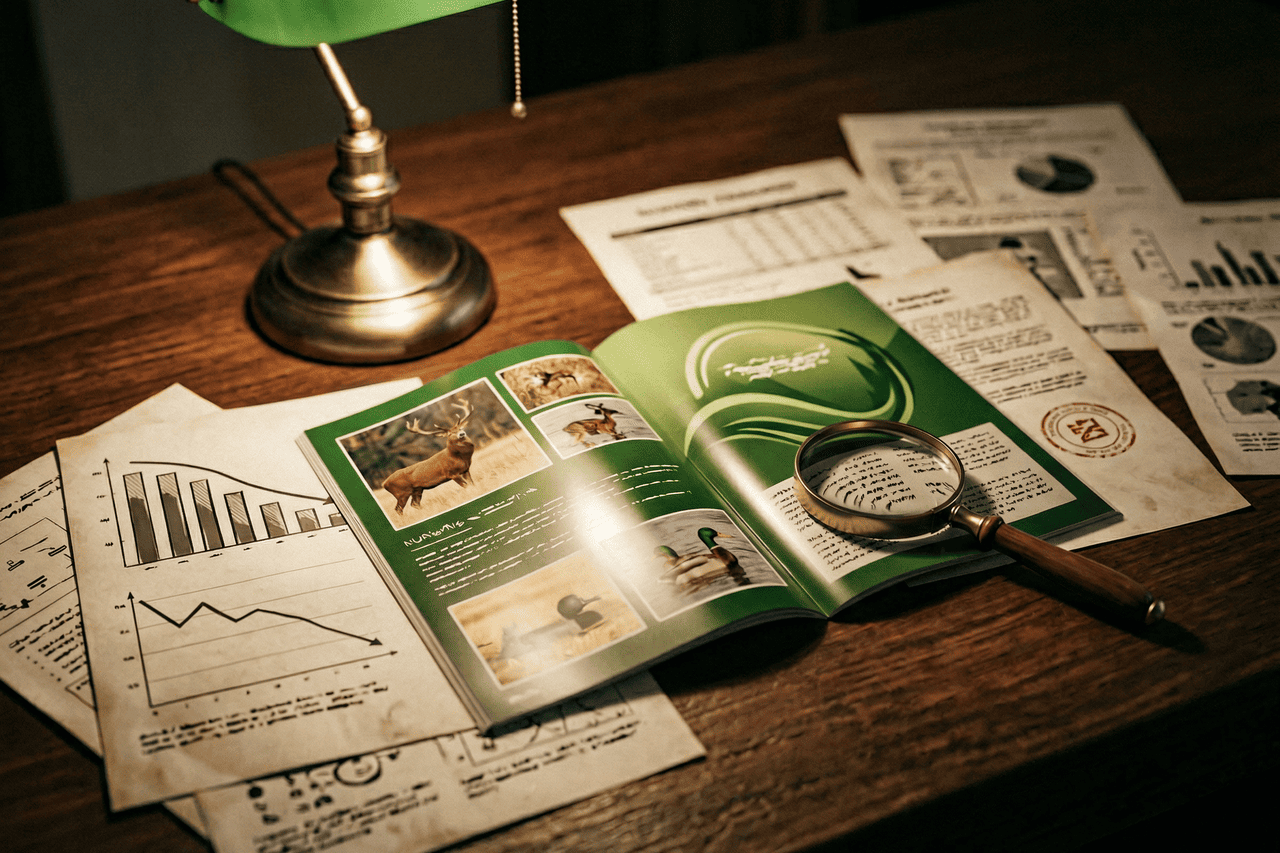
The brochure by Anton Merkle, President of JagdSchweiz, reads like a promotional pamphlet for recreational hunting: smooth figures, green triangles, a smiling president and sentences such as «Hunting is a responsible activity for nature.» What sounds like glossy PR deserves a closer look, because between the lines lies a narrative that contradicts scientific findings, ecological facts and ethical standards on essential points.
Claim 1: «The regulation of wildlife populations is a state task – recreational hunters provide expert support»
JagdSchweiz suggests that the 30,000 recreational hunters are a kind of extended arm of the state. In fact, from a legal standpoint, recreational hunting is not a nature conservation task but rather a use and regulation within a wildlife management framework. Under federal law, no canton in Switzerland is obliged to provide for recreational hunting at all. Each canton is free to decide whether to permit recreational hunting or not – as the example of Geneva since 1974 proves.
In Geneva, around ten state game wardens, who share three full-time positions, handle the entire wildlife management – without recreational hunters, without licences, without kill competitions. According to the Geneva environmental officer Gottlieb Dandliker, the wildlife damage to agriculture is «practically insignificant». The annual cost of the entire wildlife management amounts to around one million francs – the equivalent of one cup of coffee per inhabitant. Since the hunting ban, the number of overwintering waterfowl has more than tenfolded. At the same time, the damage figures in Geneva are comparable to those of the canton of Schaffhausen, even though hunting there is conducted regularly and cruelly.
Claim 2: «Recreational hunters are committed to biodiversity and habitats»
The brochure claims that recreational hunters are committed «primarily» to biodiversity and habitats. The reality in Switzerland paints a different picture. The OECD Environmental Performance Review 2017 states: «In an OECD-wide comparison, Switzerland has among the highest proportions of threatened species, including mammals.» The OECD also found that Switzerland relies «heavily on the designation of hunting reserves», which were «originally intended to limit excessive hunting», and that the «quality of the protected areas is inadequate».
The WWF confirms in 2025: in an international comparative study on combating the biodiversity crisis, Switzerland comes in last place. This does not fit with a lobby that claims its 30,000 members are the driving force of nature conservation. Half of the species once huntable are in no good conservation status or have become extinct. Protected species such as the brown hare, the black grouse or the woodcock are still on the list of huntable species.
Fighting nature conservation instead of promoting it
Particularly revealing is the conduct of the JagdSchweiz board on concrete nature conservation matters. Fabio Regazzi, vice-president of JagdSchweiz and Centre party member of the Council of States, actively opposed the Adula National Park in 2016 – Switzerland's largest nature conservation project in decades. The planned park around the Rheinwaldhorn in Grisons and Ticino could have given biodiversity an enormous boost: 250 to 300 million francs in investment over ten years, around 200 jobs and a sustainable future for depopulating mountain communities. Instead, the Ticino hunting association FCTI – of which Regazzi was long-standing president – stirred up opposition with fear-mongering propaganda. The eligible voters in the affected municipalities rejected the park. In 2018, recreational hunters also prevented the creation of a second national park. This is not about protecting nature: it is about securing the hunting ground.
The same Regazzi campaigned in the National Council for wolf-free zones, fought against the biodiversity initiative and tried to make barbed hooks in angling acceptable again – a breach of the animal welfare act. The Ticino cantonal councillor Claudio Zali described the conduct of the hunting lobby as the embodiment of «arrogance, a lack of legal awareness and egoism».
Suppressing criticism instead of engaging in dialogue
Anyone who publicly questions the JagdSchweiz narrative must reckon with legal consequences. David Clavadetscher, on behalf of JagdSchweiz, filed a complaint against the platform wildbeimwild.com – over fact-based reporting and analyses of recreational hunting. The aim was to make critical voices «disappear from the scene». The criminal court of the Canton of Ticino in Bellinzona gave it a clear rebuff: Judge Siro Quadri found that the critical statements on wildbeimwild.com are not lies and have no defamatory character. The ruling is legally binding. A civil case in Locarno was also dropped – JagdSchweiz achieved none of its objectives.
The court thereby confirmed what observers have long criticised: JagdSchweiz cultivates intimidation instead of dialogue. Members threatened «civil war» should, for instance, fox hunting be discontinued. The association works with violent imagery, fear-mongering and tall hunting tales in order to influence democratic processes and to restrict freedom of the press and freedom of opinion.
Promoting habitat is nature conservation. But Recreational hunting is not automatically nature conservation, merely because it takes place in the forest. Anyone claiming nature conservation must be measured against nature conservation standards: improving habitats, reducing disturbance, promoting biodiversity, creating transparency and demonstrating impact. It is precisely here that the myth begins to crumble.
Claim 3: «44’000 days of management work – voluntary and unpaid services»
JagdSchweiz calculates: 44’000 «working days in the hunting ground» which, at an hourly wage of 30 francs, would amount to an equivalent of 10.5 million francs. What is concealed: these so-called management days primarily serve the upkeep of the hunting ground for the next hunting season – setting up feeding stations, building high seats, maintaining hunting infrastructure. The «voluntary work» is therefore, to a considerable extent, self-service: recreational hunters maintain the hunting ground in which they subsequently kill animals.
Genuine nature conservation work – such as biotope maintenance, renaturation, species protection projects – is carried out in Switzerland primarily by nature conservation organisations, cantons and civil society. The comparison with a hypothetical hourly wage obscures the fact that professional game wardens could perform these tasks more efficiently, in a more animal-welfare-friendly manner and without any vested interest in hunting – as Geneva has been demonstrating for over 50 years.
Claim 4: «Hunting is a targeted intervention in a known population»
The brochure claims that recreational hunting is preceded by «a census and planning of the wildlife population». The reality looks different. Even the Federal Office for the Environment (FOEN) states, through Wildtier Schweiz, that the hunting statistics permit only limited conclusions about the state of the populations.
The scientific evidence furthermore shows that intensive hunting achieves the opposite of population control. Servanty et al. (2009) published in the «Journal of Animal Ecology»: under high hunting pressure, fertility in wild boars is considerably higher than in lightly hunted areas. Sexual maturity sets in earlier, and even piglet sows become pregnant. Recreational hunting thus produces precisely the population explosion it claims to prevent.
A study by the European Food Safety Authority (EFSA) from 2014 confirmed: wild boar populations cannot be reduced through hunting measures alone. Wild boar reproduction is compensatory – losses caused by recreational hunting are offset by increased offspring.
Darimont et al. (2009, PNAS) showed in a meta-analysis: human recreational hunters alter wildlife populations faster than any other evolutionary factor ever observed in wild animals. The rates of phenotypic change in hunted populations were up to 300 per cent higher than under natural selection.
Claim 5: «Game meat worth 20 million francs – more organic than organic meat»
The brochure praises game meat as high-quality and sustainable. The survey even suggests that game meat is «more organic than organic meat». What is concealed: the Federal Food Safety and Veterinary Office (FSVO) makes clear that wild boar, roe deer and red deer can be among «the foods most heavily contaminated with lead». The cause is lead-containing hunting ammunition, which deforms on impact and disperses in tiny fragments throughout the meat.
The FSVO recommends: children up to the age of seven, pregnant women, breastfeeding mothers and women wishing to become pregnant should »eat as little game as possible« that has been killed with lead ammunition. The German Federal Institute for Risk Assessment (BfR) warns: in hunters' households, where up to 90 portions of game meat are consumed per year, «a health hazard must be expected, especially for the unborn and children under seven years of age».
Current research also shows: the average lead content in small game killed with lead ammunition is around 5.2 ppm – about 14 times higher than assumed in EU risk assessments. In addition, there are risks from zoonoses such as trichinosis and hepatitis E. The French health authority ANSES advises limiting the consumption of game meat to a maximum of three times a year.
Carrion instead of a delicacy
What JagdSchweiz sells as a «natural resource» is in practice often a hygienic risk. Just minutes after the shot, blood clotting and microbial proliferation begin in the animal's carcass. Within an hour, one million bacteria per gram of contaminated meat can develop. In the slaughterhouse, livestock is processed under strict hygiene requirements – in recreational hunting these controls are largely absent.
The reality in the field: hours of dawdling during recovery, inadequate cooling, unhygienic gutting in the open air, no official meat inspection. Added to this are residues that no butcher would accept: pesticides, slurry contamination, heavy metals, PFAS – all untested. Wild animals that feed in intensively used agricultural landscapes are not automatically “organic”. They take in whatever lies in that landscape – and that is often anything but natural.
The risk does not end with lead. Raw or insufficiently cooked game meat can transmit trichinellosis, salmonella, E. coli and the hepatitis E virus. Particularly at risk are the immunocompromised and pregnant women – in whom a hepatitis E infection can lead to liver inflammation, a chronic course or organ failure.
Game meat with lead contamination, a zoonosis risk, a lack of systematic food control and a carrion character is certainly not “more organic than organic”.
Claim 6: “Hunting prevents the spread of animal diseases”
The survey in the brochure suggests that recreational hunters protect the public from animal diseases. Science says the opposite. More than 18 studies prove that fox hunting, for example, neither regulates populations nor protects against diseases. On the contrary: the decimation can destroy social structures within populations and even intensify disease dynamics.
The Friedrich-Löffler Institute calls for driven hunts to be avoided in the event of an outbreak of African swine fever among wild boars. The destruction of stable family groups leads not only to a rise in the birth rate, but also to increased movements of individual animals – and thus potentially to a faster spread of diseases.
Whoever shoots foxes shoots into their own healthcare
Foxes are not pests, but nature's health police. A single fox eats around 4’000 mice per year. Mice are reservoir hosts for tick-borne pathogens such as Lyme disease and tick-borne encephalitis (TBE) as well as for the hantavirus. A study by Tim R. Hofmeester (Wageningen University, 2017, Proceedings of the Royal Society B) examined 20 forest plots and reached a clear conclusion: in areas with higher fox and stone marten activity, rodents carried 10 to 20 per cent fewer tick larvae. In areas with low predator activity, the nymphs were 15 per cent more frequently infected with pathogens.
The consequence is measurable: fewer predators due to recreational hunting mean more mice, more infected ticks and rising cases of TBE and Lyme disease in humans. TBE figures in Switzerland reached their highest level since 2013 at the start of 2025. In Germany, 686 cases were recorded in 2024 – the second-highest TBE figures ever registered. The hantavirus, transmitted by mice via dust from droppings, causes up to 2’000 cases per year – eight times more than the fox tapeworm, with which recreational hunters justify their fox hunting.
Fox hunting spreads the fox tapeworm rather than combating it
JagdSchweiz has claimed for years that fox hunting protects against the fox tapeworm. A French long-term study near Nancy refutes this impressively. Over four years, 776 additional foxes were killed across around 700 square kilometres – hunting pressure rose by 35 per cent. The result: the fox population did not decline, because juvenile foxes migrated in from neighbouring areas. The infestation rate with fox tapeworm rose from 40 to 55 per cent – because the immigrating young foxes carried contaminated faeces into new areas. The title of the study speaks for itself: «Echinococcus multilocularis management by fox culling: An inappropriate paradigm.»
In Luxembourg the opposite is evident: after the ban on fox hunting in 2015, the infestation rate fell from 40 per cent to below 10 per cent. Rabies in Switzerland was eradicated not through recreational hunting, but through vaccine baits – Switzerland has been rabies-free since 1998. The Swiss Rabies Centre already determined that a reduction of the fox population by hunters is impossible.
Low hunting as a disease driver
The low hunt destroys stable family communities among foxes. This leads to every vixen being mated and bearing more cubs per litter – the population rises instead of falling. At the same time, the chronically high hunting pressure causes permanent stress, which suppresses the immune system of the wild animals and makes them more susceptible to infections. Recreational hunting thus produces sicker, stressed populations with higher density – the opposite of what JagdSchweiz claims.
The cascade reaches further: fewer foxes mean more mice and rats, and thus more leptospirosis (via rodent urine in puddles), more hantavirus, more botulism (because absent scavengers leave carcasses lying around) and more tick-borne diseases. Cantons with the highest fox kills — among them Bern, Aargau, Grisons and Zurich — have solved none of these problems. On the contrary: they help create them.
Claim 7: «Over 80% of the population confirm that recreational hunting takes place in an animal-welfare-compliant manner»
Every two years, JagdSchweiz commissions a population survey by the firm DemoScope and presents the results as proof of broad acceptance of recreational hunting. What the brochure conceals: the survey is based on just 1’005 respondents. The client is JagdSchweiz itself — that is, the organisation that has a commercial interest in positive results. The questions are worded suggestively: who, for instance, when asked whether recreational hunters «commit themselves to the environment», would spontaneously object if they knew of no opposing perspective?
JagdSchweiz itself concedes that the results are «somewhat declining compared to the previous surveys». The trend is therefore pointing downwards — despite massive PR work.
Opinion research as a PR instrument
The pattern is recognisable internationally: Jagd Österreich cheers over «85 percent approval» — yet the core question is merely: «Do you grant other people the right to hunt, if they do so in accordance with the applicable hunting acts?» That measures liberal tolerance towards a legal activity — not substantive approval of recreational hunting. The trick works in three stages: first «tolerance» is surveyed, then reinterpreted as «societal acceptance», and finally presented as a «public mandate».
The same institute, DemoScope, delivers opposite results for different clients: for JagdSchweiz the survey produced a «large majority» in favour of recreational hunting. For the Swiss Animal Protection STS, the same institute found: 64 percent want to ban earth hunting, only 21 percent want to keep it. 43 percent want to ban driven hunts entirely, a further 32 percent want them severely restricted — together 75 percent. As soon as concrete hunting practices are surveyed, the supposed approval collapses.
The representative WaMos-2 study of 2012 paints an even clearer picture: 79 per cent of the Swiss population have reservations about recreational hunting or reject it on principle. The «80 per cent approval» claimed by JagdSchweiz is therefore not an expression of genuine support, but a product of leading questions and selective communication.
The facts behind the facade
More decisive than opinion polls are the facts: according to the Swiss Animal Protection STS, the success rate of follow-up searches for injured game ranges, depending on the canton, at merely 35 to 65 %. That means: around half of the animals wounded during recreational hunting can never be released from their suffering, despite follow-up searches. In the canton of Grisons, over five years around 3,836 animals were merely wounded instead of being killed in compliance with animal welfare – along with fines totalling over 700,000 francs for unlawful kills.
Under these circumstances there can be no talk of «animal welfare-compliant» practices.
Claim 8: «Wildlife damage is the result of intact biodiversity»
This sentence in the brochure is particularly revealing. JagdSchweiz claims that wildlife damage is «the consequence of a desired species-rich fauna» – and at the same time the justification for the existence of recreational hunting. This is a circular argument: first a problem is constructed, then one offers oneself as the solution.
Yet the figures in Geneva show: the wildlife damage is comparable to that of Schaffhausen – a canton where intensive hunting takes place. Before the hunting ban of 1974, recreational hunters in Geneva had exterminated the wild boars for decades. Today around five wild boars live per square kilometre of forest – a low, stable level that is controlled by professional wildlife wardens.
The actual causes of wildlife damage – intensive agriculture, habitat destruction, the feeding practices of recreational hunters and the population pressure generated by hunting – are consistently omitted in the brochure.
Claim 9: «Hunting is a responsible activity for nature»
The last page of the brochure presents a «hunting code» with behavioural recommendations: «I avoid unnecessary suffering of animals.» «I work towards preserving biodiversity.» «I hunt with respect and responsibility.»
The reality: since the start of the BFU statistics in the year 2000, over 75 people were killed in hunting accidents up to 2019. In purely arithmetical terms, a hunting accident occurs every 29 hours. Each year there are around 300 recognised accidents involving recreational hunting – plus a considerable number of unreported cases among pensioners and accompanying persons, who are not captured statistically.
Scientific studies document the effects systematically: wild animals live under permanent stress in a “Landscape of Fear”. In wild boars subjected to drive hunts, elevated cortisol levels were measured (Güldenpfennig et al. 2021). Mountain hares that were hunted with dogs showed a 6.5-fold higher cortisol level (Pedersen et al. 2024). Recreational hunting destroys family groups, forces unnatural changes in behaviour and triggers compensatory reproduction.
Crime in the context of recreational hunting
The category «Crime and Hunting» on wildbeimwild.com has for years documented criminal offences, rule violations and systemic abuses in the context of recreational hunting. These include poaching, illegal killings of protected species, mistaken shootings of pets and farm animals, weapons misuse and threats against dissenters. In October 2024 a Valais recreational hunter shot dead a livestock guardian dog that he claims to have mistaken for a wolf – value: around 8’000 francs. At the end of November 2024, in the canton of Vaud, a 64-year-old recreational hunter was killed by a shot fired by a colleague.
The Swiss Animal Protection STS calls, among other things, for a Switzerland-wide ban on earth hunting, a strict restriction of driven hunts, a mandatory reporting requirement for follow-up searches, an end to lead ammunition and the removal of species such as the brown hare, mountain hare, black grouse, ptarmigan and woodcock from the list of huntable species. None of these demands appears in the “Hunting Code” of the brochure – and none was supported by JagdSchweiz.
A hobby activity that regularly kills people and animals, hunts protected species and evades any independent oversight is certainly not “responsible”.
Claim 10: «JagdSchweiz cooperates with WWF, Pro Natura and BirdLife»
The brochure lists numerous “organisations with related aims”, including WWF, Pro Natura and BirdLife Switzerland. What is suggested: that recreational hunting is broadly supported and accepted by nature conservation organisations.
What actually happens: According to the brochure, the institutional dialogue serves to «prevent senseless hunting restrictions and excessive over-regulation». The cooperation is therefore not a commitment to nature conservation, but a strategic lobbying instrument. It is not about jointly promoting biodiversity – it is about fending off restrictions on recreational hunting.
Dialogue failed
What is striking is who is missing from the partner list in the brochure: the Schweizer Tierschutz STS – the largest and oldest animal welfare organisation in the country – has discontinued all dialogue with JagdSchweiz. The STS calls for a ban on earth hunting, a strict restriction of driven hunting, an end to lead ammunition and the removal of threatened species from the hunting list. JagdSchweiz opposes every single one of these demands.
The stakeholder process for the revision of the hunting act also failed: in October 2022, the Farmers' Association, the Alpine Farming Association and the SAB withdrew from the joint negotiations. The «constructive cooperation» that JagdSchweiz praises in the brochure regularly falls apart in the face of reality – because the hunting lobby regards compromises as a threat to its hobby and systematically torpedoes nature conservation demands.
The partner list in the brochure is not a coalition of like-minded parties. It is a list of organisations with which JagdSchweiz occasionally sits in a room and which hold fundamentally different positions on key issues.
Advertising brochure instead of factual basis
The JagdSchweiz brochure is not a scientific document, but a PR instrument. It systematically conceals the dark sides of recreational hunting: the animal suffering caused by missed shots, the health risks from lead ammunition, compensatory reproduction, hunting accidents, the catastrophic state of biodiversity in Switzerland and the existence of functioning alternatives such as in the canton of Geneva.
Anyone who wants to answer the question «Does recreational hunting protect and benefit?» honestly must look beyond the glossy images and take note of the scientific evidence.