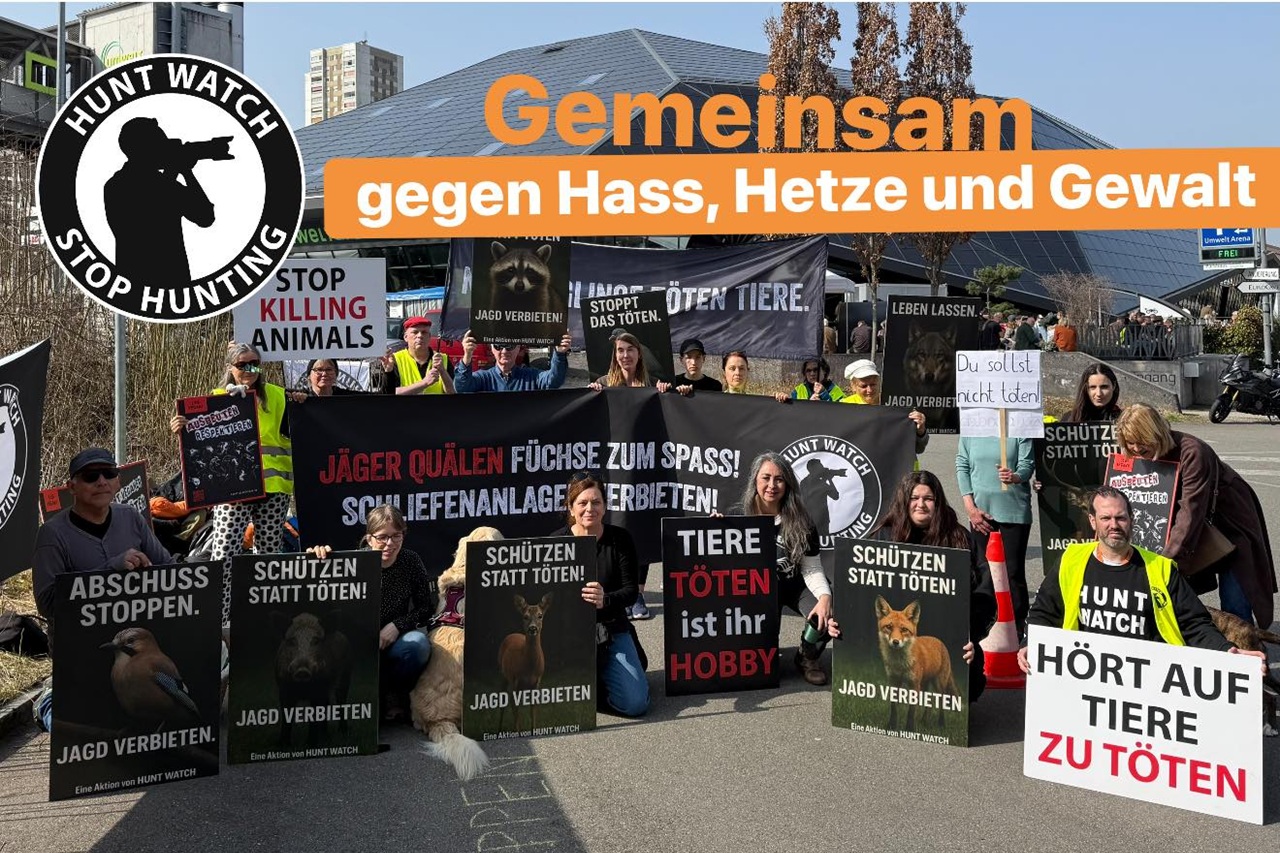
Fox Hunting Without Facts: JagdSchweiz Invents Problems
In JagdSchweiz's current position paper on fox hunting, foxes are treated as “ownerless public property” and as a raw material with a fluctuating fur price. What matters is hunting law, hunting bag, and market — not the animal as a sentient individual.

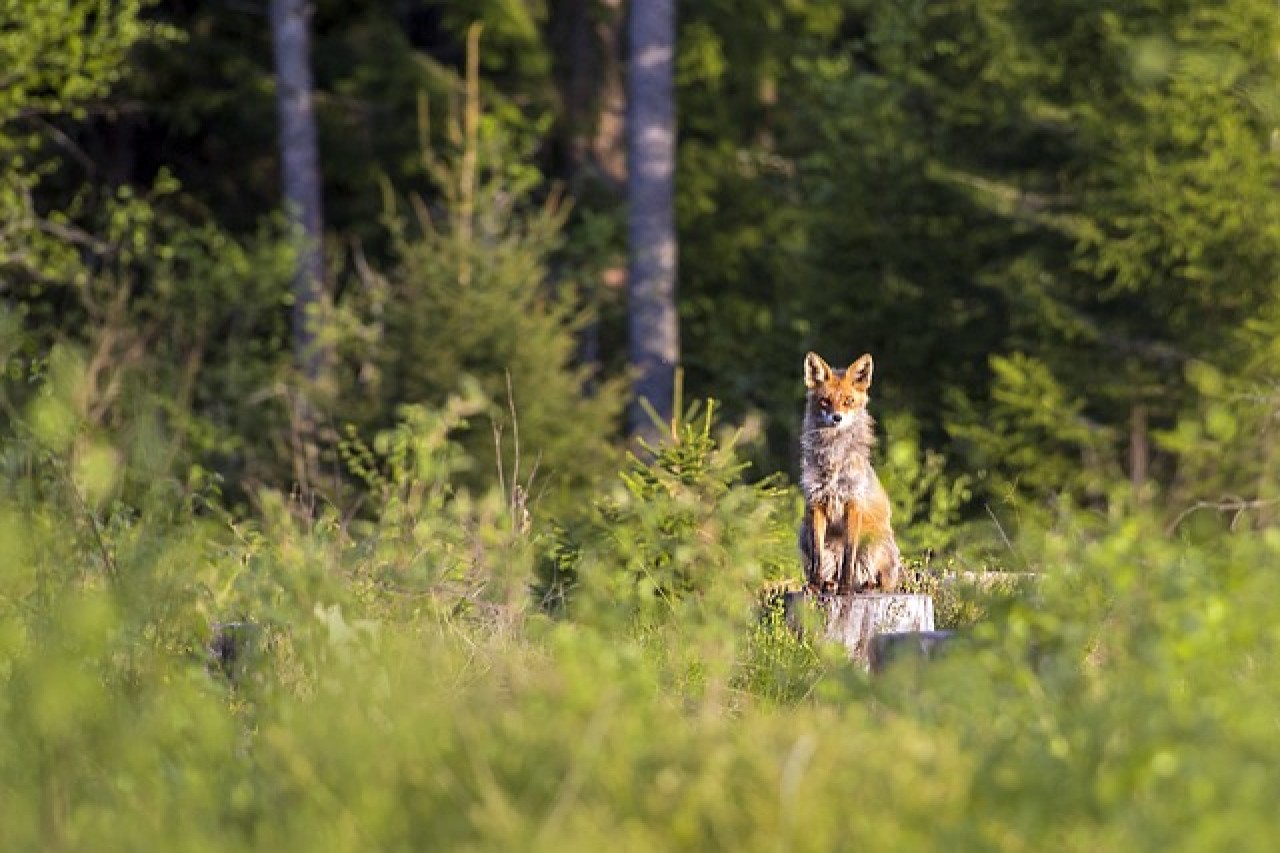
On 27 November 2025, the militant association JagdSchweiz published a position paper full of hostility towards fox hunting.
The message is clear: fox hunting is “meaningful and useful” and must “by all means be retained.” Criticism from nature and animal protection organisations is dismissed as emotional and lacking in facts.
Anyone who takes a closer look at actual developments in regions free of fox hunting, at court rulings, and at the official figures on hunting practice will quickly recognise: the paper primarily defends a hunting self-image and a bloody hobby that is barely compatible with modern wildlife ecology and animal welfare.
JagdSchweiz Defends a System That Has Long Been on the Defensive
In the position paper, JagdSchweiz responds to the “discussion repeatedly initiated by nature and animal protection circles” about the purpose and future of fox hunting. The organisation maintains that recreational hunting of foxes is necessary in order to regulate populations, prevent damage, combat disease, and protect other wildlife species. The fox is indirectly constructed as a problem figure that would spiral out of control without shotgun and rifle.
Conspicuously absent is a sober scientific assessment of experiences in regions where fox hunting has not taken place for years or decades, as well as an honest engagement with the massive failings of the organisation's own clientele. It is precisely this reality that we address in the following.
Luxembourg: Fox Hunting Banned, Problems Have Not Materialised
At the beginning of 2015, Luxembourg completely suspended recreational hunting of foxes. Hunting associations predicted a “population explosion,” growing epidemic risks, and increasing damage. None of this came to pass.
Assessments by Luxembourg's authorities and independent reports show:
- The fox population has not exploded since the ban, but has remained largely stable.
- There was no increase in wildlife diseases.
- The proportion of animals infected with fox tapeworm roughly halved between 2014 and 2020.
In other words: a country in the heart of Europe has completely forgone fox hunting for years and refutes in practice the alarmist rhetoric with which hunting associations seek to legitimise their fox campaigns.
Canton Geneva: Fifty Years of Wildlife Policy Without Recreational Hunting
The reality check is even clearer within Switzerland itself. In the canton of Geneva, militia hunting was abolished by popular vote in 1974. Since then, recreational hunting has been prohibited, and wildlife management has been the responsibility of state game wardens.
Geneva is today regarded as an example of modern wildlife management:
- Wildlife populations are regulated in a targeted and restrained manner by professional game wardens, where this is necessary for agriculture, traffic, or public safety.
- Studies and field reports from the canton show that wildlife populations regulate themselves more effectively without recreational hunting, or can be managed with minimal intervention.
Despite the absence of widespread fox hunting, neither ecological disasters nor epidemic-scale disease outbreaks have been recorded. On the contrary, the Geneva model is now being discussed in other cantons as a viable alternative to traditional recreational hunting.
National Parks and Fox-Hunting-Free Areas: The Threat Scenario Remains Theoretical
Alongside Luxembourg and Geneva, there are further areas in Europe where foxes have not been hunted, or have been hunted only minimally, for years — including national parks such as the Bavarian Forest and Berchtesgaden, as well as larger fox-hunting-free territories.
The findings from these areas can be summarised as follows:
- There are no documented “fox explosions” followed by collapses in ground-nesting bird or hare populations.
- Fox density adjusts to natural and human-made environmental conditions.
- Where humans do not intervene with a rifle, food availability, disease, and competition among foxes regulate population levels.
This places JagdSchweiz in an obvious contradiction: while yet another thoroughly incompetent position paper paints dramatic scenarios, real field trials demonstrate the opposite. Fox-hunting-free zones are not ecological problem regions, but are often hotspots of biodiversity.
The culture of violence in recreational hunting before the courts
How the hunting environment of JagdSchweiz operates is illustrated by a case before the criminal court in Bellinzona. The association had sued IG Wild beim Wild because it felt its honour had been damaged by sharp criticism.
At the centre of the case were statements in which JagdSchweiz was described, among other things, as a “militant problem association” accused of a culture of violence, disrespect towards wildlife, and massive political pressure through intimidation and propaganda of lies.
After taking evidence, Judge Siro Quadri concluded that these statements did not constitute lies and therefore had no defamatory character. The lawsuit was dismissed and the verdict is final.
In legal terms, this means: even drastically worded descriptions of a “militant hunting milieu” and a “culture of violence” were considered by the criminal court to be protected by freedom of expression and, at their core, supported by the facts and context presented. This sheds a clear light on the environment in which the current position paper was produced.
The Criminal Court of Ticino ruled in proceedings between JagdSchweiz and IG Wild beim Wild that sharp value judgements — such as criticism of a ‚culture of violence‘ within the sphere of JagdSchweiz — are protected by freedom of expression. In legal terms, this means: the court did not regard these drastically worded formulations as criminal defamation, but rather as permissible value judgements supported by the facts presented.
Graubünden: Official hunting statistics expose the idealised image
The gulf between the hunting community’s self-portrayal and reality becomes even more apparent when examining the canton of Graubünden. There, the high hunts are frequently presented as a model example of responsible regulation. The official figures tell a different story.
According to the Graubünden Office for Hunting and Fisheries and an SRF report, the following applies:
- During the high hunt, nearly 10’000 deer, chamois, roe deer and wild boar are shot every year in the canton of Graubünden.
- Around nine to nearly ten percent of these kills occur unlawfully. In the five years prior to 2016 alone, recreational hunters paid administrative fines of over 700’000 Swiss francs for illegal kills.
Particularly alarming are the figures relating to wounded animals:
- Between 2012 and 2016, 56’403 deer, roe deer, chamois and wild boar were shot in Graubünden.
- In 3’836 cases, animals were merely wounded. These figures come from the official data on the so-called blood-tracking dog system, which were disclosed to the SRF programme «Rundschau».
IG Wild beim Wild and other animal welfare organisations have taken up and analysed these data. They show that this is not a matter of isolated incidents, but a structural problem: hundreds of unlawful kills per year in a single canton, along with thousands of injured animals within just a few years.
Extrapolated across all hunting cantons and over longer periods, the figures amount to tens of thousands of animals either killed illegally or not culled in a manner consistent with animal welfare standards. Against this backdrop, the image of the disciplined, law-abiding recreational hunter committed to animal welfare that JagdSchweiz projects to the public looks less like a realistic description and more like a promotional brochure.
Fox hunting as a scapegoat for misdevelopments in agriculture
A central argument in hunting discourse holds that foxes decimate ground-nesting birds and brown hares in the agricultural landscape to such a degree that only intensive recreational hunting of predators can protect these species.
Developments in Luxembourg, Geneva and the fox-hunting-free national parks suggest: the main problem lies not with the fox, but in the fields. Expert articles and official reports repeatedly point to:
- Habitat destruction through land consolidation, drainage and the loss of hedgerows and fallow land
- the extensive use of pesticides and fertilisers, which destroys insects and thus the food base
- early and frequent mowing with heavy machinery, which directly kills nests and young animals.
Luxembourg’s environmental policy, for instance, explicitly attributes the decline of various farmland bird species to these factors, not to foxes. Where meadows are mown later and more carefully, pesticides are reduced and refuge areas are created, populations recover — entirely without fox hunting.
Making foxes scapegoats for the consequences of misguided agricultural policy may be politically convenient. Technically, it is a diversionary tactic.
Disease: The Success of Medicine, Not the Rifle
Another standard argument of hunting associations is disease control. The fox serves as a scapegoat for rabies, fox tapeworm, and other zoonoses.
The history of rabies control in Europe, however, clearly shows: the breakthrough came through large-scale oral vaccination programmes, not through recreational hunting. In Switzerland and its neighbouring countries, millions of vaccine baits were distributed, after which fox rabies disappeared within a few years.
The same applies to the fox tapeworm: what matters is hygiene, public education, and where necessary, targeted baiting with deworming agents in hotspots. Luxembourg, despite its ban on fox hunting, does not face an elevated risk — on the contrary, the proportion of infected foxes has declined.
Disease prevention therefore cannot serve as a blank cheque for the general, permanent persecution of the fox.
What a Modern Wildlife Policy Would Actually Require
Rather than clinging to a poorly justified fox hunt, Switzerland could look to already functioning models. A contemporary wildlife management approach would focus on three priorities:
- Waste and Feeding Policy in Residential Areas
Secure waste systems, clear feeding bans, and public awareness campaigns would effectively and in accordance with animal welfare principles limit fox densities in urban areas. Foxes follow the food supply, not the moralising rhetoric of hunting associations. - Habitat Instead of Lead for Endangered Species
Mowing meadows later in the season, reducing pesticides, promoting small-scale habitat structures, creating quiet zones: these measures demonstrably benefit ground-nesting birds and hares far more than a blanket declaration of foxes as enemies. - Targeted, Professional Interventions Instead of Recreational Hunting
Where genuinely documented, serious damage exists, state wildlife wardens with clear mandates and monitoring can intervene on a case-by-case basis. The Geneva model has demonstrated for five decades that this works. Long-term studies by the canton show that following the abolition of recreational hunting in 1974, biodiversity increased significantly. Geneva also has the highest hare population density in Switzerland.
A Position Paper from the Past
The position paper by JagdSchweiz on fox hunting seeks to create the impression that it speaks in the name of reason and facts. Reality paints a different picture:
- Countries and cantons without fox hunting manage without the predicted problems.
- National parks and fox-hunting-free areas disprove the threat of population collapses and epidemics.
- A legally binding ruling in Bellinzona confirms that criticism of a culture of violence in the sphere of JagdSchweiz cannot be considered defamation.
- Official figures from Graubünden document hundreds of illegal kills and thousands of wounded animals year after year in a single canton alone.
Against this backdrop, fox hunting appears not as an indispensable instrument of modern wildlife policy, but as a relic from an era in which the rifle was considered an all-purpose tool against self-created problems.
Anyone genuinely interested in species and animal protection will not look to JagdSchweiz for guidance, but to Luxembourg, Geneva and other regions where it has been demonstrated that nature functions without recreational hunting — and does so better.
The Swiss Animal Welfare Act makes clear that its purpose is the protection of the dignity and well-being of animals, and the Civil Code establishes that animals are not objects. An argument that justifies fox hunting primarily on the basis of economic attractiveness and utilisation effectively reduces the fox once again to a commodity, contradicting the spirit of animal welfare law. Where, in this paper, is the respect for animal dignity that goes beyond the interests of the hunting lobby?
- Federal hunting statistics Link
- Scientific literature: Studies on the red fox
- Hunters spread diseases: Study
- Hunting promotes diseases: Study
- Recreational hunters in criminal activity: The list
- Ban on pointless fox hunting is long overdue: Article
- Luxembourg extends fox hunting ban: Article
- Small game hunting and wildlife diseases: Article
- Deterrence of wild animals: Article
More on the subject of recreational hunting: In the dossier Poaching and hunting crime in Switzerland we document cases, legal questions and recurring patterns. The scientific evidence is presented in the overview Studies on the Effects of Recreational Hunting.
The position of IG Wild beim Wild: IG Wild beim Wild rejects recreational hunting. Our model is the canton of Geneva, which has managed without recreational hunting since 1974: without hunting seasons, without hunting dogs, without driven hunts, without high seats, without the animal cruelty and crime that go hand in hand with hunting season elsewhere. What has worked there for over fifty years disproves every position paper by JagdSchweiz. An association that bases its policy on claims it refutes in its own documents is not a professional organisation, but a factory for misinformation.