Criminal charges: Recreational hunter kills wolf
In Poschiavo, a suspected wolf poacher is in the crosshairs of criminal authorities, but the case primarily shines a spotlight on a hunting system that creates the groundwork for such acts. While politics and the hunting community focus on individual «black sheep», the case reveals how deeply rooted poaching, the wolf enemy image and hunting territorial claims are in the southern Grisons valley.

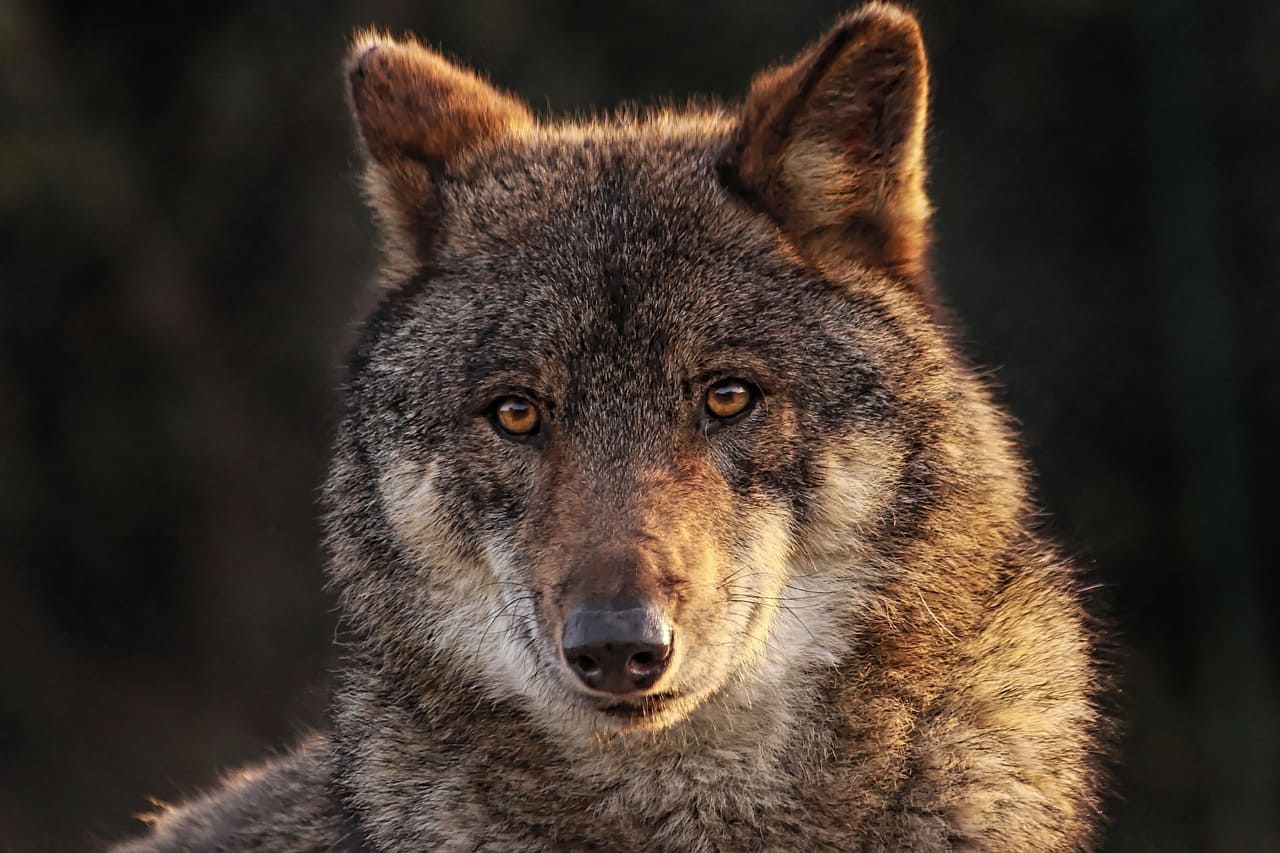
In September 2025, Grisons wildlife wardens find a dead wolf in Val Poschiavo, a male animal with clearly recognizable, fatal gunshot wound.
The Grisons prosecutor's office has initiated criminal proceedings against a recreational hunter following the discovery of an illegally killed wolf in Poschiavo. Police previously investigated together with wildlife monitoring authorities.
At this time, no wolf has been approved for culling in the affected area, neither by the canton nor by the federal government. The carcass is being transferred to the Centre for Fish and Wildlife Medicine (FIWI) in Bern for forensic and biological examination; simultaneously, the Graubünden cantonal police are taking over the investigation, launching a criminal investigation for suspected poaching.
Authorities emphasize that genetic and forensic analyses can take weeks, while the criminal investigation proceeds without a set timeline. Legally, poaching in Switzerland carries a penalty of up to one year imprisonment or a fine, but experience with previous cases of illegal wolf killings shows that perpetrators often remain undetected or proceedings peter out.
Poschiavo: A conflict region with history
The Poschiavo case does not come out of nowhere; it fits into a pattern in a region that has been wrestling with wolves for years. Already in 2022, an encounter on Alp Grüm made headlines: A wolf followed a person for several minutes and growled at them; the incident was classified as 'extraordinary,' and media and hunting circles immediately instrumentalized it as evidence of supposedly growing danger. At the same time, the canton documented that several wolves were active in Poschiavo without systematic attacks on humans occurring.
The region exemplifies a conflict-laden Alpine area where historical wolf hostility, hunting tradition, and economic interests of the agricultural and tourism lobby collide. Where wolves are perceived primarily as disruption to hunting plans and as competition for deer and roe deer, a climate flourishes in which illegal killings are glorified as 'self-defense' or 'correction of wrong policy.'
Poaching as symptom of a hunting system
The poached wolf in Poschiavo is not an isolated incident, but part of a pattern evident across the Alpine region. In Graubünden, a young wolf from the Calanda pack was illegally shot in 2014; the animal died after days of agony, the shooter was never found, and investigations were discontinued. Similar cases of wolf poachers caught in the act are also documented in neighboring countries, often from the environment of organized recreational hunting.
The recreational hunting lobby likes to present itself as guarantor of 'stewardship' and 'connection to nature,' yet statistics and scientific analyses show that recreational hunting contributes massively to wildlife disturbance and was co-responsible for the disappearance of numerous species. The competitive mindset is structurally embedded: wolves hunt for the ecosystem, selectively and energy-efficiently, while recreational hunters artificially manipulate wildlife populations with weapons and create imbalanced wildlife stocks.
Lenient laws, weak signals
Legally, poaching in Switzerland operates within a surprisingly mild framework: for the illegal killing of protected species like wolves, criminal law typically provides for a maximum of one year imprisonment or a fine. In practice, this often means suspended sentences and symbolic monetary amounts that bear no relation to killing a protected predator and the damage to the ecosystem.
The signal effect is devastating: those who know that chances of being caught are low and that at worst a mild sanction threatens can view shooting a wolf as a calculable risk. This attitude is supported by political campaigns that scapegoat wolves for structural problems in agriculture, tourism policy, and hunting management.

What the Poschiavo case now needs
If the poached wolf in Puschlav is to be more than a marginal note in criminal statistics, three consequences are needed.
- First, a consistent investigation of the case, including the question of which hunting or political circles are providing the perpetrators with support or backing.
- Second, a significant tightening of sentencing practices for poaching, especially when it involves protected species.
- Third, an honest debate about the role of recreational hunting in modern nature conservation, in which the wolf is treated as an ecological partner and not as an enemy.
As long as hunting associations refuse to pose this systemic question and clearly condemn poaching in their own circles, every additional dead wolf in the mountains remains a symbol of the failure of an entire criminal milieu.
RECREATIONAL HUNTER RADAR
On the trail of hidden animal welfare violations, poaching and/or criminality? Report suspicious cases to us! Help with the big recreational hunter radar.

Support our work
With your donation you help protect animals and give their voice a hearing.
Donate now →