
Cantonal Initiative – Canton Vaud
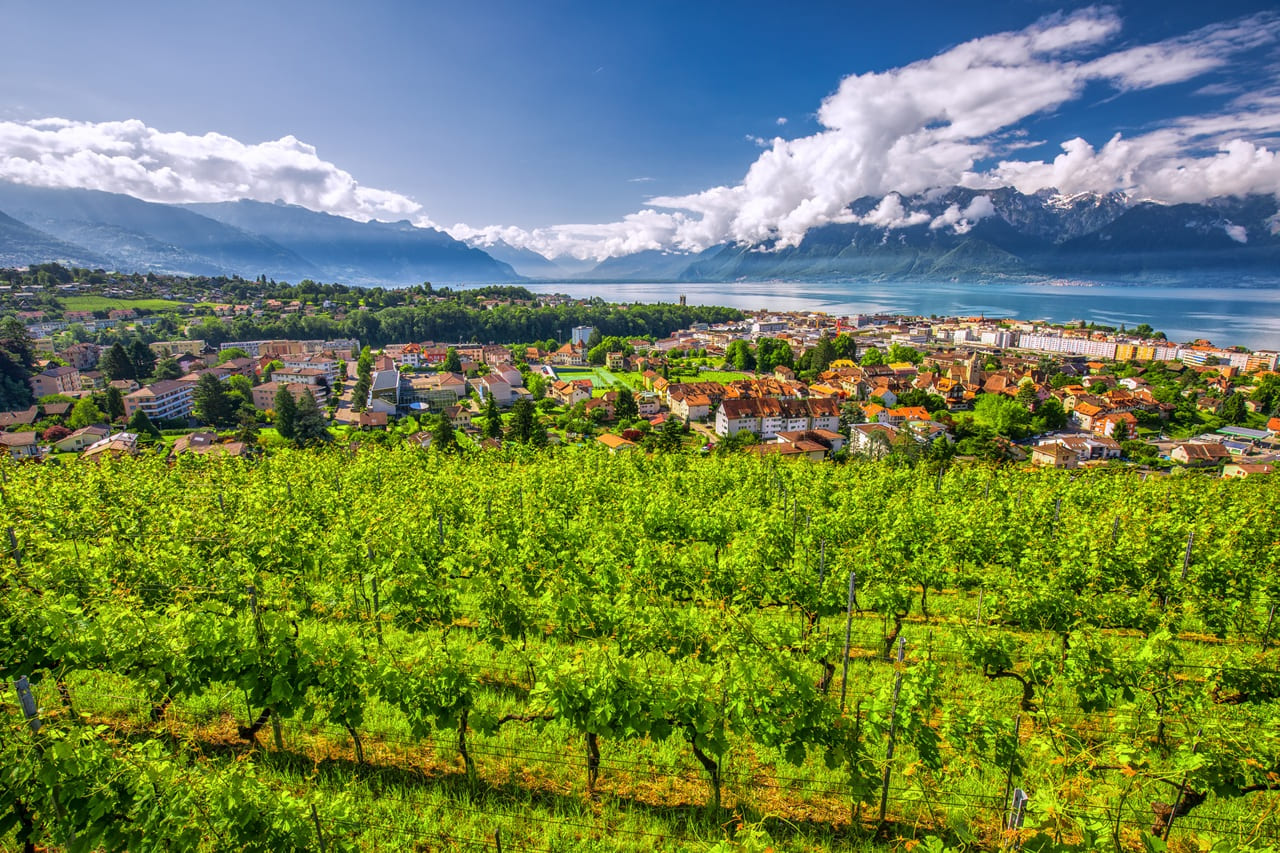
«Pour une gestion professionnelle de la faune sauvage» / «For professional wildlife protection»
Initiative constitutionnelle rédigée de toutes pièces / Constitutional initiative in the form of a fully drafted proposal
Based on Art. 79 of the Constitution of Canton Vaud of 14 April 2003 and on the Law on the Exercise of Political Rights
Submitted by the initiative committee [Date of submission]
Note: Canton Vaud is French-speaking. For submission, the initiative text must be in French. This German version serves for overview and strategic planning.
Initiative text
The undersigned, persons entitled to vote in Canton Vaud, submit the following constitutional initiative:
The Constitution of Canton Vaud of 14 April 2003 shall be supplemented by the following articles:
Art. [new] Professional wildlife protection
1 The practice of hunting by private individuals (patent hunting, recreational hunting) is prohibited throughout the territory of Canton Vaud.
2 The protection, care and, where necessary, regulation of wild animals shall be the exclusive responsibility of professionally trained wildlife managers in the service of the canton.
3 The shooting of wild animals is only permissible as a last resort when all other suitable measures for damage prevention or hazard control have been exhausted or are insufficient. It requires prior approval from the wildlife commission.
4The canton establishes an independent wildlife commission composed of representatives from animal and nature protection organizations, the scientific community, and the relevant authorities. The commission supervises wildlife management and decides on regulatory measures.
5The canton promotes the natural regulation of wildlife populations, the connectivity of habitats, and the coexistence of humans and wildlife.
6Details are regulated by law.
Art. [new] Protection of threatened and protected wildlife species
1The canton refrains from submitting applications for preventive population regulation of protected wildlife species under the Federal Act on Hunting and the Protection of Wild Mammals and Birds, particularly wolves, lynx, bears, beavers, otters, golden jackals, golden eagles, goosanders, and other species protected under federal law.
2It focuses on promoting coexistence between humans and wildlife, passive damage prevention, ecological enhancement of habitats, and scientific monitoring of wildlife presence.
3Measures against individual wild animals that pose an immediate and significant threat to humans remain reserved. They must be limited to the minimum and carried out by the competent cantonal authority.
4The canton actively advocates for the protection and conservation of threatened wildlife species within the framework of intercantonal cooperation and vis-à-vis the federal government.
Transitional provision
1The State Council issues the necessary implementing provisions within two years of the adoption of this constitutional amendment.
2Existing hunting licenses expire upon the entry into force of the implementing provisions. Patent fees already paid for the current hunting season will be refunded proportionally.
3The State Council ensures continuity of wildlife management during the transition phase.
Explanations
1. Initial situation
In the Canton of Vaud, the third-largest canton in Switzerland with around 815,000 inhabitants across 3,212 km² of area, today's recreational hunting is a system that serves neither species protection nor contemporary wildlife management. It is the practice of a bloody recreational activity at the expense of sentient beings, legitimized by outdated narratives that do not withstand scientific scrutiny. The claim that ecological balance would collapse without recreational hunting has been empirically refuted by the Geneva model for over 50 years (see the comprehensive dossier on the Geneva hunting ban on wildbeimwild.com).
Recreational hunting in Vaud is organized as patent hunting. Private individuals obtain a cantonal patent and hunt without fixed territory responsibility (see the psychology of recreational hunting in Canton Vaud as well as the critical analysis of hunting education on wildbeimwild.com).
Simultaneously, at the federal level, an increasing number of protected wildlife species are coming under pressure. With the revision of the Hunting Act in December 2022, preventive regulation of wolves was introduced. Beavers may be shot upon cantonal application since February 2025. Canton Vaud is directly affected by wolf return: several wolf packs are documented in the Vaud Jura and the Vaud Alps. Lynx have been native to the Jura and pre-Alps for decades. Beavers populate numerous waterways. Golden eagles breed in the Vaud Alps. The northern shore of Lake Geneva is one of Switzerland's most important waterfowl areas (see the analysis of hunting policy on wildbeimwild.com and the wolf policy on wildbeimwild.com).
Canton Vaud has the opportunity to set a clear signal here: not only for professional wildlife protection instead of recreational hunting, but also for consistent protection of threatened wildlife species at the cantonal level. As a neighboring canton to Geneva, Vaud can directly draw upon the successful experience of its neighbor.
2. The model: Canton Geneva
On 19 May 1974, around two-thirds of voters in the canton of Geneva voted to abolish the militia hobby hunting system. Before the ban, large game in the canton was practically extinct: deer and wild boar had disappeared for decades, and only a few dozen roe deer remained. Around 300 hobby hunters massively released pheasants, partridges and hares for recreational hunting.
The experiences since the hobby hunting ban are unambiguous:
– Biodiversity has increased markedly. The number of overwintering waterfowl has multiplied from a few hundred to around 30,000. Geneva today hosts the largest hare population and one of the last partridge populations in Switzerland.
– The roe deer population has stabilized at a healthy level, with an annual specialized cull by professional game wardens of only 20 to 36 animals.
– In 2005, in a renewed referendum, 90 percent of Geneva's electorate voted to maintain the hobby hunting ban. In 2009, a motion to reintroduce hunting was rejected in the cantonal parliament by 70 to 7 votes.
– The total costs of professional wildlife management in Geneva amount to around 1.2 million francs annually, divided into around 600,000 francs for personnel (approximately three full-time positions, distributed among around a dozen environmental officers), 250,000 francs for prevention and 350,000 francs for damage compensation. This corresponds to around 2.40 francs per inhabitant per year.
Geneva's fauna inspector Gottlieb Dandliker, responsible for wildlife management since 2001, describes the hobby hunting ban as the most financially advantageous alternative for the canton. A detailed account can be found in the dossier 'Geneva and the Hunting Ban' on wildbeimwild.com. For the canton of Vaud, the Geneva experience is not only a theoretical model, but lived neighborhood: Vaud shares with Geneva the Lake Geneva shore, the same language and the same political culture.
The efficiency of the Geneva model shows in direct comparison: A professional game warden in Geneva needs on average 8 hours and a maximum of 2 cartridges for a sanitary cull of a wild boar. A hobby hunter in the canton of Zurich needs 60 to 80 hours and up to 15 cartridges for the same. The hare density in Geneva is 17.7 animals per 100 hectares (highest in Switzerland), in the canton of Zurich only 1.0 per 100 hectares (cf. Fact-check Canton Zurich Government).
3. The Concept: Professional Game Management Instead of Hobby Hunting
The initiative does not replace hobby hunting with a vacuum, but with professional wildlife management according to the game warden model. This model is based on the following principles:
Professional expertise instead of recreational pleasure. Professional wildlife managers act on a scientific basis (cf. the critical analysis of hunting education on wildbeimwild.com).
Ultima ratio principle. A cull is only permissible when all non-lethal measures have been exhausted.
Democratic control through a wildlife commission. The independent commission prevents political pressure from diluting wildlife management.
Natural self-regulation as guiding principle. Experience from Geneva, from national parks and from numerous scientific studies proves: Wildlife populations regulate themselves in most cases autonomously.
4. Why Vaud?
The canton of Vaud is particularly suitable for introducing professional wildlife protection for several reasons:
Neighboring canton of Geneva. Vaud is the immediate neighbor of the Canton of Geneva. The Geneva experience is not abstract, but tangible. The Vaud population knows Geneva. The waterfowl that overwinter in Geneva are the same ones seen on the northern shore of Lake Geneva. Wildlife corridors cross the cantonal border. Professional wildlife management in Vaud would extend the Geneva experience to the entire Lake Geneva basin.
Largest French-speaking canton in Switzerland. With 815,000 inhabitants, Vaud is the largest Romandie canton. A success here would have a signal effect for the entire French-speaking Switzerland (FR, NE, JU, VS). The core messages work in French: «Genève le fait depuis 50 ans. Ce qui fonctionne là-bas fonctionne aussi ici.»
Wolf policy in the Jura and the Alps. Several wolf packs are documented in the Vaud Jura and the Vaud Alps (Pays-d'Enhaut, Vaud Gruyère). The controversial wolf culls have politicized the debate. The initiative offers a constitutional response (cf. Wolf policy on wildbeimwild.com).
Lynx in the Vaud Jura. The lynx has been native to the Vaud Jura for decades and naturally regulates the roe deer population. Professional wildlife management protects the lynx and utilizes its ecological function.
Lake Geneva northern shore: wetland area of national importance. The Lake Geneva northern shore is among Switzerland's most important waterfowl areas. The Geneva experience shows what happens when recreational hunting of waterfowl stops: the number of overwintering waterfowl multiplied from a hundred to 30,000. Vaud could achieve a similar result for the northern shore.
12,000 signatures. With 815,000 inhabitants, 12,000 signatures represent 1.5 percent of the population. In Lausanne, Yverdon-les-Bains, Montreux, Nyon, Vevey and Morges, collection can be done efficiently (cf. wildbeimwild.com on wildlife in urban areas).
Patent hunting = simple system change. No lease contracts, no municipal compensation.
University of Lausanne (UNIL) and EPFL. Lausanne is a scientific hub. The evidence-based argument of professional wildlife management finds an academically oriented audience here.
5. On the initiative text
Paragraph 1 – Ban on hobby hunting
The ban on patent hunting by private individuals corresponds to the Geneva model. The cantonal competence is undisputed: Art. 3 Para. 1 JSG. The three hunting systems are equivalent. Geneva has been compliant with federal law since 1974.
Paragraph 2 – Professional wildlife management
Instead of hobby hunters, professionally trained wildlife managers in cantonal service take over all tasks. In Geneva, this system has proven itself for over 50 years.
Paragraph 3 – Culling as ultima ratio
Culling is the exception, not the rule. Passive measures have priority.
Paragraph 4 – Wildlife commission
The independent wildlife commission is modeled on the Geneva model. It prevents the State Council from independently approving exceptions (cf. wildbeimwild.com/jagd-fakten).
Paragraph 5 – Natural regulation and coexistence
Promoting coexistence in Vaud includes in particular connecting the Lake Geneva northern shore with the Jura and the Alps, securing wildlife corridors and educating the population (cf. wildbeimwild.com on wildlife in urban areas).
Transitional provisions
The two-year deadline gives the State Council sufficient time. The existing cantonal hunting inspectorate (Inspection de la faune) can serve as an institutional basis.
6. On the second article: Protection of threatened and protected wildlife species
The second article is particularly relevant for Vaud. Several wolf packs are documented in the Jura and the Alps. The lynx has been native to the Jura for decades. The beaver colonizes numerous waterways. The northern shore of Lake Geneva is a waterfowl area of national importance. The "in particular" formulation also protects future returnees, especially the otter (cf. the wolf policy on wildbeimwild.com).
7. Cost implications: Concrete budget for Vaud
The Geneva reference budget
In Geneva, the direct neighboring canton with 282 km² and around 500,000 inhabitants, the total costs of professional wildlife management amount to around 1.2 million francs annually.
Conservative projection for Vaud
For Vaud with 3,212 km² area and around 820,000 inhabitants, the following deliberately conservative cost estimate results. This calculation is generous and considers the Vaud Alps, livestock protection development, and red deer transition management:
Personnel costs: 1,440,000 to 2,380,000 francs annually. Required are 12 to 17 full-time positions. Vaud is eleven times larger than Geneva and topographically diverse: Lake Geneva shores and Mittelland in the west, Jura in the north, Vaud Alps in the east (Diablerets, Pays-d'Enhaut, Château-d'Oex). The wolf is documented in the canton. Additionally, there is red deer transition management in the Alps.
Material costs: 300,000 to 500,000 francs annually. Alpine equipment, vehicles, monitoring infrastructure, livestock protection materials, and public relations.
Damage compensation: 150,000 to 350,000 francs annually.
Livestock protection startup investment: 500,000 to 900,000 francs. One-time investment in livestock protection infrastructure for the Vaud Alps (Diablerets, Pays-d'Enhaut) over three to five years: livestock protection dog programs, mobile fences, night enclosures, shepherd training. Not necessary in the Vaud Mittelland and at Lake Geneva.
Total costs: 1,890,000 to 3,230,000 francs annually (gross). This corresponds to approximately 2.30 to 3.95 francs per inhabitant per year.
Red deer transition management
The red deer is present in the Vaud Alps. Compensatory reproduction – the artificially increased reproduction rate due to hunting pressure – prevents sustainable reduction. After the system change, targeted transition management is needed in the first three to five years, which is calculated into the higher staffing numbers (cf. studies on wildbeimwild.com).
Savings and counter-financing
This is offset by significant savings: No hunting exams, no license administration, no shooting planning, no hunting supervision. A single senseless killed wolf costs the public around 35,000 francs. Vaud, as a neighboring canton of Geneva, has the shortest path of argumentation: What has worked in Geneva for 50 years also works in Vaud.
Lost revenue
With the abolition of recreational hunting, license fees of an estimated 1.5 to 2 million francs annually are eliminated. However, this is offset by the never-accounted external costs of militia hunting – wildlife accidents, hunting-related browsing damage in protective forests, administrative costs, police and court operations – which amount to a multiple of these revenues. In Canton Geneva, these revenues have been eliminated since 1974 – without financial problems: Before the hunting ban, over 400 hobby hunters were active, today three full-time positions do the same work better. Sanitary and therapeutic culling by professional game wardens is not the same as regulatory hunting based on hunters' folklore or misunderstood "nature experience" of hobby hunters. A full cost calculation shows: Militia hunting costs taxpayers significantly more than it brings in (cf. "What recreational hunting really costs Switzerland" on wildbeimwild.com).
Hobby hunters in politics vote against nature conservation. The recreational hunting lobby systematically opposes biodiversity and species protection initiatives. In 2024, it opposed the biodiversity initiative (63 percent No). In 2020, the hunting law it helped shape failed at the ballot box (51.9 percent No). In 2016, the Ticino hunters' association torpedoed the Parc Adula National Park. During the 2015-2019 legislative period, hobby hunters in parliament predominantly voted against environmental concerns. Anyone claiming that hobby hunters are conservationists ignores their voting behavior (cf. Ticino Hunters' Association: 30 Years of Nonsense and Cost Dossier).
The net additional costs would likely be 1’000’000 to 2’200’000 francs annually, which corresponds to approximately 1.20 to 2.70 francs per resident. Even calculated generously: that's less than one coffee per person per year. For a canton with a total budget of around 12.7 billion francs (State Accounts 2024, EFV), this represents less than 0.02 percent (cf. Hunting Myths Fact Check on wildbeimwild.com).
8. Compatibility with Superior Law
First Article: Abolition of Recreational Hunting
Compliant with federal law. Art. 3 para. 1 JSG. Three equivalent hunting systems. Geneva unchallenged since 1974.
Second Article: Protection of Protected Species
Art. 7a JSG enables preventive regulation but does not mandate it. Refraining from it violates neither federal law nor the Bern Convention.
Unity of Subject Matter
Preserved, as all provisions relate to cantonal wildlife management and the protection of wild animals.
9. Anticipating Foreseeable Objections
'Vaud is eleven times larger than Geneva – the system won't work here'
The facts: Larger area, but also larger population (815’000 vs. 500’000). Per capita costs are below Geneva levels: 1.20 to 2.70 francs vs. 2.40 francs. The Vaud plateau (Broye, Gros-de-Vaud) is the same landscape as Geneva. The Jura and Alps are less densely populated with fewer conflict zones (cf. the Psychology of Recreational Hunting in Canton Vaud).
Concise communication formula: 'Le Plateau vaudois est le même paysage que Genève. Et les coûts par habitant sont inférieurs à ceux de Genève.' / 'The Vaud plateau is the same landscape as Geneva. And per capita costs are lower than in Geneva.'
'The wolf needs recreational hunting'
The facts: The wolf regulates. Recreational hunting disrupts. Geneva has proven this for 50 years.
Concise communication formula: 'Le loup régule. La chasse de loisir perturbe. Genève le prouve depuis 50 ans.'
'The costs are too high'
The facts: 1.20 to 2.70 francs per resident per year. Below Geneva levels. Geneva has done this for 50 years, and 90 percent of the population wants to keep it.
Concise communication formula: 'Moins de 2.20 francs par habitant et par an. Moins qu'à Genève. Et 90% des Genevois veulent garder le système.'
10. Summary
This initiative gives the Vaud population the opportunity to advocate for modern, evidence-based wildlife management and comprehensive protection of endangered wildlife species. The first article follows the Geneva model that has proven successful for over 50 years. The second article particularly protects wolf packs in the Jura and Alps, lynx in the Jura, and waterfowl on Lake Geneva. As a neighboring canton to Geneva and the largest French-speaking canton in Switzerland, success in Vaud would have signal effects for the entire Romandie.
Initiative Committee 'Pour une gestion professionnelle de la faune sauvage' / 'For Professional Wildlife Protection'
[Name 1], [Name 2], [Name 3] …
(Committee members according to cantonal law, residing in Canton Vaud)
Contact address: [Committee address]
Appendix: Further Documentation
Geneva Model in Detail: wildbeimwild.com/dossiers/genf-und-das-jagdverbot – Comprehensive presentation of Geneva wildlife management since 1974.
Scientific Studies: wildbeimwild.com/studies
Hunting in Switzerland: wildbeimwild.com/hunting-in-switzerland
Psychology of recreational hunting in Canton Vaud: wildbeimwild.com – Psychology of recreational hunting in Canton VD
Psychology of recreational hunting: wildbeimwild.com/category/hunting-psychology
Wolf dossier: wildbeimwild.com/category/wolf
Predators: wildbeimwild.com/category/predators
National parks and protected areas: wildbeimwild.com/category/national-park
Wildlife in urban areas: wildbeimwild.com/category/wildlife-in-urban-areas
Hunting myths: wildbeimwild.com/dossiers/hunting-myths
Cantonal popular initiative Basel-City: Model text of the initiative in Canton Basel-City
Note on procedure
The initiative committee submits the initiative text in French to the State Chancellery of Canton Vaud for preliminary review before beginning signature collection. 12,000 valid signatures are required for the initiative to succeed. The collection period is 4 months from publication in the official gazette. Submission procedures are governed by the law on the exercise of political rights.
Strategic briefing for activists
Popular initiative «Pour une gestion professionnelle de la faune sauvage» – Canton Vaud Internal working document – Status March 2026
Summary
Vaud is the strategically most important Romandy canton in the series. As neighbor to Geneva, largest French-speaking canton and seat of the University of Lausanne, Vaud combines all prerequisites. Per capita costs are below Geneva levels. 12,000 signatures in 4 months is challenging but feasible with 815,000 inhabitants (1.5 percent). Wolf, lynx, waterfowl and beaver are present in the canton.
1. Why Vaud specifically?
Neighboring canton to Geneva. Lived neighborhood relations. Same language, same political culture.
Largest Romandy canton. Signal effect for the entire French-speaking Switzerland.
Wolf policy. Wolf packs in the Jura and Alps. Species protection clause mobilized.
Lake Geneva north shore. Waterfowl area of national importance.
12,000 signatures. 1.5 percent. Challenging but feasible.
Patent hunting = simple system change. No lease contracts.
2. Lessons from Zurich: What we'll do differently
Positive title. «Pour une gestion professionnelle de la faune sauvage».
Geneva neighborhood. «Geneva has been doing this for 50 years» is not an abstract reference here, but lived neighborhood relations.
Concrete budget calculation. Under 2.20 francs per capita. Below Geneva level.
3. Opposition analysis and prepared responses
Counter-argument 1: «Vaud is too large»
Communicative short formula: «Le Plateau vaudois est Genève. Les coûts par habitant sont inférieurs.»
Counter-argument 2: «The wolf needs recreational hunting»
Communicative short formula: «Le loup régule. La chasse de loisir perturbe.»
Counter-argument 3: «The costs are too high»
Communicative short formula: «Moins de 2.20 francs par habitant. Moins qu'à Genève.»
4. Communication strategy: The three core messages
«Genève le fait depuis 50 ans. Ce qui fonctionne là-bas fonctionne aussi ici.»
«Professional instead of recreational.» / «Professional instead of hobby.»
«Less than 2.20 francs per person per year.»
5. Timeline and next steps
| Phase | Content | Timeframe |
|---|---|---|
| Committee formation & text pre-review | Engage lawyer; create French version; committee members with VD residence | Month 1–4 |
| Submission for pre-review | State Chancellery Vaud (French text) | Month 4–5 |
| Publication & collection start | 4-month deadline; goal: 15,000+ signatures as buffer; professional collection organization | Month 5 |
| Party contacts & coalition building | PS, Verts, Vert'libéraux; Pro Natura Vaud; BirdLife Vaud; WWF Vaud; Fondation Franz Weber | Month 1–12 |
| Submission of signatures | State Chancellery, official verification | Month 9–11 |
| Grand Council debate | Parliamentary anchoring; media work | Following months |
| Voting campaign | Geneva neighborhood, wolf argument, Lake Geneva waterfowl | Before the Vote |
6. Campaign Materials
- The Geneva Dossier on wildbeimwild.com as central argumentation.
- The Psychology of Recreational Hunting in Canton Vaud as background material.
- Local media: 24 heures, Le Temps, La Région, La Côte, Riviera-Chablais, RTS (Radio Télévision Suisse).
- Infographic: Map Geneva–Vaud as Lake Geneva Basin. Waterfowl on Lake Geneva. Wolf in the Jura. Cost comparison VD vs. GE.
- All campaign materials in French.
7. Further Sources
- Geneva Hunting Ban in Detail
- Scientific Studies
- Hunting in Switzerland
- Psychology of Recreational Hunting in Canton Vaud
- Hunting Myths Fact-Check
- Wolf Politics
- Predators
- Federal Hunting Statistics (FOEN)
- Cantonal Popular Initiative Basel-Stadt
This document is a template text by IG Wild beim Wild. It can be freely used by activists, organizations or initiative committees and adapted to the conditions in Canton Vaud.
Fact-Check: The Claims of the Recreational Hunting Lobby
The brochure «Hunting in Switzerland Protects and Benefits» by JagdSchweiz reads like an advertising prospectus – yet the central claims do not withstand fact-checking. Ten narratives under scrutiny, from «state duty» to «biodiversity» to «80% approval»: Dossier: Fact-Check JagdSchweiz Brochure →