Special Hunt Switzerland: Purpose, Criticism and Cantonal Practice
Extended hunting season: the special hunt as a lobbying success.


The special hunt is a supplementary hunting period that takes place after the regular hunting season.
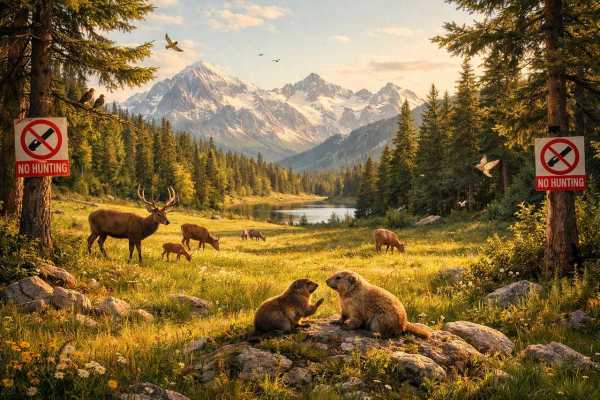
Officially, it is justified as an instrument for wildlife population management. In practice, it extends the hunting season in cantons such as Graubünden significantly and primarily serves the interests of recreational hunters, at the expense of wildlife, which are already under considerable stress during this period.
What is the special hunt?
The special hunt is an authority-ordered or -approved hunt outside regular hunting times. In Graubünden, the canton with the most extensive hunting system in Switzerland, the special hunt is a fixed part of the hunting year. It begins after the main hunt and officially aims to meet culling quotas that were not reached during the regular season.
The Special Hunt Dossier in Graubünden documents how this extended hunt is organized, which animal species are affected and how culling quotas are established.
Which animal species are affected?
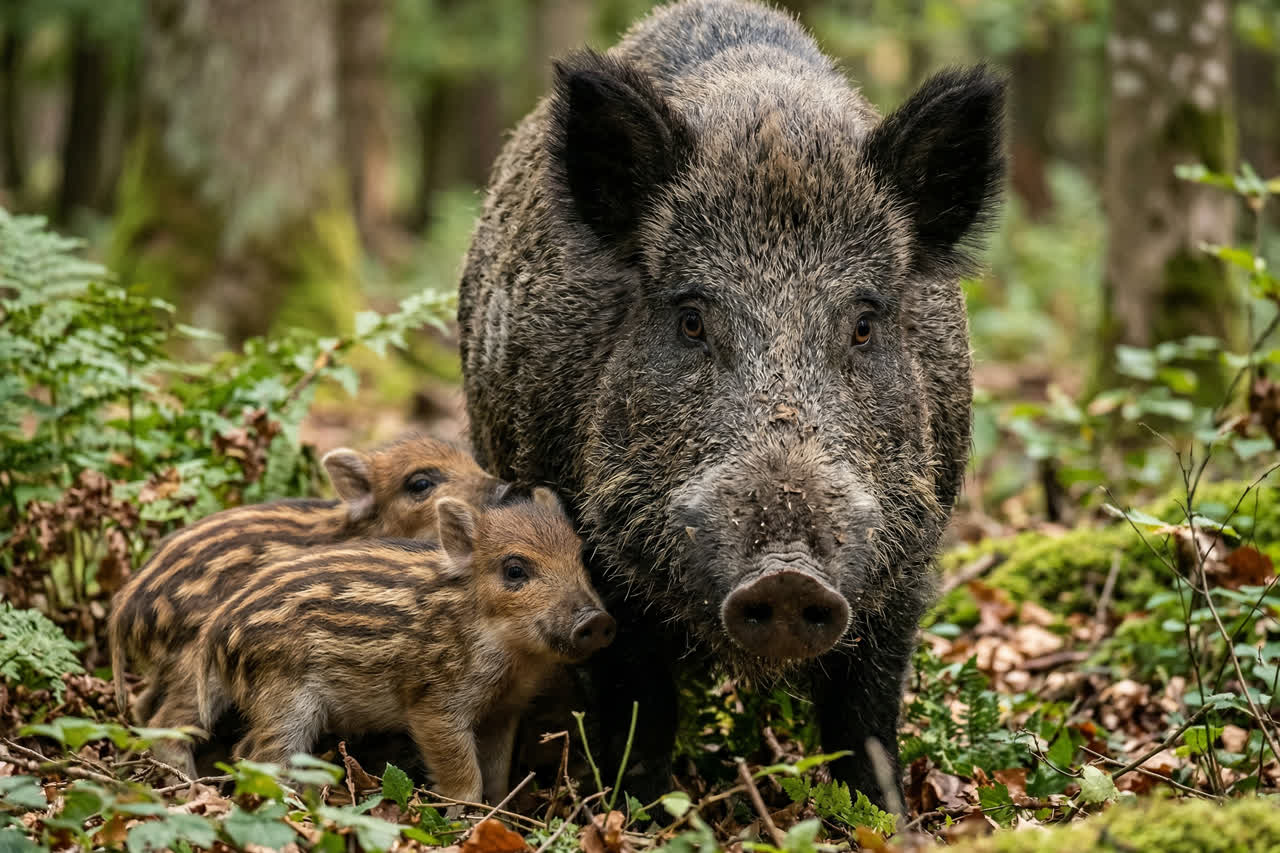
At the center of the special hunt are red deer and roe deer, the most important hunted species in the permit hunting cantons. However, chamois and wild boar can also be part of special hunt measures. Crucially: these animals are in a physically and ecologically stressed phase at the time of the special hunt.
The red deer in Switzerland is today one of the most heavily hunted hoofed animals in the Alps after extirpation and reintroduction. The chamois dossier shows how this species simultaneously faces climate stress, tourism and intensive hunting.
Autumn as an exception and hunting state
The main hunt in Graubünden begins in early September and lasts several weeks. The special hunt begins immediately afterward or after a short break. For affected wildlife, this means: weeks of hunting pressure, flight, disturbance, forced habitat changes, and this during the phase when animals must build up winter reserves.
The main hunt dossier for Switzerland analyzes this stress dynamic scientifically: cortisol release, disturbance effects and the long-term consequences of intensive autumn hunts on wildlife populations are well documented.
Predators as a natural alternative: Why the special hunt could become unnecessary
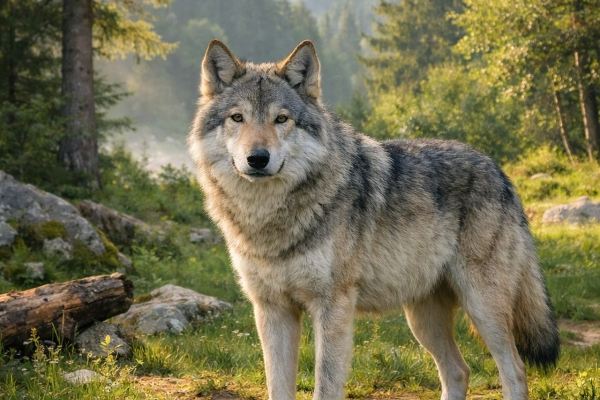
The central gap in the special hunt narrative is the role of predators. Wolf, lynx and bear are the natural regulators of those hoofed animal populations whose alleged overpopulation supposedly justifies the special hunt. The fact that these predators were extirpated in Switzerland in the 19th and early 20th centuries created the current situation: hoofed animal populations without natural competitors, which now must be "regulated" by recreational hunters.
The Federal Research Institute for Forest, Snow and Landscape (WSL) has examined the relationship between predators and forest regeneration. Researchers distinguish between direct and indirect effects: wolves directly reduce hoofed animal populations through predation. Indirectly, they change the spatial-temporal behavior of prey animals, a phenomenon known in ecology as the "Landscape of Fear." In the presence of wolves, hoofed animals avoid certain foraging areas, change location more frequently and feed more selectively. This reduces browsing pressure on forest regeneration without a single shot needing to be fired (WSL, waldwissen.net, 2016/2025).
The President of the Cantonal Foresters' Conference (KoK), Ueli Meier, confirmed this finding to SDA: predators such as wolf and lynx maintain balance in the ecosystem's feeding and food chain dynamics. Humans can only partially close the ecosystem cycle.
A 2024 study published in the Journal of Applied Ecology led by Prof. Marco Heurich (University of Freiburg) and Dr. Suzanne van Beeck Calkoen analyzed data from 492 study sites across 28 European countries. The result: where wolf, lynx and bear coexist in an area, red deer density measurably declines. A single predator species alone does not achieve this effect in fragmented European cultural landscapes. However, the study also shows: human recreational hunting reduces red deer density in Europe even more than all predators combined, raising the question of whether culling quotas themselves are not part of the problem (University of Freiburg, 2024).
For Switzerland, this concretely means: in Graubünden, where wolf packs are becoming established, natural regulation by predators could mid-term assume exactly the function that the special hunt supposedly fulfills today. The Wolf dossier for Switzerland documents that approximately 30 packs and about 300 wolves (as of 2023) live in the Swiss Alps, pre-Alps and Jura. Their primary prey animals are red deer, chamois and roe deer, exactly those species subject to the special hunt.
The historical parallel is instructive: when the lynx was reintroduced in Switzerland in the 1970s, this occurred under pressure from forestry interests concerned about forest regeneration. The lynx was supposed to reduce browsing pressure from roe deer and chamois. Today, its presence demonstrably benefits forest development, particularly white firs (SRF, Mission B). Where the lynx is established, browsing damage declines. This ecological function is not welcomed by recreational hunters, as it undermines the legitimation for additional hunting periods.
Rather than accepting predators as natural partners in forest regeneration, they are politically opposed in Switzerland. Entire wolf packs were eliminated in Valais. The hunting lobby demands higher culling quotas for wolves. Meanwhile, special hunts continue as though natural regulators did not exist. This approach is ecologically contradictory: on one hand, predators capable of naturally regulating hoofed animal populations are killed; on the other, the necessity for additional hunting periods is justified by exactly those "excessive" populations that emerge without predators.
Special hunt as a regulatory instrument: What is true, what is not?
The justification of the special hunt as a regulatory instrument sounds factual. In reality, however, two different logics underlie it: first, the state's task to manage wildlife populations, which professional wildlife managers could accomplish. Second, the interest of recreational hunters in having more hunting days.
The Hunting in Switzerland dossier: numbers, systems and myths reveals how culling quotas are established, who is involved in their determination and whether they are actually ecologically necessary or politically motivated.
Ecological logic contradicts the special hunt
In ecology, it is known that intensive hunting pressure in autumn and winter often contributes not to stabilization but to destabilization of wildlife populations. Animals displaced from their habitats by hunting pressure move to lower elevations, which can create exactly those "forest-wildlife conflicts" that the hunting lobby in turn uses as justification for more culling.
The Hunting Myths dossier examines 12 common claims made by the hunting lobby for their scientific substance, including the thesis that recreational hunting effectively regulates wildlife populations.
Cantonal differences: Graubünden as an extreme case
Graubünden is the only canton where the special hunt is so institutionalized that it occurs annually and encompasses significant numbers. In other cantons, similar instruments exist under various names. The system is the same: regular hunting seasons are extended through special measures, and affected wildlife have no rest period. In the permit hunting system, which around 65% of Swiss cantons operate, moreover, there is no binding district responsibility, which further undermines ecological management claims.
Transparency and democratic control
Who determines how many animals may be shot in the special hunt? Usually hunting authorities in close consultation with hunting associations, that is, institutions with a structural interest in high culling numbers. Independent scientific assessment and public transparency about the basis of culling quotas are the exception, not the rule.
The Hunting Lobby dossier for Switzerland shows how closely hunting associations and authorities are networked and what influence these structures have on hunting policy.
Conclusion
The special hunt is not an absolutely necessary regulatory tool but rather primarily an institutionalized extension of hunting season for recreational hunters. It stresses wildlife during an already critical phase, is ecologically questionably justified and systematically ignores the regulatory effect of natural predators. The return of wolf and lynx to the Swiss Alps offers a scientifically grounded alternative that requires no additional hunting periods. Rather than fighting predators while simultaneously conducting special hunts, a reorientation of wildlife policy would be necessary: professional wildlife management by wildlife managers, acceptance of the ecological function of predators and external, transparent review of culling quotas.
Further Reading
- Special Hunt in Graubünden
- Main Hunt Switzerland
- Wolf in Switzerland
- Chamois Switzerland
- Red Deer Switzerland
- Hunting in Switzerland: Numbers, Systems and Myths
- Hunting Lobby in Switzerland
- Hunting Myths
Sources
- Federal Research Institute for Forest, Snow and Landscape (WSL): Kupferschmid et al., "Direct, indirect and combined effects of wolves on forest regeneration in Switzerland," Swiss Journal of Forestry 167 (2016)
- Van Beeck Calkoen, S. T. S. et al.: Study on red deer density in Europe, Journal of Applied Ecology, 2024 (University of Freiburg, 492 sites in 28 countries)
- BAFU: Wolf Concept Switzerland, revised 2016
- BAFU: Lynx Concept Switzerland, revised 2016
- Pro Natura: "Lynx, Wolf, Bear – the predators of Switzerland"
- Cantonal Foresters' Conference (KoK): Statement on the role of predators (via SDA)
- SRF, Mission B: "The Returnees – The Return of Large Wild Animals to Switzerland"
- Federal Act on Hunting and the Protection of Wild Mammals and Birds (JSG, SR 922.0)
Support our work
With your donation you help protect animals and give their voice a hearing.
Donate now →More on the subject of recreational hunting: All Dossiers at a glance bring together fact checks, analyses and background reports. The scientific evidence is presented in the overview Studies on the Effects of Recreational Hunting.
The position of IG Wild beim Wild: IG Wild beim Wild rejects recreational hunting. Our model is the canton of Geneva, which has managed without recreational hunting since 1974: without hunting seasons, without hunting dogs, without driven hunts, without high seats, without the animal cruelty and crime that go hand in hand with hunting season elsewhere. What has worked there for over fifty years disproves every position paper by JagdSchweiz. An association that bases its policy on claims it refutes in its own documents is not a professional organisation, but a factory for misinformation.