
Brown Bear Switzerland: Returned and still unwanted
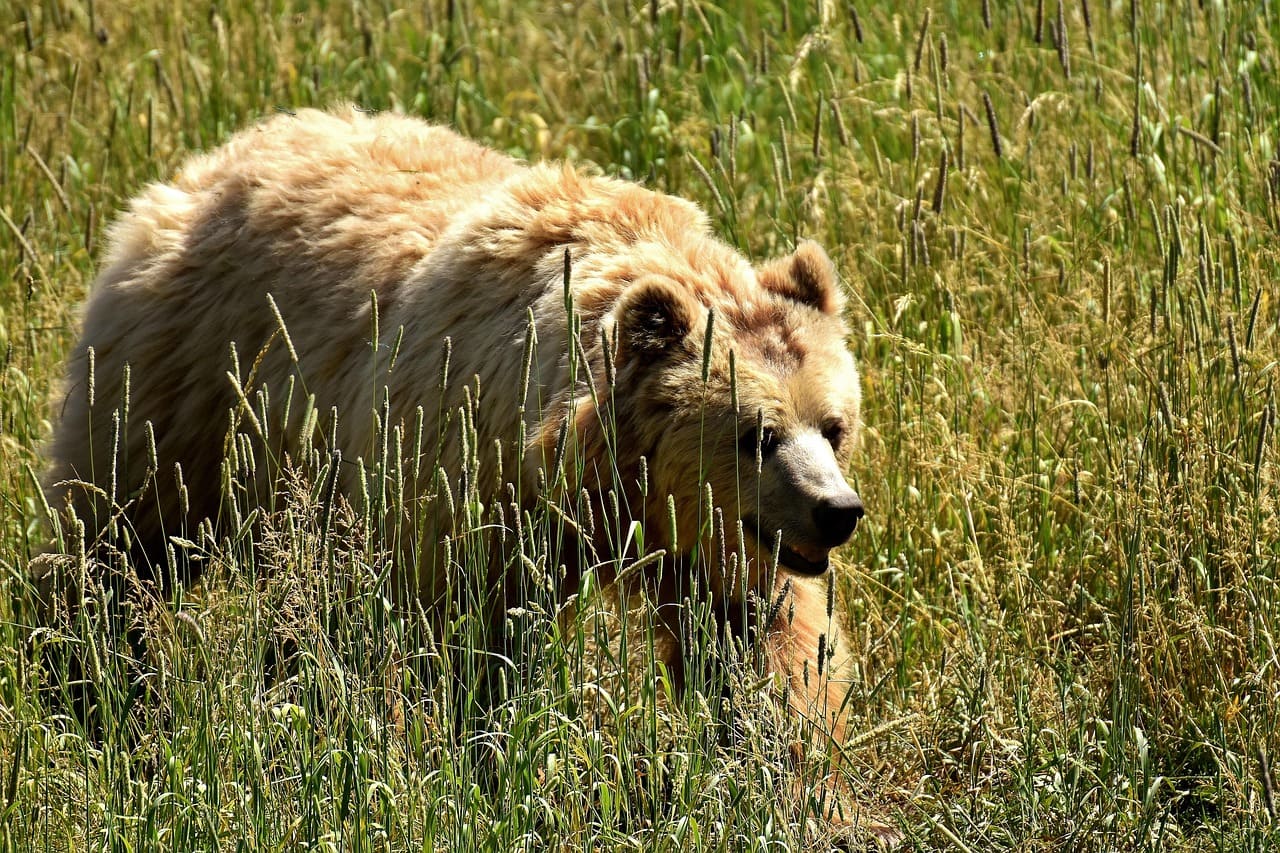
The European Brown Bear (Ursus arctos) belongs to Switzerland like the bear in the Bern coat of arms. For millennia it was part of the Alpine landscape, from prehistoric times until the early 20th century. In 1904 the last brown bear was shot in Val S-charl in the Lower Engadin. In 1923 the last sighting of a presumably Italian immigrant animal occurred. After that, the bear was extinct in Switzerland. For one hundred years.
In summer 2005, the first brown bear in a century appeared in the Swiss National Park. Photo evidence, media hype and a wave of enthusiasm followed. Since then, at least 22 bears have immigrated to Switzerland, all from the Trentino population in Northern Italy, all males, all via the canton of Graubünden. 90 percent of them behaved inconspicuously, stayed for days, weeks or months and moved on. Two were shot as 'risk bears': JJ3 in April 2008 near Thusis, M13 in February 2013 in Puschlav. Another, M29, lived for almost four years in the cantons of Graubünden, Bern and Uri without ever causing damage or coming too close to humans.
In Switzerland, the brown bear is still considered 'extinct' (regionally extinct) despite sporadic occurrence, because no reproduction takes place. No females immigrate. Without females no young, without young no population. Switzerland has no bear reintroduction project. The bear comes naturally, and so far it also leaves again.
This dossier documents what the brown bear means for Switzerland and the Alpine region: its biology, its history, its return, the real threats, the 'problem bear' label as a political construction and the question of whether a society that bears the bear in its coat of arms is ready to live with it. Those who want to delve deeper will find the most comprehensive material base in our Dossier on hunting in Switzerland.
What awaits you here
- Biology and way of life: Who the European brown bear is, how it lives, what it eats and why it poses no danger to humans when given the space it needs.
- Ecological significance: Why the brown bear as omnivore, seed disperser and keystone species is indispensable for intact Alpine ecosystems.
- History: From extermination to cautious return. How hobby hunting exterminated the bear in Switzerland and why its return is a product of protection, not hobby hunting.
- 20 years of bears in Switzerland. From M1 to today: An assessment of the return that shows coexistence is possible and only few individuals cause problems.
- The 'problem bear' label: Political construction instead of biological reality. Why the term 'problem bear' shifts responsibility from humans to the animal.
- Threats: Illegal killing, traffic, habitat fragmentation, political populism and trophy hobby hunting.
- Hobby hunting and the bear: Why trophy hobby hunting, shooting quotas and 'management' vocabulary undermine bear protection.
- Slovenia and Trentino: How 'management' becomes code for hobby hunting.
- 'Did you know?' 20 facts about the brown bear that hardly anyone knows.
- What would need to change: Concrete political demands.
- Arguments: Answers to the most common claims.
- Quick links: All relevant articles, studies and dossiers.
Biology and way of life: The shy giant of the Alps
The European brown bear (Ursus arctos arctos) is Europe's largest terrestrial carnivore and belongs to the bear family (Ursidae). The European subspecies reaches a head-body length of 170 to 220 centimeters, a shoulder height of 90 to 110 centimeters and weighs 140 to 320 kilograms in males and 100 to 200 kilograms in females. The fur varies from light blonde through cinnamon brown to almost black. A distinctive hump above the shoulders, a massive skull and powerful paws with up to 10 centimeter long, non-retractable claws characterize the species. The hind paw can be up to 22 centimeters long in adult animals. Despite their weight, brown bears reach speeds of up to 50 km/h over short distances.
The brown bear is an omnivore that feeds approximately 75 percent on plants. In spring, grasses, herbs, roots and buds are on the menu, supplemented by carrion from fallen game. In summer and autumn, when it comes to building up fat reserves for winter dormancy, primarily berries, fruits, beechnuts, acorns and nuts are eaten. Honey is coveted. Insects and their larvae form an important protein source. European brown bears hunt opportunistically and can occasionally prey on unprotected livestock, but they are not specialized predators. KORA makes clear: In the stomachs of examined Swiss bears, predominantly plant remains were found. A study by Washington State University confirms: Bears are not carnivores in the strict sense, they are omnivores with a preference for carbohydrate-rich food.
Brown bears live as solitary animals. In contrast to Luchs and Wolf they are not territorial: They tolerate conspecifics of the same sex in their habitat and do not defend a territory. Home ranges vary considerably depending on food availability: from 130 square kilometers in Croatia to 1,600 square kilometers in Scandinavia for males, and from 60 to 225 square kilometers for females. Young females often settle near their mothers, while young males disperse far away, which prevents inbreeding and enables species expansion.
The mating season falls in the months of May to July. After mating, delayed implantation occurs: the fertilized egg only implants at the beginning of winter dormancy. The actual gestation period is only 6 to 8 weeks, but the total span between mating and birth is 180 to 270 days. In January or February, 1 to 3, rarely 4 young are born in the winter den. The newborns weigh only 340 to 680 grams, are blind, almost naked and rat-sized — an extreme size difference compared to the mother. The young remain with their mother for about two years, during which time she spares no effort to protect her offspring. Sexual maturity occurs at 3 to 5 years. Life expectancy is 20 to 30 years in the wild, up to 50 years in captivity. The reproductive rate is one of the lowest of all mammals.
Winter dormancy lasts 2 to 7 months depending on the region, typically from October to March. Unlike true hibernators, the bear's body temperature barely drops. It takes neither food nor water and lives off the fat reserves it accumulated in autumn. The den is either dug by the bear itself or established under root stocks and windfall. At the slightest disturbance, the bear awakens, which can be particularly fatal for females with young: it happens that disturbed mothers abandon their newborns.
The brown bear is naturally a shy animal that distrusts humans. If it notices humans in time, it avoids them. In Europe, brown bears have become more nocturnal due to more frequent contact with humans. Young bears are initially active during the day and apparently only learn to switch to nighttime activity through disturbances.
More on this: Bears are not carnivores and 20 years of bears in Switzerland
Ecological significance: Omnivore, seed disperser, keystone species
The brown bear is an ecological keystone species of alpine and subalpine ecosystems. Its functions are diverse, scientifically documented and cannot be replaced by any recreational hunting.
As a seed disperser the bear plays a significant role in the distribution of berry bushes and trees. When it consumes large quantities of berries, fruits and nuts in autumn, it excretes the seeds over long distances at other locations. This process of zoochory promotes genetic diversity and plant dispersal and actively shapes forest landscapes. WWF Austria emphasizes: Bears help distribute fruits, nuts and seeds and thus participate in the spread of plant species in the forest.
As a carcass processor the bear removes carrion and carcasses, especially after winter. This function is important for the nutrient cycle in the forest and reduces the risk of disease transmission through decomposing carcasses.
As a soil disturber the bear digs for roots, tubers, insect larvae and small mammals. In doing so, it aerates the soil, promotes humus formation and creates microhabitats for other species. Similar to the badger, but on a larger scale, the bear is a natural soil cultivator.
As an indicator species the presence of brown bears indicates the quality of large-scale, low-disturbance forest landscapes. Where bears live, the habitat is large enough, connected enough and undisturbed enough that numerous other species also benefit. The bear stands at the top of the food pyramid and is an indicator of the ecological integrity of entire landscapes.
As a part of the natural predator community the bear complements the functions of the wolf and lynx. While the wolf primarily regulates ungulates and the lynx specializes in roe deer and chamois, the bear as an omnivore uses a much broader food spectrum and fills its own ecological niche. The return of all three predators to the Alps would be the restoration of a balance that recreational hunters destroyed centuries ago.
More on this: Dossier: The lynx in Switzerland and Dossier: Arguments for professional wildlife wardens
History: The extermination and its lessons
The history of the brown bear in Switzerland is a history of systematic extermination by humans. In prehistoric times, the brown bear inhabited the entire country. By around 1500, it had disappeared from the Central Plateau, which was already continuously settled and largely deforested. Between 1800 and 1850, the last brown bears of the Northern Alps and the Jura were killed. The species survived longer in the Graubünden and Ticino Alps.
Then came the modern rifle. The emergence of improved firearms caused the number of bear killings to skyrocket again in the 19th century. At the beginning of the 20th century, the brown bear was only present in the Lower Engadine, in Val Müstair and Val dal Spöl. On September 1, 1904, a hobby hunter shot the last bear in Val S-charl. In 1923, a bear that had presumably immigrated from Italy was observed in Switzerland for the last time. Then there was silence. For a hundred years.
The extermination of the bear is not a natural event. It is the result of a cultural history in which the bear was seen as a threat, as a competitor, as a trophy and as a pest. Recreational hunters exterminated the bear in Switzerland. This fact is systematically ignored in the current debate about the return of predators.
Only since 1962 has the brown bear been protected in Switzerland by the Hunting Act (JSG, Art. 5 and 7). Internationally, it is listed by the Bern Convention as a "strictly protected animal species" (Annex II). Switzerland ratified the convention in 1981 and is obligated not to deliberately capture, kill or disturb brown bears or their habitat. In the EU Habitats Directive, the brown bear is listed in Annexes II (protected areas) and IV (strictly protected). In the Washington Convention on International Trade in Endangered Species (CITES), it is in Appendix II. Globally, it is listed by the IUCN as "Least Concern", but four of the ten European populations are considered "critically endangered", including the Alpine population.
The return began in 2005, when a young brown bear from Trentino immigrated into the Swiss National Park. Between 1999 and 2002, ten bears from Slovenia had been relocated there to support the last remaining population of only 3 to 4 animals in the Alps. The Trentino population grew to an estimated 73 to 92 individuals (2021). Since then, young males regularly migrate north from it, some of them as far as Switzerland.
More on this: Federal Council adopts report on bears in Switzerland and Bear observed in the Lower Engadine
20 years of bears in Switzerland: A review
Since 2005, at least 22 bears have visited Switzerland. They came almost annually, with the exception of 2006, 2009 and 2023. All evidence stems from the warm months (April to October), during winter months bears hibernate. KORA documents: All confirmed bears were exclusively males. The immigrant animals were genetically identified through DNA analyses wherever possible. Most remained only a few days to a few months and then migrated back towards Trentino, where there are also female bears.
The balance is clear: 90 percent of bears in Switzerland to date have behaved largely inconspicuously. M29, for example, lived from 2016 to 2020 in the cantons of Bern and Uri without causing damage or coming too close to humans. He was the only confirmed bear outside the canton of Graubünden and remained almost four years. In 2018 and 2019, there was evidence of bears in Valais for the first time.
Two bears were classified as 'risk bears' and shot: JJ3, who was killed by game wardens near Thusis in April 2008 after losing his fear of humans and repeatedly appearing in populated areas, and M13, who was shot in Puschlav in February 2013. M13 had previously been injured in a collision with a Rhaetian Railway train but had survived. The shootings occurred according to the 'Bear Concept Switzerland,' FOEN's enforcement guideline that establishes strict criteria for killing. Another bear was run over and killed by a train in the Lower Engadin in 2016.
The 'Bear Concept Switzerland' is based on the principle that coexistence between humans and bears is possible under certain conditions, with human safety taking priority. The Federal Council confirmed in 2021 that the concept corresponds to pan-European guidelines. Potential exists in damage prevention: the better beehives, livestock and waste disposal are protected, the lower the risk that bears develop problematic behavior.
The future depends on whether female bears immigrate. The nearest resident females of the Trentino population are located around 40 kilometers from the Swiss border. In the last four years, the females have begun to slightly expand their core territory. KORA judges: If the development in Trentino continues this way, the probability of female bear visits to Switzerland also increases. But until a stable Alpine population emerges, connection is needed between the Trentino population and the much larger Dinaric population in Slovenia and Croatia.
More on this: 20 years of bears in Switzerland and Notice of brown bear in Bavaria
The 'problem bear' label: Political construction instead of biological reality
Hardly any term has so shaped and simultaneously distorted public discourse about predators as the word 'problem bear.' The term first appeared prominently in 2006, when brown bear JJ1, better known as 'Bruno,' migrated from Trentino to Bavaria, killed sheep there, raided beehives and was spotted near settlements. Bavaria's then Environment Minister Werner Schnappauf declared: 'The bear has become a problem bear.' A few weeks later Bruno was dead, shot on June 26, 2006 near Spitzingsee, 170 years after Bavaria's last bear.
Bruno's story is a parable about failure in dealing with predators. Bruno's mother Jurka had been fed by a hotel owner who wanted to use bears as an attraction for guests. Bruno had learned from his mother that food could be found near humans. The behavior that made him a 'problem bear' was human-made. The bear was the symptom, not the cause.
JJ1 was Bruno's official name. JJ4, his sister, was declared a perpetrator in Trentino in 2023 when she fatally attacked 26-year-old jogger Andrea Papi. It was the first fatal bear attack in Italy in modern times. JJ4 was also captured and imprisoned. Here too, the 'problem bear' label was applied. The question of why in an area with around 100 bears there was no adequate visitor management, no warning system and no consistent feeding prevention was hardly asked.
In Switzerland, JJ3 (2008) and M13 (2013) were classified as 'risk bears' and shot. The 'Bear Concept Switzerland' defines an escalation level from 'damage bear' to 'problem bear' to 'risk bear'. The terms sound factual, but they direct attention to the animal and away from the context. A bear that penetrates into a settlement area because waste containers are left open, beehives are not secured and livestock graze unprotected is not a 'problem bear'. It is a bear in a problem habitat. KORA formulates it with nuance: Of the 34 known deaths in the Alpine population from 2003 to 2019, almost half were caused by humans, either through traffic collisions, illegal killings or legal killings.
More on this: Trentino: Bear attacks hobby hunter and Demo in Trentino: Hundreds demand release of bear JJ4
Threats: What really endangers brown bears in Switzerland and the Alps
Illegal killing and politically motivated culls remain one of the greatest threats to brown bears in the Alps. Slovakia decided to shoot up to 350 brown bears, officially to 'ensure public safety'. Of around 1,300 animals, more than a quarter were to be killed. Conservation organizations accuse Bratislava of directly violating the EU Habitats Directive. In Trentino, a new law from 2024 enables the simplified shooting of up to eight 'problematic' bears per year.
Trophy recreational hunting threatens brown bears especially in Eastern Europe. In Romania, Prince Emanuel von und zu Liechtenstein shot the brown bear 'Arthur' in March 2021, the largest bear ever documented in Romania, under questionable circumstances. The shooting permit was for a completely different, smaller 'problem bear'. The Romanian environmental organization Agent Green called the shooting poaching and compared the case to the ivory trade: 'Shooting of large male animals weakens the bear population.'
Traffic accidents regularly claim victims. In Switzerland, a bear was run over and killed by a Rhaetian Railway train in the Lower Engadin in 2016. M13 had sustained bruises in a similar collision in 2012. Throughout the Alps and Carpathians, road collisions are a significant cause of death.
Habitat fragmentation and isolation threaten the genetic viability of the Alpine bear population. The Trentino population descends from only ten founder animals. It is small and genetically isolated. A connection to the much larger Dinaric population (around 2,145 individuals) is of central importance for the long-term survival of brown bears in the Alps. Roads, highways, settlements and missing wildlife corridors prevent the necessary genetic exchange.
Habituation through human misbehavior is the main cause of 'problem bears'. Open waste containers, unsecured beehives, feeding by tourists and lack of visitor management accustom bears to human food sources. A food-conditioned bear actively seeks proximity to settlements. The problem is human-made and human-solvable.
Populist handling of conflicts endangers bear protection politically. In Trentino and Slovakia, politicians exploit the bear issue to profile themselves with rural voters. Trentino's governor Maurizio Fugatti (Lega) has become the most prominent advocate of generous hunting quotas. A conservation story becomes a culling story, 'management' becomes a code word for recreational hunting exploitation.
More on this: Europe's largest brown bear killed and Controversial new law permits shooting of bears in Trentino
Recreational hunting and the bear: Historical guilt, current threat
The relationship between recreational hunting and the brown bear can be summarized in one sentence: Recreational hunting exterminated the bear, and it prevents its return.
First: Recreational hunting destroyed the brown bear in Switzerland and large parts of Western Europe. Systematic hunting from the Middle Ages to the 20th century, driven by trophy lust, fear-mongering and the image of the bear as a 'pest', led to the extinction of a species that had lived in Europe for millennia. In Bavaria, the last bear was killed in 1835, in Switzerland in 1904, in Germany the bear had disappeared for 170 years thereafter. The first returnee, Bruno, was shot after just six weeks.
Second: Trophy recreational hunting threatens bear populations in Eastern Europe. In Romania, once Europe's stronghold of bear trophy recreational hunting, wealthy foreigners can purchase shooting permits despite strict protection. The Arthur case showed how the system works: A prince arrives, shoots the largest bear instead of the approved animal, and authorities look the other way.
Third: In Slovenia, 'bear management' is misused as a cover for hunting exploitation. The practice of deliberately feeding bears, officially to keep them away from settlements, leads to artificially enlarged populations. Then generous hunting quotas are released, a political gift to a well-organized recreational hunting lobby. The bears attracted by feeding are declared 'problem animals' and released for culling. At the same time, the debate ignores that culling can change population behavior: When shy, cautious animals are removed, the more curious and conflict-prone individuals remain.
Fourth: In Switzerland, there is no direct recreational hunting problem with bears, as shooting is reserved only for wildlife wardens. But the recreational hunting system creates the cultural and political framework in which predators are perceived as competitors, threats and problems, rather than as enrichment. The recreational hunting lobby fuels fear of predators because their return challenges its own narrative: that only humans with rifles can conduct 'wildlife management'.
The Geneva model has shown since 1974 that professional wildlife management works without recreational hunting. Professional wildlife wardens who are trained, independent and committed to species protection can also deal with large predators - objectively, competently and without trophy interests.
More on this: Slovenia's brown bears as scapegoats and Dossier: Geneva and the hunting ban
'Did you know?' 20 facts about the brown bear
- The brown bear is Europe's largest terrestrial predator, but feeds 75 percent on plants. It is an omnivore, not a predator in the classic sense.
- In Switzerland, the last brown bear was shot in 1904 in Val S-charl in the Lower Engadin. After that, it was extinct for a hundred years.
- In 2005, the first brown bear in a century appeared in the Swiss National Park. All bears documented since then originated from the Trentino population.
- Since 2005, at least 22 different bears have visited Switzerland. All were males. Not a single female has immigrated so far.
- 90 percent of the bears in Switzerland to date have behaved inconspicuously, without damage to people or property.
- M29 lived almost four years in Switzerland (2016 to 2020) in the cantons of Graubünden, Bern and Uri, without ever becoming a problem.
- The brown bear hibernates, not a winter sleep. Its body temperature barely drops, and it can wake immediately when disturbed.
- Newborn brown bears weigh only 340 to 680 grams, about as much as a rat. The size difference to the mother (up to 200 kilograms) is more extreme than in any other placental mammal.
- Brown bears are not territorial. They tolerate conspecifics in the same habitat and do not defend territory.
- The Trentino bear population descends from only ten founding animals that were relocated from Slovenia between 1999 and 2002. Previously, only 3 to 4 bears lived there.
- Of the 34 known deaths in the Alpine population (2003 to 2019), almost half were human-caused: traffic accidents, illegal killings and legal culling.
- The brown bear can run up to 50 km/h on short distances, faster than a horse.
- 'Bruno' (JJ1) was the first brown bear in Germany in 170 years in 2006. He was shot as a 'problem bear' after only six weeks. His sister JJ4 killed a jogger in Trentino in 2023 and has been in captivity since then.
- The bear is the heraldic animal of Bern, Appenzell and numerous municipalities. It has shaped Swiss cultural history for centuries.
- There is no bear reintroduction project in Switzerland. The return occurs naturally, exclusively through immigration from Italy.
- The reproductive rate of the brown bear is one of the lowest of all mammals. Females have offspring only every two to three years, with litter sizes of usually 1 to 3 young.
- The alpine overall population is 'threatened with extinction'. Only the connection to the Dinaric population in Slovenia and Croatia can ensure long-term survival.
- In Romania, Prince Emanuel of Liechtenstein shot the largest brown bear ever documented in Europe, 'Arthur', under questionable circumstances in 2021. The culling permit was for a different animal.
- Female bears with cubs can react aggressively when disturbed. The vast majority of bear attacks on humans are related to mothers defending their young.
- KORA documents: The Swiss population has calmed down in dealing with bears since 2005. The initial excitement has given way to a more factual attitude. The near-natural landscape of Switzerland offers suitable habitat for brown bears in many regions. The question is not whether the habitat exists, but whether society is ready to share it.
What would need to change: Political demands
The IG Wild beim Wild demands a paradigm shift in dealing with brown bears in Switzerland and the Alpine region. Instead of reactive culling policies, preventive coexistence strategies are needed:
First: Consistent damage prevention instead of 'problem bear' rhetoric. Bear-proof waste disposal in all potential bear areas (Graubünden, Valais, Ticino, Central Switzerland). Mandatory electric fence protection for beehives. Bear-proof containers in settlements and on hiking trails. Prevention must come before the next bear visit, not after.
Second: No culling without independent review. The decision to kill a bear must not lie solely with cantonal hunting authorities under political pressure. An independent expert commission including KORA, animal welfare organizations and wildlife biology must review every culling order in advance.
Third: Professional game wardens instead of hobby hunting structures. Dealing with predators must be in the hands of specialized experts, not in the hands of a system focused on trophies and meat production. The Geneva model shows how it works.
Fourth: Secure and expand wildlife corridors between Trentino and Switzerland. The connection of alpine subpopulations is vital for survival. Switzerland must actively participate in international coordination between Alpine countries and secure migration corridors through spatial planning.
Fifth: Ban trophy-hobby hunting of bears throughout Europe. Switzerland should advocate in international bodies for trophy-hobby hunting of strictly protected predators to be condemned and banned Europe-wide.
Sixth: Education and awareness. The population in potential bear areas must be objectively informed: about behavior during bear encounters, about the actual low danger, and about the ecological significance of bears. Fear-mongering by media and the hobby hunting lobby must be countered with facts.
Arguments: Responses to the most common claims
'Bears are dangerous and have no place in a densely settled cultural landscape.' The experience of the last 20 years in Switzerland shows the opposite: 90 percent of immigrated bears have behaved inconspicuously. In 2024, around 20,400 brown bears lived throughout Europe, including in relatively densely populated countries like Slovenia, Croatia, and Slovakia. Examples in Italy, Austria, and Slovenia show that brown bears can also find habitat in cultural landscapes. Pro Natura notes: Most bears live shyly and withdrawn, far from settlements in forests. Switzerland has forgotten how to live with bears, but this can be relearned.
'Problem bears must be shot, otherwise they endanger humans.' In extreme individual cases, shooting may be unavoidable. But the label 'problem bear' obscures the cause: Almost always the problem lies not with the bear, but with humans. Food conditioning through open garbage, unsecured beehives, and feeding create 'problem bears.' Consistent prevention would prevent most conflicts. In North America and Scandinavia, bear-proof waste systems have functioned for decades.
'Bears kill livestock. This is unbearable for mountain farmers.' Bear damage concentrates on beehives, fruit crops, small livestock, and rarely cattle. Damages are compensated at 80 percent by the federal government and 20 percent by cantons according to current law. The federal government pays 100 percent for other direct damages. The Federal Council confirmed in 2021 that the compensation system functions. Prevention (electric fences, bear-proof beehives, herd protection) is more effective than shooting.
'Hobby hunting has nothing to do with bears; in Switzerland only wildlife wardens may shoot anyway.' This is formally correct but falls short. Hobby hunting exterminated bears in Switzerland. The hobby hunting system continues to shape the cultural and political framework in which predators are perceived as competitors and threats. The hobby hunting lobby fuels fear of predators because their return questions its own narrative. In Trentino and Slovenia, it becomes clear how 'management' becomes a vehicle for the hobby hunting lobby.
'There are already enough bears in Europe; Switzerland doesn't need to accept any.' The alpine bear population is one of the most endangered in Europe. It is small, genetically isolated, and not viable long-term. Switzerland lies at the center of the Alpine arc and is crucial for the natural distribution and networking of bear populations. Those who say there are 'enough' bears ignore the reality of alpine fragmentation.
'Switzerland's bear concept works. Why more?' The bear concept has fundamentally proven itself, according to the Federal Council. However, it was written for a situation where individual bears pass through. If the Trentino population continues to expand and females immigrate to Switzerland, the requirements for prevention, education and management increase significantly. Switzerland must prepare now, not only when the first conflict escalates.
Quicklinks
Articles on bears on wildbeimwild.com:
- 20 Years of Bears in Switzerland
- Bear Observed in Lower Engadin
- Europe's Largest Brown Bear Shot
- Bears Are Not Carnivores
- Bear Kills Jogger on Forest Path in Northern Italy
- Trentino: Bear M49 Captured
- Trentino: Female Bear Attacks Hobby Hunter
- Demo in Trentino: Hundreds Demand Release of Female Bear JJ4
- Controversial New Law Permits Shooting of Bears in Trentino
- In Italy, a Bear Classified as Dangerous Was Shot by Forest Authorities
- Italian Court Suspends Order to Kill Bear
- Slovenia's Brown Bears as Scapegoats
- Bear Poaching in Carpathian Biosphere Reserve
- Federal Council Adopts Report on Bears in Switzerland
- Evidence of Brown Bear in Bavaria
- Bear Takes 400 Selfies with Wildlife Camera
Related Dossiers:
- Golden Jackal in Switzerland: Natural Immigrant Under Political Pressure
- The Otter in Switzerland: Exterminated, Returned and Politically Threatened
- The Brown Bear in Switzerland: Exterminated, Returned and Still Unwanted
- The Wildcat in Switzerland: Back from Extinction, Threatened by Indifference
- The Lynx in Switzerland: Predator, Keystone Species and Political Object of Dispute
- The Fox in Switzerland: Most Hunted Predator Without Lobby
- Wolf: Ecological Function and Political Reality
- The Wolf in Europe: How Politics and Recreational Hunting Undermine Species Protection
- Wolf in Switzerland: Facts, Politics and the Limits of Hunting
- Valais Wolf Balance Sheet: Numbers of a Massacre
- Fox Hunting Without Facts: How JagdSchweiz Invents Problems
- Livestock Protection in Switzerland: What Works, What Fails and Why Culling Is No Solution
Our Standard
The brown bear belongs to Switzerland. Not as a heraldic animal, not as a tourist attraction, not as folklore, but as a living part of an ecosystem that is incomplete without it. Recreational hunting exterminated it. Protection enabled its return. The question now is whether Switzerland is ready to allow and shape this return, or whether it will drive away the bear a second time, this time not with rifles, but with indifference, inadequate prevention and populist 'problem bear' rhetoric.
20 years of bear presence in Switzerland have shown: coexistence is possible. The vast majority of bears behave inconspicuously. The few conflicts are human-made and human-solvable. What is missing is not the habitat, it is the political will, consistent prevention and the willingness to recognize the system of recreational hunting for what it is in dealing with predators: part of the problem, not the solution.
Those who bear the bear in their coat of arms must be ready to live with the bear. Everything else is hypocrisy.
This dossier is continuously updated when new studies, numbers or political developments require it.
More on recreational hunting: In our Hunting Dossier we compile fact-checks, analyses and background reports.