Sweden: Lynx hunt 2026 – Court stops, then government gives green light
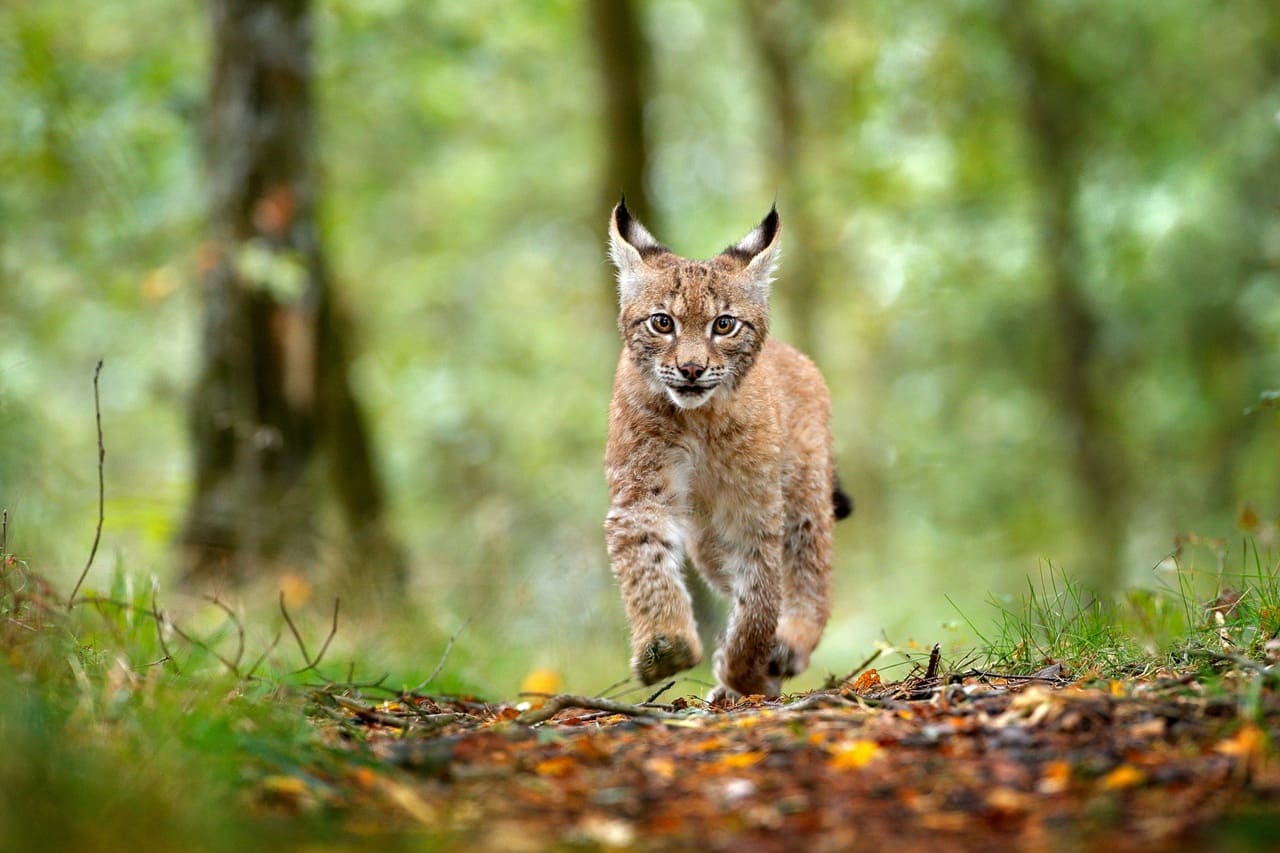
153 lynx were to be shot starting March 1, 2026 in 14 Swedish provinces. An appeals court has suspended the entire license hunt. It is the second judicial halt of a predator hunt within a few months.

Update March 24, 2026: On March 17, 2026, the appeals court (Kammarrätten) in Sundsvall lifted the temporary suspension of the lynx hunt.
The license hunt has been running in all affected provinces since then.
Sweden has almost doubled the kill quota for lynx in 2026 to 153 animals (2025: 87 animals).
The release affected all 14 concerned provinces and would have affected more than a tenth of the estimated total population of around 1,400 individuals. The hunt was scheduled to begin on March 1, in the middle of lynx mating season.
The Swedish conservation organization Naturskyddsföreningen filed lawsuits against the hunting permits in all affected provinces, except for the reindeer grazing areas in Västerbotten, Jämtland and Västernorrland. The administrative court initially rejected the lawsuits in several provinces, including Örebro, Stockholm, Västra Götaland, Uppsala and Kalmar.
Court of appeal intervenes – and authorizes hunting again
Naturskyddsföreningen immediately appealed to the Kammarrätten (court of appeal) in Sundsvall and requested a temporary suspension of the hunt. The court granted the request at the end of February and suspended lynx hunting in the southern and central Swedish provinces by inhibition. In the four northern provinces (Västerbotten, Jämtland, Västernorrland, Gävleborg), recreational hunting started on March 1st nonetheless, but was also stopped on March 2nd by the Förvaltningsrätten in Luleå. By this point, 19 lynx had already been killed.
Beatrice Rindevall, chairwoman of Naturskyddsföreningen, had already warned at the first instance: The authorization violates both EU law and Swedish hunting law. If more than every tenth lynx is authorized for shooting, the long-term survival of the population is endangered.
Hunting ban lifted after two weeks
However, the judicial protection lasted only about two weeks. The complete chronology shows how quickly species protection eroded under pressure from recreational hunters:
- February 27:Kammarrätten in Sundsvall suspends lynx hunting in southern and central Swedish provinces by inhibition.
- March 1:Recreational hunting starts anyway in the four northern provinces (Västerbotten, Jämtland, Västernorrland, Gävleborg).
- March 2:The Förvaltningsrätten in Luleå also stops recreational hunting in the north. 19 lynx are already dead.
- March 11:The Förvaltningsrätten lifts the suspension in the three northernmost provinces (Västerbotten, Västernorrland, Jämtland) again, citing reindeer herding.
- March 16:The stop in Gävleborg is also lifted.
- March 17:The Kammarrätten in Sundsvall grants no examination permit (prövningstillstånd) in nine of ten southern and central Swedish provinces. The inhibition is lifted, lynx hunting is authorized again from 3:00 PM. Only in Dalarna is the appeal substantively admitted, but hunting is also permitted there while the proceedings are ongoing.
Thus, the license hunt for 153 lynx has been running since March 17th in all provinces. The court of appeal has effectively dismissed the conservation organizations' lawsuits without examining them substantively. Naturskyddsföreningen's request to refer the case to the EU Court of Justice was also rejected.
Escalation since 2023
The quotas of recent years show the political pressure of recreational hunters on Swedish wildlife policy:
- 2023: 188 lynx killed by license hunting, plus 30 by 'protective hunting' and 54 by traffic and natural causes (Sweden's Big Five)
- 2024: 143 lynx killed by license hunting
- 2025: Quota 87, of which 83 already shot by mid-March
- 2026: Quota increased to 153, temporarily stopped by court, authorized again since March 17th
Since 2015, over 1,100 lynx have been killed in Sweden through licensed and 'protective' hunting. At the same time, the official population declined from an estimated 1,417 in winter 2022/23 to around 1,276 in 2024. Only the latest estimate shows a slight increase again to about 1,400, which authorities immediately used as justification for higher quotas.
Trophy hunting as the actual motive
The official justifications for lynx hunting do not withstand scrutiny. Sweden's environmental protection agency Naturvårdsverket argues that the hunt serves the «protection of livestock» and «increasing acceptance». However, the numbers contradict this narrative: In 2023, only 89 of an estimated 340,000 Swedish sheep were killed or injured by lynx.
Magnus Orrebrant, chairman of the Swedish Carnivore Association (SCA), puts it bluntly: recreational lynx hunting exists exclusively to satisfy recreational hunters. A large majority of the Swedish population wants to see lynx live freely in nature. According to polls, 67 to 80 percent of Swedes support the continued existence of viable predator populations, while only 2.75 percent of the population is registered as recreational hunters.
Even the Swedish hunting association Svenska Jägareförbundet acknowledges that lynx hunting is not related to dangers to humans. An association advisor confirmed it is about the «thrill» and for some also about the pelt as a trophy.
Hunting methods in contradiction to animal welfare
The most common method of Swedish lynx hunting is the use of GPS-equipped dogs that drive the lynx up a tree, where it is then shot defenseless. Alternatively, the lynx is encircled by groups of recreational hunters and driven from cover with dogs. Occasionally, box traps are still used, in which the lynx is caught and subsequently shot.
The hunt takes place in March, during mating season, when young animals are still dependent on their mother. Naturskyddsföreningen has emphasized in an open letter to the EU Commission that this practice endangers the long-term survival of the species. The Swedish environmental agency commissioned a study in February 2025 to investigate when young animals separate from their mother, but concrete consequences have yet to follow.
Wolf stopped, lynx approved – same court, different standards
The lynx hunting decision stands in striking contrast to wolf hunting. Already in December 2025, the administrative court in Luleå stopped the planned wolf hunt for 2026 in all five affected provinces. In January 2026, the appeals court in Sundsvall confirmed this decision and determined that there was no scientific basis for licensed hunting at such low population levels. The wolf hunt remains blocked to this day.
For lynx, however, the same appeals court did not even admit the appeals in nine of ten provinces for substantive review. This raises the question of why wolves enjoy judicial protection while lynx do not, although both species are strictly protected under the same EU Habitats Directive and the Swedish population of around 1,400 animals is significantly below the level of 2,000 individuals that was recorded when joining the EU in 1995.
The Swedish government had lowered the so-called reference value for wolves from 300 to 170 individuals in summer 2025. The EU Commission criticized this step as scientifically unfounded. For lynx, no comparable public reference value dispute exists, making it easier for authorities to declare high quotas as «sustainable».
EU complaint unanswered
Since March 2024, a formal complaint by the Swedish Carnivore Association (SCA) against Swedish lynx hunting has been pending with the EU Commission. The complaint is based on the EU Habitats Directive, which lists the lynx as a strictly protected species. Killing is only permitted when there is no other satisfactory solution. Conservation organizations argue that neither trophy hunting nor reducing competition for prey animals like deer fall under this exception.
The Commission has taken no concrete steps so far. In parallel, it even discontinued the infringement procedure against Sweden over wolf hunting in October 2025, after the EU downgraded the wolf's protection status from 'strictly protected' to 'protected'. Conservation organizations fear that this development could also weaken lynx protection at the EU level in the long term.
According to the EU Habitats Directive, a member state may not have a lower population of a protected species than at the time of EU accession. When Sweden joined in 1995, approximately 2,000 lynx lived in the country according to the Swedish University of Agricultural Sciences (SLU); today there are around 1,400.
Norway also in focus
Parallel to the Swedish court proceedings, criminal proceedings for organized illegal wolf and lynx hunting are underway in Norway. The Economic and Environmental Prosecution Authority Økokrim has charged ten men with illegal wolf hunting, and further proceedings for allegedly illegal lynx hunting are pending.
What the Swedish case reveals
The developments in Sweden demonstrate a pattern that is becoming increasingly visible in Switzerland as well: Recreational hunters push for politically defined population caps and ever higher hunting quotas, authorities deliver, and when courts intervene as a corrective, protection only lasts until political pressure overcomes the legal hurdles.
For wolves, Swedish courts permanently blocked hunting in 2026. For lynx, however, judicial protection lasted only two weeks before the appeals court refused even to admit the conservation groups' lawsuits for substantive review. Lynx hunting has continued in all provinces since then, right in the middle of mating season, with a quota almost doubled compared to the previous year.
That in a country internationally regarded as a model for 'sustainable wildlife management', the same court protects wolves but abandons lynx to recreational hunters, sends a clear signal: Species protection in Scandinavia remains selective, politically negotiable, and dependent on how strong media and social pressure is. For lynx, this pressure was obviously not great enough.
Further information:
- How hunting policy escalates in Scandinavia
- Sweden stops wolf culls in 2026: Signal to Switzerland
- The importance of lynx for biodiversity conservation
- Sweden: Recreational hunters out of control
- Why recreational hunting fails as population control
- Dossier: Hunting myths
More on the subject of recreational hunting: In our dossiers on the criticism of recreational hunting gather fact-checks, analyses and background reports. What the research says about this is shown by Hunting fact-checked: the state of research.
The position of IG Wild beim Wild: IG Wild beim Wild rejects recreational hunting. Our model is the canton of Geneva, which has managed without recreational hunting since 1974: without hunting seasons, without hunting dogs, without driven hunts, without high seats, without the animal cruelty and crime that go hand in hand with hunting season elsewhere. What has worked there for over fifty years disproves every position paper by JagdSchweiz. An association that bases its policy on claims it refutes in its own documents is not a professional organisation, but a factory for misinformation.
Support our work
With your donation you help protect animals and give voice to their concerns.
Donate now →