
Livestock Protection Switzerland: What Works and What Fails
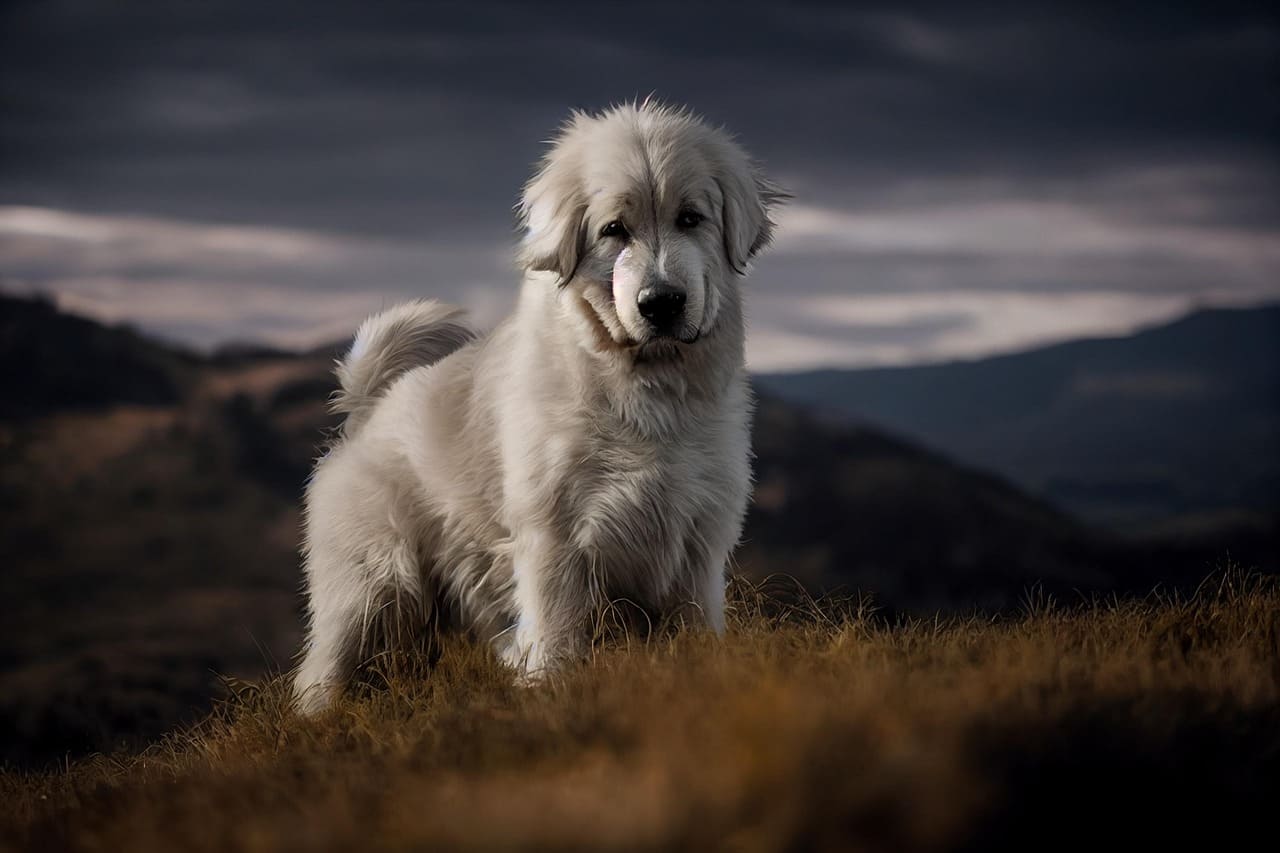
Every year, around 4,000 sheep die in the Swiss mountains from diseases, falls and severe weather. The wolf kills, which have dominated political debate for years, make up only a fraction of this: 336 livestock killed by wolves in 2022 (the second-highest figure since 1998), 318 in Valais in 2025. Nevertheless, money does not flow into protecting living animals, but into killing predators. In Valais, culling programs consumed between 0.8 and over 1 million francs of taxpayer money in 2025, around 35,000 francs per wolf. A single livestock guardian dog costs around 3,000 to 5,000 francs per year and protects an entire herd.
This dossier shows which livestock protection measures work in Switzerland, why they are still inadequately implemented, and what interests lie behind the systematic underfunding. It is based on data from FOEN, the KORA Foundation, cantonal administrations and international research.
What awaits you here
- Overview of measures: Electric fences, night enclosures, livestock guardian dogs, shepherding, adapted grazing methods and their proven effectiveness.
- Calanda Pack: The evidence being ignored: 1,500 sheep, 37 kills in five years, consistent livestock protection in Switzerland's most wolf-rich area.
- Costs: Culling vs. prevention: 35,000 francs per wolf, 0.8 to 1 million in Valais 2025. What livestock protection would cost and why it is cheaper.
- Financing and responsibilities: FOEN, FOAG, cantonal programs, program agreements and the gaps in the system.
- Livestock guardian dogs: Effectiveness and political instrumentalization: How the hobby hunting lobby uses encounters with hikers as an argument against livestock protection.
- The political failure: Why livestock protection remains underfunded: Valais priorities, cantonal resistance, DJFW criticism 2016 and the role of the recreational hunting lobby.
- International examples: France, Italy, Spain, Norway and what Switzerland can learn from them.
- What would need to change: 6 demands for consistent livestock protection as a prerequisite for wolf management.
- Arguments: Responses to the most common objections to livestock protection.
- Quick links: All relevant articles, dossiers and external sources.
Overview of livestock protection measures
Switzerland has a broad spectrum of proven livestock protection measures that, when combined, provide highly effective protection against wolf kills. No single measure is sufficient, but the systematic application of multiple instruments demonstrably reduces kills to a minimum.
Electric fences form the foundation of every modern livestock protection concept. Wolf-proof fences (at least 4,000 volts, 90 cm height, with ground wire) prevent access to fenced pastures. The KORA Foundation documents that correctly installed electric fences are effective in over 90 percent of cases. Costs range around 3 to 5 francs per linear meter and are thus significantly cheaper than a single wolf kill.
Night enclosures protect the herd during the most vulnerable phase: at night, when wolves are most active. Confining animals overnight in a mobile or fixed enclosure, combined with electric fencing, drastically reduces kills. On most affected alpine pastures this measure would be feasible, but is not consistently required in many cantons.
Livestock guardian dogs are the most effective single instrument. Around 300 livestock guardian dogs are deployed in Switzerland, primarily Maremmano-Abruzzeses and Montagne des Pyrénées. They live with the herd, detect predators early and drive them away through barking and intimidation behavior. AGRIDEA and the Livestock Protection Unit have documented their effectiveness for over 20 years.
Herding means the constant presence of a herder with the flock. In combination with dogs and fences, herding is the most effective of all measures. However, in many Swiss alpine regions, summer grazing occurs without herders for cost reasons, leaving animals defenseless not only against wolves, but also against disease, falls and severe weather.
Adapted grazing forms include selecting suitable pasture areas, avoiding strip grazing and temporally adapted alpine stocking. In some regions, switching from sheep to cattle farming (less vulnerable to wolves) may make sense. The combination of grazing adaptation and livestock protection measures is what 'coexistence' means in practice.
More on this: Alternatives to recreational hunting and Wildlife corridors and habitat connectivity
Calanda pack: The proof that is ignored
The Calanda pack in Graubünden has been the best-documented wolf pack in Switzerland since 2012 and provides the strongest empirical evidence for the effectiveness of livestock protection. Around 1,500 sheep graze in the pack's territory. In the first five years of its existence, the Calanda pack killed only 37 livestock, a rate far below what is common in unprotected areas.
The reason is no coincidence: In the Calanda area, investment in livestock protection was consistent from the beginning. Electric fences, night enclosures, livestock guardian dogs and adapted grazing were systematically employed. Experience shows: where livestock protection is consistently implemented, kills decline even when the wolf population grows.
Nevertheless, the Calanda model is hardly cited as an example in political debate. In Valais, where 27 wolves alone were killed in 2025, according to the Valais wolf assessment 13,390 work hours went into wolf management and regulation, not into advising on and implementing livestock protection measures. The Calanda pack proves what would be possible. Valais shows what is politically desired.
More on this: Wolf in Switzerland: Facts, politics and the limits of hunting and Wolf: Ecological function and political reality
Costs: Culling vs. prevention
The cost calculation of culling policy reveals a grotesque disproportion. In Valais, between 0.8 and well over 1 million francs were spent in 2025 on regulating 27 wolves, approximately 35,000 francs per killed wolf. These costs include professional game warden deployments, hunting support groups (UGJ), helicopters, coordination and administration. During the same period, 3.2 full-time positions were available for the canton's entire livestock protection, which were also used for other tasks.
What would consistent livestock protection cost? The calculation is manageable. A livestock guardian dog costs 3,000 to 5,000 francs annually (feed, veterinarian, training). An electric fence for an average alpine pasture: 5,000 to 10,000 francs initial investment, then minimal maintenance costs. A herder for an alpine season: 15,000 to 25,000 francs. For the cost of a single shot wolf, one could finance seven to ten livestock guardian dogs for a year.
At the national level, the federal government invests around 5 million francs annually in livestock protection (FOEN program agreements with the cantons). That sounds like a lot, but is distributed across over 6,000 alpine operations. Per operation per year it is less than 1,000 francs, an amount that is hardly sufficient for serious conversion. The question is: Is Switzerland prepared to invest in protecting living animals, or does it prefer to spend tax money on killing predators?
More on this: Valais wolf assessment: Numbers of a massacre and Hunting laws and control: Why self-supervision is not enough
Financing and responsibilities
Livestock protection in Switzerland is financed and coordinated through an interplay of federal government, cantons and specialist agencies. The FOEN (Federal Office for the Environment) finances livestock protection measures through program agreements with the cantons. The FOAG (Federal Office for Agriculture) provides additional funds through summer grazing contributions and structural improvement programs. The KORA Foundation operates scientific monitoring. AGRIDEA coordinates the Livestock Protection Unit and advises farmers.
In practice, a federal patchwork emerges: Implementation lies with the cantons, and the differences are considerable. While Graubünden demonstrates what is possible with the Calanda model, Valais primarily relies on culling. The 2025-2028 program agreements provide for an increase in federal funds, but cantonal implementation remains voluntary. No canton is legally obligated to finance livestock protection beyond a minimum.
The Livestock Protection Unit at AGRIDEA, which has provided consultation, training and livestock guardian dog placement for over 20 years, is chronically underfunded. Its recommendations are treated as 'suggestions' in many cantons, not as binding standards. As long as livestock protection is not a mandatory prerequisite for culling permits, it remains politically optional and thus structurally weak.
More on this: How hunting associations influence politics and the public and Hunter Lobby in Switzerland: How Influence Functions
Livestock Guardian Dogs: Effectiveness and Political Instrumentalization
Livestock guardian dogs are a central element of non-lethal wolf management. In Switzerland, around 300 dogs are deployed, with demand exceeding supply. The dogs live year-round with the herd, are conditioned to protect the animals, and deter predators through their mere presence. Studies from Italy, France, and the USA demonstrate protection rates exceeding 80 percent when the dogs are correctly trained and deployed.
In Switzerland, livestock guardian dogs occasionally lead to conflicts with hikers: When a dog perceives a supposed threat to its herd, it may bark at walkers or block the path. These incidents are systematically instrumentalized by the recreational hunting lobby to portray livestock guardian dogs as 'dangerous' and 'unreasonable.' The reality: In over 20 years of deployment in Switzerland, no case of serious injury by a livestock guardian dog is documented. The few incidents can be resolved through signage, information, dog training, and adapted hiking trail routing.
Professional training is crucial: The Livestock Protection Specialist Unit trains puppies, accompanies placement, and advises alpine operations. Training lasts around two years and requires experience with both the dog breed and the specific conditions of Swiss alpine agriculture. The biggest bottleneck is not effectiveness, but availability: there is a lack of trained dogs and qualified breeders.
More on this: Hunting Dogs: Deployment, Suffering, and Animal Welfare and Hunting Myths: 12 Claims You Should Critically Examine
The Political Failure: Why Livestock Protection Remains Underfunded
Livestock protection fails in Switzerland not due to technology, but due to politics. In Valais, the Service for Hunting, Fishing, and Wildlife (DJFW) was already massively criticized by the Parliamentary Oversight Committee in 2016: weak leadership, outdated administration, structural deficiencies. The DJFW is simultaneously responsible for livestock protection and wolf regulation, an institutional conflict of interest that is systematically resolved in favor of culling policy.
Christophe Darbellay, Center Party State Councilor in Valais and himself a hobby hunter, has made his canton's priorities unmistakable: The goal is to reduce wolf packs from 11 to 3. In this logic, livestock protection appears as an obstacle, not a solution, because effective livestock protection would undermine the justification for culls.
The recreational hunting lobby has a strategic interest in portraying livestock protection as 'insufficient.' When livestock protection works, the main argument for wolf culls disappears. Therefore, in parliamentary debate, individual cases (a killed goat despite fencing, an incident with a livestock guardian dog) are regularly elevated to system failures, while systematic successes (Calanda, project alps) are ignored.
The lack of transparency in damage reports exacerbates the problem: In many cantons, wolf kills are reported without documenting whether and which livestock protection measures were in effect at the time of the kill. Without this data, a serious cost-benefit analysis is impossible, which benefits the culling lobby.
More on this: Cultural Landscape as Myth and Media and Hunting Topics
International Models
Livestock protection is not a Swiss experiment, but lived practice in numerous European countries.
France has systematically invested in livestock protection since the 1990s, particularly in the Alps and Pyrenees. The national program 'Plan National d’Actions Loup' finances livestock guardian dogs, fences, shepherding, and emergency measures. Over 3,000 livestock guardian dogs are deployed nationwide. Experience shows: Where measures are consistently implemented, kills decline significantly.
Italy as the country of origin of the Maremmano-Abruzzese has the longest tradition in deploying livestock guardian dogs. In Abruzzo, Liguria, and Piedmont, livestock protection measures have been state-supported for decades. The local population has more experience with coexistence than any other region in Europe.
Spain relies on participatory approaches in the mountain regions of Cantabria and Asturias: Local coexistence projects where farmers, nature conservation authorities, and communities jointly develop solutions show that acceptance arises not through culls, but through participation.
Norway is a counterexample: Despite massive culling programs, conflicts persist because Norwegian sheep farming is largely based on unguarded free-range grazing. Norway shows that culls without livestock protection do not solve the problem, but create a cycle of killing and renewed immigration.
More on this: The Wolf in Europe: How Politics and Recreational Hunting Undermine Species Protection and Hunting and Biodiversity: Does Hunting Really Protect Nature?
What Would Need to Change
- Livestock protection as mandatory prerequisite for culling permits: No culling without documented proof that all reasonable livestock protection measures have been implemented and evaluated over at least one complete grazing season. This condition is already provided for in the Wolf Concept Switzerland 2008, but is systematically undermined in practice.
- Tripling of federal funds for livestock protection: The current 5 million francs annually are insufficient for serious implementation. 15 million francs, specifically allocated for livestock guardian dogs, shepherding, and fencing infrastructure, would enable Switzerland to protect comprehensively rather than shoot.
- Independent damage documentation: Every kill report must mandatorily document whether and which livestock protection measures were effective at the time of the incident. Without this data, any cost-benefit analysis remains worthless.
- National livestock guardian dog program: The waiting lists for livestock guardian dogs are long, breeding is insufficiently organized. A federally coordinated breeding and training program with a target of 500 active dogs by 2030 would resolve the biggest bottleneck.
- Institutional separation of livestock protection and recreational hunting: Responsibility for livestock protection must be removed from services that are simultaneously responsible for wolf regulation. In Valais, the institutional conflict of interest between DJFW and livestock protection has demonstrably led to underfunding.
- Mandatory livestock protection consultation for alpine grazing in wolf areas: Every alpine operation that grazes in a wolf perimeter must complete consultation with the Livestock Protection Specialist Unit before the season. The consultation is free and concludes with a documented protection plan.
Model motions: Template texts for hunting-critical motions and Template letter: Appeal for change in Switzerland
Arguments
«Livestock protection doesn't work in steep alpine areas.» The Calanda pack proves the opposite: 1,500 sheep, 37 kills in five years in one of Switzerland's steepest regions. This claim has been repeated for years without defining the conditions under which livestock protection is supposedly impossible. In reality, livestock protection works everywhere it is consistently implemented. The question is not whether it works, but whether there is willingness to implement it.
«Livestock protection is too expensive for mountain agriculture.» A livestock guardian dog costs 3,000 to 5,000 francs per year. A wolf culling costs 35,000 francs. The Valais culling programs consumed between 0.8 and 1 million francs in 2025. This money could finance 200 to 300 livestock guardian dogs for a year. It's not livestock protection that's too expensive, but culling policies.
«Livestock guardian dogs are dangerous for hikers.» In over 20 years of deployment in Switzerland, no case of serious injury by a livestock guardian dog is documented. Encounters with hikers can be resolved through signage, information campaigns and adapted trail routing. The recreational hunting lobby deliberately instrumentalizes these isolated cases to discredit livestock protection overall.
«If livestock protection were necessary, our ancestors would have done it too.» They did do it. Livestock guardian dogs, shepherds and night enclosures were standard in the Alps for centuries until predators were exterminated. That alpine agriculture abandoned these practices was a consequence of extermination, not a sign of their superfluousness. The return of predators requires the return of livestock protection.
«Damage from wolves is increasing despite livestock protection.» Kills increase where there is no or insufficient livestock protection. In areas with consistent protection (Calanda, AGRIDEA project alps), kills remain at low levels. Those who complain about rising kills without asking about the level of livestock protection are engaging in cause displacement.
Quicklinks
Articles on Wild beim Wild:
- Valais Wolf Balance 2025/2026: Numbers of a Massacre
- Christophe Darbellay's Wolf War: Polemic Against Facts
- Problem Politicians Instead of Problem Wolves
- Wolf Hunt 2026 Stopped: How Courts Protect the Wolf
- Criminal Complaint: Hobby Hunter Kills Wolf (Puschlav)
- Illegal Wolf Hunting in Switzerland
Related Dossiers:
- Golden Jackal in Switzerland: Natural Immigrant Under Political Pressure
- The Otter in Switzerland: Exterminated, Returned and Politically Threatened
- The Brown Bear in Switzerland: Exterminated, Returned and Still Unwanted
- The Wildcat in Switzerland: Back from Extermination, Threatened by Indifference
- The Lynx in Switzerland: Predator, Keystone Species and Political Dispute
- The Fox in Switzerland: Most Hunted Predator Without Lobby
- Wolf: Ecological Function and Political Reality
- The Wolf in Europe: How Politics and Recreational Hunting Undermine Species Protection
- Wolf in Switzerland: Facts, Politics and the Limits of Hunting
- Valais Wolf Balance: Numbers of a Massacre
- Fox Hunting Without Facts: How JagdSchweiz Invents Problems
- Livestock Protection in Switzerland: What Works, What Fails and Why Cullings Are No Solution
Our Standard
This dossier shows that livestock protection is not a utopian demand by animal welfare advocates, but a proven, financeable and internationally established practice. Those who demand cullings before all livestock protection measures are exhausted are not acting in the interest of mountain agriculture, but in the interest of a recreational hunting lobby that needs the wolf as justification for its own existence. The Calanda pack and experiences from France, Italy and Spain prove: coexistence with predators is possible when political will exists.
Those who know tips, data or experience reports on livestock protection that belong in this dossier should write to us. Particularly sought: documentation from alpine operations that work successfully with livestock protection.
More on recreational hunting: In our hunting dossier we bundle fact-checks, analyses and background reports.