Illegal Wolf Hunting in Switzerland
Under Swiss law: recreational hunters are fundamentally prohibited from hunting wolves – the wolf remains a protected species that is not subject to hunting.

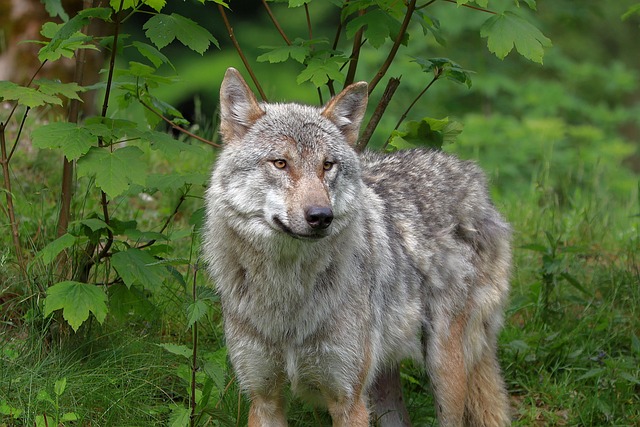
The wolf is listed in Switzerland among the protected species under the Hunting Act (JSG) and the associated Hunting Ordinance (JSV).
Individual wolves may only be shot by game wardens, and only upon order or with authorisation – not by private individuals or recreational hunters.
The wolf is also protected internationally under the Bern Convention. As of 7 March 2025, the wolf is no longer classified as “strictly protected” (Appendix II) under the Bern Convention, but as “protected” (Appendix III). Switzerland signed the Bern Convention on 12 March 1981 and ratified it on 1 June 1982. Since then, it has been legally obligated under international law to transpose the protection provisions contained therein – such as those for protected species like the wolf – into national law.
The hunting of wolf cubs is fundamentally prohibited under the Bern Convention. Switzerland has no official authorisation to hunt wolf cubs. There is also ongoing debate as to whether Switzerland's incremental relaxation of protections is compatible with the objectives of the Convention. According to the Bern Convention, the proactive culling of wolves is also illegal. The Standing Committee of the Bern Convention regards the Swiss regulation involving minimum numbers and preventive culls as concerning and potentially non-compliant with the Convention.
Hunting wolves is fundamentally prohibited – except in cases of explicitly authorised exceptions. Wolves may only be shot when certain conditions are met, such as in the event of repeated livestock depredation or when an animal poses a danger to humans. Switzerland may only hunt wolves with federal authorisation and in compliance with the Hunting Act, ordinances, international law, and herd protection requirements.
Since December 2023, Switzerland has permitted preventive culls through its hunting ordinance — including the culling of entire packs under certain conditions. This also affects wolf pups, as they are part of packs. However, this is not covered by the Bern Convention and is therefore illegal.
It is not only the canton of Graubünden or the FOEN that currently lack authorization from the Bern Convention for their massacres.
The Bern Convention confirmed in October 2024 that “proactive” culls — i.e., preventive killing without concrete damage — are illegal.
In December 2024, the Standing Committee of the Bern Convention opened an investigation against Switzerland because certain elements of the regulatory hunting system (e.g., a minimum of 12 packs and preventive culls) are considered non-compliant with the Convention.
Arbitrariness
In 2025, there are plans in the canton of Graubünden to cross yet another red line in the “regulation” of innocent wolves. The Office for Hunting and Nonsense, led by Adrian Arquint, Marcel Michel, and Arno Puorger, plans — starting September 1st, under the so-called ‘baseline regulation’ and with the support of recreational hunters — to kill two-thirds of this year’s wolf pups, who bear no guilt whatsoever. Their only offence is having been born and being classified under the “Two-Thirds Quota” In the worst case, this could result in the deaths of dozens of wolf pups during the massacre.
The killing of wolf pups is internationally condemned and ethically indefensible. There is no exception or authorization under the Bern Convention to hunt wolf pups. Switzerland is also repeatedly criticized by the Bern Convention for its wolf policy. Furthermore, the newly introduced term ‘baseline regulation’ is neither defined nor mentioned in either the Hunting Act or the Hunting Ordinance.
It must be taken into account that wolves today are widely established across parts of the cantons of Valais and Graubünden, as well as in the western Vaud Jura. In this situation, wolf populations (or those of beavers, foxes, and others) self-regulate through their territoriality: where one pack lives, no new pack will settle. According to scientific consensus, a levelling off of population growth can be expected in these areas even without active regulation.
Thanks to improved livestock protection the number of kills had also decreased massively by the end of September 2024. In the canton of Graubünden by 35% and in the canton of Valais by 15%. In 2023, the number of kills across Switzerland had already fallen by 40% compared to 2022. In 2024, too, most kills occurred in unprotected or inadequately protected herds. The decline in depredation events began as early as 2023, before wolves were shot preventively for the first time. Ultimately, the decline in livestock losses is primarily the result of strengthened herd protection from 2022 onwards, when a significant increase in funding for protective measures was decided for the first time.
A similar situation can be observed in Brandenburg, Germany:
Dossier: Wolf Switzerland: Facts, Politics and the Limits of Hunting
Further Articles
- Swiss meadows are losing biodiversity at an alarming rate
- When sheep, cattle and others occupy wildlife habitat
- Swiss animal welfare organizations criticize planned wolf culls as a threat to pack structures and herd protection
- In Graubünden, wolf mismanagement runs rampant
- Val Fex: When the herd protection concept is more full of holes than the fence
- Culling instead of protection – Switzerland on the path to silent wolf extermination
- Communication failures at the Office for Hunting and Fishing in Graubünden
- Illegal wolf hunting in Switzerland
- Wolf cubs in Switzerland under fire
- Switzerland sells massacre of wolves as a success
- Sloppiness in the office of Katrin Schneeberger
- Livestock grazing alters soil, plant and insect populations
- The senseless hunt for wolves in Switzerland
- The truth about sheep mortality in Switzerland: causes and statistics
- Wolf culls in Switzerland: concerns over party politician Albert Rösti
- Let us stop the destructive fury of the SVP
- Participatory campaign: An appeal for change in Switzerland
- 200 environmental organizations from 6 continents urge the Swiss government: Stop the wolf cull
- Federal Council faces sharp criticism from wolf experts
- The consequences of controversial wolf management in Switzerland
- Wolf: Federal Councillor Rösti (SVP) circumvents law and order
- Es Burebüebli mahn i nit
- Are BAFU and the hunting authorities still operating rigorously?
- Federal Councillor Albert Rösti tramples the will of the people
- The consequences of controversial wolf management in Switzerland
- Too many sheep harm biodiversity
- Agricultural use destroys alpine meadows
- Livestock losses despite herd protection – how is that possible?
- The rotten apple in St. Gallen's hunting administration
- Pro Natura calls for comprehensive strategy for summer sheep grazing
- According to Agridea study, livestock protection with dogs works well
- Thanks to livestock protection, wolves kill fewer farm animals in Switzerland
- Farmers treat fields as disposal sites
- Biomass of wild animals
- Of sheep farmers and evasive authorities
- The double standards of wolf opponents
More on the subject of recreational hunting: In our dossiers on the criticism of recreational hunting gather fact-checks, analyses and background reports. The scientific evidence is presented in the overview Studies on the Effects of Recreational Hunting.
The position of IG Wild beim Wild: IG Wild beim Wild rejects recreational hunting. Our model is the canton of Geneva, which has managed without recreational hunting since 1974: without hunting seasons, without hunting dogs, without driven hunts, without high seats, without the animal cruelty and crime that go hand in hand with hunting season elsewhere. What has worked there for over fifty years disproves every position paper by JagdSchweiz. An association that bases its policy on claims it refutes in its own documents is not a professional organisation, but a factory for misinformation.