Pro Natura demands a comprehensive strategy for summer sheep grazing
Pro Natura calls for regional master plans for summer sheep grazing. Structural change, labour shortages and the wolf pose major challenges for mountain farming.

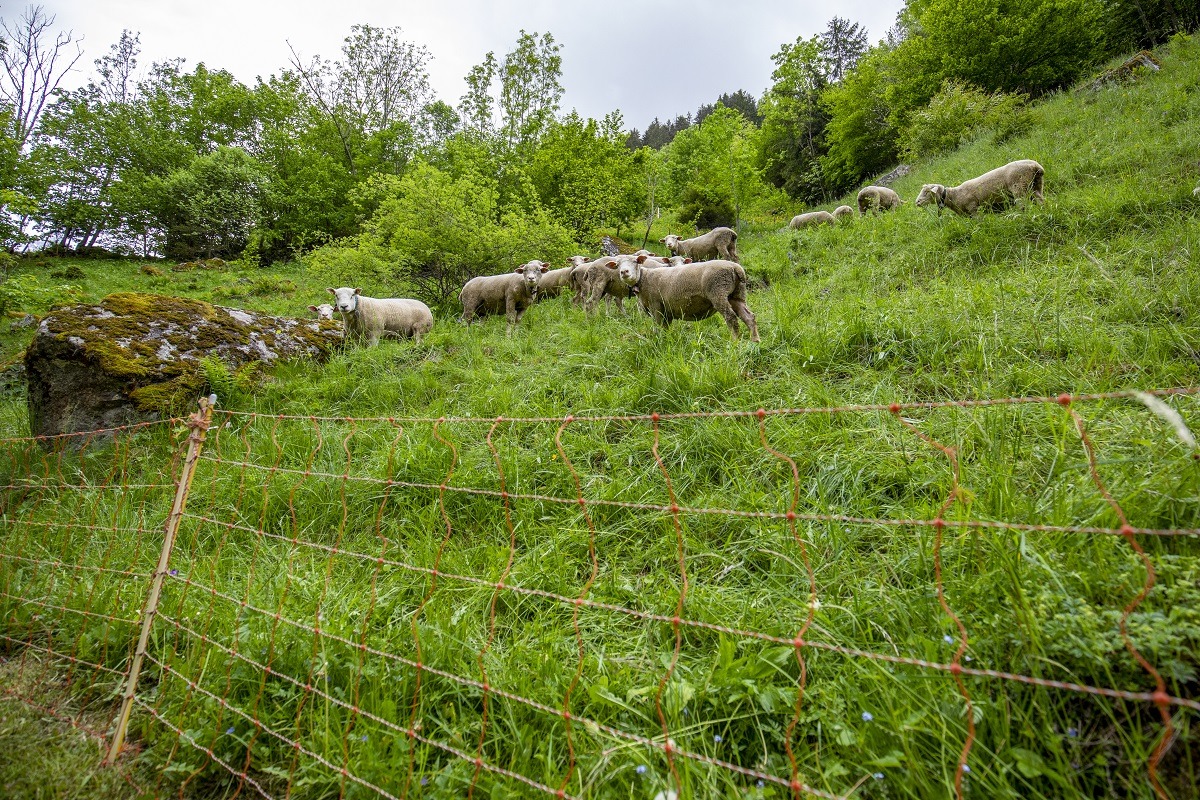
Structural change, labour shortages, the wolf: mountain farming faces major challenges.
To equip summer sheep grazing for the future, Pro Natura is calling on all stakeholders involved to work together on regional master plans with holistic solutions.
Mountain farming is being subjected to enormous strain by the human-caused climate crisis, labour shortages and the presence of wolves. The number of summer grazing operations decreases by two percent annually, and hundreds of hectares of fodder land are becoming overgrown. Sheep alpine farms with fewer than 50 animals in particular are closing down because they are too remote, infrastructure is inadequate, no successors for the operations can be found, or resources and finances for herd protection are lacking. At the same time, operations at larger farms are being intensified. As a result, despite the decline in the number of farms, the number of sheep summered has barely decreased in recent years.
Better information bases needed
Cattle alpine farms also face problems: dairies, for example, are being abandoned due to water shortages. “Some of these alpine pastures would be partially suited to sheep grazing, with good conditions for herd protection,” says Sara Wehrli, expert on predators at Pro Natura. Both the abandonment of alpine farms and intensification are aggravating the biodiversity crisis: “While valuable areas from a nature conservation perspective on sheep pastures are being lost despite summer grazing subsidies, the use of high-performance cattle breeds with supplementary concentrated feed on cattle alpine farms leads to over-fertilisation, and the expansion of access roads damages habitats and biodiversity,” explains Pro Natura agricultural expert Marcel Liner.
Furthermore, due to inadequate data at the federal and cantonal level, it is not known how well grazing bans in areas with sensitive plants are being enforced. “Public funds are therefore currently supporting grazing even in places where it does more harm than good to biodiversity,” says Liner. The cantons must therefore urgently establish better information foundations.
Rethinking sheep summer grazing
Pro Natura would welcome livestock farmers, the federal government, cantons and environmental organizations sitting down for a serious discussion about summer grazing practices. The goal should be to designate priority alpine areas for conservation and to financially support alpine farming where clear requirements for species, biotope or landscape protection have been established. Grazing with sheep does not, for example, have a positive impact everywhere on the biodiversity. Above the tree line, where natural shrub encroachment does not occur, grazing has no biodiversity-promoting effects. This affects around 40 percent of the total summer grazing areas of Switzerland; where wildlife graze and are displaced by livestock or infected with diseases.
In the future, summer grazing practices should be viewed more holistically. The discontinuation of individual alpine operations must not be a taboo. To this end, the federal government could financially support livestock farmers in developing farm-specific protection concepts. “We should prioritize sheep summer grazing on those areas and with those breeds where it makes the most sense from an ecological, agricultural and societal perspective,” emphasizes Wehrli. Where and how exactly this is done must be determined collectively. More on the topic of agriculture and wolf protection.
Dossier: Wolf in Switzerland: Facts, politics and the limits of hunting
| You can help all animals and our planet with compassion. Choose mercy on your plate and in your glass. Go vegan. |
More on the subject of recreational hunting: What the research says about this is shown by Hunting fact-checked: the state of research.
The position of IG Wild beim Wild: IG Wild beim Wild rejects recreational hunting. Our model is the canton of Geneva, which has managed without recreational hunting since 1974: without hunting seasons, without hunting dogs, without driven hunts, without high seats, without the animal cruelty and crime that go hand in hand with hunting season elsewhere. What has worked there for over fifty years disproves every position paper by JagdSchweiz. An association that bases its policy on claims it refutes in its own documents is not a professional organisation, but a factory for misinformation.