
Lynx Switzerland: Keystone Species and Political Flashpoint
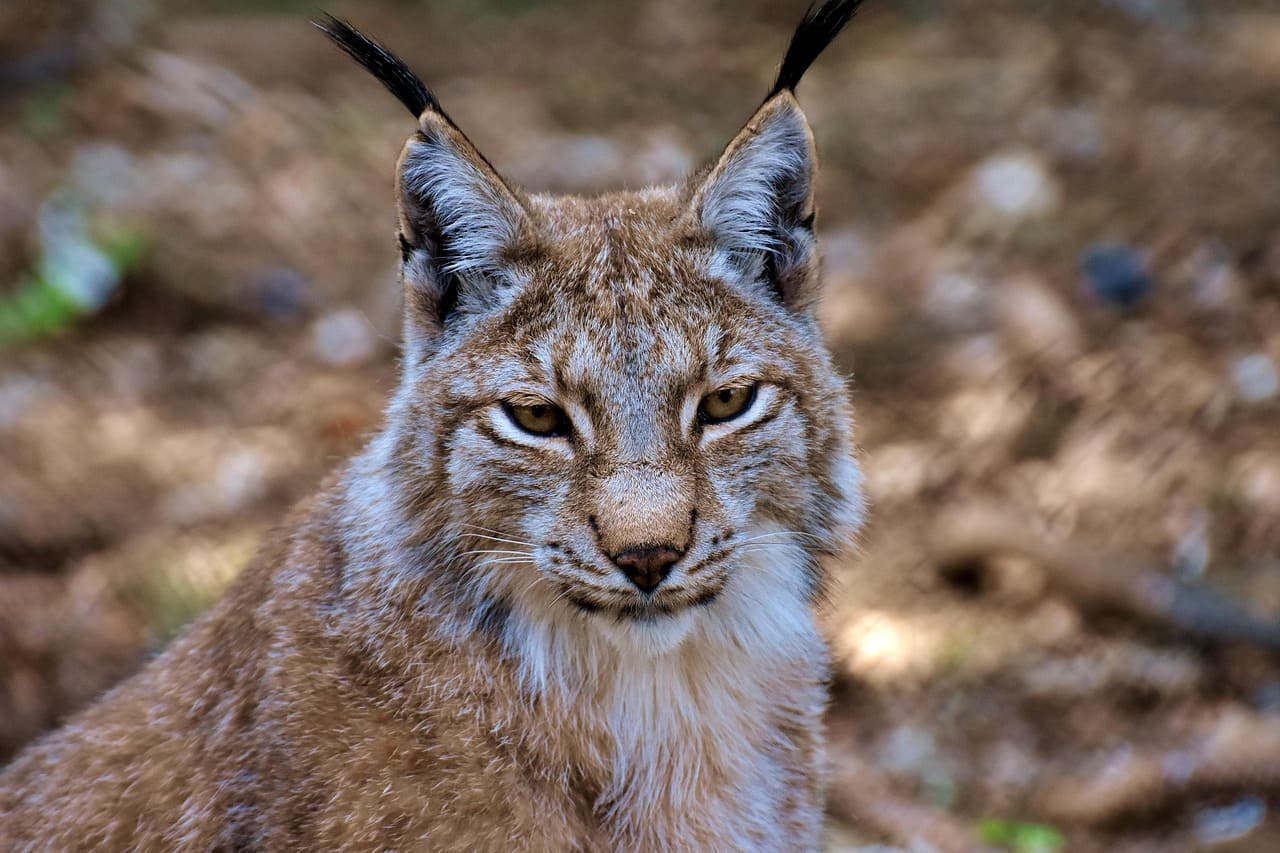
Around 340 Eurasian lynx live in Switzerland. They descend from approximately 20 individuals that were reintroduced from the Carpathians in the 1970s. Switzerland thus harbors the largest lynx population in the entire Alpine region and bears special responsibility across Europe for the conservation of this strictly protected species. At the same time, the gene pool of both subpopulations – Alps and Jura – is alarmingly small. Inbreeding, genetic impoverishment, traffic accidents, and poaching by recreational hunters threaten the lynx's future.
What a contradiction: A country that presents itself as a nature conservation nation protects its largest native predator among cats on paper – and in practice lets it disappear between lobby interests, misidentification shootings, and political blockades. In November 2024, a game warden in Graubünden shot three lynx – one adult male and two juveniles – because he confused them with wolves. The planned compensation project, the release of two replacement lynx, was suspended a few months later under pressure from the recreational hunting lobby. In the Jura, an earless lynx shows what genetic impoverishment means in concrete terms: heart murmurs, low birth weight, drastically declining fertility.
This dossier compiles the most important facts about the lynx in Switzerland: its ecological role as a keystone species, the political blockades that prevent its expansion, the threats from recreational hunting, poaching, and habitat fragmentation – and the question of why a species that is legally protected receives no reliable protection in reality.
What awaits you here
- Biology and lifestyle: Who the lynx is, how it hunts, why it is indispensable as a keystone species for biodiversity.
- Ecological significance: How the lynx regulates deer populations, promotes forest regeneration, and stabilizes ecosystems – better than any recreational hunter.
- Population and genetic crisis: Why 340 lynx from 20 founding animals is no reason for reassurance – and what inbreeding, isolation, and lack of connectivity mean.
- Threats: Poaching, misidentification shootings, traffic, habitat fragmentation, and the systematic cultivation of hostility by the recreational hunting lobby.
- The Graubünden case 2024: Three shot lynx, a stopped compensation, and a system that treats predators as collateral damage.
- Politics and Lobbying: How hunting associations block lynx protection and why the lynx enjoys less political protection than on paper.
- «Did You Know?» – 25 facts about the lynx that refute the hunting narrative.
- Alternatives: What can save the lynx.
- What needs to change: Concrete political demands.
- Arguments: Responses to the most common claims of the recreational hunting lobby about the lynx.
- Quick links: All relevant articles, studies and dossiers.
Biology and Lifestyle: Europe's Largest Wild Cat
The Eurasian lynx (Lynx lynx) is Europe's largest wild cat. Adult animals reach a body length of 70 to 110 centimeters, a shoulder height of 50 to 75 centimeters and a weight of 15 to 38 kilograms. The characteristic tufted ears, pronounced facial ruff and short, black-tipped tail make it unmistakable. The hair tufts on the ears enhance hearing ability: lynx can detect passing roe deer at a distance of 500 meters.
Lynx are solitary animals with large territories. A male claims a territory of 100 to 300 square kilometers, a female 50 to 150 square kilometers. These spatial requirements explain why the lynx depends on large, contiguous forest areas – and why habitat fragmentation by roads, settlements and highways poses one of the greatest threats.
As an ambush and stalking predator, the lynx strikes its prey at regularly used wildlife corridors. Its prey spectrum includes primarily roe deer and chamois, as well as foxes, martens, hares, young wild boar, marmots and occasionally birds. Unlike the wolf, the lynx returns to its kill and uses it over several days. It only eats carrion in absolute emergency situations. The large paws prevent the lynx from sinking deep into snow in winter – a crucial advantage over its prey animals.
More on this: The Lynx – Animal Portrait and The Significance of the Lynx for Preserving Biodiversity
Ecology: Why the Lynx Does More for the Forest Than Any Recreational Hunter
The lynx is a keystone species. Its presence or absence has direct and indirect effects on a multitude of other species and on the entire ecosystem. By spatially and socially regulating roe deer and chamois populations, it prevents overgrazing and promotes natural forest regeneration. Where the lynx occurs, browsing pressure on young trees measurably decreases – not because it kills all deer, but because its mere presence changes the spatial behavior of prey animals.
This principle of the «landscape of fear» is well documented in behavioral ecology: roe deer and chamois avoid certain areas when they know a predator is nearby. The vegetation in these areas gets a chance to regenerate. Structurally rich forests with old and young trees emerge – habitats for a multitude of other animal species, from woodpeckers to insects.
Recreational hunting cannot replace this effect. Recreational hunters are temporally limited in their territory, follow human schedules and select based on trophy size, not biological function. The lynx, however, is present year-round, kills sick and weak animals with far greater precision and sustainably stabilizes populations. The result: less browsing, healthier wildlife populations, better forest regeneration – without a single shot.
The lynx also serves as an indicator species: its presence shows that an ecosystem is intact and environmental conditions are sufficient for a sustainable population. Its absence is a warning signal. Promoting the lynx is therefore not just species protection – it is ecosystem protection.
More on this: Why Recreational Hunting Fails as Population Control and Arguments for Professional Game Wardens
Population and Genetic Crisis: 340 Lynx, 20 Founding Animals, a Fragile Gene Pool
In Switzerland, the lynx was exterminated in the 19th century through intensive persecution. Since 1962, it has been protected by hunting law. On April 23, 1971, the first lynx were released again in Canton Obwalden, in the federal wildlife sanctuary «Hutstock» in the Melchtal – wild captures from the Slovak Carpathians. In the following years, a total of 25 to 30 individuals were released in the Alpine region and Jura.
Current estimates by the KORA Foundation assume a total number of around 343 independent lynx in Switzerland. Of these, about 261 belong to the Alpine population and 81 to the Jura population. Since 2010, there has been a slight increase in the population. This sounds like a success story – but only on the surface.
The core problem is genetic: all Swiss lynx descend from around 20 founding animals. Both the Alpine population and the Jura population are considered highly endangered because the gene pool is far too small and therefore fragile. In the Jura, inbreeding already shows visible consequences: heart murmurs in young animals, low birth weight, drastic decline in fertility. A lynx without ears photographed in 2024 in the French-Swiss Jura mountains became a symbol of this genetic impoverishment.
The Jurassic lynx population is particularly endangered because it lives in isolation – without genetic exchange with the Alpine population. Natural barriers such as highways, settlements and missing wildlife corridors prevent migration. Between 2001 and 2008, several lynx from the Jura and Northwestern Alps were relocated to northeastern Switzerland as part of the LUNO project. A third population has established itself there, expanding toward central Switzerland and Austria. However, even this measure does not solve the fundamental genetic problem.
More on this: Swiss Lynx in Great Danger and Lynx Without Ears – Consequence of Genetic Impoverishment?
Threats: Poaching, Mistaken Identity, Traffic and Lobbying
The lynx is federally protected and considered a species of very high national priority. In reality, the lynx in Switzerland faces an entire bundle of threats that practically undermine its protected status.
Poaching by recreational hunters: Protected species on the Red List – including the lynx – are repeatedly shot illegally. Pro Natura systematically documented cases of lynx poaching in Switzerland in a widely noted analysis. The dark figure is high because lynx live in remote forest areas and illegal shootings are difficult to prove.
Mistaken identity shootings: On November 16, 2024, a game warden in the Surselva in Canton Graubünden shot three lynx – an adult male and two juveniles – during an operation for wolf regulation. The man identified the animals at night using thermal imaging technology and was «firmly convinced» he was shooting at juvenile wolves approved for culling. The case shows how error-prone a system is that shoots at predators at night with night vision technology.
Traffic accidents: Road death is one of the most common non-natural causes of death for lynx in Switzerland. The dense road network fragments habitats and migration corridors. Particularly in the Mittelland, where lynx would need to migrate between Jura and Alps, functioning wildlife corridors are missing.
Habitat fragmentation: Highways, settlements and intensive agriculture make natural expansion and genetic exchange between subpopulations impossible. Particularly in the southeastern foothills and Alps as well as in the Southern Alps, large, not yet colonized habitats are available – which the lynx cannot reach on its own.
Recreational hunting lobby: Hunting associations have been conducting systematic campaigns against predators for decades. The lynx is portrayed as a competitor for huntable game – as a threat to roe deer and chamois populations and thus to the cantonal hunting rights. The FOEN lynx concept explicitly provides that regulatory interventions in lynx populations are possible in case of «high losses in the use of hunting rights». The protected status of the lynx is thus subordinated to the economic interests of a recreational hunting lobby.
More on this: Graubünden Office for Hunting and Nonsense kills three protected lynx and Wildlife corridors and habitat connectivity
The Graubünden case: Confusion, compensation, blockade
On November 16, 2024, three lynx are killed in Graubünden as part of a wolf regulation: one adult animal and two juveniles. The official version: confusion by a game warden at night. The incident triggers a scandal. The game warden reports himself, is fined and excluded from wolf hunting. In December 2025, the Federal Office for the Environment (FOEN) approves the release of two lynx as compensation for the canton of Graubünden – one from the Jura, one from the Carpathians.
But in February 2026, the canton stops the project. Not for professional reasons, but because in parliament, rural-influenced, SVP-affiliated circles, in which recreational hunting interests play an important role, exert pressure. The federal permit remains in place, cantonal implementation is blocked. Species protection as an optional exercise, not as a mandatory task.
The legal sanction for the death of three strictly protected lynx: a fine for multiple violations of the hunting law. Three dead lynx are considered a mistake, but not a systemic error. The signal: Anyone who wants to compensate predators lost through mistaken shootings must expect headwinds from the recreational hunting lobby. What happens to the wolf today – politically motivated shootings, destruction of family units, downgrading of protection status – can be demanded for the lynx tomorrow.
More on this: Graubünden: The release of lynx is stopped and The wolf in Europe – how politics and recreational hunting undermine species protection
Politics and lobby: Protection on paper, hunting interests in practice
The lynx is protected in Switzerland by the Hunting Act (JSG) and the Hunting Ordinance (JSV). It may not be hunted. FOEN has developed a Lynx Switzerland concept as implementation guidance. Switzerland participates in international reintroduction projects and has relocated lynx to Germany, Austria and Italy. On paper, this looks good.
In practice, lynx protection systematically collides with the interests of the recreational hunting lobby. FOEN's lynx concept provides for regulation shootings when lynx cause 'major damage to livestock' or 'high losses in the use of hunting rights.' The last point is crucial: The lynx may be regulated if it preys on too many roe deer and chamois – exactly what it is ecologically there for. The recreational hunting lobby thus has an instrument to systematically undermine lynx protection.
Hunting associations of the cantons Vaud, Neuchâtel and Franche-Comté demand population interventions despite the obvious decline of lynx in the Jura. In Graubünden, political pressure blocks the release of compensation lynx. The wolf upper limit, currently being discussed in parliament, creates a precedent: What applies to the wolf today can be demanded for the lynx tomorrow. Predators are not treated as components of functioning ecosystems in Switzerland's political system, but as disruptive factors whose presence is politically negotiable.
More on this: Hunting ban Switzerland and Template texts for hunting-critical initiatives in cantonal parliaments
'Did you know?' – 25 facts about the lynx
- Around 340 lynx live in Switzerland – the largest population in the entire Alpine region. Switzerland thus bears special responsibility Europe-wide.
- All Swiss lynx descend from only around 20 founding animals that were reintroduced from the Carpathians in the 1970s. The gene pool is alarmingly small.
- In the Jura, inbreeding already shows visible consequences: heart murmurs, low birth weight and drastically declining fertility.
- A lynx without ears photographed in 2024 in the Franco-Swiss Jura is a symbol of genetic impoverishment.
- On November 16, 2024, a game warden in Graubünden shot three protected lynx because he confused them with wolves at night.
- The planned compensation – the release of two lynx – was stopped due to political pressure from the recreational hunting lobby.
- The legal sanction for the death of three strictly protected lynx: a fine.
- The FOEN lynx concept allows regulation shootings when the lynx causes 'high losses in the use of hunting rights' – i.e., when it eats too many roe deer.
- The lynx regulates roe deer populations spatially and socially compatible. Where it occurs, browsing pressure on young trees decreases measurably.
- The lynx preferentially preys on sick and weak animals – and thus stabilizes populations more sustainably than any recreational hunter.
- Lynx can hear roe deer from 500 meters away. Their ear tufts enhance their hearing ability.
- A male lynx claims a territory of up to 300 square kilometers. Habitat fragmentation by roads and settlements is one of the greatest threats.
- The Jura population lives isolated without genetic exchange with the Alpine population. Highways and settlements block migration.
- Road death is one of the most common unnatural causes of death for lynx in Switzerland.
- Poaching by recreational hunters is documented and the dark figure is high. Pro Natura has systematically analyzed cases of lynx poaching.
- Recreational hunting associations stage the lynx as a competitor for huntable game – and demand population interventions, although the species is strictly protected.
- Switzerland relocates lynx abroad to build up populations there – while domestically not securing the framework conditions for its own population.
- In the canton of Geneva, which has not known militia hunting since 1974, predators like lynx and fox are welcome and their populations stable.
- The lynx is an indicator species: Its presence shows that an ecosystem is intact. Its absence is a warning signal.
- The Swedish court stopped the wolf hunt in 2025/2026 because the politically lowered population target was not scientifically sustainable. The same logic applies to the lynx.
- Switzerland has the smallest proportion of protected areas in Europe – around 10 percent of the land area. Recreational hunting associations have been blocking national parks for decades.
- What is politically enforced for the wolf today – shooting quotas, population upper limits, destruction of family units – creates precedents for the lynx.
- In the canton of Schwyz, no damage from bear, wolf or lynx to livestock was registered in an entire alpine season. Nevertheless, the canton tightens its policy towards predators.
- Recreational hunters decimate predators and thus produce the browsing problem for whose solution they subsequently present themselves as irreplaceable.
- Only 0.3 percent of the Swiss population are recreational hunters. 99.7 percent have no interest in killing wild animals – but the 0.3 percent determine the political agenda.
Alternatives: What can save the lynx
Protecting the lynx requires no revolutionary measures. It requires the consistent implementation of what already applies legally – and is politically blocked.
Genetic refreshment: The introduction of lynx from genetically different populations – such as from the Carpathians – is the most urgent measure, particularly for the Jura population. Switzerland has the infrastructure and expertise for this. What is missing is the political will to implement it against the resistance of the recreational hunting lobby.
Wildlife corridors and habitat connectivity: The connection between the Jura and Alpine populations must be established through functioning wildlife corridors. Wildlife bridges over highways, river renaturalisation, removal of barriers – measures that benefit not only the lynx but entire biodiversity.
Professional wildlife ranger structures: Following the Geneva model, state-employed specialists replace the armed militia. Wildlife management follows clear ecological criteria, transparently, controllably and without trophy logic. The lynx is promoted as part of the ecosystem, not fought as a competitor.
Livestock protection instead of culling: Where lynxes occasionally attack livestock, prevention measures are the answer – not culling. Federal and cantonal authorities cover compensation costs for lynx kills and finance up to 100 percent of protection measure costs. The system works – when applied consistently.
More on this: Alternatives to hunting: What really helps without killing animals and Wildlife corridors and habitat connectivity and Geneva and the hunting ban
What would need to change
- Immediate genetic refreshment of both sub-populations: The introduction of Carpathian lynxes into the Jura and eastern Switzerland must be politically enforced – without veto from the recreational hunting lobby. The FOEN permit for Grisons must be implemented, not blocked.
- Elimination of hunting rights as grounds for regulation: The FOEN lynx concept may no longer accept 'losses in hunting rights usage' as grounds for interventions in lynx populations. The lynx does what it should ecologically. Punishing it for this is absurd.
- Ban on night vision technology in predator regulation: The Grisons case shows: Those who shoot at predators at night with thermal imaging devices confuse lynxes with wolves. The technology is error-prone, and the consequences are irreversible.
- Consistent expansion of wildlife corridors: The connection between Jura and Alpine populations is vital for the genetic future of the lynx. Federal and cantonal authorities must prioritise implementation of already identified corridors. Model initiative: Wildlife corridors and habitat connectivity
- Criminal consequences for mistaken shootings: Three dead lynxes cannot be settled with a fine. Those who kill strictly protected species must face consequences that correspond to the species' protection status.
- Expansion of protected areas to at least 30 percent of land area: Switzerland must take the global 30 percent target seriously. Recreational hunting lobby resistance to national parks may no longer be a binding veto.
Arguments
'The lynx eats too many roe deer – it harms hunting rights.' The lynx regulates roe deer populations in a way no recreational hunter can replace: year-round, area-wide, selectively and without the compensatory reproductive dynamics that culling triggers. What the recreational hunting lobby complains about as 'damage to hunting rights' is the ecological function of the lynx. Those who want to punish the lynx for doing what it should biologically have not an ecological but an economic problem.
'Lynxes kill livestock.' Lynxes occasionally kill sheep and goats. This is no trivial matter for affected farmers. But: Federal and cantonal authorities compensate lynx kills fully and finance prevention measures up to 100 percent. The damage amount is minimal relative to the lynx's ecological services. Those who keep livestock in predator areas must implement livestock protection – not eliminate the predator.
'There are enough lynxes in Switzerland – the population is stable.' 340 lynxes sounds stable. Genetically, it's the opposite. All animals descend from around 20 founding animals. The Jura population shows inbreeding depression: heart murmurs, declining fertility, earless young. Without genetic refreshment and connectivity of sub-populations, the lynx has no long-term viable population in Switzerland.
'The mix-up in Grisons was a regrettable isolated incident.' The isolated incident reveals a systemic problem: night vision technology, political culling pressure, inadequate species knowledge and a hunting structure optimised for culling efficiency rather than species protection. When a trained wildlife ranger cannot distinguish lynxes from wolves, this is not individual failure but structural.
'The lynx needs no additional protection – it is protected.' Protection on paper is useless when enforcement is lacking. In Grisons, three lynxes are shot and compensation is politically blocked. In the Jura, recreational hunting associations demand population interventions despite genetic crisis. In the FOEN lynx concept, hunting rights stand as grounds for regulation. Protection status without enforcement is an empty shell.
'Without recreational hunting, there would be too many roe deer and wildlife damage.' Canton Geneva has had no militia hunting for 50 years. Stable wildlife populations, higher biodiversity, less hunting pressure. Where predators like lynx and wolf occur, they regulate wildlife populations more efficiently than recreational hunters. The problem of 'too many roe deer' is substantially a product of recreational hunting itself: it eliminates predators and creates through hunting pressure the browsing problem for whose solution it presents itself as indispensable.
Quicklinks
Articles on Wild beim Wild:
- The lynx – animal portrait
- The importance of the lynx for biodiversity conservation
- Swiss lynxes in great danger
- Lynx without ears – consequence of genetic impoverishment?
- Grisons Office for Hunting and Nonsense kills three protected lynxes
- Grisons: The suspension of lynxes is stopped
- Iberian lynx brought back from brink of extinction in just two decades
- The number of threatened Iberian lynxes has doubled
- Why recreational hunting fails as population control
- Studies on the impact of hunting on wildlife
- Initiative demands 'Wildlife Rangers Instead of Hunters'
Related dossiers:
- Golden jackal in Switzerland: Natural immigrant under political pressure
- The otter in Switzerland: Exterminated, returned and politically threatened
- The brown bear in Switzerland: Exterminated, returned and still unwelcome
- The wildcat in Switzerland: Back from extermination, threatened by indifference
- The lynx in Switzerland: Predator, keystone species and political object of dispute
- The fox in Switzerland: Most hunted predator without lobby
- Wolf: Ecological function and political reality
- The wolf in Europe: How politics and recreational hunting undermine species protection
- Wolf in Switzerland: Facts, politics and the limits of hunting
- Valais wolf balance sheet: Numbers of a massacre
- Fox hunting without facts: How JagdSchweiz invents problems
- Herd protection in Switzerland: What works, what fails and why culling is not a solution
Our mission
The lynx is a predator, a keystone species and a barometer for the state of our ecosystems. It regulates wildlife populations more efficiently, sustainably and in accordance with animal welfare than any recreational hunting. It promotes forest regeneration, stabilizes populations and indicates where nature still functions. Its protection is not a sentimental demand – it is ecological reason.
Switzerland hosts the largest lynx population in the Alpine region. It has a European responsibility. It will only live up to this responsibility if it no longer treats the lynx's protection status as political bargaining material, if it consistently implements genetic refreshment, builds wildlife corridors and prevents the recreational hunting lobby from undermining species protection.
IG Wild beim Wild documents the reality of lynx protection in Switzerland – with numbers, sources and political analysis. We do this because the lynx has no voice. And because a society that champions nature conservation cannot afford to lose its largest native wildcat between recreational hunting interests, misidentification shootings and political blockade.
This dossier is continuously updated when new studies, numbers or political developments require it.
More on recreational hunting: In our hunting dossier we compile fact-checks, analyses and background reports.