St. Gallen plans to abolish red deer management associations: what the canton holds against recreational hunters
After more than 30 years, the canton draws a sobering conclusion on recreational red deer hunting, and recreational hunters are resisting the loss of power.
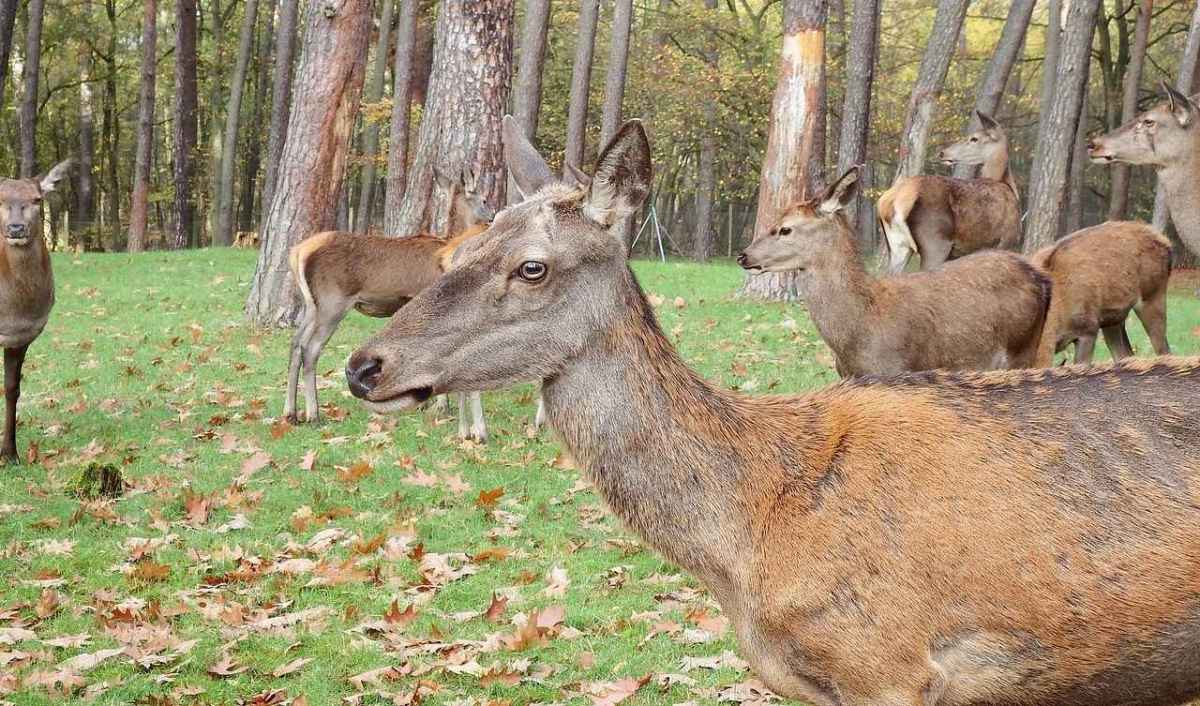
Red deer: The canton of St. Gallen wants to dissolve the recreational hunters' red deer management associations.
«Management»
The canton of St. Gallen intends to dissolve the red deer management associations.
Since 1994, recreational hunters have organised red deer hunting in three such associations spanning hunting ground boundaries, because red deer can cover a good 20 kilometres in a single night and pass through several hunting grounds. In future, the Office for Nature, Hunting and Fisheries (ANJF) is to set the kill targets directly for each of the 144 hunting grounds, as is already the case for roe deer and chamois. The consultation on the "6th Addendum to the Hunting Act" ran until 21 September 2026; the bill has not yet been passed into law. The umbrella association RevierJagd St. Gallen rejects the abolition and has reaffirmed its opposition at a press conference.
More revealing than the protest is the canton's reasoning. The report by the Department of Economic Affairs dated 30 June 2026 reads, for long stretches, like the official record of a failure.
Kill targets missed for years
The strategic hunting plan of 2016 was intended to reduce the red deer population. According to the report, the population nonetheless continued to rise over the past ten years, and the targets were "predominantly missed". In many places, populations could "only be stabilised, but not reduced as planned". According to the government's response to an interpellation, kills rose from 432 in 2006 to 944 in 2024, while count figures doubled over the same period. More deer killed, more deer alive: across the whole canton, according to the report, more red deer are being born than are being killed or dying of natural causes.
The canton also cites mitigating factors. Part of the increase is attributed to more accurate counting using thermal imaging cameras, and red deer are also spreading into areas they previously inhabited. The ANJF's kill quotas had in some cases been set too low. The problem is that even these too-low targets were regularly not met in certain areas, above all in Hegegemeinschaft 1 and partly in Hegegemeinschaft 2.
Trophies instead of antlerless deer
The reasons the report cites for the failure are ones usually heard from critics of recreational hunting. Parts of the recreational hunting community "repeatedly questioned" the need for a reduction. Within the Hegegemeinschaften, discussion mostly revolved around kill quotas for stags - that is, trophies - and too little around antlerless deer, meaning hinds and calves. Some hunting associations have internal rules that hamper hunting success. Some stop hunting during the open season as soon as the quota in their own hunting ground has been fulfilled, even if neighbouring hunting grounds are lagging behind. Hunts spanning multiple hunting grounds remain the exception.
On top of this there is a structural flaw: within the Hegegemeinschaften, each hunting ground has one vote. Hunting grounds with few deer are in the majority and can outvote those with many deer. The delegates' assembly generally meets once a year, and sanctions against defaulting hunting grounds are barely enforceable. This is nothing new. As early as the 1993 dispatch on the hunting act, it was noted that cooperation across hunting grounds had not proven effective due to the lack of sanctions. "Even back then, the shortcomings that still exist today were pointed out," the canton writes.
More hunting pressure, shyer deer
Since 2013, the canton has continuously made concessions to the recreational hunting community. In 2016, the calibre requirements for red deer hunting and the ban on flushing dogs were dropped. The hunting season now lasts four months, from the third Saturday in August to the third Saturday in December. In 2025 it was extended in certain areas until the end of the year, additional driven hunts were held, and the wildlife wardens shot red deer in non-hunting areas.
The same report describes what this permanent offensive brings about. Prolonged hunting pressure makes red deer wary and nocturnal, and the St. Gallen red deer hunt finds itself «in a downward spiral». The canton is particularly explicit when it comes to the killing of calves: the surviving mother animal learns to recognise humans and the high seat «as a mortal danger». We have described the consequences that killing a calf has for the surviving hind, and the risks that killing a hind poses for its calf, using the example of Emmental and Entlebuch and the Grisons special hunt. Research on the effects of hunting pressure on the behaviour and spatial use of wild animals can be found on our page Hunting Fact Check.
The recreational hunters want more powers
At the press conference held by RevierJagd St. Gallen, those present were President Peter Weigelt, Vice-President Stephan Schädler, Barbara Hubschmid as chairwoman of Hegegemeinschaft 2, and Mirco Rossi, president of the Werdenberg Hunters' Association and also a member of the cantonal parliament. The association does not want to abolish the wildlife management communities, but rather to equip them with more powers. They should assume responsibility for regional targets, as an assessment based on individual hunting grounds falls short. Hubschmid also demands clearly defined, long-term targets: «Anyone who wants to regulate a population must first define what population is being aimed for.» It should be investigated, she says, how many red deer the forests can sustainably bear.
Strategic targets have, however, existed since 2016. According to the canton, hunting planning sets out specifications for population development, spatial distribution, density, age structure and sex ratio, oriented towards achieving forestry objectives. Whether the canton has, beyond this, set a comprehensibly quantified target population for each region is another question. The association further criticises that the canton places too much emphasis on the deficits, and calls for a «balanced analysis». St. Gallen's territorial hunting, it argues, is a voluntary public service. «Hunting is a service for the general public,» says Weigelt.
The cantonal parliament has already turned this down once
The problems are also known within parliament. During deliberations on the most recent amendment to the hunting act, the preliminary committee submitted the motion «Adjust hunting planning for red deer». It demanded that the wildlife wardens be bindingly involved in organising the red deer hunt whenever kill quotas are not met. The cantonal parliament rejected entering into debate by 70 votes to 42. The same parliament will decide on the sixth amendment following the consultation process.
Hunting without a qualification certificate
The report contains another passage that raises eyebrows. To this day, in the canton of St. Gallen, hunting guests without a qualification certificate are permitted to hunt on up to six days a year, legitimised by a hunting pass. The canton itself now states that this arrangement contradicts the overriding requirements of animal welfare and hunting law, according to which only qualified persons may kill vertebrates. It is to be abolished. Also to be abolished is the private hunting oversight that the law provides for but which, according to the canton, has «never» actually existed. How heavily the monitoring of recreational hunting relies on the shooters' own statements was most recently demonstrated by the Amden case.
Comment: A public service that fails to deliver
The most important sentence appears in the report's conclusion. Both options—abolishing or strengthening the game management associations—would «on the surface, for now, bring no change to red deer hunting», since they only concern the organisational structure. The canton does intend to set and monitor kill quotas directly per hunting ground in future. But it does not even promise itself that a new organisational form alone will change hunting practice.
Because the core of the problem is not the organisational form, but the construction itself. A public task is delegated to a leisure group pursuing its own interests: trophy stags, a pleasant hunting operation, a hunting ground where it is worthwhile sitting on the high seat. The association calls this «a service for the general public». The canton's own report describes what this service looks like: debates over stags instead of hinds, hunting grounds that stop early, internal rules that curb the kill, and a hunting community that questions the mandate itself. Those who provide a public service in this way are not granted more powers—they have them taken away.Lucerne is currently discussing the very same question with its bonus-malus model, and there too the recreational hunters draw the line at consequences.
What's more: the report itself identifies the causes of high red deer populations as intensive agriculture reaching high altitudes, milder winters and more food. Additional kills do not eliminate these causes. At the same time, according to the canton, sustained hunting pressure makes the red deer warier and makes hunting more difficult. The return of the wolf, which has lived in the canton again since 2012, appears in the report mainly as a cost item.How strongly it affects red deer populations is evident in Grisons. And where the canton already intervenes itself today, in non-hunting areas, it does so with the wildlife wardens. Therein lies the real lesson from 30 years of red deer hunting in St. Gallen.
More on the subject of recreational hunting: What the research says about this is shown by Hunting fact-checked: the state of research.
The position of IG Wild beim Wild: IG Wild beim Wild rejects recreational hunting. Our model is the canton of Geneva, which has managed without recreational hunting since 1974: without hunting seasons, without hunting dogs, without driven hunts, without high seats, without the animal cruelty and crime that go hand in hand with hunting season elsewhere. What has worked there for over fifty years disproves every position paper by JagdSchweiz. An association that bases its policy on claims it refutes in its own documents is not a professional organisation, but a factory for misinformation.

All articles are written by IG Wild beim Wild as well as by external co-authors. Research, structuring and editorial processes may be supported by AI-assisted tools.
Support our work
With your donation you help protect animals and give their voice a hearing.
Donate now →