Special hunt in Grisons: protected in September, cleared for killing in December
In September, the killing of a lactating red deer hind in Grisons is a mistaken kill punishable with a fine of 150 francs; during the special hunt, it counts as quota fulfilment. The Grisons game office has itself documented why: in their winter refuge, the hinds can no longer evade hunters.
«The crown in the moss»
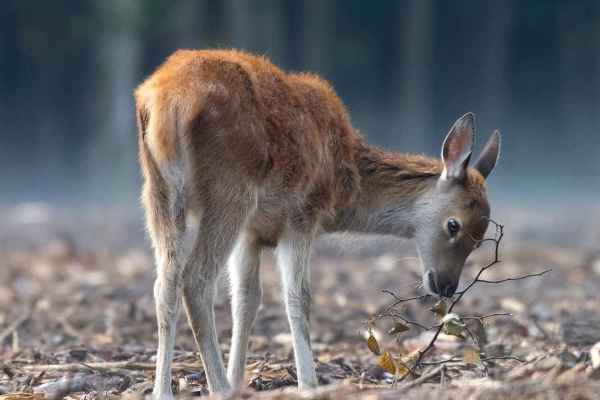
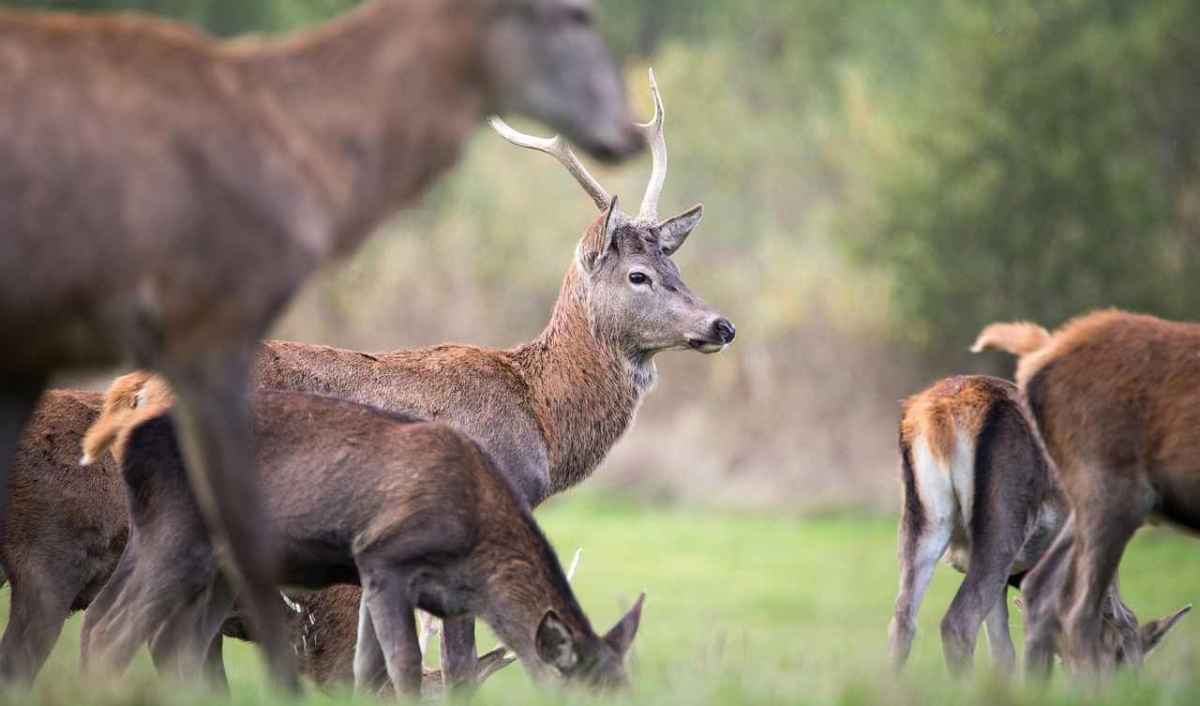
If a red deer calf loses its mother, it loses guidance and rank within the herd and is cast out.
This is what Lucerne game warden Daniel Schmid says, as documented by the article Emmental and Entlebuch: More hinds in the crosshairs, orphaned calves cast out. In Grisons, this has been known for decades. It is stated in a dissertation that the cantonal Office for Hunting and Fishing helped design, and in a paper that the office itself published. Nevertheless, every autumn the canton plans a second hunting phase, whose statutorily defined function is to make up for the number of female animals and their calves not reached during the high hunt.
What costs a fine in September is quota in November
During the Grisons high hunt in September, calves and lactating hinds are not huntable. Anyone who nevertheless kills a lactating red deer hind or a calf commits a mistaken kill. Annex 1 to the Ordinance on Hunting Operations (as of 1 August 2025) sets a fine of 150 francs for each. The special hunt, depending on the region taking place between 31 October and 20 December on a maximum of ten half-days per area, reverses this logic. The same ordinance stipulates that the kill quotas for the special hunt are set in such a way that the missing number of female animals is killed. For planning purposes, the canton generally assumes a female share of the bag of 70 percent.
The hunting year 2023 shows how large this gap can become: after the high hunt, the canton stated that a further 2,218 female red deer and their calves still had to be killed during the special hunt. In the end, the so-called qualitative target achievement stood at 80.8 percent. How this two-stage system works is shown by the analysis by 4,616 red deer: what the Grisons hunting plan reveals – and what it does not prove. The fact that even recreational hunters in Grisons point out this contradiction is documented by the article Grisons recreational hunters do the maths: nine questions on the 2026 red deer kill quota. The sender describes the intervention in the winter habitats there as “ethically unjustifiable” and states: if calves without a mother were not at risk, there would be no reason for a ban in September. Three of the nine questions to the Office for Hunting and Fisheries concern precisely this point: the wildlife-biological justification for the contradiction, the fate of orphaned calves, and the compatibility of the special hunt with winter rest. The office did not answer the questions. However, the answer to the sixth has been on its own website since March 2025, and it is more revealing than the office would probably like.
The office knows the consequences and names the real reason
On 28 March 2025, the Office for Hunting and Fisheries published an eight-page “Expert assessment on the protection of suckling red deer hinds and calves during the Grisons high hunt”. The occasion was a request from the hunting associations of Mesolcina, supported by Bregaglia, to allow calves and suckling hinds to be shot on the last two days of the high hunt. The office rejected this and explains why it protects in September what it allows to be killed in November.
On the subject of the calf, the office writes: if it loses its mother after the suckling period, it may survive physiologically but will suffer socially. Orphaned calves find no acceptance among other animals; the lack of guidance means great stress, hinders physical development, and mortality is high. From an animal welfare perspective, it would be optimal to forgo the killing of mother and young animals altogether. This is the statement made by game warden Schmid from Entlebuch, signed by the Grisons hunting authority.
The reason why the office nevertheless has cows and calves shot in winter is set out in the section on mother-animal protection as a "hunting management instrument". Red deer hinds are said to be strong bearers of tradition, passing their behaviour on markedly to their young. Radio-collaring projects have shown that hinds avoid an area over the long term and across a wide range if their calf has been shot there. A pilot project in Prättigau, in which calves were released for hunting on the last days of the high hunt from 2013 to 2015, saw numbers plummet within three years from seven calves to just one, and was therefore stopped. In summer, according to the office, the hinds can retreat into protected areas or neighbouring cantons. The winter habitats are much smaller, and there the hind "has only limited opportunity to evade hunting in the long term and escape it". Regarding the simultaneous killing of hind and calf, it states that this leaves "no witnesses" to learn from the experience.
The paper's conclusion names the purpose of the September protection period first and foremost: it ensures that "the efficiency of the high hunt remains high in the long term". Mother-animal protection in Grisons is thus not a limit on recreational hunting, but its tool. Protection is granted in September so that the hinds do not learn. Shooting takes place in December, where they can no longer escape. In doing so, the office itself describes how it knows the hinds' knowledge, makes use of it, and ultimately turns it against them.
The canton wrote it down itself
In September 2025, Thomas Rempfler of the Swiss National Park submitted his dissertation on the spatio-temporal behaviour of red deer at the University of Natural Resources and Life Sciences, Vienna. It is based on the Grisons red deer project "Ingio via?", jointly launched by the canton and the National Park in 2015. Hannes Jenny of the Office for Hunting and Fishing is part of the advisory team, helped develop the idea for the main study, and co-organised the fieldwork. The office also helped finance the analysis. The work is therefore not an outside perspective, but the scientific self-description of the Grisons hunting system.
On the high hunt, it states there (Chapter 1.1.5): Calves and their mothers may not be hunted, in order to preserve established behavioural traditions, even in the case of site-faithful animals outside protected areas. The canton thus acknowledges that the bond between cow and calf, and the knowledge passed on within the herd, are valuable from a population-ecology standpoint. On the special hunt, the same document states that since 1987, in a second hunting phase in November and December, culling has taken place on a maximum of ten half-days, with particular attention paid to the sex ratio of the kill quota. What is taboo in September for wildlife-biological reasons becomes a planned item in December.
The dissertation also provides the history behind this. Between 1956 and 1966, hunting in Grisons around the National Park focused on lactating cows. The result, as the work notes with reference to Jenny and Filli 2014, was that hunting pressure fell primarily on animals that did not spend the summer in the hunting-free National Park, which harmed long-term hunting success. And regarding the absence of mature stags, it states that a lack of older, experienced males during the rut led to only a few dominant stags remaining, resulting in oversized herds and a prolonged rut. Both are experiences from Grisons, published with the involvement of the Grisons hunting authority. What game warden Schmid describes in the Entlebuch has been documented in Grisons for decades.
Loss of the mother has lifelong effects
The standard argument for the special hunt is that a calf aged five to seven months is already almost independent. The long-term study on the Scottish island of Rum, which has individually tracked red deer since 1974, disproves this. Andres and colleagues showed in 2013 that the loss of the mother, both before and after weaning, increases the risk of death for both sexes. In male calves, physical condition was also impaired, measurable in a lower probability of developing antlers by 16 months of age. In female animals, the benefit of having a living mother persisted throughout their entire lives.
In January 2026, a team led by Kathreen Ruckstuhl of the University of Calgary, with involvement from the Max Planck Institute for Evolutionary Anthropology and the University of Cambridge, followed up with further findings. Over 40 years of data from 295 red deer hinds across 24 maternal lineages were analysed. The result: the strength of a hind's social bonds correlates with her survival, with the number of her calves, and with the number of calves that themselves reach reproductive age. The authors rank the effect as comparable to environmental and physical factors. The study shows an association, not an experimentally proven cause. But it demonstrates that social bonds in hinds are not a side issue, but a predictor of survival and reproduction. Hunting planning that treats maternal lineages as a kill category would need to take these consequences into account. Grisons does not.
The pack's knowledge is not inherited, but learned
Grisons red deer migrate seasonally between summer and winter ranges. Where these are located, which slopes clear of snow first, where there is quiet: this is not instinct, but culture. Jesmer and colleagues demonstrated in "Science" in 2018, using relocated bighorn sheep and moose, that migrations by hoofed animals arise through learning and cultural transmission. Fewer than nine percent of the relocated animals migrated, compared to 65 to 100 percent in herds whose tradition had never been interrupted. According to the researchers' assessment, if this knowledge is lost, it takes decades to re-establish.
Thurfjell, Ciuti and Boyce showed in 2017, using radio-collared elk cows in Canada, that hinds learn with age to evade recreational hunters. From around ten years of age, they are almost unreachable for recreational hunters, and with every season they survive, they become better at it. For Grisons, this means: precisely the hinds that survive the high hunt carry the pack's knowledge. The special hunt in the winter range, where the herds gather, is the instrument used to catch them anyway. The office itself says so in its paper from March 2025.
Hunting on a shoestring budget
Red deer lower their metabolism in winter. In 2004, Arnold and colleagues documented in radio-collared animals a reduction in heart rate of around 60 percent compared to summer, along with nocturnal hypometabolism, through which these non-human animals conserve energy. The Grisons dissertation confirms for the study areas in the canton that red deer save energy in winter and do not compensate at night for what they miss in grazing during the day. The special hunt therefore catches the animals in a physiological phase in which every flight through snow costs reserves that cannot be recovered. The work also notes that hunting activity leads red deer to choose their habitats more cautiously even at night, even though hunting at night is prohibited in Switzerland.
A camera-trap study from the Italian Eastern Alps, published in 2026 after five hunting seasons, adds to the picture: red deer reacted more strongly to hunting and recreational use than to wolves, with increasing nocturnal activity and avoidance of paths. Hunting pressure pushes the animals into cover and darkness — and thus into precisely those forest areas whose browsing damage later serves as an argument for further kills. How the browsing-damage narrative works is shown in the dossier Forest and Wildlife: The Browsing Damage Narrative.
Recreational hunting selects differently than the wolf does
The review by Milner, Nilsen and Andreassen in «Conservation Biology» in 2007 summarises what selective hunting does to ungulate populations: it can destabilise social structures and dominance hierarchies and lead to the loss of social knowledge. Hunted populations consistently show mortality patterns that differ markedly from those of unhunted populations. Darimont and colleagues added in 2009 in «PNAS» that, unlike most predators, humans remove high proportions of a population and specifically target large, reproductively capable adults. Wolf and lynx predominantly take calves, the sick and the weakened. Recreational hunters take healthy animals. The Grisons hunting operation regulations themselves acknowledge this difference by lowering the female kill quota in regions with wolf packs.
The question the canton never asks
For decades, stags were at the centre of recreational hunting in Grisons. What this means genetically was modelled by Hard, Mills and Peek in 2006 for red deer: if hunting causes the ratio of reproducing males to females to fall below roughly 15 to 100, the effective population size can shrink to the point where adaptive potential is at risk. The effect arises both from the skewed sex ratio and from the declining age of reproducing stags. The canton does not report the decisive figure here — the sex ratio of adult animals after the high hunt. Rapid genetic impoverishment of the Grisons red deer population is therefore not proven. What is proven is that no one is checking for it.
Populations that meet the kill quota are not the same as healthy populations
The canton of Grisons measures the state of its red deer population by three figures: population size, sex ratio, and calf proportion. Social structure, age structure, learning behaviour and disturbance pressure play no role in assessing whether the kill quota has been met. What is not measured cannot be shown to be damaged. Yet the Grisons hunting authority has itself written down everything it would need to know: cow-calf bonds are worth preserving, behavioural traditions are worth preserving, orphaned calves suffer socially, the absence of mature stags has already once thrown the rut out of sync, and hunting nursing cows around the national park has already once proven to be a failure. In the view of Wild beim Wild, the special hunt is the institutionalised repetition of this very mistake, now carried out under winter conditions — and in March 2025 the office itself explained why it targets precisely that period: because the cows can no longer escape from their winter refuge. Questions 6 to 8 from the nine-question article are thereby answered — two of them by research, one by the office itself. What remains open is only whether the Office for Hunting and Fishing will also answer them to the public.
If the population were healthily structured after the high hunt, there would be no need for a second round targeting cows and calves. The special hunt is therefore not the correction of a problem, but the annual proof that recreational hunting in Grisons does not create healthy wildlife populations, but merely ones that fulfil the kill quota. Ongoing incidents from the Grisons hunting season are documented by the Grisons Ticker.
The position of IG Wild beim Wild: IG Wild beim Wild rejects recreational hunting. Our model is the canton of Geneva, which has managed without recreational hunting since 1974: no hunting seasons, no hunting dogs, no driven hunts, no high seats, none of the animal cruelty and crime that elsewhere belong to hunting season. What has worked there for fifty years refutes every position paper by JagdSchweiz. An association that bases its policy on claims it refutes in its own documents is not a professional organisation, but a factory for misinformation.
Sources: Office for Hunting and Fishing Grisons (2025): Expert assessment on the protection of lactating hind deer and calves during the Grisons high hunt, 28 March 2025; Canton of Grisons, Ordinance on Hunting Operations (BR 740.025) with Annex 1 fixed penalty fines, as of 1 August 2025, and Hunting Operation Regulations 2025/2026; Rempfler, T. (2025): The impact of habitat characteristics on spatio-temporal behaviour of red deer. Dissertation, BOKU Vienna, freely accessible at parcs.ch; Andres, D. et al. (2013): Sex differences in the consequences of maternal loss in a long-lived mammal, the red deer. Behavioral Ecology and Sociobiology; Ruckstuhl, K. E. et al. (2026): Associations between lifetime fitness and social bonds in female red deer. Royal Society Open Science; Jesmer, B. R. et al. (2018): Is ungulate migration culturally transmitted? Science; Thurfjell, H., Ciuti, S., Boyce, M. S. (2017): Learning from the mistakes of others. PLOS ONE; Arnold, W. et al. (2004): Nocturnal hypometabolism as an overwintering strategy of red deer. American Journal of Physiology; Milner, J. M., Nilsen, E. B., Andreassen, H. P. (2007): Demographic side effects of selective hunting in ungulates and carnivores. Conservation Biology; Darimont, C. T. et al. (2009): Human predators outpace other agents of trait change in the wild. PNAS; Hard, J. J., Mills, L. S., Peek, J. M. (2006): Genetic implications of reduced survival of male red deer under harvest. Wildlife Biology.
More on the subject of recreational hunting: In our dossiers on the criticism of recreational hunting gather fact-checks, analyses and background reports. The scientific evidence is presented in the overview Studies on the Effects of Recreational Hunting.
The position of IG Wild beim Wild: IG Wild beim Wild rejects recreational hunting. Our model is the canton of Geneva, which has managed without recreational hunting since 1974: without hunting seasons, without hunting dogs, without driven hunts, without high seats, without the animal cruelty and crime that go hand in hand with hunting season elsewhere. What has worked there for over fifty years disproves every position paper by JagdSchweiz. An association that bases its policy on claims it refutes in its own documents is not a professional organisation, but a factory for misinformation.

All articles are written by IG Wild beim Wild as well as by external co-authors. Research, structuring and editorial processes may be supported by AI-assisted tools.
Support our work
With your donation you help protect animals and give their voice a hearing.
Donate now →