Emmental and Entlebuch: More hinds in the crosshairs, orphaned calves cast out
Bern and Lucerne are shifting the focus of red deer hunting onto female animals. A game warden speaks openly about what this means for the calves, and in Schangnau a still-pregnant hind was shot dead.
«The Stolen Night»
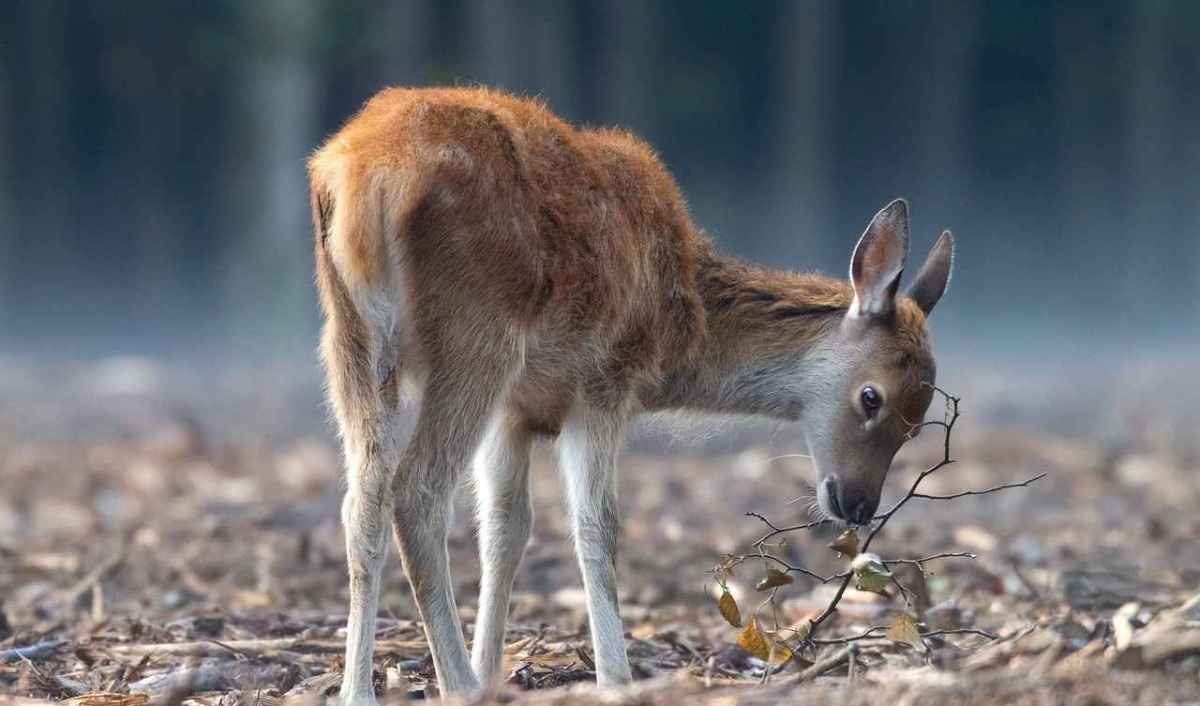
If a red deer calf loses its mother, it also loses its guidance and its social standing within the herd, and is cast out.
This is what Lucerne game warden Daniel Schmid told the «Wochen-Zeitung für das Emmental und Entlebuch». Nevertheless, the cantons of Bern and Lucerne are deliberately shifting recreational hunting of red deer onto female animals this season. In Schangnau, in early September, a hind that was still pregnant was also shot dead.
In the canton of Bern, red deer hunting began on 1 September; in Lucerne, as early as 1 August. Citing rising populations and damage to forests and crops, Bern has increased kill figures by six percent. In wildlife area 5, between Lüderen and Schangnau, 26 red deer have been released for hunting, 15 of them female. According to its 2026 hunting operation regulations, Lucerne is aiming for a ratio of at least one and a half female animals to one male animal. At least 195 red deer are to be killed, including 82 female animals over a year old, plus a calf share of around 30 percent.
The hind first, then the stag
How systematically the pressure on female animals is organised is shown by one detail of Lucerne's regulations. A recreational hunter may only shoot a young stag or a mature stag once they have first collected so-called antlerless points: two per hind, one per yearling hind, and half a point per calf. Anyone wanting to shoot their first stag must therefore first kill a hind or two calves. Bern, too, links the release of crowned stags to a prior kill of antlerless deer.
Schmid explains the logic behind this in the «Wochen-Zeitung»: killing stags barely changes population development. If many stags are killed, young red deer also take part in the rut, which further increases the proportion of female animals. Mature stags, on the other hand, tend to sire more male calves, as research projects have shown. Recreational hunters prefer to shoot male red deer, Schmid concedes, not only for the trophy but also because the risk of a mistaken kill is lower.
With this, Schmid describes a development that, in Wild beim Wild's assessment, is also linked to the recreational hunting sector's long-standing trophy orientation: for decades, the focus was on killing male red deer. Now, the consequences are to be corrected with more hinds being killed.
What happens to the calf
Red deer calves are born in May and June. At the start of the Lucerne hunt in early August, they are two to three months old; at the start of the Bern hunt, around three to four months old. Leading hinds are protected in Lucerne, with an actively lactating udder carrying milk serving as the defining characteristic. However, this protection has a loophole: if the calf and hind are shot together, the lactating hind is also considered non-leading. In Bern, lactating hinds may be shot provided the calf is killed first and both animals are presented together for inspection.
An older calf could, in principle, survive without its mother, says Schmid, since it has long since started eating plants as well. What is decisive, however, is the loss of guidance and rank within the herd. Cow and calf are separated above all during the so-called loud hunt with dogs, which is practised in Lucerne from October onwards.
If a lactating hind is mistakenly shot in Lucerne, she is only considered non-leading if the calf, too, is killed by nightfall on the second day thereafter at the latest. The wildlife wardens may extend this deadline by a few days, after which attempts to kill the orphaned calf are to continue. What sounds sober in the language of regulations means, for the calf, days without a mother, without protection and without a place in the herd, before it too is shot — assuming it is even found. The canton of Ticino shows that such cases are not a marginal phenomenon: the Ticino hunting report 2024 lists 143 killed lactating hinds, as documented by the article 190 self-reports, 186 proceedings: What Ticino's top recreational hunter calls "almost gone". Wild beim Wild already reported on this in 2022, Recreational hunters in Ticino shooting lactating red deer hinds.
The pregnant red deer hind of Schangnau
On 3 September 2026, a red deer hind that was still pregnant was shot in the municipality of Schangnau. The Bernese hunting inspectorate confirmed the case to the «Wochen-Zeitung». The kill occurred during the first week of the hunting season, when only antlerless deer — hinds, yearling hinds and calves — were permitted to be shot in Bern, from 1 to 6 September. According to the inspectorate, no comparable cases are known from past decades, and Lucerne, too, has never recorded such a late due date. Experts at the inspectorate describe it as an extraordinary exception and suspect a very late conception in January, around three months after the usual rutting season.
The case has had no consequences. Because it is regarded as an isolated incident, Bern sees no reason to postpone the start of the hunting season on 1 September. Nor does the kill have any consequences for the shooter, since it could not have been assumed that the hind was still pregnant.
The justification is revealing. Rules that assume a shooter cannot be expected to recognise an animal's condition before firing shift the entire risk onto the animal. The same principle applies to the protection of mother animals: whether a hind has a calf at foot, whether she is lactating, whether she is pregnant — the shooter judges this within seconds, often at dusk and from a distance. Bern itself demonstrates just how little is disclosed in this regard: according to the «Wochen-Zeitung», the canton does not publish current kill figures.
Red deer that learn
With 84 red deer shot, Lucerne is around 20 animals behind the previous year's level. Red deer are harder to hunt than roe deer, says Schmid, because they can usually only be reached from a high seat at dusk. The red deer population, which has only been hunted in the region for around 20 years, is learning from the situation, and the mother animals pass on their knowledge to the young. As a result, the animals have noticed that they have nothing to fear within the federal hunting sanctuary of Tannhorn. Lucerne has therefore once again applied to the federal government for regulatory kills within the protected area, based on a 2026 ruling. The animals killed there count towards the ordinary hunting bag.
Repeated hunting pressure can contribute to red deer becoming shyer, shifting their activity to dusk and night, and seeking out refuge areas. In Entlebuch, Schmid describes precisely this learning effect. The answer to this is not less hunting pressure, but kills even in areas where the law is meant to guarantee peace and quiet. And the animals specifically targeted are those that pass on the herd's knowledge: the experienced hinds. The consequences that the loss of lead animals and social structures has for wildlife populations are summarised on the page Hunting Fact Check.
How cantons justify their red deer numbers and what they fail to disclose in the process is also shown by the analysis 4,616 red deer: what the Grisons hunting plan reveals – and what it does not prove. Ongoing incidents from the Grisons high hunt are documented by the Grisons Ticker.
Sources: «Wochen-Zeitung für das Emmental und Entlebuch», 24 September 2026 (Bruno Zürcher); Canton of Lucerne, Hunting Operating Regulations 2026; Canton of Bern, determination of the 2026 hunting period.
More on the subject of recreational hunting: In the dossier The Role and Criticism of Recreational Hunters we shed light on the training, power and self-image of recreational hunters. The scientific evidence is presented in the overview Studies on the Effects of Recreational Hunting.
The position of IG Wild beim Wild: IG Wild beim Wild rejects recreational hunting. Our model is the canton of Geneva, which has managed without recreational hunting since 1974: without hunting seasons, without hunting dogs, without driven hunts, without high seats, without the animal cruelty and crime that go hand in hand with hunting season elsewhere. What has worked there for over fifty years disproves every position paper by JagdSchweiz. An association that bases its policy on claims it refutes in its own documents is not a professional organisation, but a factory for misinformation.

All articles are written by IG Wild beim Wild as well as by external co-authors. Research, structuring and editorial processes may be supported by AI-assisted tools.
Support our work
With your donation you help protect animals and give their voice a hearing.
Donate now →