PFAS in wild boars: All 114 liver samples above the maximum level, one in eight meat samples too
Official data from seven German federal states show how heavily game meat is contaminated with forever chemicals. The same maximum levels apply in Switzerland, yet wild boar liver is hardly tested.
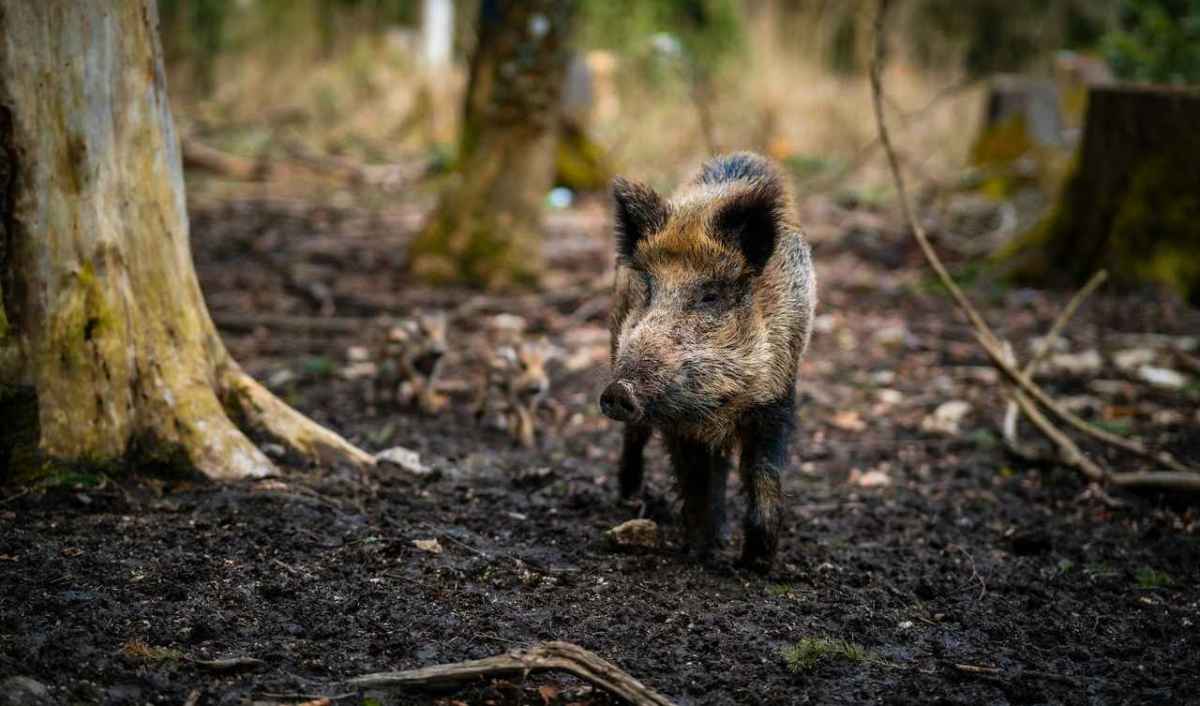
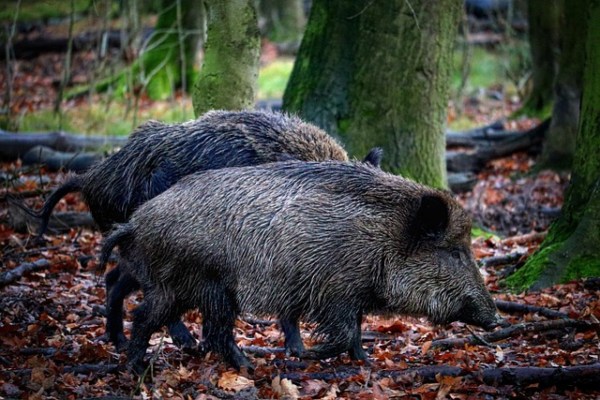
Wild boars absorb PFAS while rooting in the soil. Photo: Patrick Pahlke, Unsplash
«Straight from the forest»
In the advertising of recreational hunting, game meat is presented as the most natural meat there is: free-range, regional, free of additives. An analysis by Friends of the Earth Germany (BUND) dated 14 October 2026 shows what this meat actually contains. All 114 wild boar livers examined by the authorities clearly exceeded the statutory maximum levels for PFAS. Of the 152 meat samples, more than 12 per cent were above the limit, and in half of them the concentration was so high that BUND cannot rule out long-term health damage if eaten weekly.
Where the figures come from
BUND did not collect the data itself but requested the official measurements from all German federal states. The meat samples come from Baden-Württemberg, Bavaria, Hesse, Lower Saxony, North Rhine-Westphalia, Rhineland-Palatinate and Saxony, the liver samples from Bavaria, Hesse, Rhineland-Palatinate and Schleswig-Holstein. According to the BUND press release, the contamination is not confined to known sources of pollution such as chemical sites or firefighting training grounds but is also found in comparatively natural habitats. This is consistent with two studies by the German Federal Environment Agency that document nationwide PFAS contamination of wild animals and soils. BUND chair Olaf Bandt sees the wild boars as a gauge of how widely the forever chemicals have spread in the environment, and calls on the federal government and the EU Commission to introduce a comprehensive restriction on their production and use.
The scale of the problem had been known to individual authorities for years. In 2024, the State Investigation Office of Rhineland-Palatinate had 30 meat samples and 30 liver samples from wild boars analysed. All the livers exceeded the maximum limit; the sum of the four regulated PFAS ranged between 98 and 738 micrograms per kilogram, with a mean of 310. The permitted limit is 50. The state subsequently prohibited the marketing and further processing of wild boar liver. In Hesse, monitoring carried out as early as 2007 to 2009 had found PFOS levels of up to 1,780 micrograms per kilogram in wild boar livers. The Bavarian State Office for Health and Food Safety notes that PFAS are detectable above all in wild boar liver, but usually not in the meat of other game.
Why wild boars in particular
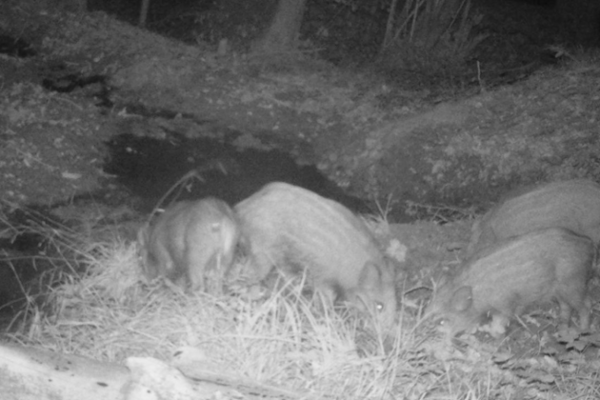
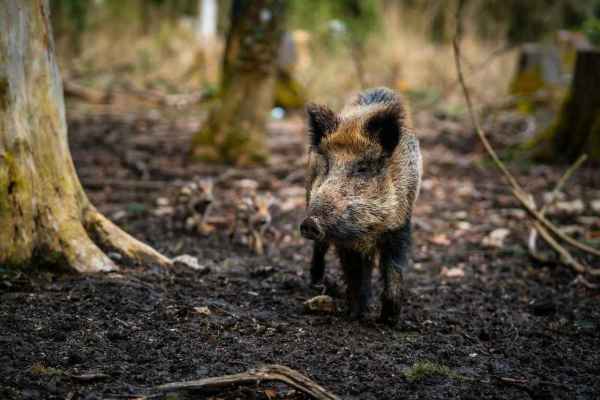
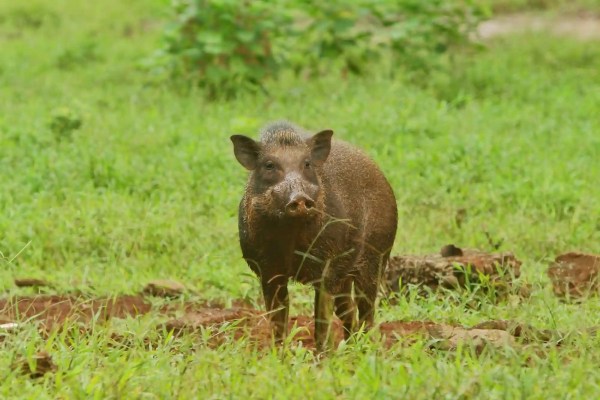
Wild boars root around in the soil and feed on worms, grubs and roots. In doing so, they take up pollutants that have accumulated in the uppermost soil layers, and over a wide area, because they cover long distances. The German Federal Institute for Risk Assessment (BfR) therefore explicitly uses the wild boar as a bioindicator for PFAS. The liver is the organ in which the substances collect. PFAS are barely broken down in the environment and accumulate in the body. According to Bild, they have been linked to liver damage, thyroid disease and cancer.
For humans, the European Food Safety Authority (EFSA) has derived a tolerable weekly intake of 4.4 nanograms per kilogram of body weight. In its assessment, the BfR concluded that even a single portion of wild boar liver per year, at the measured average levels, exceeds this amount in the long term. The institute sees an elevated risk above all for frequent consumers, and as an example it names, in its infographic on the food safety of game meat, the families of recreational hunters.
The same maximum limits apply in Switzerland
The EU introduced the PFAS maximum levels for meat, offal, fish and eggs on 1 January 2023. Switzerland adopted them into its Contaminants Ordinance on 1 February 2024, at identical levels: for game meat, a maximum of 9 micrograms per kilogram applies to the sum of PFOS, PFOA, PFNA and PFHxS, and for game offal 50. Foods that exceed these levels may not be placed on the market.
However, the Confederation and the cantons know only in part how heavily contaminated Swiss wild boars are. In 2025, the Federal Food Safety and Veterinary Office (FSVO) and the Association of Cantonal Chemists examined around 900 samples of meat, fish and eggs on the Swiss market. Seven samples, or 0.8 per cent, exceeded the maximum levels. Among meats, according to the campaign report beef, mutton and game meat showed the higher PFOS contamination. The campaign names no results for game offal, which is precisely the part that is consistently above the limit in Germany. The Association of Cantonal Chemists expects further exceedances in future because of local contamination. How widespread PFAS are in Swiss waters is shown by the canton of Aargau: 28 per cent of 107 wild fish were above the maximum level in 2025.
The recreational hunter assesses his own meat
This is where the Swiss gap lies. Anyone who not only eats game they have shot themselves at home, but sells it to butchers, innkeepers or private individuals, is classed as a producer under food law. The recreational hunter judges fitness for consumption himself: he looks at the nonhuman animal before the shot, during gutting and during transport, ticks assessment A on the game accompanying certificate, and the meat is cleared for sale. Only where there are visible abnormalities is the inspection passed to an official veterinarian. PFAS are invisible, odourless and heat-stable. No visual inspection and no kitchen removes them. There is no obligation to have wild boar liver analysed before sale, and there is no order like the one in Rhineland-Palatinate banning the sale of wild boar liver. Anyone buying wild boar liver in Switzerland relies on an assessment that cannot detect the problem at all.
Meanwhile, the number of wild boars killed has been rising for years. Recreational hunters and their associations justify this with crop damage and African swine fever, and the meat comes thrown in as an argument: wild boar from local hunting, sustainable and healthy. The official measurements say otherwise. Alongside PFAS there are lead fragments from ammunition, hepatitis E viruses and trichinae, as we have compiled in “Game meat: health risks from lead and PFAS” and the enjoyment framing of the Wildwochen, which leaves out these warnings, we have examined using the example of Grisons.
Commentary
Recreational hunting markets its product with the image of untouched nature. That nature no longer exists, not even in the forest. The wild boar rooting in the soil carries the chemical burden of decades within it, and not just near industrial sites, but everywhere. That the very liver prized as a delicacy in the hunting kitchen exceeds the limit value in one hundred per cent of samples is no surprise; it has been documented for over fifteen years. The only surprise is how little of this makes it into the advertising for game meat.
Switzerland has adopted the limit values, but not the monitoring. A system in which the seller declares his own goods fit for consumption, and in which the pollutant is neither visible nor measurable unless a laboratory is commissioned, does not protect buyers. It would be for the cantonal chemists to test wild boar liver systematically, and for the BLV to publish the results. Until then, the advice the Rhineland-Palatinate state investigation office gives its citizens applies: do not eat wild boar liver. According to the new figures from Germany, there is little to recommend the meat either.
More on the subject of recreational hunting: In the dossier The Role and Criticism of Recreational Hunters we shed light on the training, power and self-image of recreational hunters. What the research says about this is shown by Hunting fact-checked: the state of research.
The position of IG Wild beim Wild: IG Wild beim Wild rejects recreational hunting. Our model is the canton of Geneva, which has managed without recreational hunting since 1974: without hunting seasons, without hunting dogs, without driven hunts, without high seats, without the animal cruelty and crime that go hand in hand with hunting season elsewhere. What has worked there for over fifty years disproves every position paper by JagdSchweiz. An association that bases its policy on claims it refutes in its own documents is not a professional organisation, but a factory for misinformation.
Wild animals need a voice
Once a week: research, petitions and background information on recreational hunting. Free of charge and can be unsubscribed from at any time.

All articles are written by IG Wild beim Wild as well as by external co-authors. Research, structuring and editorial processes may be supported by AI-assisted tools.
Support our work
With your donation you help protect animals and give their voice a hearing.
Donate now →