Game as ‘home on a plate’? What the feel-good feature in Grisons leaves out
Why behind the feel-good framing of the high hunt in Grisons lie animal suffering, official precautionary warnings and unresolved questions about hygiene and origin.
Roe deer, red deer and jugged venison, served with red cabbage, spätzli and a glass of Pinot: right on cue for the start of the high hunt in Grisons, media and gastronomy stage the game dish as a piece of living tradition.
Four restaurants in Grisons stand as examples of a feel-good framing that romanticises the origin of the meat and blanks out relevant questions about animal welfare, safety and declaration.
It is a recurring ritual. No sooner does Switzerland's largest hunting event begin in September than menus fill up with saddle of roe deer and fillet of red deer, and the regional press delivers the matching story. In a recent feel-good feature by the «Südostschweiz», no fewer than four establishments have their say: the «Adler» in Fläsch, the «Bellavista» in Surlej, the «Walserhuus Sertig» and the «Posta» in Rueras. The message is coherent, warm and inviting. It is also incomplete.
What is consistently missing from such pieces is the other side of the story: the killing, the conditions under which a living animal becomes a product, and the nuanced warnings and precautionary advice issued by food safety authorities. Whoever promises ‘home on a plate’ conceals where that home actually comes from.
‘No need to fear game’ — authorities urge caution
At the «Adler» in Fläsch, the message is that with the right preparation, a bit of patience and plenty of love, half the battle is already won. ‘No need to fear game,’ is the advice from the kitchen. Health authorities put it in more nuanced terms — and for good reason.
The Federal Food Safety and Veterinary Office (FSVO) advises particularly vulnerable groups to exercise caution: if it cannot be ruled out that an animal was killed with lead ammunition, children up to the age of seven, pregnant and breastfeeding women, and women wishing to conceive should, where possible, avoid game meat. Germany's Federal Institute for Risk Assessment (BfR) recommends cooking game meat thoroughly and urges particular caution with raw sausages made from game for pregnant women, children and immunocompromised individuals. France's food safety agency ANSES recommends that the general population consume large game only occasionally — in the order of around three meals per year — and advises women of childbearing age and children to avoid it altogether. This recommendation is explicitly linked to chemical contamination, above all lead.
This discrepancy between official precautionary advice and the promotional language of gastronomy is at the heart of the problem, as we set out in detail in our article ‘Meat makes you ill, and game meat is no exception’.
What happens before the kitchen
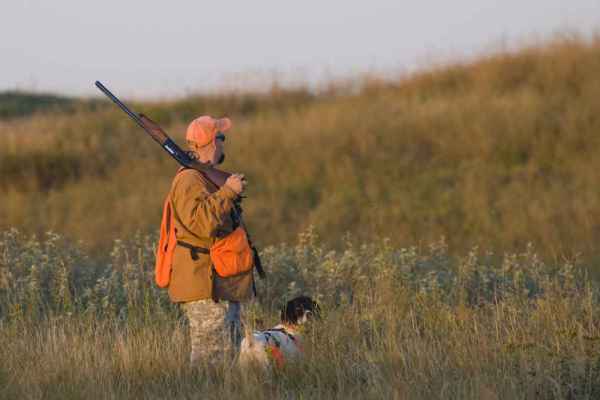
The «Bellavista» in Surlej emphasises its personal connection to game ‘through its own hunting activities’. This brings into focus precisely the part that the feel-good feature otherwise omits: the quality and safety of a game dish are not determined in the kitchen, but by the shot and what happens in the time that follows.
Game meat is produced outside a slaughterhouse, under field conditions. Its safety therefore depends particularly on a properly placed shot, swift and clean field dressing, hygienically secured cooling, and the prescribed inspections. Swiss guidelines on game meat hygiene require that a killed animal be field-dressed as quickly and cleanly as possible, and that hoofed game be cooled within a reasonable time to no more than seven degrees, ideally four degrees. Wherever this chain breaks down, the risk increases.
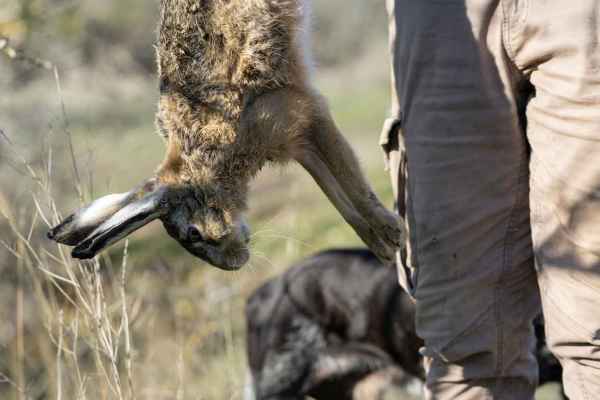
Particularly in alpine terrain, hours often pass between the shot and the recovery of the animal. A killed red deer must be retrieved from steep terrain and brought down into the valley, not infrequently dragged along the ground. By this time, blood clotting has long since set in, and the intestinal barrier of the dead animal breaks down, allowing gut bacteria to migrate into the surrounding meat. If the animal is additionally field-dressed on the ground, contact with soil, leaves and dirt is added to the mix. What would be unthinkable in a slaughterhouse — with immediate bleeding-out, clean surfaces and uninterrupted cooling — is the norm when recovering an animal in the field.
This is because wild animals, wild boars in particular, can be reservoirs of food-relevant pathogens. A study from Geneva detected, among other things, salmonella, listeria, pathogenic E. coli and yersinia in killed wild boars. This underlines just how crucial hygienic field dressing and thorough cooking are. The BfR recommends cooking game meat thoroughly. Particularly vulnerable groups should heat game meat, raw sausages and raw meat products made from game to a core temperature of 72 degrees Celsius for at least two minutes. The advice from several of the featured kitchens to ‘sear the meat briefly and hot’, and that when it comes to cooking ‘less is sometimes more’, is understandable from a culinary point of view. It stands in tension with this recommendation. We have documented the details of these conditions in our article “‘Game meat: natural, healthy or dangerous?’.
Traditional flavour is not transparency
Ten to twelve days marinating in red wine, vinegar, vegetables and a dozen spices, together with ‘intense’ and ‘robust’ sauces, brown butter and classic side dishes: Grisons' game cuisine stages game meat as a seasonal speciality with artisanal depth. Marinating and sauce-making are part of the traditional preparation and shape the flavour.
Striking, nonetheless, is just how strongly the preparation shapes the flavour. This is not evidence of a hygiene issue, but a culinary observation: it is a fair question how much of the meat's own natural flavour actually comes through in the end. It is telling that the one dish recommended as a ‘beginner's dish’ — venison entrecôte — apparently ‘doesn't actually need much’, according to the chefs. It is the exception that gets by without a heavy marinade.
The culinary narrative becomes problematic where it obscures the view of the animal's origin. An elaborate sauce does not answer the questions that matter to consumers: Was the animal killed instantly, or did it need to be tracked down afterwards? How quickly was it field-dressed and cooled? Are origin, hygiene and the required inspections documented in a traceable way? And is the declared regional origin verifiable beyond doubt? Enjoyment may honour craftsmanship. It should not lead to origin appearing merely as an idyllic label.
When the rut tastes of “barnyard flavour”
Recreational hunters from Schwyz say that meat from red deer taken during the rutting season tastes too intense and is therefore not recommended for ordinary consumption. The obvious solution offered is to kill the stag beforehand. At the same time, the Grisons high hunt falls in September, even though the canton itself dates the start of the red deer rut to mid-September through October. In 2026, stags may be hunted throughout the entire high hunt, from 3 to 13 September and from 21 to 30 September.
This raises an uncomfortable question: what does “respect for wildlife” mean when animals are, on the one hand, meant to be killed before their rut so their meat tastes milder, while on the other hand they are subjected to intense hunting pressure right at the start of this reproductive period? The high hunt does not simply turn the stag into a “regional product”. It intervenes in a formative phase of its life, before its body becomes a dish and its death becomes a tale of touristic indulgence.
This reveals what can lie behind the often-romanticised talk of “regional game enjoyment”: it is not the animal’s natural annual rhythm that determines how it is treated, but its suitability as a meat product. For the stag, the rut is not a culinary mishap but a central phase of its life. It is only the view from the plate that turns it into a problem.
This very blind spot shapes many seasonal indulgence stories about game dishes. They speak of tradition, marinades, sauces and “homeland on a plate”, but hardly ever mention that the timing and manner of killing can also be chosen according to how the animal is later meant to taste.
Lead-free is not residue-free
One argument appears to pre-empt this criticism in Grisons: lead-based bullet ammunition has been banned in the canton's high hunt since September 2021. The canton acted earlier than many other regions in doing so. The hunting operating regulations expressly prohibit carrying and using lead-based bullet ammunition during the high hunt, special hunt and ibex hunt. Moreover, an analysis of over 8,000 kills in Grisons showed no significant differences between lead-free and lead-based ammunition in the criteria examined — a finding we have contextualised in our dossier on lead ammunition and environmental toxins.
Replacing lead, however, does not eliminate every open question. Lead-free rifle bullets, too, can leave metallic fragments in the meat on impact. The BfR is therefore developing and testing standardised methods to record and, where possible, minimise the introduction of metallic residues from both lead-based and lead-free projectiles. This is particularly relevant for people who regularly eat game meat, such as in hunters' households. ‘Lead-free’ is a necessary step forward. But it does not replace transparency about which ammunition was used to kill an animal, how the meat was processed, and what residues may remain in the product.
The price that isn't on the menu
The «Posta» in Rueras marinates its jugged venison for ten to twelve days. That sounds like craftsmanship and patience — and it is. But it changes nothing about what precedes that craftsmanship.
Not every shot leads to instant death. Injury, flight and follow-up search mean fear, distress and avoidable suffering for the animals concerned. That is first and foremost an animal welfare problem, regardless of meat quality. Research also shows that the duration and intensity of stress before death can influence cortisol levels and certain quality parameters of the meat; how strongly this is reflected in an individual cut varies. What is described on the plate as “robust, aromatic meat” carries a backstory that finds no place in the culinary feature. More on this in «Beware: Warning about game meat from recreational hunters».
«From our homeland» — but is that even true?
All four establishments emphasise regional origin. That is commendable, but by no means the rule across the industry. An inspection by the Office for Food Safety and Animal Health in Grisons and Glarus examined 34 establishments advertising game dishes during the hunting season. At 13 of them, i.e. 38 percent, the inspectors found deficiencies: in seven cases, a Swiss or regional origin was claimed even though the meat came from abroad, in five cases the country of origin was not stated at all, and one establishment was unable to substantiate the claimed origin at all. The authorities subsequently announced stricter controls. We covered the case under «Every third establishment cheats on game meat labelling».
So origin is not a given. Outside the short local season, the restaurant trade often relies on farmed or imported goods, whose hunting and inspection standards vary greatly. «Regional» is thus a promise that individual establishments may keep, but which was not consistently fulfilled even in an official inspection of 34 establishments in Grisons and Glarus.
What world religions have long known
It is striking how many cultures do not even allow this meat onto the plate in the first place. For observant Jews, shot game is never kosher, and for Muslims it is never halal: both dietary laws require ritual slaughter with the animal bled while still alive, which a rifle shot fundamentally rules out. Many devout Hindus, in turn, reject the consumption of killed animals on principle. Across continents and faiths, then, the body of a killed wild animal is anything but self-evidently regarded as food.
This leads to the actual contradiction. In everyday life, most people feel disgust and aversion at the sight of a dead animal. Yet as soon as that same dead animal is marinated, sauced and dressed up with a narrative of «homeland», it is supposed to become a pleasure. It is precisely this reframing that the culinary feature performs, and it is precisely this that deserves critical scrutiny.
Enjoyment without blind spots
There is nothing wrong with good cooking, craftsmanship, red cabbage or spätzli. The question is not whether chefs can carefully prepare a game dish. The question is why the media's story of enjoyment regularly ends exactly where the animal's story begins: at the shot, at a possible follow-up search, and at the transformation of a sentient being into a seasonal product.
The four establishments named here are not singled out as isolated offenders. They stand as examples of a media pattern that tells the same half-truth every September. The other half belongs to the story too: the ethical reality behind every «saddle of local game», the conditions of the shot, the follow-up search and the chilling process, and the question of whether «regional» is really regional. Anyone who wants «homeland on a plate» should also know what accompanies the journey there.
More on the subject of recreational hunting: In our dossiers on the criticism of recreational hunting gather fact-checks, analyses and background reports. What the research says about this is shown by Hunting fact-checked: the state of research.
The position of IG Wild beim Wild: IG Wild beim Wild rejects recreational hunting. Our model is the canton of Geneva, which has managed without recreational hunting since 1974: without hunting seasons, without hunting dogs, without driven hunts, without high seats, without the animal cruelty and crime that go hand in hand with hunting season elsewhere. What has worked there for over fifty years disproves every position paper by JagdSchweiz. An association that bases its policy on claims it refutes in its own documents is not a professional organisation, but a factory for misinformation.

All articles are written by IG Wild beim Wild as well as by external co-authors. Research, structuring and editorial processes may be supported by AI-assisted tools.
Support our work
With your donation you help protect animals and give their voice a hearing.
Donate now →