Fribourg: recreational hunters want to hunt the ibex
While the canton is not opening ibex hunting due to weak populations, the recreational hunting lobby is demanding new kills, artificial light as a shooting aid, and feeding. Environmental organisations and a Social Democratic Party motion are pushing back.

«The Salt Lick»
Fribourg recreational hunters and their umbrella association have submitted a list of demands to the canton aimed at a far-reaching expansion of recreational hunting.
At the centre of it all is, of all things, the ibex: both Fribourg colonies are so weak that the canton is not opening the species to hunting. Nature conservation organisations and a parliamentary motion are pushing back.
A catalogue of expansion
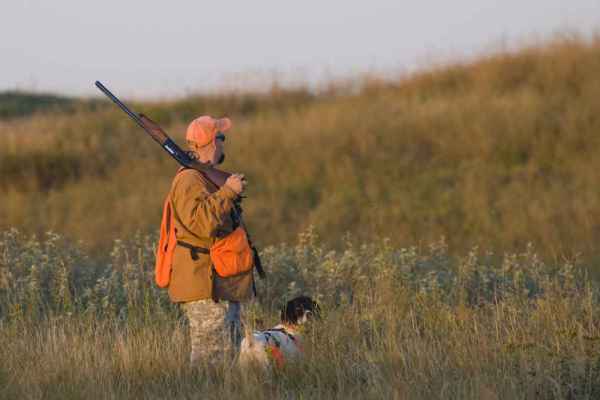
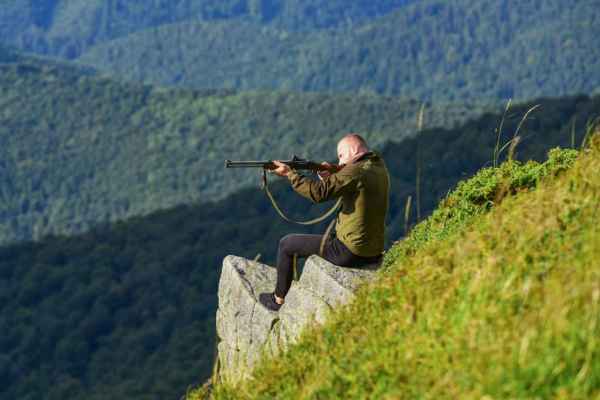
Fribourg's recreational hunters and the Fribourg hunting association have submitted a series of demands to the canton aimed at a far-reaching expansion of recreational hunting. The newspaper «La Liberté» made the initiative public, bluntly headlining that Fribourg hunters wanted to kill the ibex. What at first glance looks like technical minutiae adds up, in sum, to the pattern of a political offensive by the recreational hunting lobby: more huntable species, more technical aids, and more baiting. The ibex is the most symbolically charged of these demands, but by no means the only one.
In parallel, there are demands for artificial light as a shooting aid for wild boar and for an expansion of baiting, i.e. targeted feeding. Three concerns, one common denominator: hunting pressure is to increase, and recreational hunting is to become more technical in order to compensate for recreational hunters' own shortcomings.
The ibex: protected, but not shot
A precise distinction is worthwhile here. The ibex holds a special status in Switzerland. After it was wiped out at the beginning of the 19th century, it was reintroduced from 1911 onwards using animals from Italy's Gran Paradiso National Park. The canton of Fribourg has been home to two colonies for decades: one at Vanil Noir with the adjoining Bimis area, and one at Dent de Lys.
Legally, the ibex is protected, but may be hunted under certain conditions. What matters is what the canton makes of this: due to the weak populations in both colonies, the Office for Forests and Nature is currently not opening the ibex to hunting. The demand from recreational hunters is therefore not aimed at kills that are already taking place, but at a political opening in an area where the canton has, for good reason, applied the brakes.
How good these reasons are is shown by the recent population history. A few years ago, more than 300 animals were counted at Vanil Noir; by 2014 there were around 200, and the 2016 survey found a historic low of just 111 ibex. Between 2015 and 2016 alone, 55 animals disappeared, without the causes ever being fully clarified. A population that has collapsed to this degree cannot withstand additional hunting pressure.
That the ibex, of all animals, has come under fire carries a bitter irony: the animal is the emblem of Pro Natura, Switzerland's oldest nature conservation organisation. How problematic hunting this species can be has been evident for years in the neighbouring canton, where the controversial ibex hunt in Valais regularly causes controversy. It is precisely the selective recreational hunting of old bucks with particularly large horns that has been criticised for years, because it can alter the age and social structure of ibex populations and create undesirable selection pressure. A lesser-known chapter of the species' biological and breeding background is also covered in our article on ibex-goat hybrids.
Light and baiting: the hunting lobby has already succeeded
While the ibex issue is still a demand, the recreational hunting lobby has already achieved a partial political success regarding wild boar. The Council of State has pledged to amend the hunting ordinance and to permit the use of an artificial light source as a shooting aid under certain conditions: on high seats in the international water bird and migratory bird reserves as well as in cantonal reserves on the southern shore of Lake Neuchatel, until 9 p.m., for the hunting of wild boars. On this occasion, baiting — that is, feeding to attract animals — is also to be expanded to a limited extent in the same areas, in order to lure the animals in a targeted manner. This relaxation was triggered by a motion from members of the SVP and the Centre party, who argued on the grounds of agricultural damage and the risk of African swine fever.
As long as the amendment to the ordinance has not yet come into force, this remains a political pledge. What is already remarkable, however, is the setting: of all places, it is bird reserves where shooting with artificial light and luring with bait is now to be permitted.
Pro Natura: “How far will this go?”
The conservation side does not see this development as a minor detail, but as a direction. Morgane Bättig, project manager at Pro Natura, is watching the relaxations with concern and sums up the core question: how far will this actually go? She fears that recreational hunting is becoming increasingly technical, to the detriment of ecology. The growing technical upgrading of recreational hunting could disturb wild animals, compromise the safety of other users of the landscape, and raise serious questions of respect and ethics.
What recreational hunters are selling as an “improvement” is, from this perspective, the opposite: an upgrade that further shifts the balance of power between humans and wild animals in favour of the weapon.
The political response: a motion against the hunting of endangered species
The offensive by the recreational hunters has been met with a countermove in the cantonal parliament. Grand Councillor Grégoire Kubski (SP, Fribourg), together with Pierre Vial (SP, Progens), has submitted a motion calling for a ban in the canton of Fribourg on recreational hunting of protected species, as well as of those species listed on the Federal Office for the Environment's Red List as vulnerable, endangered, or critically endangered. According to «La Liberté», Kubski justifies the motion by citing the growing pressure from the hunting lobby, which he describes as powerful. He says it is time to show that there are limits.
The motion addresses a real contradiction in the system. In Switzerland, species whose survival is threatened may still be hunted without any compelling reason, such as agricultural damage, being required. We have documented this tension between hunting practice, the hunting act, and the Red List in detail in our overview of hunted wild animal species in Switzerland. That Fribourg is no stranger to this issue is shown by the case of the woodcock: the canton maintains its hunt of the bécasse despite the species being on the Red List, while it has long been banned in numerous German-speaking cantons.
Licence-hunting canton without an ongoing conservation obligation
One argument that recreational hunting likes to use to justify its special rights is: whoever hunts also cares for and regulates wildlife. In the case of Fribourg, this argument does not hold up well. Fribourg is a licence-hunting canton. Recreational hunting is organised as licence hunting: private individuals purchase a cantonal licence and an annual hunting permit and hunt across the entire cantonal territory, without the fixed responsibility for a hunting ground that exists in territorial-hunting cantons.
This means there is no continuous attachment to a specific area and its upkeep. A publicly documented, annually recurring duty of care for licence holders is not apparent in Fribourg. By comparison: in the canton of Jura it amounts to around eight hours per year, in Grisons about five. In Fribourg, by contrast, the only clearly documented conservation work is a one-off requirement during training: those aiming to pass the hunting examination must complete at least 50 hours of conservation work during the roughly 18-month preparation period. Beyond this one-off conservation contribution, the canton should transparently disclose what binding care obligations hunting licence holders actually owe during ongoing hunting operations.
In any case, licence holders do not assume any fixed ecological responsibility for a hunting ground, but act within the framework of cantonal kill quotas that are primarily geared towards the interests of forestry and agriculture. This significantly relativises the self-image of the caring warden and raises the question of what legitimacy recreational hunting now has to demand additional rights over protected species.
A strained relationship
The current conflict falls at a time when the relationship between Fribourg's recreational hunters and the cantonal wildlife wardens is already tense. The trigger was the acquittal of an experienced recreational hunter who had put down a roe deer injured by a large predator without first informing the responsible game warden. A senior official of the cantonal office questioned this acquittal in writing, whereupon the presiding judge criticised a violation of the separation of powers and the responsible state councillor had to intervene.
In this context, a remarkable statement came to light. In spring 2026, the game warden concerned noted in a letter to the presiding judge that the acquitted recreational hunter, like every recreational hunter and as the statistics show, injures healthy animals every year in the course of recreational hunting, without this seeming to bother him particularly. An admission from within the ranks of the wildlife wardens themselves, exposing the downside of recreational hunting. «La Liberté» was able to view the letter.
The cantonal enforcement report for the 2025/26 season lists 31 fines, 13 formal complaints and two licence revocations. The same report shows 162 wild boar kills by licence holders and 117 subsidiary kills by the wildlife wardens. To put associations, lobby pressure and political influence in hunting matters into perspective, it is worth taking a look at the large recreational hunter radar.
Not an isolated case, but a direction
As early as 2020, a broad committee formed in Fribourg against the then tightening of the federal hunting act, carried by the SP, the Greens, the Green Liberals and the CVP, and supported by Pro Natura, WWF, the Cercle ornithologique, the animal welfare organisation and BirdLife. Resistance to extending recreational hunting to protected species thus has a tradition in the canton.
This is exactly what is at stake now: a small ibex population, which the canton has not opened up to hunting due to its weak numbers, is facing a demand for the hunt to be opened. Together with the plans for artificial light as a shooting aid and for increased feeding, a political direction is becoming apparent: more hunting pressure, more technical means and less consideration for the protection of wild animals. Whether the motion by Grégoire Kubski and Pierre Vial can slow this development will be decided in the Fribourg cantonal parliament.
More on the subject of recreational hunting: In our dossiers on the criticism of recreational hunting gather fact-checks, analyses and background reports. The scientific evidence is presented in the overview Studies on the Effects of Recreational Hunting.
The position of IG Wild beim Wild: IG Wild beim Wild rejects recreational hunting. Our model is the canton of Geneva, which has managed without recreational hunting since 1974: without hunting seasons, without hunting dogs, without driven hunts, without high seats, without the animal cruelty and crime that go hand in hand with hunting season elsewhere. What has worked there for over fifty years disproves every position paper by JagdSchweiz. An association that bases its policy on claims it refutes in its own documents is not a professional organisation, but a factory for misinformation.

All articles are written by IG Wild beim Wild as well as by external co-authors. Research, structuring and editorial processes may be supported by AI-assisted tools.
Support our work
With your donation you help protect animals and give their voice a hearing.
Donate now →