Grisons wolf policy: a recreational hunter justifies himself
AJF co-head Adrian Arquint defends the third wolf regulation as proportionate. A look at his arguments and his dual role.

“Scapegoat machine”
Two nature conservation associations have sharply criticised the proactive killing of dozens of wolves in Grisons.
Adrian Arquint, co-head of the Office for Hunting and Fisheries (AJF), defends the interventions to the news agency Keystone-SDA as fundamentally proportionate. His arguments deserve close scrutiny, as does the question of who actually decides the fate of the Grisons wolves.
The starting point is quickly outlined: from 1 September 2026 the FOEN has authorised Grisons to carry out kills in twelve wolf packs; in four further packs they are possible once offspring have been confirmed, and the canton is additionally applying for the complete removal of the Calderas pack. We have already analysed in detail the particulars of this authorisation and the contradiction that Grisons had reported new wolf offspring only a few days earlier. This article focuses on Arquint's justification.
Nature conservation associations speak of a policy of extermination
The associations Wildtierschutz Schweiz and Wolfshirten responded to the regulation plans with a sharp statement. In recent years, they say, the Office for Hunting and Fisheries has turned from a professionally independent wildlife authority into an enforcement body for a misguided, right-wing-conservative-dominated policy of extermination.
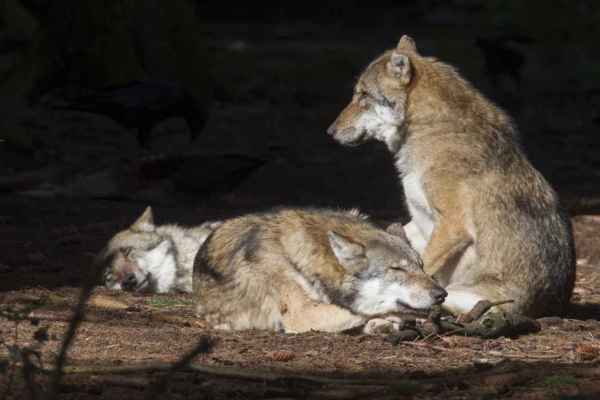
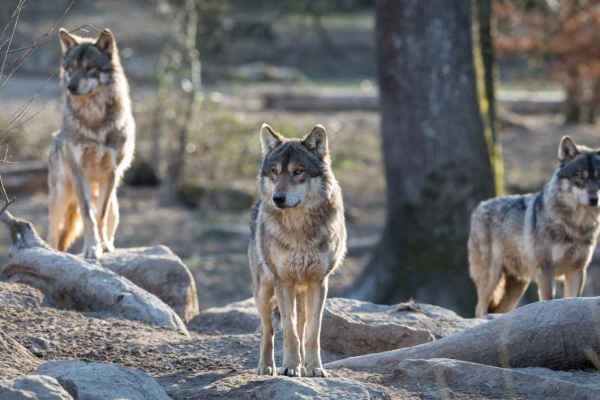
Grisons in particular shows that wolves recolonise suitable territories and that losses are usually compensated for in the following year. In the view of the two associations, the chosen strategy is not effective and is a cost driver without benefit. Despite the authorised killing of 115 wolves, the number of wolf families has continued to rise.
The wolf poses a very low risk to humans. In the associations' view, it is not the number of wolves but the number of unprotected grazing animals that is responsible for the number of kills. Parts of the farming sector are also resistant to learning when it comes to herd protection. The causes of inadequate protection are being managed with the rifle. Pre-emptively decimating peaceful, inconspicuous wolf families clearly runs counter to the purpose of species protection.
The office sees a proportionate intervention
Arquint is at pains to provide a factual assessment. With the approved intervention, the canton is far from endangering the population — it is not even stabilising it. For him, the intervention is therefore fundamentally proportionate.
He explained that livestock kills had halved since preventive kills became possible from the 2023 hunting season onwards. This chronological parallel does not, however, prove any causal link. The decline in reported kills was already visible in Grisons before the new legal basis came into force on 1 December 2023: as early as the 2023 alpine summer, kills fell by almost 50 per cent compared with 2022, from around 500 to about 260 by the end of September. No effect of later preventive kills can be derived from this chronology. The cause is considered to be the expanded herd protection, which Arquint himself cites in the same breath as a major influencing factor.
He rejected the accusation of resistance to learning: almost 95 per cent of sheep and goats are covered by protection schemes. After every kill incident, game wardens check on site whether the fencing requirements have been met. Arquint justified the staff expenditure criticised as a cost driver with the statutory mandate to assess kills and to monitor wolves. The question also arises as to what the alternative would be. With other animal species too, such as red deer, regulation is part of management.
Killing of young animals as a «necessary intervention»
Arquint conceded that the killing of young animals can be emotionally difficult to understand from a human perspective. As with other species with a high reproduction rate, such as roe deer and red deer, this intervention is nevertheless necessary from a biological and ecological point of view. In the case of the wolf, the targeted kill pursues the aim of stabilising the population without wiping out entire packs. There are indications that the risk of conflicts and livestock kills is lower with smaller packs.
He rejected the accusation that the kills were unscientific or politically motivated. Political pressure had at times increased owing to higher numbers of livestock killed, he said, but the office had remained true to its line. What mattered was that the approach had a clear legal basis and was technically defensible. He conceded that wolf management was a dynamic process. The long-term effect of regulating pups was still unclear. Only the experience of the coming years, the data gathered and the accompanying scientific work would show whether this was the most effective path.
Assessment
The office's reasoning follows a familiar pattern. Falling numbers of livestock killed are cited as evidence of the effectiveness of the kills, even though the decline in attacks began before preventive regulation was introduced and is largely attributable to improved herd protection. That the population continues to grow despite more than a hundred authorised kills is portrayed by the office as a success of regulation, while the very same figure equally demonstrates that the population is escaping control.
Arquint's interview also contains a striking internal contradiction. The targeted kill is intended to stabilise the population «without wiping out entire packs», he says. At the same time, his own office is applying for the complete removal of the Calderas pack, and in the previous season entire packs were already removed with Sinestra and Moesola. The reassuring formula and the actual practice stand side by side in the same document.
Nor does the comparison with roe deer and red deer hold up. It conflates two different ecological starting points. With ungulates, hunting is frequently justified by the absence or deliberate limitation of predators. With the wolf, by contrast, regulation targets precisely such a predator. Roe and red deer populations in Switzerland only need to be «regulated» by recreational hunters at all because the natural regulator – besides the fox, the wolf – is missing or is actively being decimated. Anyone who removes the predator and then cites the human substitute regulation thereby made necessary as proof that regulation is simply part of nature is arguing in circles. What does not follow from the comparison is that killing wolf pups is ecologically necessary or effective in reducing damage.
Who actually decides here
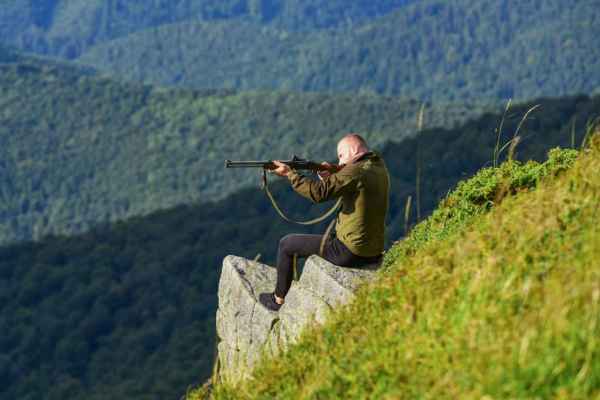
Rarely considered is who defends these interventions as biologically necessary. Adrian Arquint is himself a passionate recreational hunter. In interviews he speaks of his «hunting colleagues», names chamois and red deer hunting as his preferred forms of hunting, and counts himself, as head of the office, among the roughly 5,500 recreational hunters in Grisons. That is not an insinuation, but his own, publicly documented self-description.
Added to this is a close institutional entanglement between the authority and the hunting association. The Grisons Cantonal Licence Hunters' Association organises discussion rounds expressly «in consultation with the Office for Hunting and Fisheries», in which Arquint personally takes part alongside the association's president, and the head of the office regularly comments in the militant association magazine «Bündner Jäger». The fate of the wolves of Grisons is thus decided not by a wildlife authority independent of hunting, but by an office leadership personally and institutionally closely bound up with recreational hunting. When the very same circle of interests that lives off hunting roe deer and red deer simultaneously decides on the decimation of their natural competitor, the wolf, the professional neutrality claimed in the interview is, at the very least, in need of explanation.
Behind terms such as «regulation» and «population management» there lies a question the office does not answer: necessary for whom? For the ecosystem, which knows predators as natural regulators, or for agriculture, forestry and hunting planning, which find a predictable wildlife density convenient? Anyone who assesses non-human animals primarily by whether they conform to agricultural, forestry or hunting objectives is not representing a neutral ecology, but an economically shaped management logic. In this logic, wild animals become a disposable resource: populations calculated down to target figures, family groups torn apart, natural developments corrected until they fit into the desired landscape. The intrinsic value of wild animals, their claim to a life appropriate to their species, does not feature in this calculation.
There is no need to reinvent the wheel
Arquint's reference to the supposedly still unclear long-term effects of cub regulation weighs most heavily, because it ignores the fact that research into the consequences of lethal interventions in wolf packs is already under way. In 2024, the research commission of the Swiss National Park stated with regard to the then-planned complete removal of the Fuorn pack that this was not indicated from a scientific point of view. It pointed out that the killing of predators often did not reduce future livestock depredations, and that in some cases even more depredations were observed, and it warned of the knock-on risks of a complete pack removal: young, dispersing wolves searching for territory and a mate are involved in livestock depredations at an above-average rate. No automatic rule can be derived from this to the effect that every pack removal leads to more depredations, but it can be concluded that such interventions may have social and ecological knock-on effects that must be examined scientifically for each measure. The Office for Hunting and Fisheries nevertheless authorised the killing of the Fuorn pack despite this statement. So it is less a matter of reinventing the wheel than of taking note of existing findings that contradict the practice that has been adopted.
In legal terms, proportionality remains the decisive hurdle. The Bern Convention has classified the wolf as merely «protected» rather than «strictly protected» since March 2025. This downgrading at international level lowers the hurdles for interventions, but it does not replace Swiss protection law and does not create a general licence to kill. The precautionary killing of cubs in packs with no documented damage remains in tension with the principle of proportionality and under legal scrutiny.
More on the subject of recreational hunting: In the dossier The Role and Criticism of Recreational Hunters we shed light on the training, power and self-image of recreational hunters. What the research says about this is shown by Hunting fact-checked: the state of research.
The position of IG Wild beim Wild: IG Wild beim Wild rejects recreational hunting. Our model is the canton of Geneva, which has managed without recreational hunting since 1974: without hunting seasons, without hunting dogs, without driven hunts, without high seats, without the animal cruelty and crime that go hand in hand with hunting season elsewhere. What has worked there for over fifty years disproves every position paper by JagdSchweiz. An association that bases its policy on claims it refutes in its own documents is not a professional organisation, but a factory for misinformation.

All articles are written by IG Wild beim Wild as well as by external co-authors. Research, structuring and editorial processes may be supported by AI-assisted tools.
Support our work
With your donation you help to protect animals and to give their voice a hearing.
Donate now →