«Bio Bio Plus» and other legends: what the Grisons hunting interview leaves out
The president of the Grisons recreational hunters and a cultural anthropologist paint a conciliatory picture of the high hunt in the «Südostschweiz». A fact check on game meat, regulation and the wolf.
«What I Won't Pass On»
For the 2026 high hunt, recreational hunting in Grisons is presenting itself as markedly conciliatory.
The new president of the licence hunters' association and a cultural anthropologist paint a picture in the «Südostschweiz» of a thoughtful recreational hunting scene open to dialogue. At the same time, the association is launching a code of conduct urging restraint. A fact check shows: between rhetoric and practice there is a gap that no interview, however friendly, can close.
It is that time of year when recreational hunting in Grisons wrestles with its image. The high hunt opens in September, and with it begins the annual communications offensive. In the «Südostschweiz», Benjamin Hefti, president of the Grisons cantonal licence hunters' association since May, and cultural anthropologist Nikolaus Heinzer talk about passion, culture and the question of what legitimises the killing of wild animals. The tone is reflective, criticism is invited and immediately contained again. Almost simultaneously, the association publishes a hunting code invoking respect, sporting fairness and a careful handling of images.
The two go together. It is the same message in two formats: recreational hunting as modern stewardship of nature, borne of responsibility and self-criticism. Look more closely, however, and it becomes clear that the central claims of this narrative do not stand up to sober scrutiny. We take five of them apart.
First legend: the shot as a moment of the highest responsibility
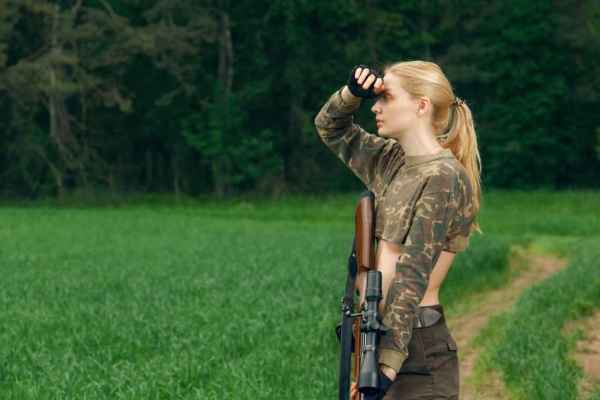
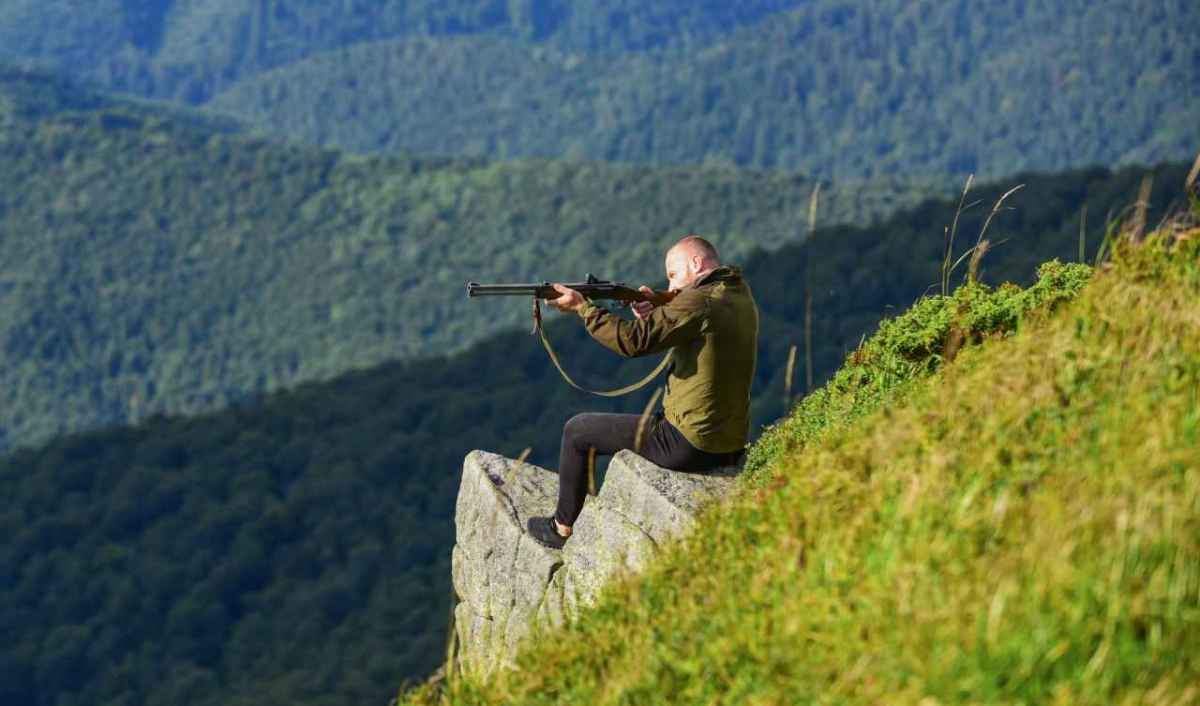
The most striking passage of the interview belongs to the shot. Hefti describes the tunnel vision, the concentration, the relief after a clean hit and the responsibility one bears in those seconds, before, during and after pulling the trigger. It is an honest account of the aspiration. How often that aspiration is missed in everyday practice is shown by follow-up searches, lost wounded game and breaches of hunting regulations.
An analysis of follow-up searches in the canton of Grisons found that only around 57 per cent of follow-up searches for injured game end with the animal being found and killed. In a large proportion of cases it therefore remains unclear whether and for how long injured animals live on or die undiscovered. A hunting routine without injuries and follow-up searches is in any case not the reality. Even in stand hunting, the method customary on the Grisons high hunt, experience shows that roughly every tenth shot results in a follow-up search. The «seated» shot invoked by recreational hunter Hefti is the declared aim, not the guaranteed norm.
The picture becomes even clearer when one looks at legality. According to figures from the Grisons Office for Hunting and Fisheries, more than a thousand charges and fines against recreational hunters are recorded in the canton year after year, peaking at 1,384 in 2017. This high number of documented proceedings and sanctions raises questions about oversight, compliance and enforcement. Just how systematically criminal prosecution fails in the case of hunting offences is documented in our dossier on poaching and hunting crime in Switzerland.
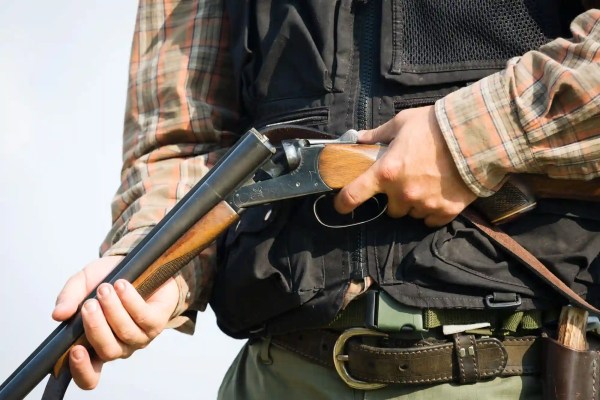
And the responsibility does not end with the game. Recreational hunting means handling lethal weapons in a densely used landscape. In purely arithmetical terms, a hunting accident occurs in Switzerland every 29 hours, and Grisons of all cantons is the most accident-prone. How many people recreational hunting actually endangers is shown by our statistics on fatal hunting accidents.
Between the solemn self-image of the responsible marksman and a reality of missed shots, lost wounded game and a thousand proceedings a year lies a gap that no interview can bridge.
Second legend: game meat as «organic organic plus»
In the interview, Benjamin Hefti advances an argument that is part of the standard repertoire in hunting circles: game meat is «organic organic plus», it cannot get any more sustainable than that. It sounds compelling, and yet it is misleading.
There is also a point that the word «organic» obscures. «Organic» is not an emotional label for close-to-nature meat; in the food trade it stands for controlled production standards. Game meat from free recreational hunting is not a foodstuff automatically certified to the Swiss organic standard. The formula «Bio Bio Plus» is therefore not proof of quality but hunting marketing: it suggests a controlled ecological quality that it cannot substantiate.
The reality in the field fits this picture. Game meat carries its own hygiene risk: between the shot, an often lengthy follow-up search, recovery, gralloching, cooling and any official inspection, considerable periods of time can elapse during which blood coagulation and bacterial growth set in within the carcass. What would be decisive is therefore a documented cold chain, proper gralloching and transparent declaration. The sale of game from recreational hunting is a long way from the seamless controls to which every piece of meat from an abattoir is subject.
Anyone selling game as a particularly healthy natural product also fails to mention that processed meat, and thus also game sausage, dried meat or smoked venison ham, is classified by the WHO cancer research agency IARC as a Group 1 carcinogen, in the same category of evidence as tobacco and asbestos. This does not mean that a slice of game sausage is as dangerous as asbestos, because the classification describes the strength of the scientific evidence, not the magnitude of the risk. It does mean, however, that the link between processed meat and bowel cancer is scientifically established. That stands in open contradiction to the advertising formula «Bio Bio Plus».
Selling a product from which a federal authority advises consumers to abstain as «Bio Bio Plus» is more than embellished marketing. For the Federal Food Safety and Veterinary Office recommends eating game shot with lead ammunition only rarely; children up to the age of seven, pregnant and breastfeeding women, and women wishing to become pregnant should avoid it altogether as a precaution. It is true that hunters in Grisons now shoot predominantly lead-free when it comes to ungulates, and since February 2025 lead-containing bullet ammunition has in principle been banned for use on cloven-hoofed animals. But the change of material does not solve the fundamental problem. Every shot carries metal into the animal and into the landscape. With lead, the meat itself is affected, because the bullet fragments and the finest, barely visible particles penetrate deep into the tissue. Copper bullets fragment less, yet a study by the Technical University of Munich shows that lead-free shot made of copper and zinc can be even more toxic to aquatic organisms than lead. Whether in the meat or in soil and water: hunting distributes heavy metals; it can shift the problem, not resolve it. Game meat is therefore far from being a residue-free natural product.
How deep the problem runs and why politicians and the hunting lobby are keeping a long-known poison alive with transitional deadlines is shown in our dossier on lead in hunting, our analysis of game meat and health risks as well as our fact check on the JagdSchweiz brochure.
Third legend: recreational hunting regulates the forest into balance
The strongest argument put forward by recreational hunting is population regulation. Hefti points to density stress among 16,000 to 17,000 red deer, and Heinzer too concedes that, outwardly, regulation is the main argument for hunting. The canton proudly reports that the red deer population has been reduced by 17 per cent since 2020.
The figures are correct. The red deer population has been reduced by 17 per cent, or 2,805 red deer, since 2020. But the narrative behind it is a circular argument. For the very reduction that is sold as an achievement of the hunting community coincides precisely in time with the return of the wolf and the lynx. The Office for Hunting and Fisheries itself concedes that in regions with wolf packs the growth rate of red deer declines. So who really did the regulating here?
Even more revealing is another mechanism: the special hunt. For the 2026 hunt, the cantonal kill quota provides for the killing of 4,616 red deer. Year after year, between 4,000 and 5,000 red deer are shot, and yet the canton regularly orders special hunts. Special hunts show that the high hunt alone regularly fails to achieve the cantonal population and structure targets, or fails to achieve them precisely enough. Over decades it has not managed to bring populations down to a forest-compatible level on its own. With the return of the wolf and the lynx, an additional natural regulating factor has come into play. The Office for Hunting and Fisheries itself concedes that in regions with wolf packs the growth rate of red deer declines.
That leaves the main argument on shaky ground. The decline cannot be attributed wholesale to recreational hunting alone. Natural predation by wolf and lynx, additional kills ordered by the authorities, hunting pressure, migration and reproduction would all have to be reported separately before the hunting fraternity could claim the success for itself. How it nonetheless sells the effect as proof of its own indispensability is documented in our analysis Grisons reports declining red deer populations.
And even if one accepted the regulation argument in the case of red deer, it does not carry the rest of the hunt. For far more than hoofed game is shot. On the low hunt and the wait hunting, the Grisons recreational hunters kill foxes, badgers, martens, hares and birds, species where there can be no talk of density stress in the forest. Tellingly, a former president of the Grisons licence hunters' association, Robert Brunold, publicly described the low hunt as not necessary, but justified. With that, the regulation argument has been struck down for a substantial part of recreational hunting by its own leading association. What remains is what Heinzer, too, concedes: people hunt because they enjoy it.
In the case of predators the argument does not hold in any event. Hunting them cannot be justified by browsing damage in the forest, since foxes, martens and badgers do not eat tree shoots. Their ecological functions within food webs, such as controlling small mammals and rodents, are entirely ignored in the interview. Anyone who hunts them regularly interferes with precisely that natural regulation which recreational hunting invokes on other occasions.
Fourth legend: the wolf is only hunted where it causes damage, and in moderation
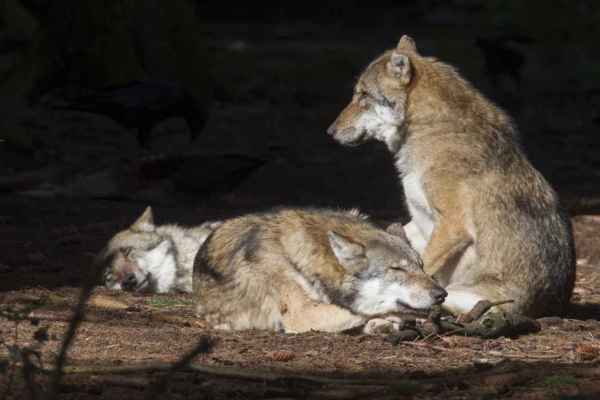
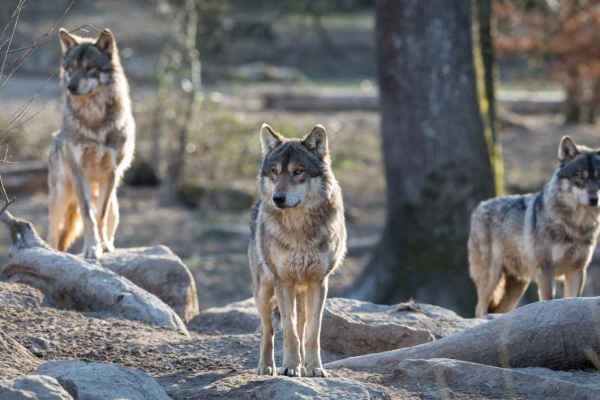
On the wolf, Hefti strikes a statesmanlike tone. Up to a certain number, he says, the wolf has its place, but animals that cause damage must be hunted consistently. What goes unmentioned in the interview: Hefti speaks as an SVP member of the cantonal parliament and as a farmer, that is, from a position with a direct vested interest in a weak wolf presence.
Above all, however, the formula of «damage-causing wolves» is a smokescreen. It sounds like a targeted response to individual animals that repeatedly kill livestock despite effective herd protection. Yet the practice that has been authorised goes further. For the 2025/26 regulation period, up to two thirds of the pups could be shot in every pack in Grisons with confirmed offspring, and that proactively, before any significant damage had occurred. The decisive point is not whether a young animal might hypothetically cause damage later, but that the rules take effect precisely before significant damage has been demonstrated.
Just how far removed this is from targeted damage prevention is shown by the choice of packs. Affected was, for instance, the Muchetta pack, which had lived a reclusive existence for years and caused no particular damage. At the end of the season the canton drew up its balance sheet: 18 wolves during the regulation of young animals in seven packs, another 14 through the removal of three entire packs, plus three lone wolves, making 35 animals killed in total. And the practice continues. For the period from September 2026, Grisons is expressly sticking to proactive regulation.
The seemingly balanced position of the cultural anthropologist does not hold up here either. Nikolaus Heinzer says there is no objective figure for how many wolves are tolerable; that is a matter of social negotiation. This captures the political question of how many wolves a society will tolerate. But it blurs the biological one, and that has indeed been researched. Wolves live in strictly delimited territories in which a pack tolerates no outside animals apart from its own offspring. Young wolves disperse at around two years of age and look for a territory of their own, often across great distances right across Europe. Territoriality, prey availability, dispersal and social dynamics limit the growth of a wolf population within a confined area. It does not follow that every form of regulation would be ineffective, but it does follow that its necessity and its effect would have to be demonstrated, rather than presented as a mere matter of opinion.
That this is not about averting acute damage is also demonstrated by the trend in livestock kills. After a peak in 2022 with 1,789 kills, wolf kills had already declined by around 40 per cent nationwide and by almost 50 per cent in Grisons in 2023 — and this before preventive regulation began on 1 December 2023. The decline therefore began before proactive regulation started. The data thus refute the claim that regulation alone caused it. It follows a political expectation more than a demonstrated necessity.
Just how error-prone this system is on top of everything else is shown by a particularly bitter case: in Grisons, three lynx — likewise a protected species — were killed during the wolf hunt. The context is provided by our dossier on the wolf in Switzerland as well as the analysis of the proactive wolf culls in Grisons.
Fifth legend: «One of the largest nature conservation associations»
Hefti is at his most self-assured when he reinterprets recreational hunting as nature conservation: over 25,000 habitat management hours per year, for tree planting, grazing areas and amphibian promotion. The hunting community, he says, is one of the largest nature conservation associations in the canton — it is not just the 21 days of hunting in autumn.
The figure sounds enormous, but on closer inspection it shrinks to mere symbolism. For the Grisons licence hunt counts over 5,000 hunters. Spread 25,000 hours over that many heads and you get around five hours per person per year. By comparison: the canton of Jura requires its recreational hunters by law to perform a habitat management day of eight hours. A single mandatory working day in Jura thus clearly exceeds the voluntary annual per capita contribution in Grisons.
On top of that comes a structural objection. In Jura, the obligation is assigned to individuals and is verifiable. In Grisons, any comparable record-keeping is lacking. The 25,000 hours are an association's claim, not a substantiated figure. And because licence hunting has no territorial system in which individual recreational hunters would be responsible for a particular area, this habitat management can be attributed neither to a person nor to a territory. It is a key figure for public consumption, not a verifiable contribution to nature conservation.
Above all, however, nature stewardship is not a merit belonging to recreational hunting alone. What genuine, selfless nature stewardship actually looks like — unspectacular as it is — is demonstrated by the Bergwaldprojekt, a non-profit foundation based in Trin, Grisons. In 2024 alone, some 2,900 volunteers across Switzerland put in over 14’000 working days in the mountain forest, on the order of around 100’000 working hours per year. These people plant, build protective structures and tend the forest without a hunting licence and without anything in return. Recreational hunting, by contrast, inextricably links its conservation work to its own pleasure: whoever tends the land acquires the licence and may kill in the autumn. That is not unpaid service to the community, but part of a bargain at the end of which stands one's own kill. Anyone wanting to see genuine, selfless nature stewardship will find it among those who ask for nothing in return.
Just how much recreational hunting defines itself through its image rather than its practice is shown precisely by a look across the cantonal border in our analysis «The image is the product, not the practice».
Staging the appearance of balance
The real trick of the interview lies not in individual statements but in its very set-up. It promises «differing perspectives», yet fills the opposing role with a cultural anthropologist who says himself: «How much actually needs to be regulated, I cannot say — I am not an ecologist.» That is honest, but it exposes the construction. For it means the association president, a lobbyist with political and material self-interest, is set against a cultural anthropologist rather than an expert who could scrutinise his claims.
What is genuinely missing are the voices that would count: independent wildlife biology on the question of whether and how much regulation is necessary; forest ecology on the role of the climate crisis, forestry and recreational pressure in so-called «game damage»; animal welfare on the question of whether minimising suffering justifies killing; herd protection rather than only livestock farming and hunting. The result is not a debate but a courteously moderated self-declaration by recreational hunting, contradicted by no one who would be professionally capable of doing so.
The code of conduct that gives itself away
Most revealing of all is the code of conduct that the association presents alongside the interview and which Hefti himself raises. It is meant to set «guard rails» and to show how modern and responsible recreational hunting is. In fact, it says more than was intended.
For the code states that sensationalist images, unnecessarily staged depictions of killed game or content that degrades animals contradict the principles of a modern and ethically sound hunt. Such an admonition is not written into a vacuum. The code is not proof of a widespread abuse, but it is an admission that the association perceives problematic self-presentation and images from within its own ranks as a real reputational risk. It is not the existence of rules that proves responsibility, but their observance, monitoring and enforcement.
This brings us full circle. The problem with this interview is not that a recreational hunter speaks about responsibility, experiences in nature or doubts. Such experiences may well be sincere. What is problematic is that the newspaper turns this into something close to an examination of recreational hunting without filling the decisive examining posts.
Anyone who says «organic organic plus» must also talk about ammunition and food safety. Anyone who says forest protection must also consider the climate crisis, forestry, hunting pressure and natural predators. Anyone who speaks of «damage-causing wolves» must explain why Grisons proactively kills young animals before significant damage occurs. Anyone who invokes ethical hunting practice must not ignore follow-up searches, wounded animals lost and the high number of documented hunting proceedings and sanctions.
The Grisons licence hunters' association wants to present recreational hunting as modern stewardship of nature. The facts show a more contradictory picture: a leisure activity with a considerable risk of killing and suffering, with vested political interests, with unresolved environmental and health questions, and with a form of regulation whose necessity cannot be proven by self-description.
The canton of Geneva shows that things can be done differently. It abolished private recreational hunting in 1974 by popular vote and has since entrusted wildlife regulation to trained, state-employed game wardens. For more than fifty years a model has functioned there that separates regulation from leisure pleasure, self-interest and association politics.
Dialogue on an equal footing does not begin with a better image. It begins where recreational hunting allows its claims to be verified independently.
More on the subject of recreational hunting: In the dossier The Role and Criticism of Recreational Hunters we shed light on the training, power and self-image of recreational hunters. The scientific evidence is presented in the overview Studies on the Effects of Recreational Hunting.
The position of IG Wild beim Wild: IG Wild beim Wild rejects recreational hunting. Our model is the canton of Geneva, which has managed without recreational hunting since 1974: without hunting seasons, without hunting dogs, without driven hunts, without high seats, without the animal cruelty and crime that go hand in hand with hunting season elsewhere. What has worked there for over fifty years disproves every position paper by JagdSchweiz. An association that bases its policy on claims it refutes in its own documents is not a professional organisation, but a factory for misinformation.

All articles are written by IG Wild beim Wild as well as by external co-authors. Research, structuring and editorial processes may be supported by AI-assisted tools.
Support our work
With your donation you help protect animals and give their voice a hearing.
Donate now →