Grisons: hunting authority reports declining red deer populations and increased disturbance of wildlife
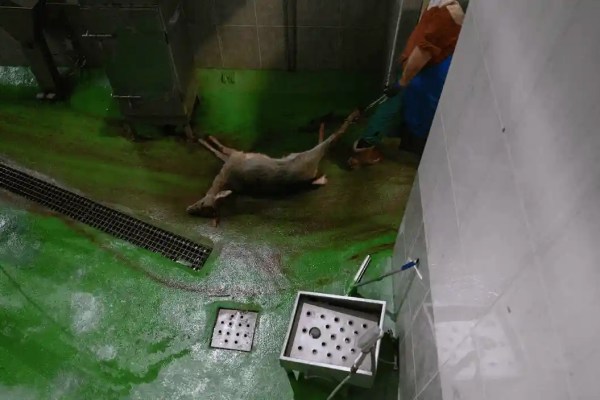
The canton of Grisons complains about disturbed wildlife and celebrates recreational hunting as a form of regulation, yet wolf and lynx are the ones reducing red deer populations, while recreational hunters startle the wildlife all year round.
The wildlife in Grisons hardly has any peace left, and the canton says so itself. And yet it stages recreational hunting as the solution, while wolf and lynx do the actual regulatory work.
The canton complains about the “human disturbance factor”
When the Office for Hunting and Fishing publicly states that the wildlife “hardly has any peace left” and is increasingly disturbed by humans, the diagnosis is clear: the main problem is not the red deer, but the human in the red deer’s habitat. The canton becomes especially honest when it speaks of the “human disturbance factor” while at the same time pointing out that municipalities can close paths and restrict access to wildlife retreat areas.
In practice, recreational hunters are active precisely where the wildlife would need peace: in retreat areas, along game trails, in avalanche-prone protective forests, on open ground with good visibility. High hunt, low hunt, special hunt and specific operations such as nocturnal wild boar hunting create a constant hunting presence that cannot be confined to a few weeks in autumn but in fact extends over many months, by day and by night, year after year. A good overview of this permanent hunting mode is provided by the article “Hunting regulations in Grisons: rules under criticism”.
It is precisely here that a contradiction with a name emerges. Adrian Arquint publicly complains that the wildlife in Grisons is “constantly startled” and that disturbances have “increased at night and during the hunts”. At the same time, as co-head of the Office for Hunting and Fishing, he drives this very development forward by selling ever more hunting aids and kill programmes as a “service of the hunting community”.
Red deer populations: they are regulated above all by wolf and lynx
Officially, the canton praises the recreational hunters for a «reduction» in red deer populations from a previously very high level. The red deer population has been lowered by a double-digit percentage since 2020, it is said. What is missing from this narrative: the decisive ecological factor behind the trend reversal was not recreational hunting that suddenly became efficient, but the reintroduction and spread of wolf and lynx.
This is shown in the article «Recreational hunting praised, wolf ignored»: Between 1999 and 2019, red deer populations rose continuously despite high hunts and special hunts. Only with the return of the wolf and, in parallel, improved herd protection measures, are declining figures discernible – effects that the authority barely mentions in its press releases.
Where wolf and lynx are present, the distribution of game shifts; red deer lose calves, become more mobile in the terrain and avoid certain areas. In some regions, roe deer and in part other cloven-hoofed game species are significantly decimated, because predators do not hunt according to hunting planning, calendar entries and leisure budgets, but rather where and when they can make a kill. Natural predation acts daily, in all weathers, without a «closed season» out of consideration for a hobby, as the article «Study: wolf packs are good for the Swiss forest» explains in detail.
The red deer in particular shows how closely the development is linked to predators: for decades the populations continued to rise despite the high hunt and special hunts. Only when wolf and lynx gained ground and «regulated» the landscape and game density from their perspective could the canton suddenly report a politically desired population reduction – and it sells this effect publicly as a success of the hunters.
The special hunt as an exposure of hunting failure
The special hunt is the clearest proof that recreational hunting in Grisons has never lived up to its own regulatory ideology. The special hunt means: regular hunting has not achieved the kill targets, the populations are too high, the forest is suffering, and so additional hunting days must be organised to correct the failure.
The dossier «Special hunt in Grisons» shows: as long as special hunts have to be ordered, the system of recreational hunting has structurally failed. The kill figures are only reached with an administratively inflated hunt, not through independent, systematic regulation by the recreationally organised hunting community.
Even today, several thousand red deer are killed each year in some cases, 4,000 to 5,000 animals depending on the year. The fact that special hunts and extremely high kill quotas continue to be “necessary” is the best proof that, over the decades, recreational hunting has failed to keep the populations at a forest-compatible level on its own, and that a natural regulator such as the wolf is indispensable. This criticism is summarised in the article «Special hunts and the limits of recreational hunting».
Small game: when “conservation” is just another word for killing
With small game, too, the canton sells the killing as care. The office states that intensive annual monitoring keeps the populations under observation, that brown hares and black grouse are stable and at a high level in many places, that the hunting operating regulations have proven their worth for “sustainable hunting”, and that the hunting community “actively campaigns for these species through conservation”. During the red deer count, 1,306 brown hares were also tallied, according to the canton the highest number ever reached.
It is precisely here that it becomes clear that “conservation” in this system above all means killing. An absolute count figure says nothing about the health of a population; what is decisive is the density. And that falls apart as soon as one compares Grisons with a hunting-free canton.
Grisons is the largest canton in Switzerland by area and at the same time kills the most brown hares nationwide, most recently well over a thousand animals per season. The brown hare is on the Red List across the country; the Swiss average is around 2 to 3 animals per 100 hectares. In the tiny canton of Geneva, on the other hand, one of the smallest in Switzerland, where recreational hunting has been banned since 1974 and professional game wardens take over the management, the highest density in the entire country was measured, at 17.7 brown hares per 100 hectares.
The message behind these figures is unambiguous: where no shooting takes place, the populations are densest. If hunting were truly «conservation», the canton with the most kills, of all places, would have to show the highest densities, not the canton with the hunting ban. Without recreational hunting, the Grisons populations would in all likelihood be higher, not lower. Details are provided in the article «Where are there still brown hares in Switzerland» and the dossier «How does the Geneva hunting ban work».
The recreational hunter as a constant disturbance factor
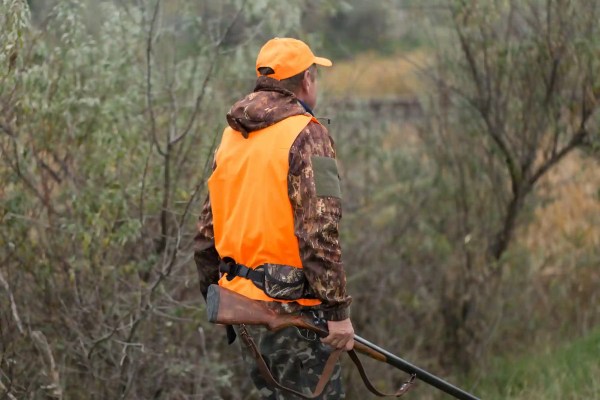
The greatest disturbance factor for wildlife is not a few nature photographers or trail runners, but thousands of recreational hunters who operate directly in the retreat areas for months of the year with rifle, dog, thermal imaging technology and hunting licence. Anyone who advertises several thousand red deer per season for shooting, splits the high hunt into two blocks, organises special hunts and tolerates nocturnal hunting creates a permanent disturbance that no other sector of use in the mountains achieves.
Whereas wolf and lynx also allow the wildlife rest phases and hunt with a natural frequency and energetic logic, recreational hunting scarcely knows any pauses. There is training, shooting, observing, work with wildlife cameras, driving with cars and off-road vehicles, work with dogs. And now, recently, they are even set upon wild boars at night, as the article «Grisons: recreational hunting for wild boars at night» shows.
No other sector of use is out in the field with weapon, dog and vehicle as often as the hunting leisure faction. Anyone who takes wildlife disturbance seriously must conclude:
- Recreational hunting is not merely a co-regulator, it is itself a permanent, highly effective disturbance factor.
- It takes effect precisely where wildlife would need rest: in retreat areas, at grazing grounds, along wildlife trails and at the transitions between forest and open land.
- It operates over a stretched-out period: high hunt, low hunt, special hunt and special hunts together produce a practically year-round backdrop of disturbance.
The article «Recreational hunters in Grisons have failed» sums it up: over decades, populations were not regulated but decimated and pushed into the night, traffic risks were increased and browsing damage to protective forests was produced, and all of this under the label «conservation».
The role of Adrian Arquint
Adrian Arquint is not the neutral voice of caution he portrays himself as in the interview, but the architect of a system that first disturbs wildlife to the maximum and then sells its own disturbance as «regulation». He praises the hunting community for «magnificent achievements», while his own figures show that it is the wolf and lynx that first turn the red deer populations around, and that hunting armament makes nocturnal disturbance explode. In this constellation, Arquint stands for a hunting policy that protects recreational hunters, devalues predators, and only addresses wildlife protection when it serves as a pretext for more kills. This is not management, this is officially organised hypocrisy.
Consequences from a wildlife protection perspective
From the perspective of consistent wildlife protection, the solution does not lie in combating the wolf and continuing to glorify recreational hunting. It is about:
- clearly limiting hunting presence in time and space,
- handing over population regulation to professional wildlife wardens in the long term,
- recognising and protecting predators such as the wolf and lynx as central ecological actors.
Anyone looking for a concrete political proposal for this will find it in the template texts for hunting-critical motions in cantonal parliaments, which call for professional wildlife wardens instead of recreational hunting and the protection of all predators according to the «Geneva model».
More on the subject of recreational hunting: In our dossiers on the criticism of recreational hunting gather fact-checks, analyses and background reports. The scientific evidence is presented in the overview Studies on the Effects of Recreational Hunting.
The position of IG Wild beim Wild: IG Wild beim Wild rejects recreational hunting. Our model is the canton of Geneva, which has managed without recreational hunting since 1974: without hunting seasons, without hunting dogs, without driven hunts, without high seats, without the animal cruelty and crime that go hand in hand with hunting season elsewhere. What has worked there for over fifty years disproves every position paper by JagdSchweiz. An association that bases its policy on claims it refutes in its own documents is not a professional organisation, but a factory for misinformation.
Support our work
With your donation you help protect animals and give their voice a hearing.
Donate now →