Spain: Doñana is drying out, the recreational hunting lobby calls for a comeback
While birds in the national park die of drought, the narrative of the rescuing recreational hunter circulates in France and Spain.

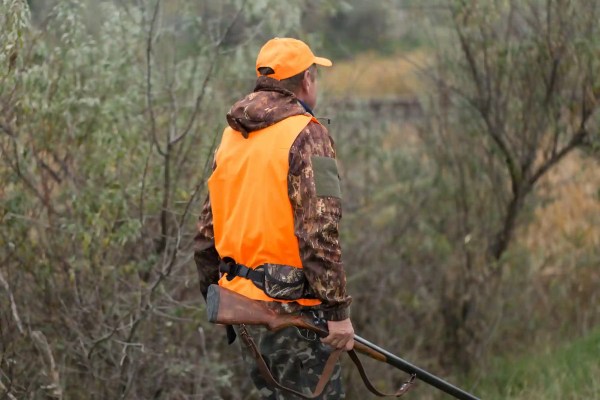
The French recreational hunting magazine Le Chasseur Français is spreading a narrative that has run across the Spanish and French hunting press in recent weeks: in the southern Spanish national park of Doñana, wild boars are said to have been plundering the nests of protected bird species ever since the hunting ban in Spanish national parks.
The headline reads, in essence: the recreational hunters have been called in to help after their «expulsion». The data from Spanish biodiversity research paints a different picture.
Doñana is dying from water, not from wild boars
In January 2024 the Doñana Biodiversity Report of the state research institution CSIC recorded the lowest waterfowl count since records began in 1973: just 43’989 animals. The central lagoon complex of Santa Olalla dried out for the third year in a row. The researchers around director Eloy Revilla identify a clear cause for this: persistent drought, a falling groundwater table, overexploitation of the aquifer by industrial strawberry and berry cultivation around the park, and the advancing climate crisis. For years UNESCO has been considering placing Doñana on the Red List of World Heritage in Danger.
The same report contains a sentence that the recreational hunting lobby consistently keeps quiet: the wild boar population in Doñana also reached an all-time low in 2024. The rabbits have likewise been in decline since 2013, which threatens the prey base of the Iberian lynx. Anyone who wants to help the birds must bring back the water, not the rifle.
A study using artificial nests becomes a campaign
The key study behind the current campaign does not come from Doñana, but from the equally drying-out national park of Tablas de Daimiel in Castilla-La Mancha (Sebastián-Pardo et al., Ecosistemas 34/1, 2025). It was carried out at the IREC, the Instituto de Investigación en Recursos Cinegéticos, a research institute embedded within the hunting establishment. The method: artificially constructed duck-nest dummies, 28 days of observation with camera traps. The wild boar was the second-fastest nest predator, with an average of 7.7 days until destruction.
That is a valid methodological observation. But it says nothing about actual brood losses, nothing about populations, and certainly nothing about whether recreational hunting in protected areas would change any of this. A Finnish comparative study (Miettinen et al.) published in 2025 in the European Journal of Wildlife Research concluded that wild boars plunder nests to a comparable extent as other meso-predators of the region. To construct from such findings an «ecological emergency caused by a hunting ban» is editorial amplification, not a scientific conclusion.
When recreational hunting creates the problem in the first place
The real paradox: wild boar populations in Spain grow above all where intensive hunting takes place. The European Food Safety Authority (EFSA) calculated as early as 2014 that a removal rate of more than 67 percent of the population per year would be necessary to reduce populations permanently. Translated, this means: more than two out of three wild boars would have to be shot annually, a figure that in open populations with immigration from neighbouring areas is practically never attainable. Instead, wild boars respond with compensatory reproduction: larger litters, earlier sexually mature piglets, dissolution of the sounder structure through the shooting of lead sows. Added to this is the practice, widespread in Spain as in Germany, of baiting and game feeding by recreational hunters, which lures wild boars together in concentration and thereby demonstrably increases the nest predation risk in the surrounding area (Oja et al., PLoS One 2015).
It is precisely this logic that Wild beim Wild demonstrated in February 2026 in Zurich's wild boar management and most recently in the Grisons night-hunting concept in the Mesolcina: the Ticino kill figures doubled between 2015 and 2024, yet the population grew nonetheless.
What would actually help Doñana
The steps that make sense from a nature-conservation perspective have been known for years and are precisely not the ones backed by the recreational hunting lobby:
- Rehabilitation of the aquifer, removal of illegal wells, limitation of the intensive berry crops around the park.
- The return of natural predators. The Iberian lynx population has almost doubled since 2020, the Iberian wolf is recolonising parts of the peninsula. Both regulate wild boar and red deer without lead ammunition and without driven hunts.
- Non-lethal fertility control for wild boars. The first field trials with oral contraceptives and immunocontraception have been running in Spain since 2022. Wild beim Wild also consistently advocates this approach.
- A strict ban on baiting and feeding, because baiting artificially enlarges wild boar populations and endangers nests.
A familiar pattern
Whether it is the Swiss hunting association, the DJV, Jagd Österreich or the Spanish hunting federations, whether «Schweizer Jäger», «Wild und Hund» or «Le Chasseur Français»: for years the hunting associations and their press have engaged in systematic distortion of the facts in the DACH region as in Spain, and the Doñana case is just another current example.
The DACH region knows this script. As soon as a wildlife crisis becomes visible, whether the wolf in Switzerland, wild boars in Barcelona or the disappearance of birds in Doñana, the recreational hunting lobby reaches the same conclusion: we are the solution. That the number of Spanish recreational hunters has plummeted by almost 50 per cent since 2002, that Spanish wild boar meat is rejected in Italy and Portugal because of massive lead contamination, that Portugal's wolf regions have shown for centuries that coexistence works, none of that makes the headline.
Protected areas without recreational hunting are not an ideological gimmick but a scientific standard. The Swiss National Park has been hunting-free since 1914, the canton of Geneva abolished recreational hunting in 1974, and Luxembourg banned fox hunting in 2015. In all three reference areas the ecosystems function without any need to shoot sows with night vision devices. Doñana's birds need water. The lobby throws in the scapegoat for free.
Support our work
With your donation you help to protect animals and give their voice a hearing.
Donate now →