Study: Wolf packs are good for Swiss forests
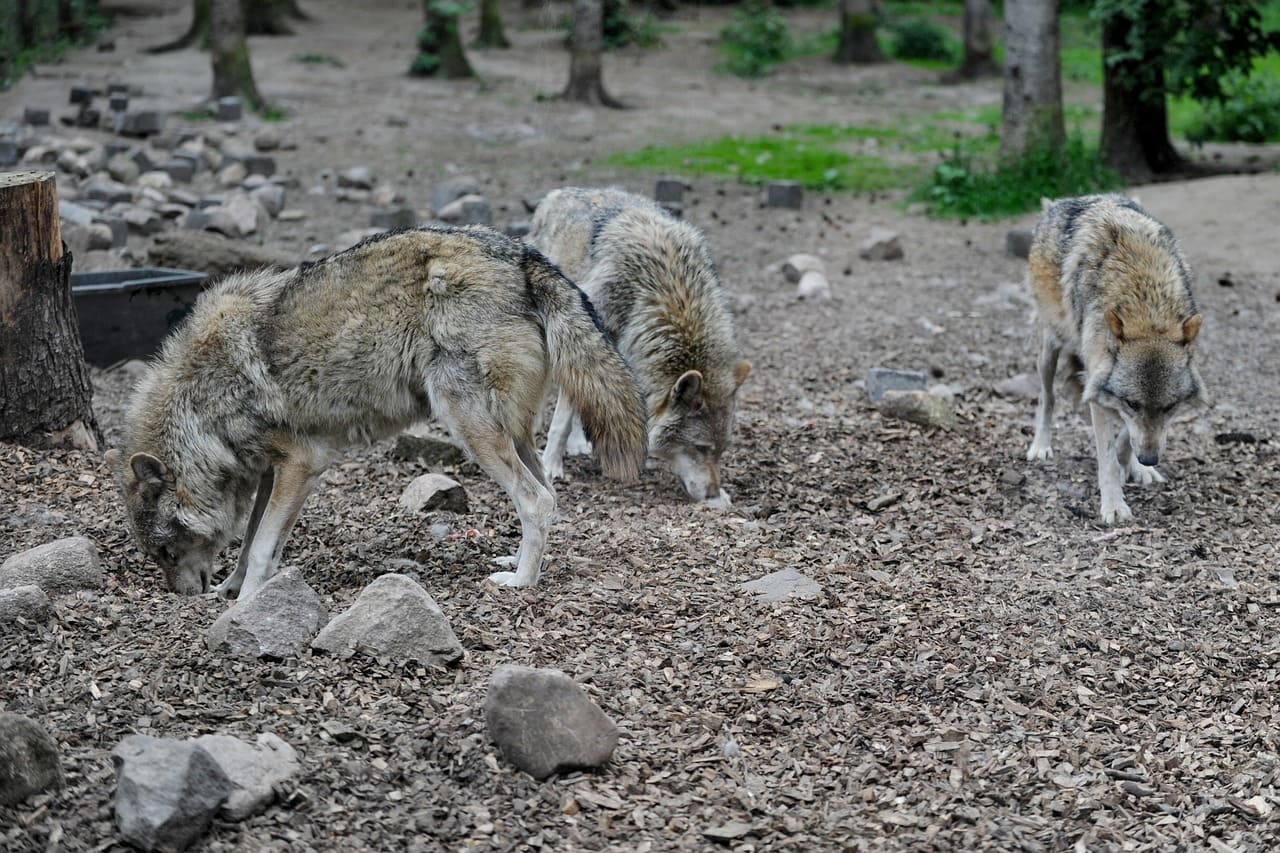
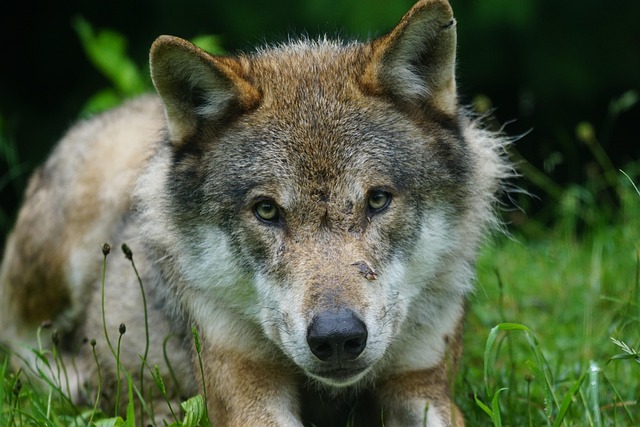
The wolf has few friends among livestock farmers and recreational hunters — but foresters are all the more fond of it. Wolf packs can help control overly large deer and roe deer populations. Initial evidence for this comes from the Calanda massif in the Chur Rhine Valley.

As in many parts of Switzerland, too many red deer and roe deer are putting pressure on forests in Graubünden as well.
Young growth is dying off because it is being eaten. Forests are at risk of ageing excessively and becoming unstable. In mountain areas this is particularly problematic, as forests there often serve a protective function against avalanches, rockfalls, and landslides.
In Graubünden, 60 percent of forests are classified as protective forests — and they are under pressure. “We have conditions that are not tolerable in the long term,” says the head of the Office for Forest and Natural Hazards, cantonal forester Reto Hefti. Twenty-one percent of protective forests have regeneration problems due to browsing damage. The protective function of the forest could be lastingly disrupted.
While the spring population of red deer in the Alpine canton stood at an estimated 12’600 animals in the year 2000, the figure climbed to 14’000 in 2011 and to 16’500 this spring. A similar trend is likely among roe deer, whose populations are not officially recorded. The mild winters of recent years have contributed to this development.
Pack kills 300 wild animals per year
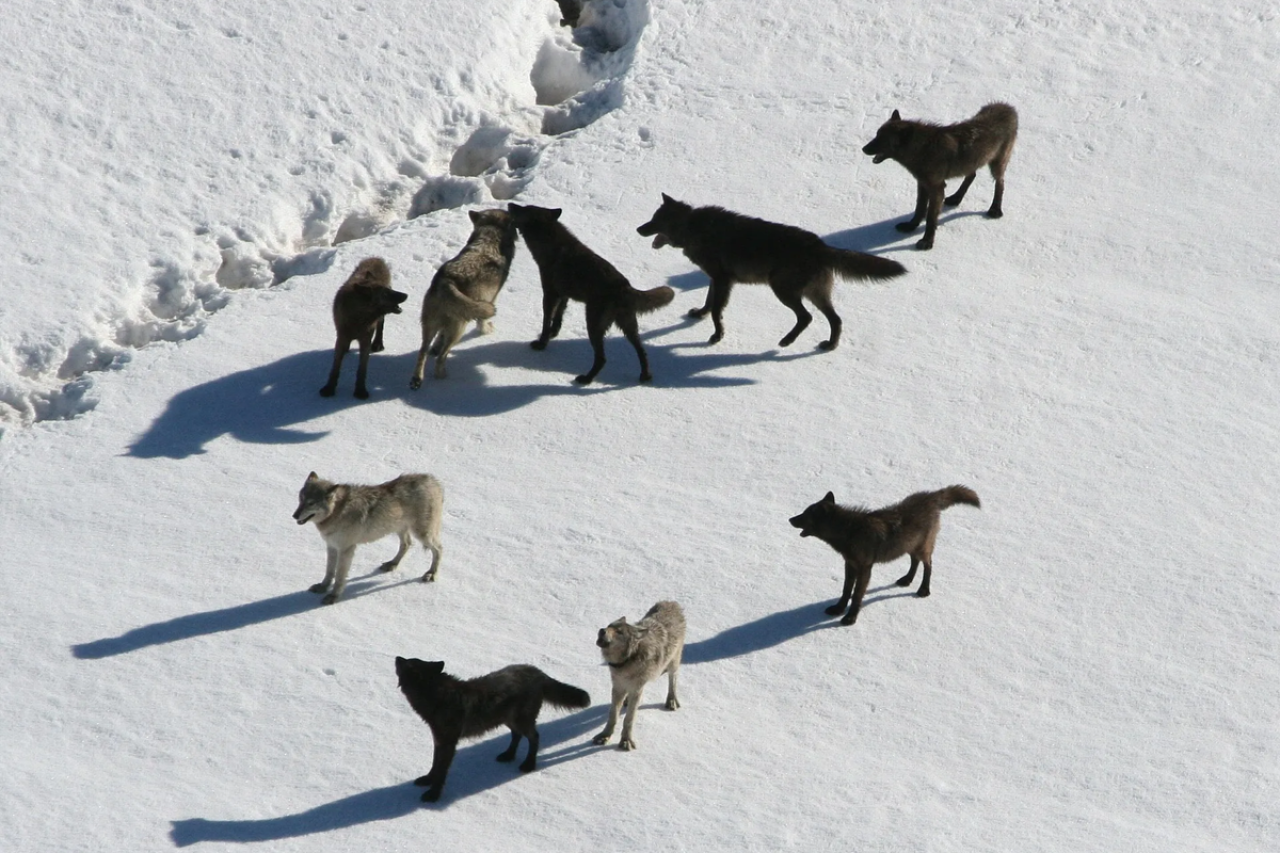
One exception is the region around the Calanda massif between the Chur Rhine Valley and the St. Gallen Tamina Valley. In 2011, Switzerland’s first wolf pack formed there. Since then, the number of red deer in the wolves’ hunting territory has decreased by an estimated one third, according to the Graubünden Office for Hunting and Fisheries, while numbers across the entire canton increased by 18 percent.
A decline is also evident among roe deer and chamois, though it is less pronounced. Altogether, the pack of around ten wolves kills some 300 red deer, roe deer, and chamois every year. Forestry experts believe that the reduction in wild animal populations should have a positive effect on the natural regeneration of the forest. However, cantonal forester Hefti notes that this cannot yet be statistically demonstrated at the Calanda. Forests simply develop on entirely different timescales than humans and animals.
"Common sense tells us that fewer deer eat young trees," says Hefti. He assumes that a positive influence of the wolf will be scientifically confirmed in a few years. Such an effect has already been confirmed in the case of the lynx.
Forest engineers want more wolves
The Swiss Forestry Association (SFV), the professional association of forest engineers, called five years ago for allowing the natural immigration and spread of the wolf. "Where lynx and wolf occur regularly, less damage to forest regeneration is observed," the SFV noted in 2012.
This position is also held by the Graubünden Office of Forests in the new Forest Development Plan 2018+, which is currently under public consultation. "Predators are welcome from a forestry perspective," the plan states. The "spread of predators into areas of the canton not yet occupied" is explicitly welcomed. A "significant reduction in wildlife damage" is expected. Not only will the reduction in wildlife populations have a positive effect, but also the influence of wolves on the distribution of wildlife within the forest.
More silver firs again
"The wildlife moves around more and doesn't always stay in the same locations," says Mattiu Cathomen, district forest warden in Tamins, a core habitat of the wolf pack. Browse damage is therefore less concentrated. Cathomen considers the positive influence of the wolf to be already established. "We can already see it in the forest," he says. What stands out is the large number of small silver firs between two and five years old.
This had not been seen in Tamins for decades. The defining tree of Graubünden's forests had repeatedly been browsed as yearlings and had died off. Now the pressure from wildlife — after some initial negative effects — has decreased. "For the forest, the wolf pack is certainly a positive thing," is the conclusion from those on the front line.
Habitat for more wolves
In total, 30 to 40 wolves live in Switzerland. Apart from the Calanda massif, a pack has established itself in Ticino and in Valais. The habitat and prey availability in Switzerland offer potential for 17 packs.
Forests and heathlands are the habitat of wolves. We have plenty of these in Switzerland and throughout the Alpine region. Predators are also highly adaptable. However, their spread depends not only on ecological carrying capacity, but also on public acceptance. While surveys show a majority in favor of the wolf's return, many people are simultaneously afraid.
The wolf has a bad reputation. Yet attacks on humans are exceptional. The few documented attacks in Europe can be traced back to individual animals that were either cornered or suffering from rabies. As long as the discussion is based solely on prejudice, fears cannot be dispelled. More on this in the Hunting Myths.
Stopping the immigration of wolves is difficult. Hundreds of animals already live in the Alpine region today. In Germany, 35 packs formed within just a few years. Furthermore, wolves can cover vast distances. There have been cases where a wolf traveled up to 1’000 kilometers within a few months in search of a mate before starting a family.
The return of the wolf in Switzerland is a source of tension: the public feels its leisure activities in forests and mountains are threatened, livestock farmers fear for their sheep and cattle, and recreational hunters see the wolf as a competitor. Foresters, on the other hand, welcome the predator wholeheartedly. "Without predators, our forests are out of balance," says Maurus Frei, head of the Forest and Wildlife working group of the Swiss Forestry Association. Deer, roe deer, and chamois prevent significant portions of Swiss forest from regenerating naturally. "If the young trees are grazed too heavily, the large trees that protect us and our villages from natural hazards will be missing in the future." Frei is convinced: "Just like recreational hunters, lynx and wolves can therefore contribute to reducing high wildlife populations and thus help safeguard the benefits our forests provide."
A fully grown wolf consumes between three and five kilograms of fresh meat or carrion per day. That is equivalent to roughly 70 roe deer per year. “They preferentially take old or weak animals,” says Gabor von Bethlenfalvy, who is responsible for the predators portfolio at WWF Switzerland. A pack will often observe a herd of wild animals for hours before identifying the weakest prey. “In this way, wolves help ensure a robust and healthy wildlife population.”
Going after the wolf
Yet the wolf is currently under considerable pressure. The Federal Council has hunting act loosened. Under the new rules, culling is also to be permitted as a preventive measure to avoid damage. Nature and animal welfare organisations are up in arms. “Shooting wolves is wrongly promoted as the simplest solution,” says von Bethlenfalvy of WWF Switzerland. In most cases, indiscriminate killing does not lead to a reduction in attacks on livestock — and in some cases even makes things worse. The recreational hunting fails as population control.
This is the conclusion reached by the newly published study “Frontiers in Ecology and the Environment”. “Losing a pack member destabilises the family structure, making the pack more unpredictable.” Pack stability, alongside livestock protection, is one of the most important factors in keeping attacks on livestock low.
Dossier: Wolf in Switzerland: Facts, Politics and the Limits of Hunting
More on the subject of recreational hunting: What the research says about this is shown by Hunting fact-checked: the state of research.
The position of IG Wild beim Wild: IG Wild beim Wild rejects recreational hunting. Our model is the canton of Geneva, which has managed without recreational hunting since 1974: without hunting seasons, without hunting dogs, without driven hunts, without high seats, without the animal cruelty and crime that go hand in hand with hunting season elsewhere. What has worked there for over fifty years disproves every position paper by JagdSchweiz. An association that bases its policy on claims it refutes in its own documents is not a professional organisation, but a factory for misinformation.