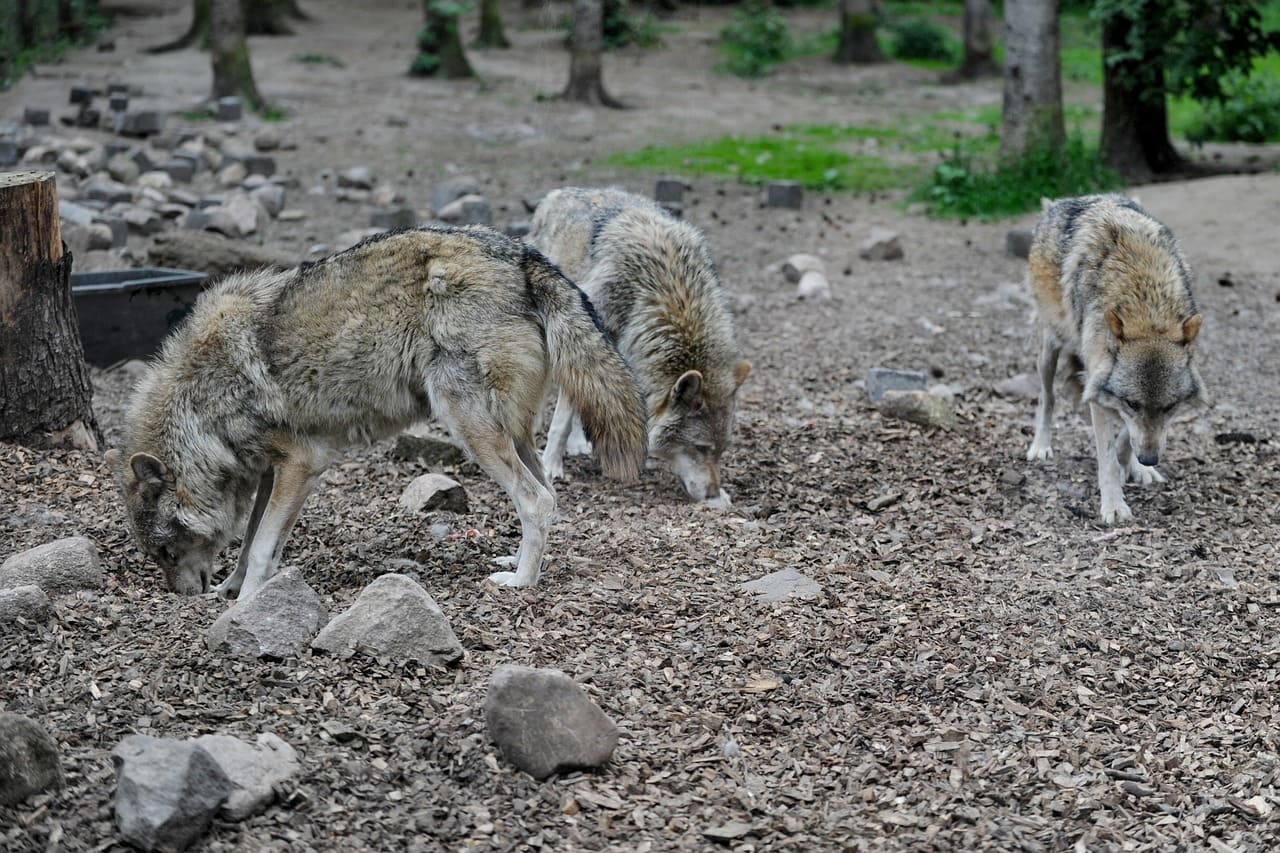
The big bad wolf is afraid of you
New research shows: wolves flee from human voices — and faster than from other sounds.

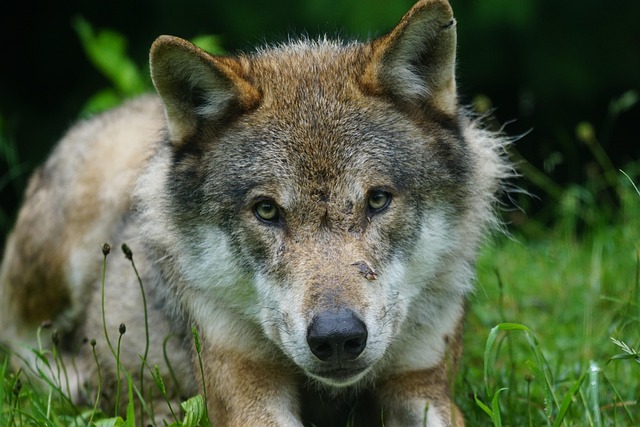
The “big bad wolf” from fairy tales and fables is anything but fearless in reality.
A new study, published in the journal Current Biology, shows that wolves react significantly more strongly to the human voice than to other sounds in their environment. The findings suggest that the animals still harbour a deeply ingrained fear of humans — despite their comeback in many European regions.
Experiment in the Tuchola Forest
The research team led by predator ecologist Liana Zanette of Western University in Ontario conducted its investigations in the Tuchola Forest in northern Poland — an area where around 15 wolf packs live.
At intersections of heavily used wildlife trails, the researchers installed motion-activated camera-speaker systems that played various audio recordings when wolves approached:
- human voices (men and women speaking calmly),
- dog barking,
- and harmless bird calls as control sounds.
Result: Clear flight response
The video data revealed a clear pattern: wolves ran away more than twice as often and twice as fast when they heard human voices, compared to the other sounds.
The animals consistently avoided the location of the sound — strong evidence that humans are perceived as a “super-killer” even in the modern wilderness.
Scientific context
"Wolves clearly fear humans more than any other animal," says co-author Maciej Szewczyk of the University of Gdansk.
Other researchers such as Chris Darimont of the University of Victoria emphasise that wolves’ fear is likely similarly pronounced in North America as well. Nevertheless, they caution that future experiments should also place greater emphasis on the sense of smell — after all, this is even more important for wolves than their sense of hearing.
Background: Protected status and conflicts
In Poland wolves were never completely eradicated, unlike in many other European countries. Nevertheless, illegal killings continue to occur, even though the animals are protected by law.
Across Europe and North America, the return of wolves continues to cause tensions: livestock farmers fear attacks, while conservationists point to the ecological role of wolves.
The new study offers a possible approach for non-lethal management: if human voices reliably drive wolves away, such acoustic signals could be used in future as a deterrent — cost-effective, efficient, and without harm to the animals.
The research findings refute the widespread assumption that wolves have lost their fear of humans.
On the contrary: they show that wolves still perceive humans as the greatest threat — regardless of whether they are armed with a rifle, a camera, or a microphone.
Sources:
- Current Biology (2025): The Big Bad Wolf Is Afraid of You
- The New York Times
- Western University, University of Gdańsk, Polish Academy of Sciences
Get involved: Petition your municipality for a tax remission on federal and cantonal taxes, citing the catastrophic policy of Federal Councillor Albert Rösti (SVP) and the recently approved culling of wolves in Switzerland. You can download the template letter here: https://wildbeimwild.com/ein-appell-fuer-eine-veraenderung-in-der-schweiz/

More on the subject of recreational hunting: What the research says about this is shown by Hunting fact-checked: the state of research.
The position of IG Wild beim Wild: IG Wild beim Wild rejects recreational hunting. Our model is the canton of Geneva, which has managed without recreational hunting since 1974: without hunting seasons, without hunting dogs, without driven hunts, without high seats, without the animal cruelty and crime that go hand in hand with hunting season elsewhere. What has worked there for over fifty years disproves every position paper by JagdSchweiz. An association that bases its policy on claims it refutes in its own documents is not a professional organisation, but a factory for misinformation.