Landshut Dialogue in Utzenstorf: Bow Hunting Panel with Familiar Recreational Hunter Faces
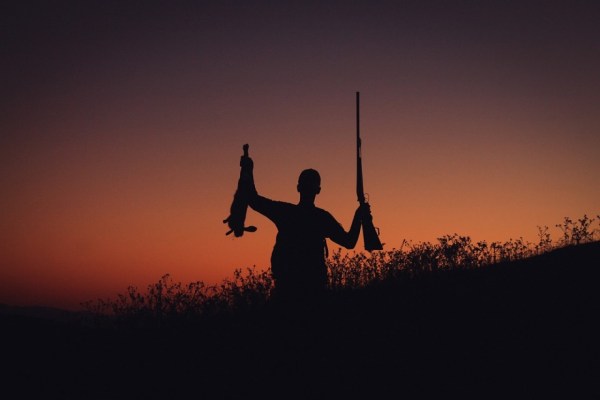
On 19 July 2026, the Swiss Hunting Museum will once again discuss a controversial hunting method, with a bow hunter as speaker and an active recreational hunter as moderator.
“What an Arrow Does”
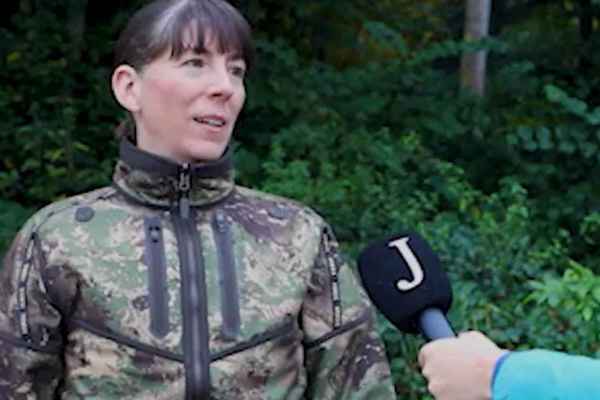
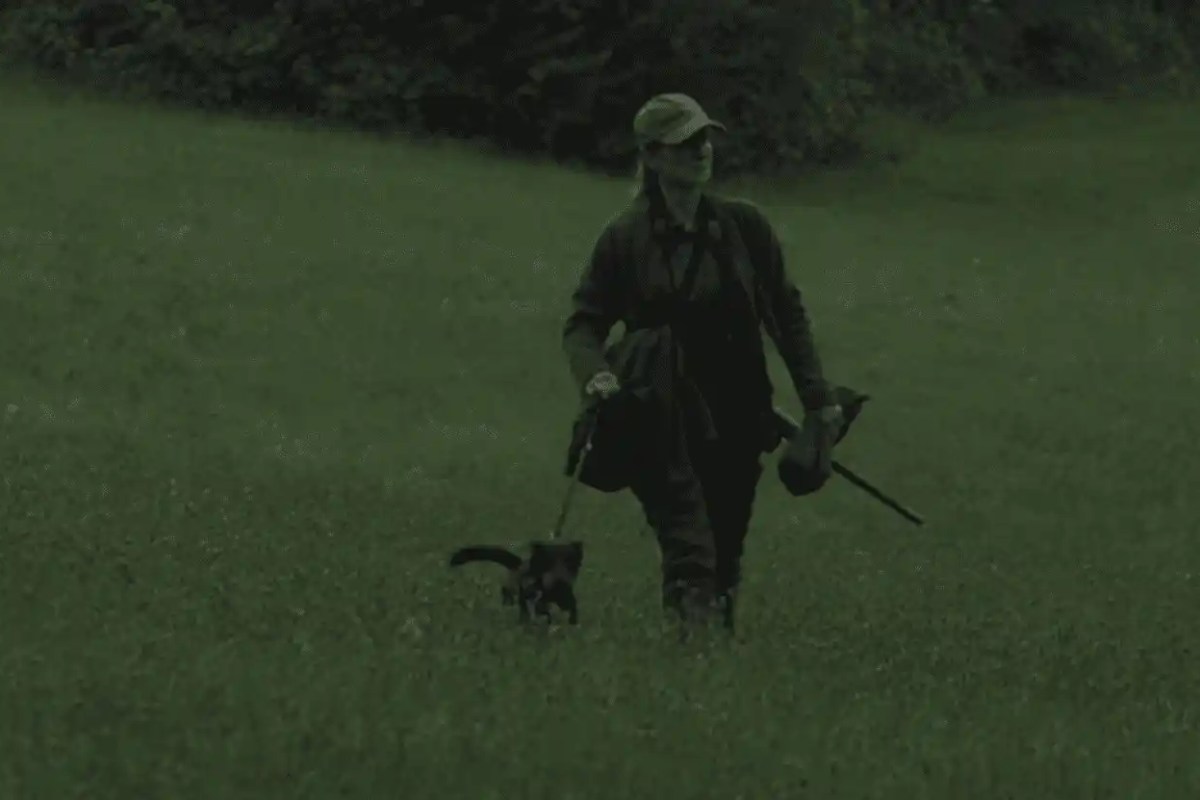
On 19 July 2026, from 2 to 3 pm, the Förderverein Schloss Landshut in Utzenstorf is inviting people to the next «Landshut Dialogue on Wildlife & Hunting». The topic: «Should bow hunting be allowed in Switzerland?» Melitta Maradi has been announced as speaker – forestry engineer ETH, managing director of Wildtier Schweiz and herself an active bow hunter. The moderation will be taken over by Reinhard Schnidrig, former head of the Wildlife and Forest Biodiversity section at the Federal Office for the Environment (FOEN), also an active recreational hunter from Valais.
Anyone who knows the organiser knows what to expect. The Förderverein Schloss Landshut has been a member of JagdSchweiz since 1998 and is the custodian of the Swiss Hunting Library, which houses, among other things, the archives of JagdSchweiz and other recreational hunting associations. The Hunting Museum in Utzenstorf is not a neutral venue for a socio-political debate; it is an institutional arm of the Swiss recreational hunting lobby.
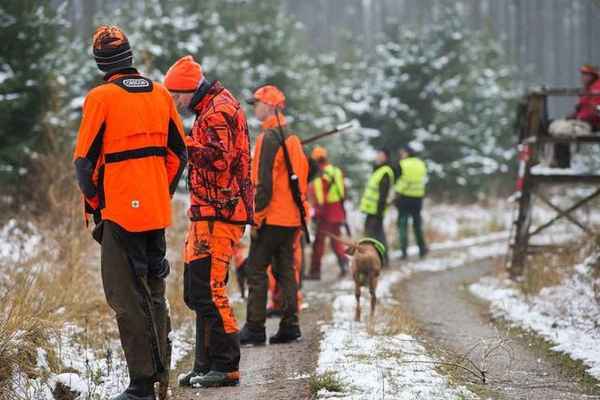
As early as 14 June 2026, the same organiser had already held a panel discussion on fox hunting at the same venue, at which four of the five guests publicly belonged to the recreational hunting community. No critical voices were heard, and no scientific evidence was presented. The event on 19 July continues this tradition.
Melitta Maradi: managing director of Wildtier Schweiz and bow hunter
Melitta Maradi is no stranger to the Swiss recreational hunting scene. The forestry engineer ETH heads the office of Wildtier Schweiz in her main occupation, an association that sees itself as a link between research and hunting practice, and sits on the board of the Swiss Society for Wildlife Biology. She is also an active recreational hunter and travels abroad to hunt with bow and arrow where this is permitted. Her designation as a «wildlife biologist» in the event announcement is misleading: Maradi is a forestry engineer and industrial engineer, not a qualified wildlife biologist with a doctorate. According to a 2019 decision by the Zurich cantonal government, Maradi served as chairwoman of the Oberland hunting district and was thus a member of the cantonal hunting commission.
There is no statutory kill quota for cruel and pointless hunts on fox, badger, songbird, duck and so on. In truth, there are dozens of scientific studies on the wildlife-biological nonsense of fox hunting. In 2011, for example, not a single red deer, roe deer, red fox, badger, marten, brown hare, etc., was shot in Geneva. Unlike other cantons, Geneva still enjoys excellent hare populations – clear proof that uncontrolled recreational hunters are not needed, but rather game wardens who put their heart and soul into wildlife management. Incidentally, Maradi also travels abroad to hunt with bow and arrow – as an account of a course with Melitta Maradi confirms. In other courses for Zürioberland Tourismus, she serves predator meat to the public.
On the side, Maradi ran paid nature courses for Zürioberland Tourismus under the label bodenhaftung.ch. In one of these courses, costing CHF 100.– per person, participants jointly butcher a roe deer shot at Schauenberg, and the animal’s offal is served as an aperitif. Venue: the Schlachthüsli in Hofstetten ZH.

The course description states that, apart from salt, sugar, vinegar and oil, the ingredients are «not organically certified – but pure nature!». This idealised portrayal ignores the fact that the central «main course» – a roe deer shot at Schauenberg – is likewise not organically certified. Unlike meat from controlled organic animal husbandry, game meat from recreational hunting comes from a shot animal whose meat, in the area of the bullet channel, may be contaminated with ammunition residue. Marketing it as «pure nature» is misleading, bordering on consumer deception.
What course participants report about Maradi is revealing. In a public Facebook comment, one participant describes how she got to know Maradi through Züri Oberland Tourismus for a course on "edible wild plants". Maradi had once caught the scent of a fox – "the reaction was worse than when our tomcat smells a mouse". The participant describes Maradi as a "real thoroughbred huntress" who knows how to "bow and scrape even in front of people". What this reaction reveals about the psyche of recreational hunters is examined in our category Psychology & hunting. For this reason, the so-called E-Screener was introduced in the Netherlands, an online psychological test that all hunting licence holders must take. The result was sobering: 20 to 25 percent of recreational hunters failed the test and had to surrender their weapon and hunting licence. One can reasonably assume that Melitta Maradi, who reacts to the scent of a fox "like a tomcat to a mouse" and serves course participants offal, would hardly pass such an aptitude test.

Reinhard Schnidrig: Former FOEN section head and active recreational hunter
The choice of moderator is telling. Reinhard Schnidrig was for years head of the Wildlife and Forest Biodiversity section at the Federal Office for the Environment (FOEN) – and, according to his official appointment from 2005, an "active hunter in the cantons of Bern and Valais". This is not a moderator who mediates between animal welfare and recreational hunting, but a figure from within the hunting-policy establishment itself. It is obvious who is not invited to this dialogue: independent animal welfare organisations with a scientific mandate that have no affinity whatsoever for recreational hunting.

Bow hunting: banned in Switzerland for good reason
Bow hunting is banned in Switzerland on animal welfare grounds, and this legal position rests on a solid scientific foundation. An evaluation of around two dozen studies from the USA shows that this hunting method often causes considerable animal suffering. In a study by the University of Oklahoma, 50 percent of white-tailed deer shot during a bow hunt were only wounded and initially could not be found. The Swiss Animal Protection organisation (STS), in its strictly rejecting stance, states that an arrow shot allows no margin for aiming error and frequently results in through-and-through wounds with no guaranteed killing effect.
Even taking the more optimistic figures provided by bowhunting associations as a basis, a wounding rate of 16 to 17 percent remains – meaning that every sixth or seventh animal hit suffers an agonising death without being recovered by the recreational hunter. This is not an acceptable standard of animal welfare in a country with one of the strictest animal welfare laws in Europe.
The «Landshuter Dialog zu Wild & Jagd» is not a dialogue. It is a series of events run by a hunting museum that belongs to JagdSchweiz, featuring speakers and moderators close to recreational hunting, with no structural involvement of independent animal welfare voices. The question “Is bowhunting one ban too many?” is posed rhetorically: it suggests that the ban requires justification, not the demand to lift it. An honest society turns the question around: why should a country that has enshrined animal welfare in its federal constitution legalise a hunting method in which every sixth animal shot perishes in agony? The law has given a clear answer for decades. What is needed is not a “dialogue” about it, but its enforcement.
The Geneva model: hunting ban since 1974
Indeed, the canton of Geneva has provided the resounding counter-evidence to recreational hunting ideology for over 40 years. Recreational hunting has been banned in Geneva since 1974. At the time, around two-thirds of voters said yes. According to a Tages-Anzeiger report, the outcome has been «consistently positive». Game wardens take over population control – at night, using light amplifiers and infrared equipment. The cantonal wildlife inspector Gottlieb Dandliker states: “99.5 percent of the animals shot die instantly.” Suffering is minimal, and there are almost no cases of animals surviving a shot while injured. With such an instant-death rate, there is no need for abnormally bred hunting dogs or elaborate follow-up searches – both unavoidable side effects of recreational hunting that massively prolong animal suffering.
The Neuchatel anthropologist Manue Pichaud has calculated the costs of the entire wildlife management: one million francs annually, or 2.20 francs per resident. Geneva's inhabitants are happy to pay this, because they value encountering wild animals on walks in nature. This impression is scientifically confirmed: the canton recorded a strong increase in biodiversity in a long-term study. Roe deer, red deer and wild boars, which had almost completely disappeared before 1974, now live in Geneva again. Martens, beavers, hares, weasels and birds of prey have recovered. Bertrand von Arx, Director of Biodiversity for the canton of Geneva, confirms: «The hunting ban can be a means of increasing biodiversity.» Hunting accidents are no longer an issue. If Geneva were to vote again today, approval would be even greater.
That is the model that works, not a «dialogue» about bow arrows at the hunting museum in Utzenstorf.
More on the subject of recreational hunting: In the dossier The Role and Criticism of Recreational Hunters we shed light on the training, power and self-image of recreational hunters. What the research says about this is shown by Hunting fact-checked: the state of research.
The position of IG Wild beim Wild: IG Wild beim Wild rejects recreational hunting. Our model is the canton of Geneva, which has managed without recreational hunting since 1974: without hunting seasons, without hunting dogs, without driven hunts, without high seats, without the animal cruelty and crime that go hand in hand with hunting season elsewhere. What has worked there for over fifty years disproves every position paper by JagdSchweiz. An association that bases its policy on claims it refutes in its own documents is not a professional organisation, but a factory for misinformation.

All articles are written by IG Wild beim Wild as well as by external co-authors. Research, structuring and editorial processes may be supported by AI-assisted tools.
Support our work
With your donation you help protect animals and give their voice a hearing.
Donate now →