Fox hunting panel in Utzenstorf: four recreational hunters, one non-hunter and no real dialogue
At Schloss Landshut, five panellists discussed fox hunting. Four of them had a hunting background, as did the moderator. A first-hand account.
On Sunday, 14 June 2026, the Schloss Landshut Friends' Association invited the public to the «Landshut Dialogue on Wildlife and Hunting» in Utzenstorf.
The topic was: «Fox hunting, necessary or questionable?» To set the mood, the documentary film «Everything for the Foxes, a Wild Animal, Loved and Hunted» by biologist Isabella Sedivy was shown at 12 noon. From 2 pm, a specialist lecture by recreational hunter Martin Baumann followed, before a panel discussion was supposed to illuminate the topic from «different perspectives». Around 50 people attended the event. What followed, however, was anything but a balanced dialogue.
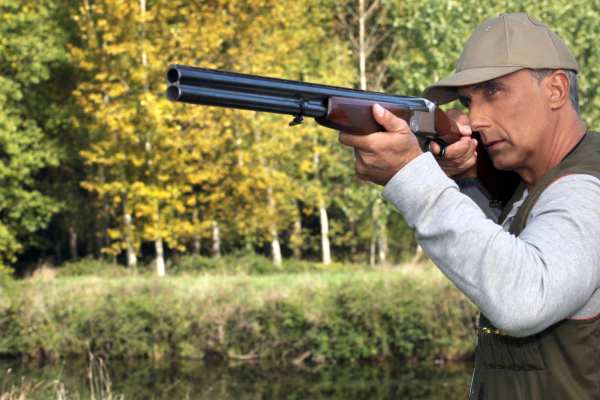
Of the five panellists, four publicly identified as recreational hunters: Nicole Imesch, hunting inspector of the canton of Bern; David Clavadetscher, managing director of JagdSchweiz; Martin Baumann, recreational hunter; and Sara Wehrli, responsible for hunting policy at Pro Natura, who over the course of the evening also outed herself as a recreational hunter. Only Casimir von Arx, GLP cantonal councillor of the canton of Bern, who according to his own account had been invited subsequently, represented a hunting-critical perspective. The moderator Reinhard Schnidrig, wildlife biologist and former head of the wildlife section at the BAFU, is also a recreational hunter.
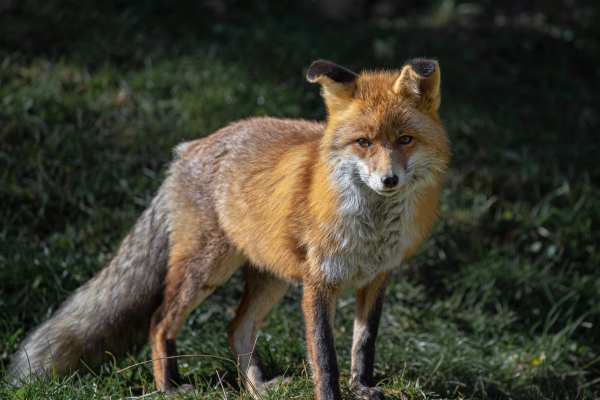
Baumann, who advocated consistent hunting of the fox, at least conceded that earth hunting is hard to justify to society. «Hunting for the rubbish bin» is not tolerated by the majority of the population, according to his own assessment. As an argument for hunting, he cited the threat posed by the fox to ground-nesting birds and mentioned the grey partridge, which is extinct in Switzerland. What he concealed: the main reason for the disappearance of the grey partridge is habitat loss due to intensive agriculture, not the fox. On that he said not a word.
Particularly explosive: Baumann also spoke out in favour of earth hunting, that practice in which dogs are driven into fox dens to force a fight in the most confined space. The Stiftung für das Tier im Recht (TIR) reaches, in its expert opinion on earth hunting (publication series volume 10, 2012), the clear conclusion that this hunting method fulfils the offence of cruelty to animals, and indeed in several respects. The TIR also analysed whether the cantonal regulations that legalise earth hunting rest on a lawful basis at all. The cantons of Zurich, Thurgau and Basel-Land have since banned earth hunting. That, of all people, a recreational hunter advocated this practice on a public podium without even beginning to problematise it shows how far the self-image of recreational hunting is removed from social realities. A detailed background article on earth hunting as legal cruelty to animals can be found at wildbeimwild.com.
Nicole Imesch confined herself to the legal observation that the fox is huntable and may therefore be hunted. That «huntable» is not a scientific argument and also implies no obligation to hunt remained unchallenged. The canton of Geneva has refrained from recreational hunting since 1974, and the canton of Zug is taking first steps in the same direction, regarding fox hunting.
Von Arx, the only non-hunter on the podium, brought the most constructive proposal of the evening: in the canton of Bern a scientifically monitored trial should be launched to refrain from fox hunting in a test area. The Executive Council of the canton of Bern had already rejected the corresponding motion. It did not even propose converting it into a postulate. In the Grand Council the motion will be dealt with in the autumn session. The podium, as expected, joined in this rejection, without providing any scientific basis for it.
From the audience, too, there came only four contributions, all of them from recreational hunters. Critical voices were not heard.
Remarkable was a statement that unintentionally captured the essence of recreational hunting: hunting, for the individual recreational hunter, is self-rewarding behaviour, driven by the dopamine reward system. In short: pure self-gratification. That, of all people, a proponent of recreational hunting put it this way speaks volumes.
The «Landshut Dialogue» once again showed how criticism of fox hunting in Switzerland is systematically stifled, without any scientific basis being provided for it. As long as panels on this topic are populated almost exclusively by recreational hunters, and even the moderation comes from the same circles, genuine dialogue is impossible. A pity, because the topic would deserve an honest, scientifically grounded debate.
More on the subject of recreational hunting: In our dossiers on the criticism of recreational hunting gather fact-checks, analyses and background reports. What the research says about this is shown by Hunting fact-checked: the state of research.
The position of IG Wild beim Wild: IG Wild beim Wild rejects recreational hunting. Our model is the canton of Geneva, which has managed without recreational hunting since 1974: without hunting seasons, without hunting dogs, without driven hunts, without high seats, without the animal cruelty and crime that go hand in hand with hunting season elsewhere. What has worked there for over fifty years disproves every position paper by JagdSchweiz. An association that bases its policy on claims it refutes in its own documents is not a professional organisation, but a factory for misinformation.
Support our work
With your donation, you help to protect animals and give their voice a hearing.
Donate now →