Spain: Fewer recreational hunters, more kills than ever
Spain has fewer and fewer recreational hunters, yet the number of wild animals killed is rising. Since 2025, the turtle dove has also been cleared for shooting again.
«More shots, more animals»
Over the past two decades, recreational hunting in Spain has changed considerably. The number of hunting licences issued has fallen by around half, from over one million twenty years ago to 568,715 in 2022. The latest official figures from the Spanish Ministry for the Ecological Transition (MITECO) for 2024 confirm this trend: in Andalusia, the region with the most recreational hunters, the number of licences fell from 129,714 to 110,483 within two years.
Fewer recreational hunters, more kills
The decline reflects a changing attitude towards recreational hunting as well as demographic change. Younger generations are growing up in cities and show less interest in rural traditions. In addition, environmental and animal welfare organisations are raising awareness of the need to protect wild animals.
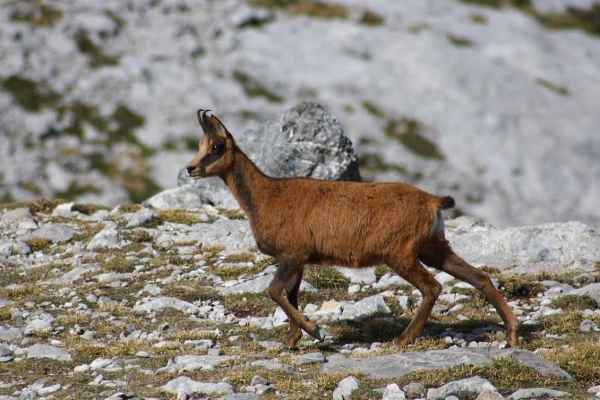
Nevertheless, the number of non-human animals killed is rising. For large game, one record chases the next: in 2022, around 740,000 animals were killed, in 2023 around 781,000, and in 2024, according to the MITECO Forestry Statistics Yearbook, the figure was 826,846. More than half of these were wild boars (483,110), along with 167,692 red deer and 100,776 roe deer.
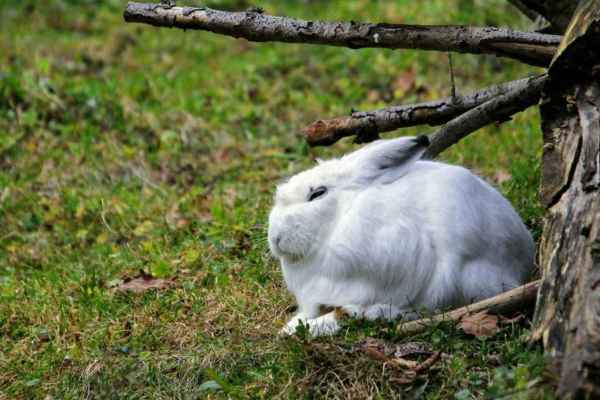
In total, the statistics for 2024 show over 18.5 million wild animals killed, including around 5.6 million rabbits, 4.3 million thrushes, around 2.8 million pigeons and grey partridges each, and nearly 200,000 foxes. The actual figure is even higher, as complete data is missing for the Canary Islands and the Basque Country. Converted, recreational hunters in Spain kill over 50,000 wild animals a day on average, although the kills are concentrated in the hunting season.
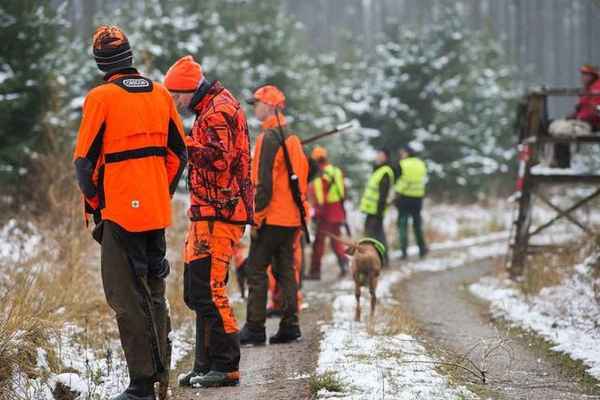
Efficient techniques and modern equipment are making the remaining recreational hunters deadlier. Added to this is an industry that supplies animals specifically for shooting: in 2024, more than 3.4 million animals, mostly game birds, were released into the countryside, with over 2.3 million in Castilla-La Mancha alone. The registered breeding operations produced more than 1.1 million grey partridges for this purpose.
Around 85 per cent of the country's land area is hunting ground, with hunting grounds covering nearly 42.8 million hectares. Only a small proportion of licences go to women.
Quail: Government follows the recreational hunters, not the science
The quail shows just how great the influence of recreational hunters remains despite their dwindling numbers. In 2022, the government's scientific committee unanimously recommended classifying the species as threatened, which would have ended its hunting. At the urging of recreational hunting associations, the Ministry of Agriculture presented a counter-report. In February 2025, the government decided not to include the quail in the catalogue of threatened species, even though a European assessment from 2024 classifies the current kill quantity as very likely unsustainable. In 2024, 847,272 quails were shot in Spain.
Turtle dove: The moratorium has fallen
As early as 2024, the Ministry of Agriculture was working towards getting the EU Commission to lift the moratorium on recreational hunting of the European turtle dove. It had been introduced in 2021 to save the rapidly dwindling species. The plan worked: on 1 April 2025, the Commission once again allowed recreational hunting along the western flyway. A take of up to 1.5 per cent of the population is permitted, around 132,000 birds per year. Spain received the largest share with 106,920 animals, followed by France with 10,560 and Italy with 924.
The statistics show how effective the hunting ban was: in 2024, Spain recorded just 382 turtle doves killed. The resumption of hunting was justified, of all things, by the recovery of the population that the moratorium itself had brought about. BirdLife Europe called the decision «reckless and short-sighted» and criticised the fact that the member states' control systems remain weak.
In Andalusia, the screw is already being tightened further. For the 2025/26 season, 35,555 turtle doves were available; for 2026/27, according to the regional government, there will be 40,338, spread across four hunting days in August. In 2025/26, 12,230 animals were taken. Only hunting grounds with documented habitat measures are permitted, and kills are recorded via an app. Worldwide, the turtle dove remains classified as endangered (IUCN “Vulnerable”). How the species fares in Switzerland is shown in the article «Turtle dove in Switzerland», why quiet species so often lose out in species protection, «Turtle doves die quietly, whales die loudly».
A shrinking minority with major influence
Spain shows a pattern that repeats itself in many European countries: the number of recreational hunters is declining, yet their political influence remains. Whether it concerns the quail, the turtle dove, or the wolf, for whose kill Asturias gave the green light once again despite several court rulings: the interests of a shrinking minority prevail over scientific recommendations. How recreational hunting associations exert political influence at EU level is shown in the article «The hunting swamp is everywhere». How Spanish providers court customers from Switzerland is examined in «How Spanish providers court Swiss recreational hunters».
The lack of newcomers is not a uniquely Spanish phenomenon. The European comparison and the German special case are shown in «Hunting in decline, hunting licences at a record high». Evidence on the ecological consequences of recreational hunting is compiled on the studies page «Hunting Fact-Checked».
That is exactly how recreational hunters are destroying biodiversity everywhere.
RECREATIONAL HUNTER RADAR
On the trail of hidden animal welfare violations, poaching and/or crime? Report suspected cases to us! Help with the great Recreational Hunter Radar.

More on the subject of recreational hunting: In our dossiers on the criticism of recreational hunting gather fact-checks, analyses and background reports. What the research says about this is shown by Hunting fact-checked: the state of research.
The position of IG Wild beim Wild: IG Wild beim Wild rejects recreational hunting. Our model is the canton of Geneva, which has managed without recreational hunting since 1974: without hunting seasons, without hunting dogs, without driven hunts, without high seats, without the animal cruelty and crime that go hand in hand with hunting season elsewhere. What has worked there for over fifty years disproves every position paper by JagdSchweiz. An association that bases its policy on claims it refutes in its own documents is not a professional organisation, but a factory for misinformation.

All articles are written by IG Wild beim Wild as well as by external co-authors. Research, structuring and editorial processes may be supported by AI-assisted tools.
Support our work
With your donation you help protect animals and give their voice a hearing.
Donate now →