Hunting barometer 2025: What JagdSchweiz's survey leaves out
After the uproar over a trophy photo from Grisons, the umbrella organisation of recreational hunters cites its own survey. Independent surveys paint a different picture.
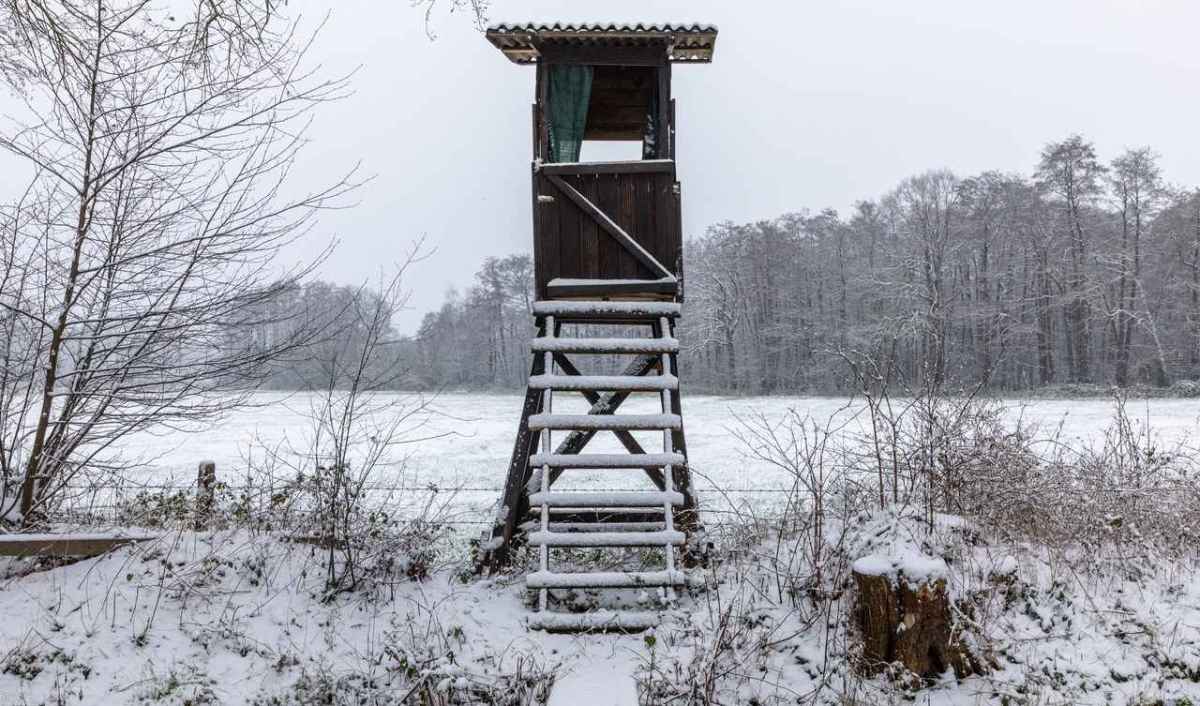
High seat at the edge of a field (symbolic image). Photo: Dietmar Rabich, Wikimedia Commons, licence CC BY-SA 4.0
«Hunter's Tales»
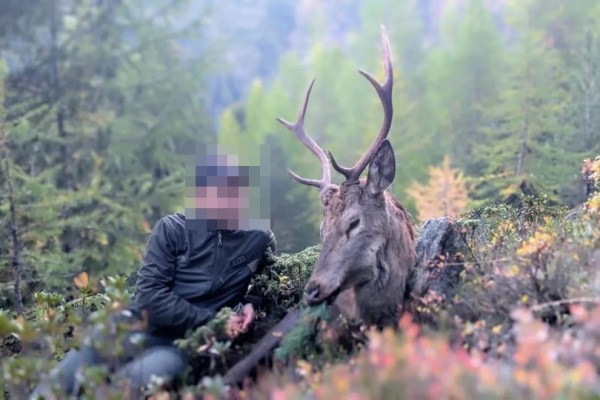
No sooner does a photo of a recreational hunter from Grisons with a shot roe deer trigger hundreds of outraged comments than Ronja Stöckli of the umbrella organisation JagdSchweiz reaches for her tried-and-tested tool: her own survey.
Speaking to Nau.ch, JagdSchweiz points to the Hunting Barometer 2025. According to it, 73 per cent of those surveyed consider recreational hunting necessary for regulating wildlife populations, and 68 per cent judge it to be compatible with animal welfare. We covered the case itself in the article Recreational hunter from Grisons poses with dead roe deer.
Anyone wanting to put these figures into perspective needs to know who commissioned them, how the questions were asked, and what other surveys show.
The client is the umbrella organisation itself
Every two years, JagdSchweiz commissions a population survey from the market research firm DemoScope and presents the results as proof of broad acceptance of recreational hunting. The survey underlying the association's brochure covered around 1,005 people. The questions are aimed at general approval. Who would spontaneously object when asked whether recreational hunters are committed to the environment, without ever having heard an opposing view? The details are set out in the fact-check of the JagdSchweiz brochure.
How selectively the association handles surveys is shown by the case of bow hunting. The Hunting Barometer is published with charts and a press release. The 2025 survey on bow hunting, by contrast, vanished from public communication after the submission deadline. The response rate and results remain unknown to this day (Bow hunting panel discussion in Utzenstorf).
Same institute, different result
How strongly the outcome depends on the client is shown by DemoScope itself. In September 2017, the same institute surveyed 1,015 people on behalf of the Swiss Animal Protection organisation STS. 64 per cent spoke out in favour of banning earth hunting, with only 21 per cent wanting to keep it. 43 per cent wanted to ban driven hunts, while a further 32 per cent wanted their numbers restricted. Opposition was stronger among women and among 15- to 34-year-olds; there was no divide between German- and French-speaking Switzerland (A ban on senseless fox hunting is long overdue).
A year later, JagdSchweiz commissioned its own survey from the same institute and announced that the vast majority considered recreational hunting to be sustainable and consistent with animal welfare. 82 per cent were said to attest to its animal-welfare compliance, and 90 per cent credited recreational hunters with a love of nature and responsible handling of weapons. Two surveys, one institute, two opposing pictures, depending on who is paying (Hunting in Switzerland: Public Is Poorly Informed About Recreational Hunting).
The difference lies in how the questions are framed. As long as the questions concern recreational hunting in general, approval predominates. As soon as concrete practices come up for discussion, it tips the other way.
WaMos 2: The survey the association does not cite
One survey that was not commissioned by an interest group is the socio-cultural forest monitoring survey WaMos 2, a representative poll of the Swiss population on their relationship with the forest. It shows that 79 per cent have reservations about recreational hunting or reject it outright, while 19 per cent are fundamentally opposed to it or call for its abolition (Introduction to hunting criticism). This figure does not appear in JagdSchweiz's press releases.
The picture is even clearer where the population knows recreational hunting from its own experience and has abolished it. In the canton of Geneva, in a representative survey by the ERASM institute in 2004, 90 per cent spoke out against reintroducing recreational hunting. In 2009, the Grand Council rejected a corresponding motion by 70 votes to 7 (Geneva hunting ban).
How approval is manufactured
This pattern is not confined to Switzerland. Jagd Österreich advertised in February 2026 with the slogan «85 per cent say yes». The core question, in essence, asked whether people would grant others the right to hunt if it were carried out in accordance with the law. That measures tolerance towards a legal activity, not approval. A second statement was tied to the condition that recreational hunting be practised responsibly and ethically. Anyone who agrees is judging an ideal, not the practice (Hunting lobby uses opinion polling as a PR weapon).
The figures from the Hunting Barometer work in a similar way. The question of whether recreational hunting is needed for regulation already presupposes the regulation thesis. And the question of whether recreational hunting is animal-welfare-compliant only measures respondents' impressions, not what actually happens in recreational hunting. The practice is documented: according to Swiss Animal Protection STS, the success rate of follow-up searches for wounded wild animals ranges from 35 to 65 percent depending on the canton. A considerable proportion of injured animals are, accordingly, never found.
What the Hunting Barometer reveals nonetheless
Even the umbrella association's own surveys contain figures that JagdSchweiz does not put in the foreground. In 2018, 82 percent of respondents in the association's survey still attested animal-welfare-compliance to recreational hunting; in the 2025 Hunting Barometer, the figure is 68 percent. Provided the questions were posed comparably, that is a decline of 14 percentage points in seven years, measured with the association's own instrument.
On top of that: in 2025, 20 percent of respondents agree with the statement that recreational hunters hunt only for the pleasure of killing and for the trophy. So one in five respondents attributes to recreational hunting exactly the motive that the Grisons trophy photo with a raised thumb makes visible.
Commentary: A survey is no substitute for an argument
Around 0.3 percent of the Swiss population are recreational hunters. It is understandable that their umbrella association brings out its own survey after every scandal. But it is not an argument. Whether a majority tolerates something says nothing about whether it is right, and certainly nothing about the suffering of the non-human animals who are shot during recreational hunting and never found.
Anyone who seriously wants to know how the public feels about recreational hunting needs independent research: transparent methodology, traceable samples and concrete questions about actual hunting practices, not questions that already presuppose an alleged duty to regulate or an ethical ideal. And no recreational hunting associations as commissioners. As long as JagdSchweiz itself commissions, itself evaluates and itself communicates the Hunting Barometer, it is not independent opinion research. It is public relations work.
More on the subject of recreational hunting: In our dossiers on the criticism of recreational hunting gather fact-checks, analyses and background reports. What the research says about this is shown by Hunting fact-checked: the state of research.
The position of IG Wild beim Wild: IG Wild beim Wild rejects recreational hunting. Our model is the canton of Geneva, which has managed without recreational hunting since 1974: without hunting seasons, without hunting dogs, without driven hunts, without high seats, without the animal cruelty and crime that go hand in hand with hunting season elsewhere. What has worked there for over fifty years disproves every position paper by JagdSchweiz. An association that bases its policy on claims it refutes in its own documents is not a professional organisation, but a factory for misinformation.

All articles are written by IG Wild beim Wild as well as by external co-authors. Research, structuring and editorial processes may be supported by AI-assisted tools.
Support our work
With your donation you help protect animals and give their voice a hearing.
Donate now →