Eschenberg Forest: recreational hunter portrays bikers as the only source of disturbance
A Winterthur hunting chairman complains about illegal bike trails.
«The Stolen Night»
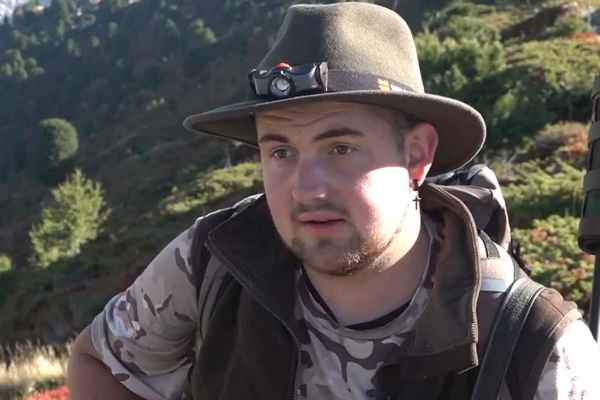
In a portrait originally published in the «Winterthurer Zeitung» and picked up by Nau.ch on 27 September 2026, a reporter accompanies Winterthur hunting chairman Harry Kohler on a drive through the Eschenberg Forest.
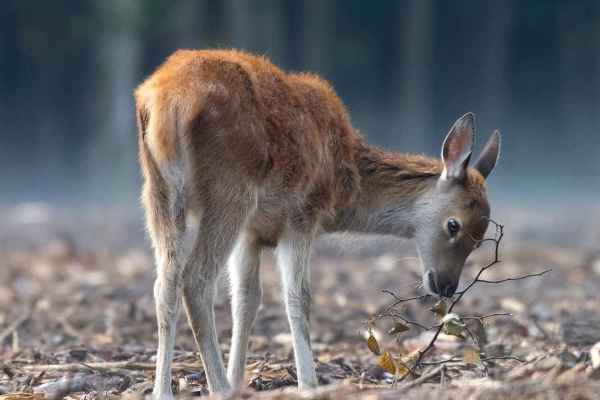
The topic is the hot summer and how the non-human animals coped with it. Kohler describes how roe deer, foxes and badgers suffered under the heat, shut down their bodily functions and hardly moved at all. His conclusion is unequivocal: «The only ones who caused problems during the heatwave were the bikers.» He points to several illegally built trails and calls on politicians to take action.
Illegal trails, destroyed barriers and self-built jumps are a real problem and should not be glossed over. The only question is who is talking about disturbance here and what is being left out.
Who really disturbs the forest around the clock
Bikers are out and about during the day and only seasonally. Recreational hunting, by contrast, intervenes in the habitat for ten months of the year and at every time of day. Stalking sessions take place at dusk and at night, precisely during the hours when many wild animals are active. In several cantons, wild boars are hunted at night using night vision and thermal imaging technology. In autumn and winter, this is followed by driven hunts with beaters, dogs and gunshots that throw entire forest areas into turmoil. On top of this comes the Earth hunting, in which dogs are sent into fox and badger dens.
Ten out of twelve months: the hunting seasons in the canton of Zurich
Just how comprehensively recreational hunting covers the year is shown by the closed seasons compiled by the Federal Office for the Environment (FOEN) for 2025. For the four species Kohler himself mentions in the article, the following applies in the canton of Zurich:
| Species | Closed season | Cleared for kill |
|---|---|---|
| Roe deer | 1 January to 30 April | 1 May to 31 December |
| Red fox | 1 March to 15 June | 16 June to end of February |
| Badger | 16 January to 15 June | 16 June to 15 January |
| Wild boar | 1 March to 30 June | 1 July to end of February |
Only in March and April are all four species protected simultaneously. From May, roe deer are shot; from mid-June, foxes and badgers; from July, wild boars. This falls right in the middle of the breeding and rearing season, during which family dogs must be kept on a lead until the end of July. And it covers the entire heatwave summer, during which the non-human animals were weakened, according to Kohler's own account. By comparison: in the canton of Geneva, all four species are protected all year round.
Research shows what this means for the non-human animals: hunted species react with greater flight distances, shift their activity to the night, and are under sustained stress. The evidence for this is compiled in the fact check on recreational hunting. A mountain bike on an illegal trail is a disturbance. A shot fired at night is the end for the animal that is hit, and an alarm signal for every other animal within earshot.
When the recreational hunter becomes the “game warden”
The terminology used is also striking. In the article, Kohler is referred to at one point as head of hunting, and at another as game warden. In the canton of Zurich, with its territorial hunting system, supervision of the hunting grounds lies largely with the hunting associations themselves. So whoever is presented as a “game warden” in this case is actually a recreational hunter talking about the forest in which his hunting association kills – a case of false labelling.
The article lacks any classification of this role, as well as any voice from outside the hunting community. Kohler speaks of “removing” sick animals, which in plain terms means: they are shot dead. Yet very few animals that die in recreational hunting are actually sick. Roe deer, foxes and wild boars are killed according to kill quotas, hunting seasons and bag targets, not according to diagnosis. This is shown by the data from the canton of Zurich itself: of 21,846 foxes recorded as hunting kills in the electronic game register between 2015 and 2025, only 7.7 percent bear any note of illness or injury, as the analysis of the Zurich game register shows. In the canton of Lucerne, where the health status of killed foxes is systematically recorded, over 98 per cent of the animals were healthy. The image of the caring forest guardian, who would if necessary have dug holes into stream beds, blinds out this side of his own activity. This also includes the consequences of the follow-up search after missed shots.
Comment: Sweep in front of your own high seat first
It's convenient to single out one group as the sole troublemakers when you yourself are driving through the forest with a rifle, a dog and a converted car. Recreational hunting doesn't just cause disturbance during a heatwave, but ten months a year, day and night. Anyone who seriously wants to relieve the pressure on the forest must not exempt their own leisure activity from the equation.
More on the subject of recreational hunting: In our dossiers on the criticism of recreational hunting gather fact-checks, analyses and background reports. What the research says about this is shown by Hunting fact-checked: the state of research.
The position of IG Wild beim Wild: IG Wild beim Wild rejects recreational hunting. Our model is the canton of Geneva, which has managed without recreational hunting since 1974: without hunting seasons, without hunting dogs, without driven hunts, without high seats, without the animal cruelty and crime that go hand in hand with hunting season elsewhere. What has worked there for over fifty years disproves every position paper by JagdSchweiz. An association that bases its policy on claims it refutes in its own documents is not a professional organisation, but a factory for misinformation.

All articles are written by IG Wild beim Wild as well as by external co-authors. Research, structuring and editorial processes may be supported by AI-assisted tools.
Support our work
With your donation you help protect animals and give their voice a hearing.
Donate now →