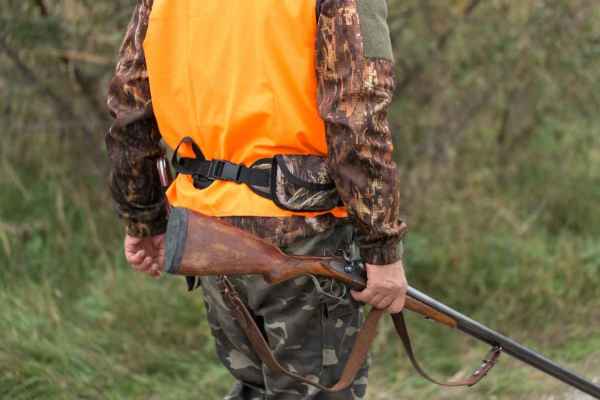
Fox hunting in Zurich: The game register disproves the canton's disease justification
Ten years of the electronic game register show: of 21,846 foxes shot dead, only 7.7 percent bear any indication of disease, while the Zurich hunting administration does not record conflicts with agriculture and the public at all. The justification for fox hunting collapses under the weight of its own data.

«Lullaby for the Uncounted»
The canton of Zurich justifies fox hunting on the grounds that a large proportion of the animals killed are diseased or in conflict with agriculture and the public.
The electronic game register, in which recreational hunters record their own kills, tells a different story. Of the 21,846 foxes recorded as hunting kills between 2015 and 2025, 1,674 bear an indication of disease or injury. That is 7.7 percent. For more than 92 percent, no such note exists at all.
How the figures came to light
In June 2026, Ursula Alayan-Ricklin from Effretikon asked the fisheries and hunting administration about the basis for fox hunting. Co-director Reto Muggler had previously claimed that of the roughly 3,200 foxes that die each year, about half are killed by hunters, and that a large proportion of these are due to disease or conflicts. In response to the enquiry, section head Manuel Bünzli initially supplied figures on 15 July 2026 that later proved to be incorrect: 1,420 dead foxes for 2025, of which 734 were shot. The raw data supplied alongside showed more than twice as many entries for the same year. On 18 September, the administration admitted to a filtering error and corrected the figure to 3,077 dead foxes, of which 1,675 were shot and 1,402 were recorded as fallen game. Only these corrected figures allow for a proper analysis.
What the game register really shows
| Year | Total foxes killed | shot | Fallen game | Noted as sick/injured | proportion |
|---|---|---|---|---|---|
| 2015 | 3’963 | 2’430 | 1’533 | 31 | 1,3 % |
| 2016 | 3’783 | 2’064 | 1’719 | 38 | 1,8 % |
| 2017 | 4’621 | 2’729 | 1’892 | 77 | 2,8 % |
| 2018 | 3’980 | 2’065 | 1’915 | 99 | 4,8 % |
| 2019 | 5’018 | 2’590 | 2’428 | 264 | 10,2 % |
| 2020 | 4’390 | 2’190 | 2’200 | 327 | 14,9 % |
| 2021 | 4’101 | 1’940 | 2’161 | 263 | 13,6 % |
| 2022 | 3’048 | 1’389 | 1’659 | 166 | 12,0 % |
| 2023 | 2’595 | 1’316 | 1’279 | 135 | 10,3 % |
| 2024 | 2’867 | 1’458 | 1’409 | 140 | 9,6 % |
| 2025 | 3’077 | 1’675 | 1’402 | 134 | 8,0 % |
| 2015–2025 | 41’443 | 21’846 | 19’597 | 1’674 | 7,7 % |
The proportion of animals recorded as sick or injured fluctuates between 1.3 percent (2015) and 14.9 percent (2020). The rise up to 2020 coincides with a mange outbreak. Recreational hunting did not prevent this wave, even though between 2,000 and 2,700 foxes were shot per year during those years. Over the entire period, the figure remains at 7.7 percent, and that with a generous method of counting: for the administration, a management kill or a keyword in the free-text field is enough to count as an indication of disease. No veterinary diagnosis lies behind any of these figures.
The conflicts that nobody counts
The second half of Muggler's justification, the conflicts with agriculture and the population, does not appear in the data at all. “Information on other reasons, namely conflicts with agriculture or problems with the population, is not recorded in the Wildbuch,” writes Bünzli, and there is “no obligation for the hunting associations” to enter such remarks. The authority itself describes its statement as a “finding” from exchanges with the hunting associations, which it “cannot substantiate with data”. In other words, the canton does not know why the vast majority of foxes are shot.
When the shooting happens
The individual data reveal not only how many foxes are killed, but also when.
| Period | Share of kills |
|---|---|
| November to February | 64 % |
| of which January and February (mating season) | 37 % |
| June and July | 15 % |
This is the rhythm of a leisure activity, not of targeted disease or conflict control. Sick animals do not adhere to the hunting season. It is also striking that the proportion of disease notes rises precisely in the summer months. During this time, the fox sheds its dense winter coat and looks scruffy, patchy and thin for weeks. To a layperson, this looks like mange, even though it is a completely normal process in a healthy animal.
Why the disease figure proves nothing
This makes the category “ill” doubly worthless as evidence. First, it is not a statistical characteristic but is read out retrospectively from a notes field. Second, it relies on the visual diagnosis of individuals without veterinary training. A note therefore does not state that a fox was ill, only that someone considered it to be ill. In Switzerland, the health status of culled foxes is systematically recorded only in the canton of Lucerne, and there over 98 per cent of the animals were healthy. Zurich is not a special case, but follows the same pattern. Anyone wishing to delve deeper into the research can find the complete study overview on the effects of recreational hunting on our website.
What follows from this
The Fisheries and Hunting Administration defends fox hunting with a justification that its own data does not support. No federal law compels the canton to hunt foxes. Geneva has managed without recreational fox hunting since 1974, and Zug stopped actively promoting it in 2026 following an independent study. Anyone wishing to change the practice in Zurich should contact the cantonal parliament. Instructions on how to do so can be found on the campaign page: Stop fox hunting – write to the Zurich cantonal parliament.
More on the subject of recreational hunting: In the dossier The Role and Criticism of Recreational Hunters we shed light on the training, power and self-image of recreational hunters. The scientific evidence is presented in the overview Studies on the Effects of Recreational Hunting.
The position of IG Wild beim Wild: IG Wild beim Wild rejects recreational hunting. Our model is the canton of Geneva, which has managed without recreational hunting since 1974: without hunting seasons, without hunting dogs, without driven hunts, without high seats, without the animal cruelty and crime that go hand in hand with hunting season elsewhere. What has worked there for over fifty years disproves every position paper by JagdSchweiz. An association that bases its policy on claims it refutes in its own documents is not a professional organisation, but a factory for misinformation.

All articles are written by IG Wild beim Wild as well as by external co-authors. Research, structuring and editorial processes may be supported by AI-assisted tools.
Support our work
With your donation you help protect animals and give their voice a hearing.
Donate now →