
Stop fox hunting – write to the Zurich cantonal parliament
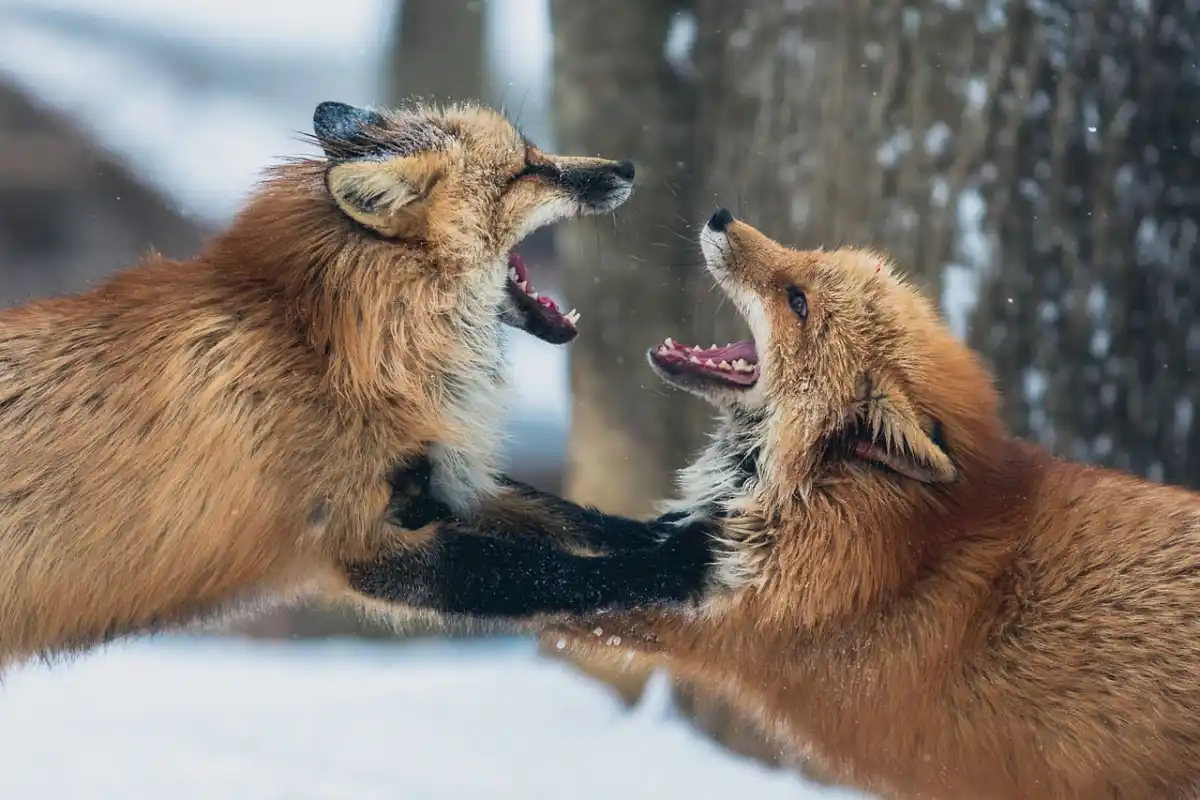
In the canton of Zurich, a total of 21,846 foxes were shot by recreational hunters between 2015 and 2025, an average of around 2,000 per year, even though the canton does not operate a kill quota. In 2025, there were 1,675. A further 1,402 foxes were recorded as fallen game, i.e. run over, found dead, or euthanised as sick animals. Night hunting of foxes is permitted, while the canton does not even grant the badger a closed season at cantonal level. When a citizen confronted the Zurich Fisheries and Hunting Administration with a scientific cost study in June 2026, its co-director Reto Muggler dismissed the source as “certainly not credible”. Yet this is a peer-reviewed publication in the renowned academic journal Biological Conservation.
This incident is symptomatic of a pattern: the hunting authority avoids the scientific debate and justifies fox hunting on the grounds of disease and conflicts for which, as its own figures show, it has no evidence. This is precisely why it is worth involving the Cantonal Council.
You can do something, no matter which canton you live in. Get in touch directly with your cantonal parliament member or your National Councillor. It's legal, effective, and takes only a little time.
Important: Don't rely on email alone. We have received feedback from several cantons that messages about hobby fox hunting sometimes come back as undeliverable. Whether this is due to faulty addresses or a targeted filter cannot be determined from the outside. It is therefore better to use several channels: write a letter, make a phone call, or seek a personal conversation. You can also contact the parties and parliamentary groups directly – a message to a party or group secretariat is often more effective than one to individual council members. A phone call or letter cannot be filtered out as easily as an email and often leaves more of an impression.
Template letter – copy this text into your email programme
Subject: Fox hunting in Zurich – please take action
Dear Ms [Name] / Dear Mr [Name]
I am writing to you directly as a citizen because I am concerned about the practice of fox hunting in our canton.
In the canton of Zurich, around 2,000 foxes are shot on average per year, without any kill quota in place. Night hunting of foxes is permitted. When a citizen approached the fishing and hunting administration in June 2026 about the economic balance of fox hunting and referred to a peer-reviewed study from the journal Biological Conservation, the administration's co-director dismissed this source as “certainly not credible”. That is hardly what an objective engagement with the evidence looks like.
The canton's own figures contradict the hunting authority's justification. Its co-director explained that most of the foxes killed were shot due to disease or conflicts with agriculture and the public. In fact, of the 21,846 foxes shot between 2015 and 2025, only 7.7 percent even carry a notation for disease or injury, and conflicts are not recorded in the wildlife register at all. The administration admits in writing that it cannot support this justification with any data.
The science is clear: more than 30 years of wildlife biology research show no sustained regulatory effect from fox hunting. Compensatory effects through higher reproduction and immigration quickly offset kills. The canton of Lucerne, the only one that records the health status of culled foxes, found over 98 percent of animals to be healthy. In 2026, the canton of Zug had an independent study confirm that fox hunting does not regulate populations and does not serve disease control, and has since stopped actively promoting it. The canton of Geneva has managed entirely without recreational hunting since 1974.
I ask you to advocate in the cantonal parliament for a genuine, scientifically grounded review of fox hunting, and to press for the hunting authority to disclose its justifications and take independent evidence seriously. No federal law compels the canton to hunt foxes. The canton of Zug has shown that this scope for action can be used.
Kind regards
[Your name]
[Your place of residence]
What happened in Zurich
In June 2026, Ursula Alayan-Ricklin from Effretikon submitted an enquiry about fox hunting to the Zurich Fisheries and Hunting Administration. Its co-director Reto Muggler brushed aside the scientific source she cited, saying it was “certainly not credible”. In fact, it is a peer-reviewed original publication in the journal Biological Conservation, which was the first to quantify the economic balance of state-organised vertebrate hunting in France. For France, the study puts annual hunting costs at 103 to 123 million euros, while officially reported damages amount to only 8 to 23 million euros.
When asked the specific question about the economic balance of fox hunting, Muggler responded with a figure on an entirely different topic: hunters respond to more than 5,000 incidents involving injured, sick or dead wild animals of all species each year, and if the canton were to take over this task, it would cost more than ten million francs. This may or may not be accurate, but it has nothing to do with recreational hunting of healthy foxes. A general wildlife service can also be organised without recreational hunting, as the canton of Geneva has shown since 1974.
Alayan-Ricklin subsequently requested access to the files, based on the principle of transparency. She wanted to inspect the electronic game register in which hunters record their kills, and the documents relating to an information event at which SWILD zoologist and lead study author Claudia Kistler gave a presentation to the Zurich recreational hunters. It was precisely this researcher — whose study prompted the canton of Zug to reverse course — who spoke internally to the Zurich recreational hunters, without a public announcement and without minutes.
On 15 July 2026, the administration provided initial figures: 1,420 dead foxes in 2025, of which 734 were shot. The accompanying data sets showed more than double that number of entries for the same year. On 18 September 2026, the administration admitted to a filtering error and corrected the figure to 3,077 dead foxes, of which 1,675 were shot.
What the Zurich game register reveals
Co-director Reto Muggler had written that most of the foxes killed in the canton of Zurich were shot due to disease or a conflict case involving agriculture or humans. The data from his own administration does not support this. Of the 21,846 foxes that recreational hunters entered into the electronic game register as hunting kills between 2015 and 2025, only 1,674 carry a note referring to disease or injury. That is 7.7 percent — even though the administration counts generously: a cull for population management purposes or a keyword in the free-text field is enough; there is no veterinary diagnosis. For more than 92 percent, there is no such indication at all. The mange outbreak is visible in the data, with the proportion rising from 1.3 percent (2015) to 14.9 percent (2020) before declining since then. Recreational hunting did not prevent this outbreak, even though 2,000 to 2,700 foxes were shot annually at the time.
For the second half of the claim, there is nothing at all. Conflicts with agriculture or the population are “not recorded in the game register”, writes section head Manuel Bünzli, and there is “also no obligation for the hunting associations” to record them. The administration refers to it as a “finding” that it “cannot support with data”.
The individual data also shows when the killing takes place: 64 percent of kills fall in the months of November to February, 37 percent alone in January and February, right in the middle of the mating season. A further 15 percent falls in June and July, when the young foxes still live within the family unit. This is the pattern of a leisure activity, not one of disease control or conflict prevention.
| Year | Total foxes killed | shot | Fallen game | Noted as sick/injured | proportion |
|---|---|---|---|---|---|
| 2015 | 3’963 | 2’430 | 1’533 | 31 | 1,3 % |
| 2016 | 3’783 | 2’064 | 1’719 | 38 | 1,8 % |
| 2017 | 4’621 | 2’729 | 1’892 | 77 | 2,8 % |
| 2018 | 3’980 | 2’065 | 1’915 | 99 | 4,8 % |
| 2019 | 5’018 | 2’590 | 2’428 | 264 | 10,2 % |
| 2020 | 4’390 | 2’190 | 2’200 | 327 | 14,9 % |
| 2021 | 4’101 | 1’940 | 2’161 | 263 | 13,6 % |
| 2022 | 3’048 | 1’389 | 1’659 | 166 | 12,0 % |
| 2023 | 2’595 | 1’316 | 1’279 | 135 | 10,3 % |
| 2024 | 2’867 | 1’458 | 1’409 | 140 | 9,6 % |
| 2025 | 3’077 | 1’675 | 1’402 | 134 | 8,0 % |
| 2015–2025 | 41’443 | 21’846 | 19’597 | 1’674 | 7,7 % |
What Science Says
Population regulation: Compensation mechanisms – higher fertility, better survival rates, immigration – offset losses. Even culling three-quarters of a population is compensated for again within the following year (Baker & Harris 2006; Rushton et al. 2006; Kämmerle et al. 2019).
Health status: The canton of Lucerne is the only one that records the health status of killed foxes. Of 2,217 animals killed, only 39 showed signs of disease – over 98 percent were healthy. Anyone who kills almost exclusively healthy animals is not containing disease.
Fox tapeworm: In a French study from the Nancy region (Comte et al. 2017), prevalence rose from 44 to 55 percent despite heavy hunting pressure – because young foxes filling the gaps carry a higher worm burden. In Luxembourg, the proportion dropped from around 40 to under 10 percent after the fox hunting ban of 2015.
Geneva: Without recreational hunting since 1974, no population explosion, no worse disease situation.
Full overview of studies: Studies: The Impact of Recreational Hunting on Wild Animals
Why writing in is worth it
The hunting authority is evading the issue, but the cantonal parliament, with its 180 members, can put the question on the political agenda. The more council members who become aware of these unanswered questions, the harder they will be to ignore: On what scientific basis are around 2,000 foxes shot in Zurich each year without any kill quota planning? Why does the canton not record the reason a fox is shot, when it justifies fox hunting on grounds of disease and conflict? And why was the game register, in which the kills are recorded, kept closed to the public for so long?
The Zug SWILD report
The canton of Zug is so far the only Swiss canton to have responded to Pascal Wolf's fox hunting petition with a genuine scientific study. In autumn 2025, the Department of the Interior commissioned SWILD – Urban Ecology, Wildlife Research, Communication – to produce an expert report. The second version appeared in May 2026 and was presented to the hunting commission on 16 June 2026.
The result is unambiguous: the fox hunting currently practised cannot sustainably regulate populations, does not improve disease control and is inferior to non-lethal methods when it comes to protecting livestock. The experience from Geneva (since 1974) and Luxembourg (since 2015) confirms that wildlife management works without recreational hunting of the red fox.
The full study is publicly accessible: Scientific Basis for Fox Hunting
Where to find the contact details
The Zurich cantonal parliament has 180 members. You can find the complete list of members with contact details on the official website at kantonsrat.zh.ch. A message to the parliamentary group secretariats of the parties is often most effective. Verify the specific address on the official list before sending.
What has happened in Switzerland so far
📌 Fox hunting in Zurich: The game register disproves the canton's disease justification
The complete analysis of ten years of game register data, including monthly distribution and the problem of lay visual diagnosis.
📌 Zurich: Citizen Confronts Hunting Authority with Fox Hunting's Million-Franc Balance Sheet
How the justifications for fox hunting dissolve as soon as the costs are set against the alleged damage.
📌 Fact check: Zurich cantonal government on the hunting initiative
Why the Zurich hunting administration's unsubstantiated ten-million claim doesn't hold up to scrutiny.
📌 Fox hunting in Zug: study proves it is pointless – act now
The only canton with a genuine scientific study. No regulatory effect, no contribution to disease control, non-lethal methods superior.
📌 Fox hunting in Lucerne: 98 percent of the killed animals were healthy
The canton's own statistics contradict the main justification for fox hunting.
📌 Abolition of recreational hunting following the example of the canton of Geneva
Why Geneva has managed without recreational hunting since 1974.