190 self-reports, 186 proceedings: What Ticino's top recreational hunter calls "almost gone"
FCT President Davide Corti declares on tio.ch that recreational hunting is a science, poaching a dying practice, and the wolf a variable to be managed. The canton of Ticino's 2024 hunting report contradicts him on every single point.
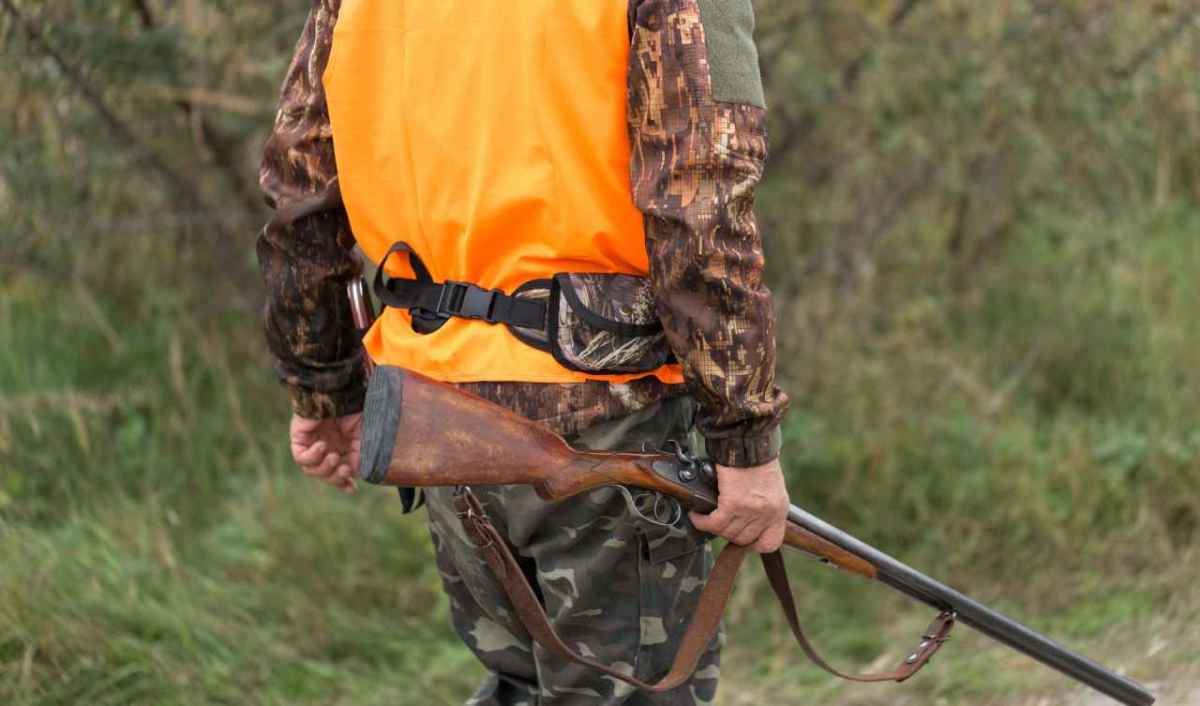
On 16 September 2026, tio.ch published an interview with Davide Corti, president of the Federazione Cacciatori Ticinesi (FCT).
The headline: «L’emozione più grande da cacciatore? Mia figlia, che prende una preda.» The greatest emotion as a hunter? His daughter's kill. Preceding it are ten questions in which Corti declares recreational hunting a "path of awareness and responsibility", a form of "scientific wildlife management", a means of "epidemic prevention" and "environmental protection". Hunting must remain ethical, he says, and technical superiority must not excessively curtail the animal's "means of defence". Serious violations and poaching have "almost disappeared", he claims, with only diminishing administrative errors remaining. And the wolf, he says, should neither be eradicated nor idealised, but "managed" like any other species.
That sounds moderate. But it shifts the debate away from the decisive question: why should a leisure activity whose purpose is killing animals be allowed to present itself as an ethical authority and as indispensable wildlife management?
The journalist does not ask a single critical follow-up question. He cites no figures. He does not mention that on the first weekend of this season, two recreational hunters fell to their deaths in the Ticino mountains. And in the lead paragraph he dates the second high hunt period as running "from 23 to 17 September" — a period that ends before it begins. The error has remained uncorrected online since publication. We fill in what tio.ch failed to do, cross-checking the claims against the canton of Ticino's 2024 hunting report, the rulings of Ticino courts, and the research.
"Almost gone": the 2024 hunting report tells a different story
The sharpest contradiction concerns the violations. The cantonal hunting report 2024 does not document a marginal phenomenon, but an enforcement problem:
| Officially documented in Ticino, hunting year 2024 | Figure |
|---|---|
| Self-reports by recreational hunters | 190 |
| Disciplinary fines | 82 |
| Opened summary offence proceedings | 186 |
| of which offences fall under the jurisdiction of the public prosecutor | 9 |
| of which serious cases with precautionary licence revocation | 12 |
| Decisions on hunting licence revocation (report's running text) | 16, two cases pending |
| "Privazioni del diritto di caccia" (report's statistical table) | 37 |
If 190 self-reports, 82 disciplinary fines, 186 summary offence proceedings, nine offences before the public prosecutor and at least 16 hunting licence revocations are supposed to count as "almost vanished serious violations", then reality is being talked down in words alone. What's more, the report contradicts itself: in the running text, the Ufficio della caccia e della pesca cites 16 decisions on the revocation of hunting rights and two pending cases, while the statistical table on the same page lists 37 "Privazioni del diritto di caccia". The 268 "Multe totali" in the table are the sum of 82 disciplinary fines and 186 proceedings, which the report nowhere explains. An authority that reports violations using two different counting methods without explaining them is itself proof of just how unreliable Corti's "almost gone" really is. The UCP must disclose why the running text and the table state different figures.
The 190 self-reports are close to the long-term average. Self-reporting is better than covering up. But it does not prove that rule violations are meaningless. It shows how often recreational hunters have to report situations in which their kill was legally or professionally wrong: wrong animal, wrong sex, wrong age class, wrong location, wrong time. And it exposes the claim to "ethics" and "science" at its most vulnerable point. The first rule of any hunt is: only shoot once the target has been identified beyond doubt — species, sex and age — with a safe backstop. Anyone who shoots the wrong animal has broken this rule before even pulling the trigger. 190 times a year, just among those who report it themselves. A professional marksman to whom this happens loses his job. A surgeon who operates on the wrong organ 190 times loses his licence. In recreational hunting, it goes: self-report, fine, carry on. That is the difference between a craft and a hobby: in a craft, the mistake is the exception, and it has consequences. In a hobby, it is factored in.
What lies behind the "serious cases" is revealed by the courts. In April 2026, the court in Mendrisio convicted a 68-year-old recreational hunter who shot a wild boar sow two hours before the opening of the 2024 high hunt. His carbine had an illegally shortened barrel, a home-made silencer and a thermal night vision device. The wildlife wardens, who had been observing him for some time, described him in media reports as more of a poacher than a recreational hunter, and the judge classified his guilt as severe. The day before the interview, tio.ch itself reported on a Ticino recreational hunter who had a crowned stag shot in Piedmont flown across the border by helicopter and was fined. In the interview, Corti describes helicopter transport of deer carcasses as standard practice, "previa notifica al guardiacaccia" (with prior notification to the game warden). Nobody asks how often that notification is skipped.
And Corti himself supplies the contradiction: in the very same breath in which he declares serious violations to have disappeared, he names the unlawful use of night vision devices and "other equipment" as the association's "main concern". A problem the association itself calls its main concern cannot simultaneously be declared a negligible exception.
A look at the neighbouring canton shows what the Ticino figures actually mean. Grisons maintains a comprehensive, organised wildlife warden service with numerous responsible wardens and on-call duty in every hunting district and regularly publishes its cases: in 2016 there were 1,201 fines and reports among 5,512 participants, in 2017 1,384 among 5,532 — over 1,000 every single year. This does not prove that recreational hunters in Grisons violate the rules more often. It shows what becomes visible when a canton actually monitors and publishes figures. Recorded violations are the product of actual violations, the probability of detection, and reporting practice. Recreational hunting takes place in remote terrain, early in the morning, in the evening, sometimes at night, and the evidence after a kill disappears quickly. The fewer wildlife wardens, the smaller the number in the report — not the smaller the problem.
For Ticino, this means: 82 disciplinary fines, 186 proceedings and at least 16 hunting licence revocations are not the whole reality, but the documented lower bound. Corti cites no inspection rate, no number of patrols, no number of recreational hunters checked, no estimate of unreported cases. Without these reference figures, the claim that poaching and serious violations have "almost disappeared" is not a verifiable record, but association public relations.
"Ethical hunting": expansion instead of restraint
Corti warns against technical superiority that would excessively diminish the animal's chances. This is a convenient ethical formula, since it assumes an animal could have "fair chances" at all when humans pursue it with rifles, telescopic sights, local knowledge, luring methods, dogs and digital reporting technology. Cantonal practice shows no hunt that limits itself out of ethics. It shows a systemic logic of ever-increasing efficiency:
- 1,762 people obtained a high hunt permit in 2024.
- During the high hunt, 3,377 red deer, roe deer and wild boars were killed — another record.
- Compared with ten years earlier, the number of these killed ungulates rose by 48 percent.
- Wild boar hunting has been extended: summer hunt in June and July, high hunt, winter hunt, plus interventions by wildlife wardens and licensed hunters. In the 2024/25 season, 3,427 wild boars were killed, and the winter hunt was extended by 15 days.
It is precisely wild boar hunting that shows what “scientific management” means in Ticino: the opposite of what science says. Wildlife biology has been describing for two decades that high hunting pressure on wild boar leads not to fewer but to more animals. Servanty and colleagues demonstrated in the “Journal of Applied Ecology” in 2011 that heavily hunted populations reproduce earlier and more frequently. Gamelon and colleagues showed in “Evolution” the same year that sows under hunting pressure reach sexual maturity earlier and produce piglets already in their first year of life. Bieber and Ruf had calculated back in 2005 that killing adult animals barely influences population dynamics, because populations are governed by the survival rate of young animals, that is, by mast years and mild winters, not by rifles. Massei and colleagues found in 2015 that across the whole of Europe, wild boar populations are rising everywhere despite record kill numbers.
The kill of the lead sow is particularly harmful. Wild boars live in sounders with a strict social structure, in which the oldest sow suppresses the reproduction of the younger females and leads the sounder through the territory. If she is killed, the sounder disintegrates, the young sows all come into heat and farrow at the same time, and the scattered animals move on into new areas and new fields. Hunting pressure thus produces exactly the increase and the damage it claims to combat.
The Ticino figures confirm this over 25 years. According to FOEN, around 570 wild boars were killed in the canton in the year 2000, compared to around 2,900 in 2024 – a fivefold increase. The share of sows killed grew the most, from around 150 to around 800. A management approach that actually worked would have to see this curve turn downward at some point. In Ticino, it has only turned upward for a quarter of a century, and the canton’s answer every year is: more hunting days. Whoever calls that “science” has not read the science.

More hunting windows, more releases, additional hunting in summer, extension until the end of February. The language of “fairness” conceals the fact that wild animals in Ticino live within an ever denser web of hunting interventions.
The treatment of nursing red deer hinds is particularly revealing. In 2024 it was permitted, during the last five days of the high hunt, to kill a nursing hind without also having to kill her calf. Of 143 nursing hinds killed, 87 were brought in for inspection without a calf. The canton assesses this positively, because it increases kill numbers and protects recreational hunters from “mistaken kills”. The obvious question is not asked in the report: what happens to a dependent calf whose mother has been shot? That is the “ethics” Corti speaks of.
“Scientific management”: kill targets instead of ecology
Corti speaks of ethics, the administration of kill targets. Wild animals appear in the hunting report as “population”, not as individuals. And even this population logic does not work.
For red deer, the hunt fell short of the cantonal target of 2,870 animals in 2024 despite record intensity: 2,554 red deer were killed, 89 percent of the plan. The canton’s answer is not to independently examine the causes of high population numbers, such as habitat fragmentation, lack of refuge areas or agricultural use. Instead, more pressure, additional hunting opportunities and more kills of female and young animals are planned. Yet the hunters’ federation itself had contradicted the authorities’ assumption of a growing population in 2021 and warned against a “merciless fight” against the red deer.
For chamois, the canton admits that the hunt misses the intended sex ratio: in 2024, 402 male but only 217 female chamois were killed, a ratio of 1 to 0.5. The report explicitly names the direct hunting of adult bucks as the cause. Nevertheless, this hunting option is not abolished, only restricted. In the Gambarogno-Tamaro-Lema area, the chamois population collapsed so severely that the hunt had to be suspended there for three years.
This exposes the structural problem: hunting rules are not designed according to ecological criteria, but according to which kills are attractive to recreational hunters. The trophy orientation regarding chamois bucks stands in direct contradiction to the claim of a neutral “population regulation”. Science would mean: defining a target, measuring the measure against it, independently reviewing the result. None of this happens. What happens instead is that an association co-negotiates the release numbers and afterwards presents itself as a scientific authority.
Corti names “protection of the environment” as one of the three pillars of recreational hunting. This too can be measured against the Ticino record. Twice within two years, the canton had the opportunity to allow nature to exist without hunting pressure, and twice hunting-affiliated circles prevented it: in 2016 the Parc Adula around the Rheinwaldhorn, in 2018 the Parco Nazionale del Locarnese. In both cases, the point of contention was not the park idea as such, but the hunting-free core zone. Whoever fights the only two areas in Ticino where wild animals would have been permanently left in peace is not practising environmental protection but defending vested interests. It fits the picture that the hunters’ federation threatened Ticino television with legal action in 2017 because it did not like the portrayal of recreational hunters in a feature film. The only hunting-free zone the canton has created in recent years is the chamois closure in Gambarogno, and that did not come about out of insight, but because recreational hunting had shot the population there to pieces. Recreational hunters in Ticino regularly operate against the very nature they claim to protect. We described the mechanics behind this in the The psychology of recreational hunting in the canton of Ticino : protected areas are experienced as expropriation, not as a gain.
“Disease prevention”: long since disproven for the fox
The argument is as old as it is wrong. In Switzerland, around 19,000 foxes are shot every year, in Ticino during a months-long low hunt. The canton of Lucerne is the only one that records the health status of the animals killed: of 2,217 foxes killed, 39 showed a disease finding – over 98 percent were healthy. When it comes to fox tapeworm, hunting is even counterproductive: a study from the Nancy area (Comte et al. 2017) showed that intensive hunting increased prevalence from 44 to 55 percent. In Luxembourg, the infestation rate fell from around 40 to under 10 percent after fox hunting was banned in 2015. Rabies was not defeated by recreational hunters, but by vaccine baits from 1978 onward.
The canton of Zug is the only canton to have commissioned an independent study. The technical report by SWILD, commissioned by the Zug Office for Forest and Wildlife (May 2026), concludes that the currently practised, spatially uncoordinated fox hunting provides no robust basis for sustainable population regulation, has no benefit for disease control, and is inferior to non-lethal measures when it comes to protecting livestock. The Zug hunting commission subsequently decided to no longer proactively promote fox hunting. Ticino is heading in the opposite direction, without a single study of its own. The Bern cantonal government itself admitted, in rejecting a fox-related motion, that hunting non-threatened species such as the fox is “factually an end in itself”. Whoever still says “disease prevention” is merely repeating an association slogan.
The wolf: pre-emptive killing under the label of “management”
Corti describes the idea of the wolf as a symbol of untouched nature as “utopian” and calls for it to be “managed like other species”. Federal legislation today allows, he says, “a more targeted and more preventive management”. What this means in concrete terms remains unspoken: kills before an animal has necessarily caused any damage.
Federal law has allowed this since 1 December 2023. Whether it works is not proven. Sven Buchmann, responsible at the KORA foundation for national wolf monitoring on behalf of FOEN, states to the “Südostschweiz” that direct scientific evidence for the claimed protective effect of pup kills is “rare”. Swiss practice is unique worldwide, and whether it triggers any of the claimed effects at all still needs to be investigated. The project runs until 2029. Until then, the legal maximum is being shot. Buchmann also corrects the premise: the kills are carried out not out of ecological necessity, but as a socio-political measure. We have documented the legal ruling situation and the evidence gap.
International research has moved further: in 2026, Treves and colleagues analysed five field studies and found no reliable protective effect from wolf removals; depending on the case, losses stayed the same, decreased or increased. The authors recommend that lethal interventions should not be treated as a precautionary protective measure as long as their effectiveness has not been proven. Cassidy and colleagues showed in 2023 that human-caused mortality reduces the probability that a pack will survive to the end of the biological year by 27 percent, and the probability of reproduction in the following year by 22 percent; when a leading animal died, the declines were 73 and 49 percent respectively. Livestock kills in Switzerland fell from 1,789 in 2022 to 1,051 in 2023, before the first preventive shot was fired. The decisive variable is herd protection.
The choice of words “manage like other species” normalises the reduction of an ecologically significant predator to a lever of hunting policy. Yet the wolf does what recreational hunting merely claims to do: it influences the behaviour, distribution and condition of ungulates through permanent presence, not through kill numbers on particular days. Recreational hunting selects according to human interests, with a focus on trophy bearers, as the chamois statistics show. That it is precisely the wolf's competitor for red deer and roe deer who calls for its “management” is not science, but interest-driven politics.
When violence from the high seat comes home
Corti speaks of “responsibility” and “awareness” as the core of hunting training. The canton in which he says this experienced this summer what the opposite means. On 9 July 2026, a 56-year-old woman was found in Faido with a gunshot wound to the head; she died shortly afterwards. Authorities identified her 59-year-old ex-husband from Leontica in the Blenio Valley as the perpetrator. The following evening, he lured emergency responders into a house and blew it up. Three police officers were injured; he himself died. Upon enquiry, RSI confirmed, based on the cantonal police's press conference:The perpetrator was a recreational hunter, legally in possession of several weapons. When the shot was fired outside the clinic, no one heard a bang; police assumed a silencer had been used. Whether he had a hunting-law exemption permit for this has not been publicly clarified to this day.
This makes two documented Ticino cases within a few months in which a recreational hunter appears with a silencer: once as a convicted poacher in Mendrisio, once as a femicide perpetrator in Faido. Silencers are fundamentally banned in Switzerland. The exception applies to certain permit categories, including holders of a hunting licence. In the interview, Corti gives no figure for these permits: no oversight, no consequence. He names night vision devices as his “main concern”. The silencer used to shoot a woman dead in his canton does not come up.
Faido was the third femicide in Ticino since the start of the year. The violence does not remain confined to the forest. Anyone who has learned that killing is a solution that brings emotion and recognition carries this pattern home. The canton's response to the phenomenon of domestic violence has, since September, been the “Cassette Arancioni”, orange letterboxes through which those affected can discreetly seek help. The association's response is an interview about the joy of the kill.
What the sentence about the daughter means psychologically
After ten questions about responsibility, science and ethics, the last one is: What is the strongest memory? Corti answers that in forty years as a licence holder he has had many, but the strongest is his daughter's first hunting licence. They had gone hunting together “recently”, and she had killed “a beautiful red deer”. He feels more satisfaction at her kill than at his own. That is “the most beautiful thing in my hunting career”.
This is the most honest sentence in the interview, and it deserves closer examination, not as a judgement of the person, but as an example of mechanisms that are comprehensibly described in the Psychology of recreational hunting.
First, the rest of the interview. Anyone who describes 82 disciplinary fines, 186 proceedings and at least 16 revocations of hunting rights as “administrative errors” and “almost gone” is not describing the documented state of enforcement. This statement follows a perspective in which one's own hunting practice is fundamentally legitimate and violations appear as the exception. Social psychology describes this effect as motivated reasoning: information is processed in such a way that practice and identity remain intact. Forty years with a licence and an association presidency are a strong filter. Then there is the language. “Manage”, “take”, “bag”, “management” shift the focus from the killing of an individual animal to a technical or culturally charged description. Albert Bandura discusses this euphemistic labelling as one of the central mechanisms of moral disengagement: whoever renames the act does not need to evaluate it. And the ethical formula about the animal's “chances of defence” functions as self-licensing: whoever sets themselves a rule and follows it feels entitled to everything that lies within that rule. The rule becomes the proof of one's own decency, not the act itself.
Then there is the daughter. What Corti describes is not joy at the death of a red deer in itself. It is joy in bonding, identity and legacy: the daughter has entered his world, passed the rite of initiation, he lives on in her. This is a deeply human motive. Only the medium of this bond is the death of an animal. The kill is the currency in which recognition, belonging and pride are paid out. This is precisely why recreational hunting cannot dispense with killing, even though it rhetorically declares it a side issue: without a kill there is no emotion, without emotion no ritual, without ritual no transmission. Corti says this himself when he places her kill above his own. This is trophy logic in family form.
And it explains the dissonance of the whole interview. A person who describes himself as a manager and ethicist finds his strongest emotion not in an achieved kill quota or a population that has remained healthy. He finds it in the fact that his child kills as he does. Herein lies the tension that the interview itself reveals: between the public language of management, disease prevention and science, and the emotional meaning of the kill, success and the passing on of tradition. A manager feels no emotion at a figure in the kill quota. A disease prevention measure is not “a beautiful red deer”.
Finally, it is remarkable how the sentence is told: not shamefacedly, but as a highlight, and tio.ch makes it the headline. This shows how strongly normalisation works in a hunting region. What seems strange outside this culture, a father celebrating the killing done by his daughter as the most beautiful moment of his career, is read as an idyll within it. This translation gap between the hunting milieu and the public is the actual finding. And it explains why the association puts so much energy into communication.
Because Corti also says this openly: the majority of new recreational hunters today come from urban areas with no family connection to hunting. This is a result of the association's communication work, which shows the public “the true role of the hunter”: management, disease prevention, environmental protection. According to Corti's own account, then, the narrative of the scientific manager is not a finding but the instrument with which the association wins over people without a hunting tradition. What they ultimately acquire is described by the last sentence of the interview.
The questions tio.ch should have asked
- How do 190 self-reports, 82 disciplinary fines, 186 proceedings and nine offences in the 2024 hunting year fit with the claim that serious violations have “almost disappeared”, and why does the hunting report state 16 revocations of hunting rights in the text but 37 in the table?
- What happens to the calves of the 87 lactating hind deer that were brought in for inspection without a calf in 2024?
- Why does a “scientific” hunt kill twice as many bucks as does among chamois, even though the canton itself names trophy hunting as the cause?
- On which study is “disease prevention” based, given that Lucerne found 98 percent of foxes healthy and Zug found no benefit from fox hunting?
- How many helicopter flights carrying red deer carcasses were reported and checked in 2025?
- How does the FCT president explain that two recreational hunters died on the first weekend of this season?
- How many hunting-law exemption permits for silencers has the canton of Ticino issued, who checks them, and did the perpetrator from Faido have one?
None of these questions is difficult. None was asked.
Commentary: Association-speak is not journalism
The interview tells the familiar story of a responsible hunting community that regulates itself and maintains a sensible middle ground between technology, tradition and nature conservation. The hunting report of the same canton tells a different one: recreational hunting in Ticino is a growing intervention in wild animal populations with record kills and ever longer hunting seasons. Serious and criminally relevant violations have not disappeared. The response to missed kill quotas is regularly the same: expand recreational hunting, increase pressure, kill more animals, including nursing mothers. The claimed «ethics» ends exactly where kill targets, trophy interests and hunting efficiency take priority. And when it comes to the wolf, «management» becomes a linguistic wrapper for the preventive killing of a protected predator.
Davide Corti does what an association president does: he sells his product. What is not legitimate is that a medium with the reach of tio.ch passes on these sales arguments unchecked, while in the same canton two people die during recreational hunting within ten days, a recreational hunter is fined over a helicopter-spotted red deer, and the judiciary convicts a poacher who used a thermal imaging device.
The decisive counter-question to the hunting president is therefore not whether night optics are «too unfair». It is this: how can a hunt that produces ever longer hunting seasons, thousands of kills, the death of nursing mother animals and hundreds of sanctions per year credibly be regarded as an ethical form of wildlife protection? Where interventions in wildlife populations are demonstrably unavoidable, they belong in the hands of a professional, state-employed wildlife wardens service modelled on the canton of Geneva, with clear targets, impact monitoring and public accountability. That would be management. What Corti describes is a hobby with technical vocabulary.
We document all incidents of the current season continuously in the Ticino Ticker 2026/27.
Sources: tio.ch, interview by Davide Milo with Davide Corti, 16 September 2026; Canton of Ticino, Ufficio della caccia e della pesca, «Rapporto sulla stagione venatoria e indirizzi gestionali 2024»; FOEN, Wildlife and Species Promotion Section, Federal Hunting Statistics, wild boar Canton Ticino 2000 to 2024, jagdstatistik.ch, 2026; Pretura di Mendrisio, judgment April 2026; Office for Hunting and Fishing Grisons, hunting statistics 2016 and 2017 as well as hunting operating regulations; Canton of Lucerne, statistics on the health status of killed foxes; SWILD, Kistler C. and Bontadina F., «Scientific Basis for Fox Hunting», commissioned by the Office for Forest and Wildlife of the Canton of Zug, May 2026; Comte S. et al., «Echinococcus multilocularis management by fox culling: An inappropriate paradigm», 2017; Servanty S. et al., «Influence of harvesting pressure on demographic tactics: implications for wildlife management», Journal of Applied Ecology, 2011; Gamelon M. et al., «Making use of harvest information to examine alternative management scenarios: a body weight-structured model for wild boar», Journal of Applied Ecology, 2012, and Gamelon M. et al., «High hunting pressure selects for earlier birth date: wild boar as a case study», Evolution, 2011; Bieber C. and Ruf T., «Population dynamics in wild boar Sus scrofa: ecology, elasticity of growth rate and implications for the management of pulsed resource consumers», Journal of Applied Ecology, 2005; Massei G. et al., «Wild boar populations up, numbers of hunters down? A review of trends and implications for Europe», Pest Management Science, 2015; FOEN, Hunting Ordinance, preventive wolf regulation from 1 December 2023; KORA Foundation, interview with Sven Buchmann in the «Südostschweiz», September 2026; Treves A. et al., «Removing wolves did not reliably prevent domestic animal losses», Conservation Science and Practice, 2026; Cassidy K. A. et al., «Human-caused mortality triggers pack instability in gray wolves», Frontiers in Ecology and the Environment, 2023.
More on the subject of recreational hunting: In the dossier Poaching and hunting crime in Switzerland we document cases, legal questions and recurring patterns.
More on the subject of recreational hunting: In our dossiers on the criticism of recreational hunting gather fact-checks, analyses and background reports. The scientific evidence is presented in the overview Studies on the Effects of Recreational Hunting.
The position of IG Wild beim Wild: IG Wild beim Wild rejects recreational hunting. Our model is the canton of Geneva, which has managed without recreational hunting since 1974: without hunting seasons, without hunting dogs, without driven hunts, without high seats, without the animal cruelty and crime that go hand in hand with hunting season elsewhere. What has worked there for over fifty years disproves every position paper by JagdSchweiz. An association that bases its policy on claims it refutes in its own documents is not a professional organisation, but a factory for misinformation.

All articles are written by IG Wild beim Wild as well as by external co-authors. Research, structuring and editorial processes may be supported by AI-assisted tools.
Support our work
With your donation you help protect animals and give their voice a hearing.
Donate now →