Hunting code Grisons: The contradiction within its own ranks
The Grisons Licence Hunters' Association invokes the dignity of wildlife, while a section president from within its own ranks circulates trophy photos.
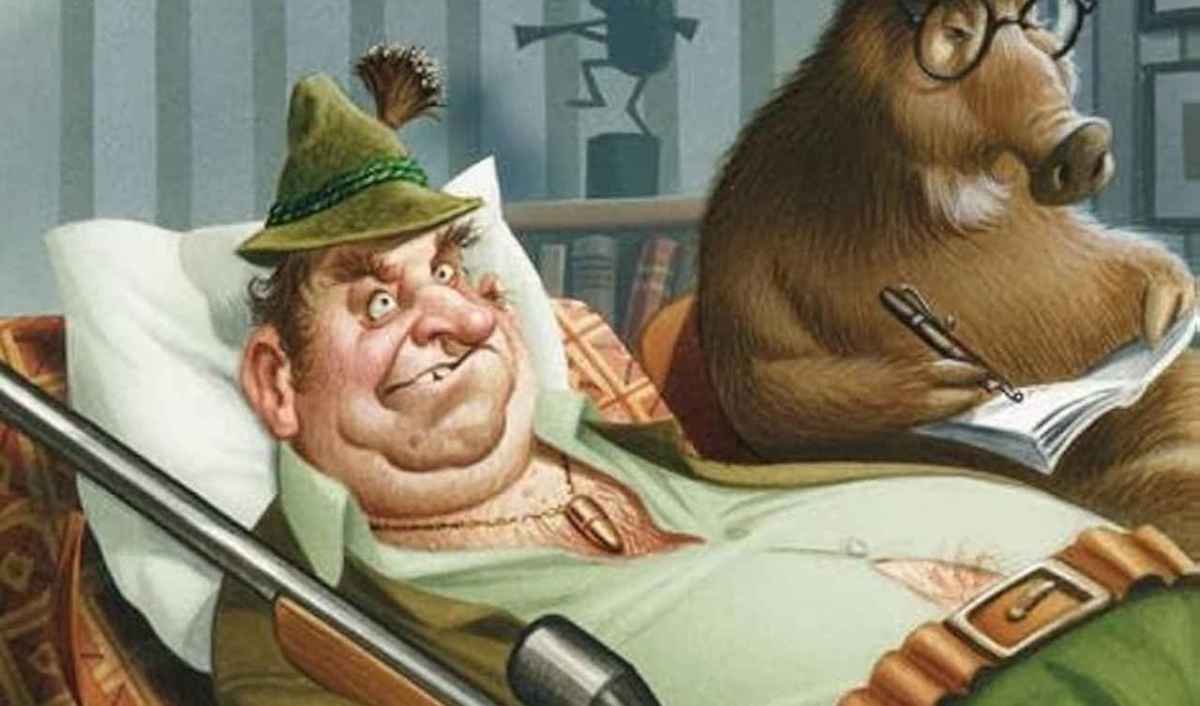
«The Whistle»
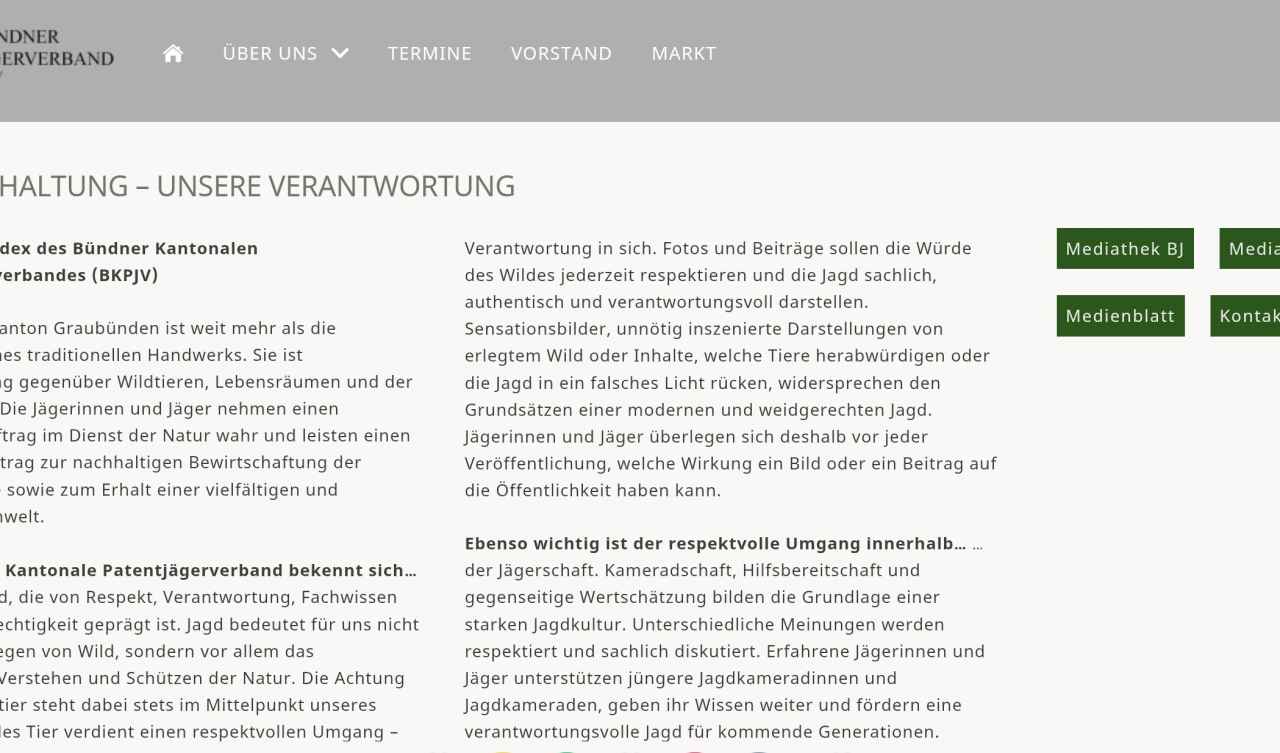
The Grisons Cantonal Licence Hunters' Association (BKPJV) waxes lyrical about a hunting code.
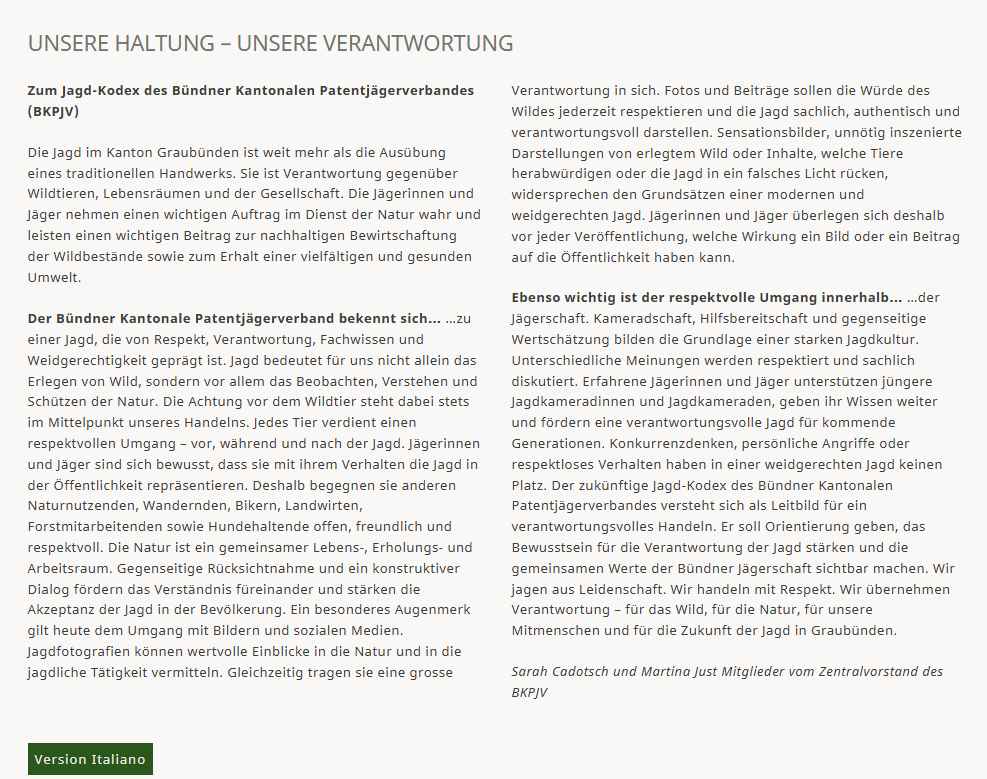
It bears the title «Our Stance – Our Responsibility» and is signed by Sarah Cadotsch and Martina Just, members of the central board. It presents recreational hunting as a responsibility towards wild animals, habitats and society. Recreational hunters, the text claims, fulfil an important mandate in the service of nature. Respect for the wild animal, according to the association, is always at the centre of their actions.
Such a code is not an animal welfare programme but a self-image of the hunting lobby. Precisely for this reason it must be measured against reality: against kills, failures, trophy photos and the political protection of a hunting practice that the association itself has declared unnecessary.
What the code promises
The code demands respectful treatment of wildlife «before, during and after the hunt». It places particular emphasis on the handling of images and social media. Hunting photographs should respect the dignity of wildlife at all times. Sensationalist images, unnecessarily staged depictions of killed animals, or content that demeans animals would contradict the principles of modern and fair-chase recreational hunting. Before any publication, the appeal states, recreational hunters should consider what effect an image might have on the public.
That is a remarkable insight. But it does not solve the fundamental ethical problem: a respectfully staged kill remains the killing of a sentient wild animal. And the call for restraint with hunting images is only worth as much as it is actually observed by those who represent the association.
The central contradictions
The code places respect for wildlife at its centre without naming the fundamental conflict: licence hunting means that animals are deliberately pursued, disturbed and killed, often at a time when they are preparing for winter or raising young.
The term «sustainable management of wildlife populations» is not a neutral term for nature. In Grisons, wildlife populations are also influenced by habitat loss, disturbance, traffic, climate, predators, and forestry and agricultural interests. Describing kills as the standard response falls short.
The claim that recreational hunting protects nature and wildlife conflates two different things. Habitat protection helps wild animals directly. Recreational hunting is the removal of individual animals. Whether and when it achieves ecological goals must be demonstrated verifiably in each case.
When the former BKPJV president Robert Brunold himself describes small-game hunting as «not necessary, but justified», this exposes the code as double standards: an association that defends an unnecessary leisure hunt can hardly credibly commit itself to protecting and respecting wild animals.
The respect towards hikers, cyclists and other people in the forest demanded by the code is likewise a matter of course. A credible code, however, would need to contain concrete rules on safety, transparency about hunting times and hunting areas, and the protection of wild animals sensitive to disturbance.
Just on 6 September 2026, a recreational hunter in Avers Cröt shot a horse that he had mistaken for a red deer on an open meadow; his hunting licence was revoked on the spot. When more than 1,000 fines and reports are lodged against recreational hunters in Grisons every year, this is not a marginal phenomenon and not the problem of a few «bad apples». It is the structural failure of a hunting system that presents itself as expert, fair-chase, and responsible. The BKPJV code should therefore not begin with fine words, but with independent controls, complete transparency and effective consequences for repeated violations.
Trophy photos from Scuol
The Società da Chatschaders Lischana Scuol describes itself on its website as a section of the Uniun grischuna da chatschaders da patenta, i.e. the BKPJV. Its president is Mario Duschèn. The section's board page lists him with photo and role as «President». The BKPJV also lists Duschèn as coordinator for hunting training in the Lower Engadine/Val Müstair region, with theory courses in Zernez and shooting ranges in Urezzas, Scuol and Zernez. He is thus not only a local section president but also active in training future hobby licence hunters.
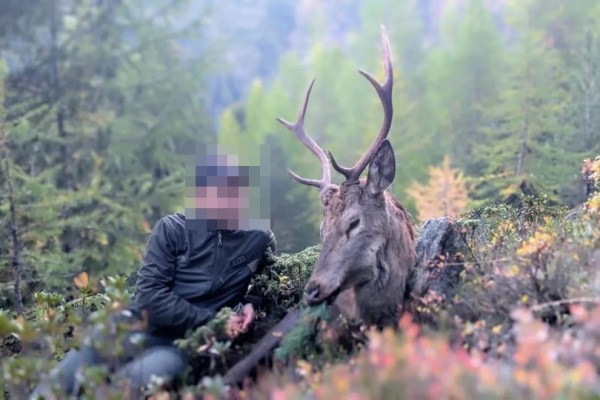
Via the section's website hunting and nature photographs are published. The page publicly invites further images to be submitted. According to IG Wild beim Wild, Mario Duschèn also published trophy photos on his Facebook profile. The IG made these publications the subject of a criminal complaint. If a police officer or soldier were to pose with a being killed after a fatal use of force and circulate the image, the outrage would rightly be great. When recreational hunters do the same with wild animals, it is trivialised under the label of «tradition» or «fair chase». This double standard reduces the wild animal to a trophy and exposes the respect code as empty rhetoric.
Even JagdSchweiz invokes «great respect» towards the individual animal. Anyone who uses killed wild animals as a trophy backdrop on social media violates the spirit of this very hunting principle.
As section president and training coordinator, Mario Duschèn is not a role model for the respectful treatment of wild animals that the BKPJV code itself demands. There is a clear contradiction between his public image practice and the announced code: the BKPJV demands that hunting photographs must respect the dignity of wildlife at all times; sensationalist images and unnecessarily staged depictions of killed animals would contradict modern, fair-chase recreational hunting. When a president and training coordinator poses with killed wild animals or publicly circulates such images, this is not merely a private communication matter. It concerns the role-model function, the credibility of the association's structure, and the question of whether its own ethical standards also apply to its representatives.
Trophy photos do not primarily show nature observation or habitat protection. They display the moment after the killing of a wild animal and turn the killed animal into part of a hunter's self-presentation. We explain why this practice is legally and ethically problematic from the perspective of IG Wild beim Wild in the article Trophy photos: dignity, law and hunting's double standards. A study published in 2024 with 1,050 respondents from Generation Z in Germany concluded that trophy photos from hunting on social networks predominantly influence attitudes towards hunting negatively.
Addendum from 16 September 2026: Klosters
The Scuol case is not an isolated incident. The Facebook page of the Klosters hunting association, also a section of the BKPJV, is full of trophy photos. In September 2026 alone, the association published, among other things, a selfie of a recreational hunter with the head of a killed chamois («Successful chamois hunt, good hunting») as well as a picture of a killed roe deer doe, draped with flowers and decorated with emojis («Good hunting for the roe deer doe»). Such images fulfil exactly what the BKPJV's code of conduct describes as «unnecessary staged depictions of killed game». They are not published by individual members, but by the association itself, just a few days after the cantonal association had called on its sections to exercise restraint with trophy photos. This confirms what this article had already stated: the code of conduct has no effect at section level as long as the association does not enforce it.

A complaint without a substantive review
The head of IG Wild beim Wild filed a criminal complaint on 8 August 2025. The public prosecutor's office of Grisons issued a decision not to proceed on 27 August 2025, meaning no criminal proceedings were opened. The Grisons Cantonal High Court declined to hear the appeal on 20 November 2025, denying the complainant's standing to appeal. As a result, there has been no judicial substantive assessment of whether the published trophy photos are compatible with animal welfare or criminal law. The judicial dispute revolved around the procedural standing and right of appeal of the complainant, not a substantive assessment of the images.
The case reveals a problematic asymmetry: the publication of images of killed wild animals was not substantively examined under criminal law. At the same time, the critical use of such an image triggered criminal proceedings. We document the background to this parallel case in the article When hunting images become the justice system's blind spot in Grisons.
The criticism in this article concerns the public image practice and the contradiction with the communicated code.
The same conflict, ten years earlier
This conflict is not new. It has been present in Grisons hunting circles for at least a decade.
As early as April 2016, IG Wild beim Wild filed a criminal complaint with the Grisons public prosecutor, at the time against the militant association magazine «Bündner Jäger». The trigger was a photo showing a hunter holding the entrails of a killed hind in his hands, grinning into the camera. The IG saw in this the suspicion of an organised depiction of violence and a violation of animal dignity.
The reaction of the association's leadership at the time was revealing. Robert Brunold, then president of the Grisons Cantonal Licence Hunting Association, awaited the complaint calmly, according to media reports. The contested article had been about the topic of «respect for the animal», which was why it was only honest to show how an animal is gutted. The editor of «Bündner Jäger», Walter Candreia, defended the images according to the same reports with the argument that gutting is an integral part of hunting and appropriate for the target audience of a specialist magazine. If this could no longer be shown, society had a problem.
How the association treats its own people became apparent in the years that followed. The same editor of «Bündner Jäger» was convicted in court in 2017 and 2018, once for violation of personal rights, once for defamation, after calling an internal supporter of the special hunt initiative a «sniper». In March 2018, the BKPJV transferred 6’003.10 francs for the first proceedings. Whether the association also covered the costs of the second proceedings or further legal fees remained unclear based on the documented records at the time. We documented the case in the article «Bündner Jäger: Association paid court costs for offender».
At the time, the association's leadership thus defended the publication of images showing the gutting of a killed animal. The 2026 code, by contrast, warns against unnecessarily staged depictions of killed animals and calls for respect for their dignity. Whether these two types of images should be judged the same way is open to discussion. The contrast in public communication is nevertheless clear.
In its wording, the code marks a departure from an image practice that leading representatives of the BKPJV publicly defended back in 2016. Whether this change in wording is followed by a binding change in practice remains to be seen.
What a credible code would need to achieve
Responsible treatment of wild animals requires more than appeals to «Weidgerechtigkeit» (sporting fairness), a term that recreational hunters largely define themselves.
The fact that the BKPJV takes a critical view of images of killed animals does not replace a critical examination of hunting practice itself. Responsibility towards wild animals is not shown in nicely worded mission statements, but in whether their protection also takes priority when it conflicts with hunting interests.
The BKPJV should disclose which binding rules apply to trophy photos, whether these are also enforced against section presidents and training coordinators, and what consequences violations carry. As long as these answers remain outstanding, the hunting code is not a verifiable ethical standard, but public relations work for a form of recreational hunting whose practice contradicts its own words.
Addendum of 1 October 2026: The co-author defends the trophy photo competition
Two weeks after this article, the BKPJV itself supplies the proof. In the Romansh daily newspaper «La Quotidiana» of 1 October 2026, Sarah Cadotsch, member of the central board and co-signatory of the code, defends the RTR competition, in which the public votes for the «most beautiful» image of a killed wild animal and a hunting licence is awarded as a prize. Recreational hunting, she argues, is part of everyday reality and therefore belongs in the programme. From the association's point of view, there is «no reason» to change anything about RTR's coverage.
The code, which Cadotsch co-authored, states verbatim:
«Sensationalist images, unnecessarily staged depictions of killed game, or content that demeans animals or casts hunting in a false light contradict the principles of modern and fair-chase hunting. Hunters therefore consider, before every publication, what effect an image or a post could have on the public.»
A photo competition that collects and rates trophy photos and rewards them with a hunting licence is staging in its purest form, complete with a public vote and a winner's ceremony. Anyone who defends this as everyday reality has either never read their own code or never meant it seriously.
With that, the pattern is complete: the association writes down restraint, sections post trophy selfies, the former president defends gutting photos, and the co-author of the code stands up for a television competition for trophy photos. The code is what it was from the very beginning: a PR text that promises respect to the outside world and demands nothing on the inside. The association's word is worth exactly as much as the behaviour of its board members. The fact that even the Swiss game wardens' association now describes the posting of trophy photos as pointless and damaging to the image does not make the BKPJV's position more credible – only lonelier.

More on the subject of recreational hunting: In the dossier The Role and Criticism of Recreational Hunters we shed light on the training, power and self-image of recreational hunters. The scientific evidence is presented in the overview Studies on the Effects of Recreational Hunting.
The position of IG Wild beim Wild: IG Wild beim Wild rejects recreational hunting. Our model is the canton of Geneva, which has managed without recreational hunting since 1974: without hunting seasons, without hunting dogs, without driven hunts, without high seats, without the animal cruelty and crime that go hand in hand with hunting season elsewhere. What has worked there for over fifty years disproves every position paper by JagdSchweiz. An association that bases its policy on claims it refutes in its own documents is not a professional organisation, but a factory for misinformation.

All articles are written by IG Wild beim Wild as well as by external co-authors. Research, structuring and editorial processes may be supported by AI-assisted tools.
Support our work
With your donation you help protect animals and give their voice a hearing.
Donate now →