Wolf kills in spring: Zug wants to scrap the FOEN's approval
Grisons warns of kills during pup-rearing, while the farmers' associations want the wolf regulated all year round. The consultation ends on 16 October.
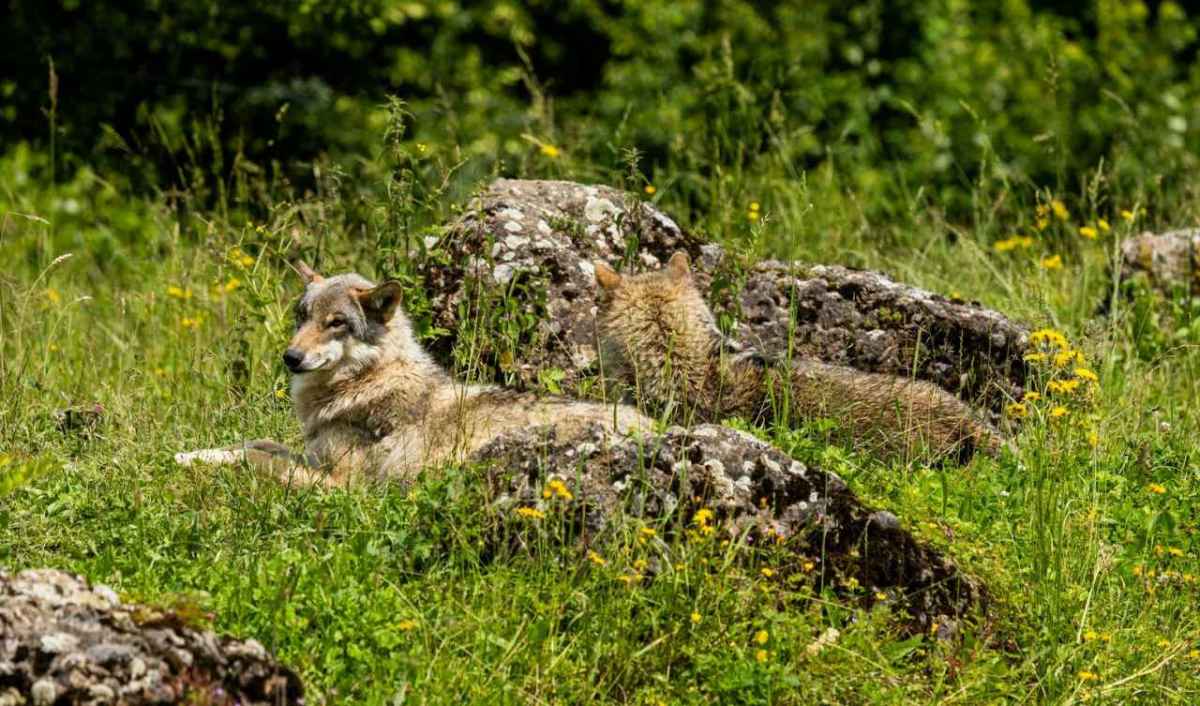
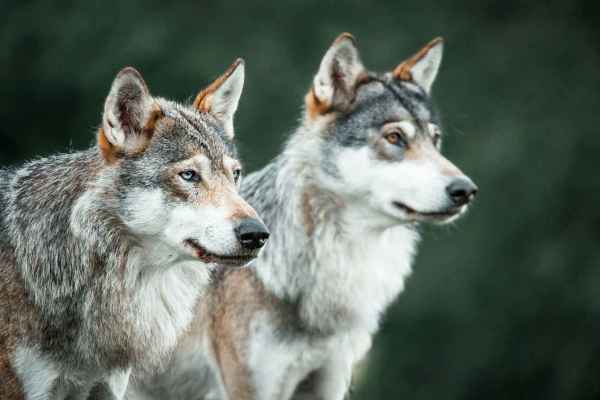
Photo: Janis Kloter / Unsplash
Taboo Broken
On 16 October 2026, the consultation on the revision of the Hunting Act ends. Under certain conditions, the Federal Council wants to allow the killing of individual pack wolves between February and May as well. Zug is calling for the requirement of FOEN approval to be scrapped. Grisons warns of risks to pup-rearing, but at the same time requests a regulation window from 1 June to 28 February.
What the Federal Council proposes
With the draft of 24 June 2026, the Federal Council implements two motions: that of Esther Friedli (25.3715) and that of Pascal Broulis (25.3549). Two new provisions of differing scope are planned.
Under Art. 12 para. 2ter, the cantons would be allowed, "with the approval of the Federal Office", to "order or permit measures against individual wolves of a pack" between 1 February and 31 May if these wolves have repeatedly overcome properly implemented herd protection and caused considerable damage in doing so, or endanger people.
Under Art. 11 para. 5bis, kills would now also become possible in federal hunting ban areas. This provision is broader: according to the explanatory report, it applies "both to individual kills under Article 12 paragraphs 2 and 2ter HuntA and to pack regulations". In hunting ban areas, pack regulations would therefore also be possible under the proposed conditions.
The explanatory report concedes that February to May is the whelping period, "which, even for huntable species, traditionally falls within the closed season", and that there is "a certain risk" of "leaving orphaned young behind". Wild beim Wild has broken down the details in the article Wolf: Consultation on the Hunting Act until 16 October.
Zug wants to scrap the prior federal review
The Zug cantonal government adopted its response on 25 August 2026. It welcomes the revision because it would remedy the "previous inability to act" between February and May. But it does not consider it far-reaching enough. Its sole request: in Art. 12 para. 2ter, the words "with the consent of the Federal Office" should be deleted. Cantons should be able to "order or permit measures against individual pack wolves independently and without the consent of the Federal Office".
The cantonal government stresses that the substantive requirements for a kill would thereby "not be relaxed". However, the assessment of whether they are met in a specific case should "lie with the canton concerned". The federal government should set the statutory framework and "ensure supreme oversight and monitoring".
In this sensitive phase, the mandatory prior consent of the FOEN would thus no longer apply. Whether the statutory requirements for a kill are met in a specific case would first be assessed by the canton concerned itself. Retrospective supreme oversight is no substitute for consent in individual cases. Cases that already exist today show how important a check before the shot is, in which the federal government authorised kills before pups had been confirmed.
In addition, Zug backs the basic position paper "Future Wolf Management in Switzerland" of the Conference for Forests, Wildlife and Landscape (KWL), in particular the aim of "reducing the administrative burden by dispensing with individual kill applications".
Grisons: Criticism of spring kills, but nine months of regulation
The Grisons cantonal government takes a critical view of the planned kills of individual pack wolves between February and May, as the "Engadiner Post" reported on 25 September and the "BauernZeitung" on 5 October. During this period, parent animals could be "of particular importance for rearing the young", and moreover "individual animals can hardly be told apart with certainty".
If individual pack members can hardly be reliably told apart in the field, the targeted killing of the wolf responsible for the damage cannot be reliably guaranteed. A parent animal that is important for rearing the pups could also be hit.
At the same time, the government is requesting a uniform regulation window from 1 June to 28 February. February would thus explicitly remain included. The proposed alternative is therefore not full protection during the period designated by the Confederation. And starting on 1 June does not eliminate the rearing problem: even then, the pups born in spring are still dependent on the pack for their food. The proposed time limit therefore answers the government's own warning about the loss of important parent animals only in part.
In addition, Grisons demands that damage occurring outside a federal hunting ban area be taken into account for kills within it, because home ranges extend beyond its boundaries.
Agriculture wants year-round action
The Grisons Farmers' Association goes even further. It wants problem wolves to be regulated all year round. A start in June would be a clear improvement for Sandro Michael of the association, because «at that point the animals are already on the alps and pastures». In principle, «the calendar should not decide whether intervention is permitted» («BauernZeitung», 5 October). The cantons should have the final say themselves. In its «Grisons Wolf Charter», the association writes: «Grisons accepts at most two inconspicuous wolf packs.» According to the Office for Hunting and Fisheries, 19 packs are currently present in the canton in whole or in part (see Grisons Ticker).
The Bern Farmers' Association, too, does not want to have to obtain the consent of the FOEN (Federal Office for the Environment) for measures against individual pack wolves between February and May: the Federal Office's consent should «no longer be required in these cases either». For certain kills in federal hunting ban areas, where the proposal provides for prior consultation with the FOEN, it additionally demands «that the FOEN's duty to be consulted be deleted». The cantons should be able to «make the decisions themselves with final authority» (statement of 11 September 2026).
The association calls the proposal as a whole a «minimal solution». It also wants damage inside and outside federal hunting ban areas to be allowed to be added together, drones to be permitted in hunting ban areas to search for livestock, and the restriction on regulating young wolves born in the current year to be lifted at ordinance level. It also calls for the swift implementation of Motion 25.4464 on a threshold value for the wolf population.
For eastern Switzerland, TVO reported on 13 October that the proposal meets with approval in most cantons, while animal welfare organisations warned against excessively far-reaching interventions. The full St. Gallen consultation response has not yet been made available to the editorial team.
What the figures say
The revision comes at a time when damage is declining. According to Pro Natura, BirdLife Switzerland, Gruppe Wolf Schweiz and WWF Switzerland, the fall in livestock kills is continuing in 2026, now in its fourth year. In Grisons there were 30 kills by the end of July, according to their statement of 23 September, compared with more than 60 in the same period last year. According to the four organisations, around a hundred wolves are already being shot every year.
Since 1 September 2026, according to the Wild beim Wild counter, at least 32 wolves have been killed under preventive regulation, as of 13 October. Reactive individual kills are not included.
What Switzerland has assured the Council of Europe
In proceedings under the Bern Convention, the FOEN gave the Council of Europe written assurances that packs are protected from 1 February to 31 August, the «période de reproduction et d’élevage» («Les meutes sont protégées durant cette période»), that any pack regulation requires the prior consent of the Confederation, and that regulation is «la dernière mesure». The consultation draft and the demands from Zug, Grisons and the agricultural sector call several of these assurances into question. In its explanatory report, the Federal Council counters that the new rules are «in line with Article 7 of the Bern Convention».
Practice already does so as well: in August 2025, in the middle of the protected period, Valais had a female wolf shot as a «lone wolf» that had given birth to pups in May, and in 2026 the Confederation granted consents before pups had been confirmed. Wild beim Wild has compared the assurances and the practice point by point: 15 assurances to the Council of Europe: what wolf management practice makes of them.
Context
The consultation shows a pattern that has repeated itself since the 2022 revision: every relaxation is introduced as a narrowly limited exception, and before it has even come into force, cantons and agriculture demand the next one. This time the closed season for pack wolves, the wildlife sanctuaries and the prior review by the Confederation are all up for discussion at once.
That the most affected canton itself warns against kills during the rearing period should give the Federal Council pause for thought. The consistent course would be to take this warning seriously, for June as well, and to expand herd protection rather than extend kill deadlines.
Sources
- Canton of Zug, Executive Council: Consultation response on the revision of the Hunting Act, 25.8.2026 (PDF)
- DETEC: Explanatory report on the revision of the hunting act, 24.6.2026
- «Engadiner Post»: More leeway for wolf kills, 25.9.2026
- «BauernZeitung»: Wolf: Grisons wants no kills, Farmers' Association wants year-round regulation, 5.10.2026
- Bernese Farmers' Association: Position paper on the amendment of the Hunting Act, 11.9.2026
- TVO: Wolf kills soon in spring too? Canton of St. Gallen wants to go after the wolf, 13.10.2026
- Pro Natura, BirdLife Switzerland, Gruppe Wolf Schweiz, WWF Switzerland: Stockpiling wolf kills is counterproductive and unnecessary, 23.9.2026
- Council of Europe, Bern Convention: Government report, File 2023/03, 18.11.2025
- Federal Council: Consultation on the revised Hunting Act, 24.6.2026
Read more: Wolf kills in wildlife sanctuaries: protection without prohibition, Wolf regulation: IG Wild beim Wild demands files and oversight from the FOEN, Wolf regulation: what the FOEN assures the Council of Europe in writing
More on the subject of recreational hunting: What the research says about this is shown by Hunting fact-checked: the state of research.
The position of IG Wild beim Wild: IG Wild beim Wild rejects recreational hunting. Our model is the canton of Geneva, which has managed without recreational hunting since 1974: without hunting seasons, without hunting dogs, without driven hunts, without high seats, without the animal cruelty and crime that go hand in hand with hunting season elsewhere. What has worked there for over fifty years disproves every position paper by JagdSchweiz. An association that bases its policy on claims it refutes in its own documents is not a professional organisation, but a factory for misinformation.
Wild animals need a voice
Once a week: research, petitions and background information on recreational hunting. Free of charge and can be unsubscribed from at any time.

All articles are written by IG Wild beim Wild as well as by external co-authors. Research, structuring and editorial processes may be supported by AI-assisted tools.
Support our work
With your donation you help protect animals and give their voice a hearing.
Donate now →