Wolf regulation: what the FOEN assures the Council of Europe in writing
In Strasbourg, the Federal Office for the Environment calls regulation “the last measure”; in Switzerland, it approves the removal of entire packs.

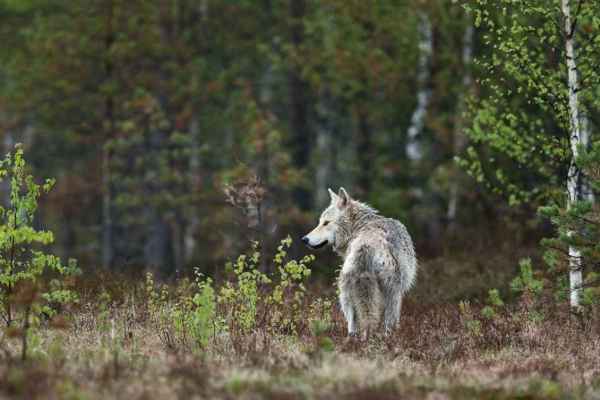
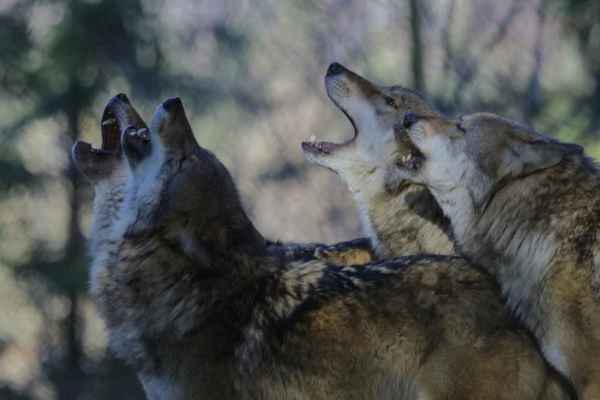
Symbolic image. Photo: Lucie Sa_Vi / Unsplash
Removal
In the proceedings under the Bern Convention, Switzerland must regularly explain its wolf policy to the Council of Europe. The reports that the Federal Office for the Environment (FOEN) sends to Strasbourg for this purpose are public. They contain assurances against which practice must be measured, and admissions that have gone largely unnoticed in Switzerland.
The proceedings in Strasbourg
CHWOLF and Avenir Loup Lynx Jura lodged a complaint in November 2023. In December 2024, the Standing Committee of the Bern Convention opened a file against Switzerland (more on this in Bern Convention reviews Swiss wolf management). The FOEN responded with a report dated 31 July 2025 and a letter dated 14 November 2025, both signed by Director Katrin Schneeberger. In the July report, Switzerland requests that the file be closed. In the 2026 documents, the proceedings are listed only as a “possible file”. Whether the Committee downgraded it in December 2025 is not clear from the documents.
“La dernière mesure”
The FOEN's assurances are unambiguous. Regulation is the last measure, the office writes. Before such a decision, herd protection measures must have been implemented and milder means such as deterrence attempted (translated from the French). Entire packs may only be removed if they show clearly defined undesirable behaviour. A pack may not be removed merely because the minimum number in the region has been exceeded. The twelve packs are a lower limit, but not a goal in themselves.
According to the FOEN, hunters taking part in pack regulation must complete special training, hold a special cantonal permit and be supervised by wildlife wardens.
At the same time, the FOEN interprets the Bern Convention broadly. Relying on Resolution No. 2 (2011) of the Convention, it argues that damage need not have occurred before a kill; it is enough that it be “very likely”. This is precisely where the dispute with the Convention's Bureau lies, which has described pre-emptive kills on account of merely potential damage as a misinterpretation.
The practice
The figures in the same report show how these assurances are implemented. For the 2023/24 period, the FOEN approved the removal of twelve entire packs, around 100 wolves in total. Fifty-five were killed, and one pack was removed completely. For 2024/25, it approved nine pack removals and 17 partial regulations, around 125 wolves. Ninety-two were killed, and three packs disappeared entirely. In November 2025, the FOEN reported that it had approved the killing of two thirds of the pups for 21 packs and the complete removal of five packs. It rejected two pack removals and one partial regulation.
In autumn 2026, the FOEN approved the complete removal of the Augstbord and Nanz packs in Valais. The published decisions contain no information on herd protection, on livestock killed or on pack size (see Nanz pack cleared for total kill). Whether the assurances given in Strasbourg were honoured cannot be verified in this way.
Nor can this be clarified in the courts. The Federal Administrative Court declined to hear appeals against the FOEN approvals and referred to the cantonal orders. These can only be challenged by organisations that meet the strict requirements of Art. 12 NHG. The Federal Supreme Court denied CHWOLF this right (Federal Supreme Court: CHWolf may not sue against wolf kills). Where courts are permitted to rule on the merits, the line is clear: before a wolf may be authorised for killing, preventive measures must have been taken, the Federal Supreme Court held in judgment 2C_68/2024 of 30 June 2025 concerning the killing of a single wolf in the canton of St. Gallen.
What the FOEN concedes in Strasbourg
According to the FOEN, herd protection is a prerequisite for any regulation. The same report states that the Confederation reduced its contribution to fences, night pens and livestock guardian dogs from 80 to 50 per cent in 2025, for reasons of fiscal policy. The 80 per cent rate only applies again from 2026.
Regarding the night-time kills, the FOEN concedes that night vision devices are among the means prohibited under Art. 8 of the Bern Convention. It relies on exceptions under Art. 9. In Ticino, the recreational hunters of the new Gruppo Controllo Lupi are equipped with thermal imaging cameras and receive 500 francs for each wolf killed (500 francs per wolf). The International Union for Conservation of Nature has criticised night-time kills using night vision and thermal imaging devices (IUCN criticises Swiss wolf kills).
Finally, the FOEN confirms that during the 2024/25 regulation period three young lynx were killed instead of wolf pups. It describes this as an isolated case. As compensation, the canton concerned is organising a relocation of lynx with the support of the FOEN.
Context
Assurances given to the Council of Europe cost nothing as long as nobody can verify them. In Strasbourg, the FOEN promises herd protection as a precondition, regulation as a last resort and pack removals only where misbehaviour has been proven. In Switzerland, the FOEN's approvals cannot be challenged and their justifications are not public. Anyone who is serious about these assurances would disclose every approval decision, together with the proof of herd protection and of the behaviour said to justify a removal. The ongoing wolf counter shows how many wolves are killed as long as this does not happen.
Sources
- FOEN, Rapport du gouvernement, Dossier 2023/03, T-PVS/Files(2025)2023-3_gov (report of 31 July 2025 and letter of 14 November 2025)
- Council of Europe, dossier page New wolf culling policy
- Federal Supreme Court, judgment 2C_68/2024 of 30 June 2025
More on the subject of recreational hunting: What the research says about this is shown by Hunting fact-checked: the state of research.
The position of IG Wild beim Wild: IG Wild beim Wild rejects recreational hunting. Our model is the canton of Geneva, which has managed without recreational hunting since 1974: without hunting seasons, without hunting dogs, without driven hunts, without high seats, without the animal cruelty and crime that go hand in hand with hunting season elsewhere. What has worked there for over fifty years disproves every position paper by JagdSchweiz. An association that bases its policy on claims it refutes in its own documents is not a professional organisation, but a factory for misinformation.
Wild animals need a voice
Once a week: research, petitions and background information on recreational hunting. Free of charge and can be unsubscribed from at any time.

All articles are written by IG Wild beim Wild as well as by external co-authors. Research, structuring and editorial processes may be supported by AI-assisted tools.
Support our work
With your donation you help protect animals and give their voice a hearing.
Donate now →