Five Weeks of Wolf Regulation 2026: At Least 26 Wolves Killed
The Confederation and cantons have authorised kills in 37 wolf packs, yet no authority maintains a nationwide overview of the kills actually carried out. The cantonal interim report after five weeks.

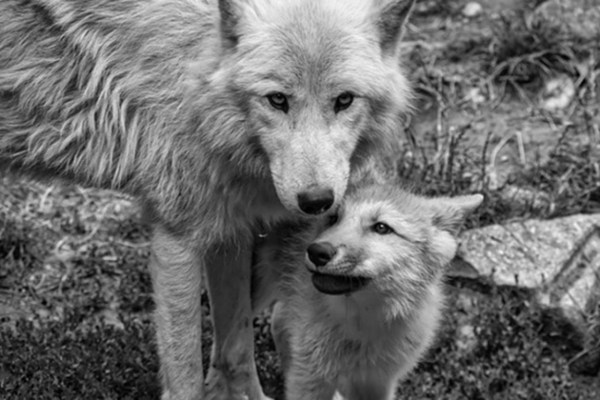
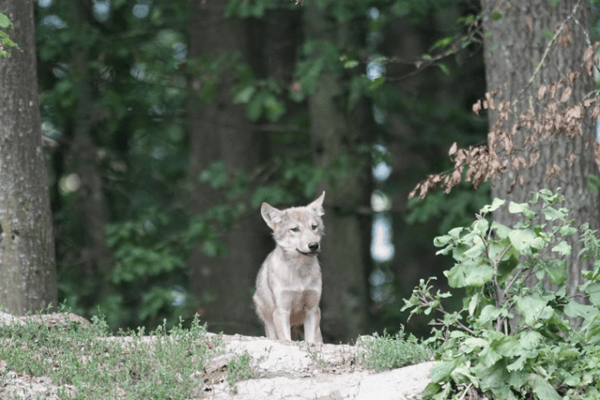
Stock photo. Photo: Hans Veth / Unsplash
«Four Pups»
Since 1 September, Switzerland's fourth preventive wolf regulation has been underway. After five weeks, at least 26 kills within this regulation have been documented according to official figures. In addition, there was one reactive individual kill in Valais. The Federal Office for the Environment (FOEN) has already granted authorisations for 37 packs. No authority publishes an overall tally, so IG Wild beim Wild has compiled the figures published by the cantons. As of: 8 October 2026.
No authority answers in one place how many wolves have been killed since the start of the regulation period. The Federal Office for the Environment (FOEN) authorises the kills and lists its approvals, but keeps no public overview of how many animals actually die afterwards. The KORA foundation publishes its monitoring data publicly with a three-month delay. Anyone who wants to know must piece the figures together from monthly reports, press releases and tables from the seven cantons with authorisations, in three languages and with differing cut-off dates. Some kills appear only in a table, without any announcement at all.
For a state programme in which a protected species is killed, this is not fit for purpose. The kills are authorised by the federal government and the cantons and carried out by wildlife wardens and commissioned recreational hunters. Since January 2026, the federal government has again been covering 80 percent of herd protection costs, and Ticino has set a cost ceiling of 250,000 francs for its recreational hunters' wolf hunt. Taxpayers and specialist agencies should be able to expect such a programme to be documented centrally, continuously and completely. The fact that Grisons manages this with a monthly report per pack shows that it would be possible.
The federal government is quick when it comes to approvals. BAFU approved Glarus's application of 14 September within nine days, and it publishes its approvals continuously on its website. Enforcement is just as swift: in the Grisons pack Combul, only eleven days passed between the first evidence of reproduction and two dead wolves (see below). What is missing, however, is a comparably up-to-date, nationwide overview of the kills actually carried out. In the view of IG Wild beim Wild, it is amateurish that the federal government approves killing within days but fails to document the kills just as promptly.
Documented preventive kills since 1 September 2026
| Canton | Documented kills | Approval | Latest source update |
|---|---|---|---|
| Grisons | 17 | around 61 wolves, including two entire packs | AJF monitoring report, as of 30 September |
| St. Gallen | 5 | 5 of 8 young wolves in the Schilt pack, completed | ANJF announcement, 21 September |
| Valais | 2 | two entire packs, two partial regulations | cantonal table, accessed 8 October |
| Ticino | 1 | up to two thirds of the pups in 9 packs | Ufficio caccia e pesca, 2 October |
| Schwyz | 1 | according to the canton, “one quarter of the approved quota” | AWN announcement, 21 September |
| Glarus | no preventive kill confirmed in the official sources evaluated; differing media report (SRF, 7 October) unresolved | Partial regulation Kärpf (BAFU, 23 September) | Review of cantonal and federal sources on 8 October |
| Neuchatel | no preventive kill confirmed in the official sources evaluated | Brévine and Jougne-Suchet, each a partial plus one parent animal | Canton, 25 August; Keystone-ATS, 3 September |
| Bern, Vaud, Uri, Obwalden | no preventive regulation requested | BAFU overview, accessed 8 October | |
| Total | at least 26 |
Not included in the table is a reactive individual kill: on 5 September, an adult female wolf was killed in Vérossaz, Valais. The three kills in the cross-cantonal Calanda2 pack are recorded exclusively under the Grisons figure. The St. Gallen figure includes the five kills in the Schilt pack.
The continuously updated figures can be found in the «Wolf kills Switzerland 2026/27» counter.
More approvals than in the entire previous period
According to the FOEN overview (version marked "Published on 4 October 2026", accessed and archived on 8 October), the Federal Office has granted 39 approvals for preventive regulation measures. These concern 37 different packs. The discrepancy arises, firstly, because the cross-border Calanda pack is listed under both Grisons and St. Gallen. Secondly, the Giarsinom pack in Grisons first received approval for partial regulation and later approval for complete removal. We count cross-cantonal packs only once. The approval for Nanz dated 29 September is additionally confirmed by the Canton of Valais in its statement of 30 September.
Broken down by canton:
- Grisons: 19 packs
- Ticino: 9 packs
- Valais: 4 packs
- St. Gallen: 2 packs, of which Calanda is also listed under Grisons
- Neuchatel: 2 packs
- Schwyz and Glarus: 1 pack each
Complete removal has been authorised for four packs: Calderas in Surses and Giarsinom in the Lower Engadine (both GR), Augstbord (23 September) and Nanz (29 September, both VS). A fifth application, Vallon de Réchy in Valais, is still pending.
Over the entire 2025/26 period, the FOEN had, according to its report, approved 30 regulation measures: 21 preventive partial regulations, 8 complete pack removals and one reactive partial regulation. After just five weeks, more approvals have already been granted than during the whole of the previous period.
Grisons: 17 kills in one month
Grisons has progressed furthest. According to the monitoring report of the Office for Hunting and Fishing (AJF), as of 30 September, 17 wolves were killed in the first month:
- Seta: 4 wolves, regulation completed
- Calanda2 (cross-border): 3 wolves
- Stagias: 2 wolves, regulation completed
- Moesola: 2 wolves, regulation completed
- Agnas: 2 wolves
- Combul: 2 wolves
- Calderas: 1 wolf
- Jatzhorn: 1 wolf
According to the AJF, speaking to SRF, the wildlife wardens killed 10 of these wolves, while recreational hunters shot 7. These are experienced licence hunters whom the canton deploys with special authorisation for wolf regulation. These kills are not carried out as part of ordinary recreational hunting.
By the end of January, the canton intends to kill around 61 wolves, compared with 48 the previous year. Arno Puorger, responsible for predators at the AJF, told SRF: «Currently, more wolves are living in Grisons than at any time in roughly 150 years.» The AJF is tracking 19 packs and at least 88 pups. These include packs that have newly formed in areas where wolves were previously killed. Our assessment of this development can be found in «Grisons reports three new packs».
Barely confirmed, already regulated
How quickly kills now follow the first confirmed detection is illustrated by the Combul pack in Poschiavo:
- According to the AJF, reproduction was confirmed for the first time on 11 September.
- On 14 September, the kill order for four young animals followed.
- On 22 September, two wolves were killed.
Eleven days passed between the first official confirmation and the first kills.
The name Combul does not appear in the FOEN overview; there, the pack in Poschiavo is listed as Brusio. The authorities do not explain how the two names are connected.
A similar pattern emerged in Ticino: the FOEN approved the killing of up to two-thirds of the pups of the new Camoghè pack on 21 September, and the canton made the pack public on 24 September. On 2 October, the office reported the first dead young wolf from the Valle Morobbia.
Kills: decline over the year, peak in September
The cantons justify the kills in similar terms everywhere: they are meant to prevent future damage to livestock and keep wolves wary of humans. The official kill statistics paint an inconsistent picture.
In Grisons, the AJF recorded 122 sheep and goats killed by the end of September 2026. In the same period in 2025, the figure was 186 — around a third more — despite there being fewer packs at the time. September stands out: in the first month of regulation, the office counted 47 sheep and goats killed, more than in any other month of the year. In September 2025, the figure was 14. The September kill count is thus significantly higher than the previous year's figure, despite ongoing regulation. Whether and how the kills influenced the pattern of livestock losses cannot be determined from this monthly comparison.
In the smaller cantons, the approved kills are sometimes disproportionate to the few documented losses:
- St. Gallen justifies the regulation of the Schilt pack with kills in properly protected situations «last year». For 2026, the canton reported two attacks by early August, each with one sheep killed, «again fewer than in the previous year». All five released young wolves were killed shortly after the ruling.
- Glarus received a partial regulation for the Kärpf pack, even though the pack has at most two pups. According to the canton, by mid-September 2026 only a single livestock animal had been killed in the canton, an inadequately protected goat.
- Ticino: According to the cantonal kill statistics of 28 September, 117 livestock animals were killed or fatally injured. Of these, 6 were adequately protected, 45 were not adequately protected and 13 were not adequately protected due to force majeure. 52 animals were killed in situations where protection is considered unreasonable. For one animal, the chart shows no labelled category.
- Schwyz: The DNA analysis attributed kills from August to the wolves M107 and M586. As we have reported, basic protection was missing in three of four kill incidents. The regulation of the Chöpfenberg pack in the Wägital is underway; a first young wolf has been killed, according to the canton.
The declining kill figures argue against a simple equation of more wolves with more damage. What share herd protection, kills and other factors have in the decline cannot be determined from the cantonal totals alone. Our analysis of the alpine summer examines this question in more detail: Halfway Through Alpine Summer: Wolf Kills Cut In Half.
The FOEN, too, describes declining damage since the peak in 2022. However, it points out that its compensation statistics from 2025 onwards are not directly comparable with previous years due to changed conditions.
Who shoots
Regulation is no longer solely a task for the wildlife wardens:
- Grisons: 7 of the 17 kills are carried out by specially authorised recreational hunters.
- St. Gallen: In the Schilt pack, in addition to the wildlife wardens, «specifically trained hunting ground lease-holders» were authorised.
- Valais: Here, the «WH+» unit shoots, which, in addition to professional and auxiliary game wardens, includes a «support group for hunting».
- Ticino: According to the «Corriere del Ticino», recreational hunters in the cantonal «Gruppo Controllo Lupi» receive 500 francs for each kill, provided the operational rules are observed. The newspaper bases this on the Council of State's proposal from May. In addition, there is a flat rate of 300 francs plus 30 francs per hour, with a cost ceiling of 250,000 francs. Whether a bonus was paid out for the kill in the Camoghè pack has not been published by the canton. More on this: 500 francs per wolf: Ticino pays a bounty for every wolf kill.
What the authorities don't publish
Transparency varies greatly from canton to canton. Grisons publishes a monthly report with every single kill, while St. Gallen and Schwyz inform via press release. Valais, on the other hand, publicly announces every new permit, but the kills themselves only appear in a table.
This is how one learns — solely from the table «Causes of death of wolves in Valais» — that two adult wolves were killed in Augstbord on 26 September. That was two days after the order for complete removal came into force. According to the same table, 21 wolves have been killed in the Augstbord pack perimeter since December 2023 as part of preventive regulation. Four of these kills are explicitly attributed to licence hunters. The rest were carried out by the «WH+» unit, which, alongside professional and auxiliary game wardens, also includes a hunting support group. Now an entire pack is to be removed there once again.
Ticino has so far not published a total number of kills. For Glarus and Neuchatel, no preventive kill is confirmed in the official sources reviewed. For Glarus, however, an SRF overview does cite one kill; whether it is attributable to the ongoing preventive regulation remains unclear. Whether no one shot there or whether it simply went unreported cannot be distinguished from the outside. For Uri, the same SRF overview lists two kills. These were reactive individual kills in June and July that do not belong to the current period.
What would be fitting for the times is a public federal register that records and continuously updates, for each pack, the authorisation, the ordered and carried-out kills, the date, the executing body, and the associated losses with herd-protection status. For its annual evaluation, the FOEN compiles cantonal kill figures. Whether this data is already centrally available during the course of the year remains unclear.
Bern and Vaud without pack regulation
Several cantons are missing from the FOEN's list. Bern has not applied for preventive pack regulation. According to the canton, mainly lone wolves roam there, and kills are carried out exclusively by the wildlife wardens. In 2026, Bern had a single wolf killed, on 9 August on the Bussalp above Grindelwald, after the damage threshold had been reached.
Vaud, too, has not applied for pack regulation for the current period, even though, according to the canton, around 20 wolves live there in several packs, including Marchairuz and Haute-Valserine. Last winter, the canton had 10 wolves of the Mont-Tendre pack killed. It then commissioned KORA to investigate how the kills affect livestock losses and wolf behaviour. The results have not yet been published.
Assessment: Authorisations are growing faster than knowledge of their effects
The interim assessment after five weeks reveals a pattern: the number of authorisations is rising, kills in some cases follow just days after the first evidence of a pack, and in several cantons packs are being regulated even though hardly any damage has been attributed to them for 2026. At the same time, losses in Grisons up to the end of September are around a third lower overall than in the previous year, even though there are more packs there.
The federal report lists 77 regulatory kills for the previous period: 76 under preventive regulation and one under reactive regulation. Of eight approved complete pack removals, according to the available information, only one led to complete dissolution. Nevertheless, the FOEN assesses the regulation as effective. How large its independent contribution to preventing livestock damage actually is thus remains a key question for the success monitoring. Equally open is whether the gaps left by kills and pack removals are filled by new wolves. The example of Augstbord, where an entire pack is to be removed again after 21 wolves were killed, points in this direction.
Politically, the scope for action is set to grow even further. The consultation on the amendment to the hunting law, which is intended to allow wolf kills during the whelping period and in hunting ban areas as well, is still running until 16 October. The National Council has also approved a motion calling for a threshold value for the wolf population (Wolf threshold: National Council approves stockpiled kills).
The regulation period runs until 31 January 2027. We document further kills in our live tickers for Grisons, the Ticino and the Valais. Background information, figures and studies are compiled in our dossier «Wolf in Switzerland: facts, politics and the limits of hunting».
On the methodology:This interim overview is based on information published by the federal government and the cantons up to 8 October 2026: monitoring reports, press releases and tables. We use media reports only where they reproduce statements or documents from official authorities, and we mark them as such. Preventive regulatory kills since 1 September 2026 are counted. Reactive individual kills are listed separately. Packs spanning several cantons are counted only once. The source dates vary by canton (Grisons, for example, 30 September). Unpublished kills are not included, so the actual figure may be higher. The pages and documents used are archived with the date of retrieval.
Sources:
- FOEN, Fourth preventive regulation of wolf packs: status of cantonal applications, version “Published on 4 October 2026”, retrieved on 8 October 2026; version used archived
- FOEN, Report on wolf regulation 2025/2026, 18.5.2026
- AJF Grisons, Wolf management monitoring September 2026, as at 30.9.2026, and September 2025
- Canton St. Gallen, ANJF, Announcements of 4.8., 26.8. and 21.9.2026
- Canton Schwyz, AWN, Press releases of 20.8., 21.9. and 6.10.2026
- Canton Valais, DJFW, Causes of death of wolves in Valais and Communiqué on the regulation of the Nanz pack, 30.9.2026
- Canton Ticino, Ufficio della caccia e della pesca, Lupo: predazioni 2026, as at 28.9.2026
- Canton Vaud, Régulations and Announcement of 3.2.2026
- Canton Neuchâtel, Le loup dans le canton de Neuchâtel, as at 25.8.2026
- SRF, Grisons: 17 wolves shot, 61 the target, 7.10.2026 (statements by the AJF)
- Corriere del Ticino, Una nuova alleanza per regolare i lupi, 8.6.2026 (proposal of the Council of State)
- Ticinonews, Valle Morobbia: abbattuto un giovane lupo, 2.10.2026 (report by the Ufficio caccia e pesca)
- glarus24, Offspring in the Kärpf pack: canton applies for regulation, 17.9.2026 (cantonal information)
- Plattform J, Bussalp Grindelwald, 10.8.2026 (information from the cantonal directorate)
More on the subject of recreational hunting: In our dossiers on recreational hunting gather fact-checks, analyses and background reports. What the research says about this is shown by Hunting fact-checked: the state of research.
The position of IG Wild beim Wild: IG Wild beim Wild rejects recreational hunting. Our model is the canton of Geneva, which has managed without recreational hunting since 1974: without hunting seasons, without hunting dogs, without driven hunts, without high seats, without the animal cruelty and crime that go hand in hand with hunting season elsewhere. What has worked there for over fifty years disproves every position paper by JagdSchweiz. An association that bases its policy on claims it refutes in its own documents is not a professional organisation, but a factory for misinformation.

All articles are written by IG Wild beim Wild as well as by external co-authors. Research, structuring and editorial processes may be supported by AI-assisted tools.
Support our work
With your donation you help protect animals and give their voice a hearing.
Donate now →