Schwyz: basic protection was lacking in three out of four kill events
The answer to the minor interpellation KA 22/26 cites open sections of fencing, non-electrified grids and missing wires, while a kill order applies to young wolves of the Chöpfenberg pack.
No Fence, No Shepherd
On 7 October 2026, the canton of Schwyz published its answer to the minor interpellation KA 22/26 by cantonal parliamentarian Andrea Burtschi (Mitte). The occasion was three kill events in August. In each case, the canton noted that the prescribed herd protection had not been fulfilled. The answer now summarises all events that were known up to the time of its publication.
What the canton found
The Department of Economic Affairs lists five kill events for 2026, three involving sheep and two involving goats. Four occurred on agricultural land, one in the alpine summer pasture area. Of the four kill events on agricultural land, three had to be assessed as unprotected. The event in the summer pasture area occurred on land considered not reasonably protectable.
The deficiencies are specifically named:
- Sections were not fenced at all.
- Metal grid fences were not electrified.
- In some cases, the gap between the ground and the lowest wire was too large.
- In one case, the animals were kept behind three wires instead of the prescribed four.
The department does not wish to infer a pattern of typical deficiencies from this.
Whether all the kills reported in September are included in the list is not evident from the answer. Watson reported, for instance, on a kill on 20 September within the pack's roaming area. In the case of the suspected wolf kill in Oberiberg on 9 September, the canton found correct protective measures in place, according to «Bote der Urschweiz».
Basic protection is not a high-tech requirement
What is required is set out in the response itself: a 90-centimetre-high electric net fence or a 4-strand fence with over 3,000 volts, fully closed and with a maximum ground clearance of 20 centimetres. A metal mesh fence is also sufficient if it is reinforced with electric strands at the top and bottom. There are no federal funds available for this basic protection. If it is implemented correctly, kills are, according to the cantonal herd protection page counted towards the kill quota and compensated.
Extended herd protection is financially supported: 5-strand fences, 105-centimetre-high nets and livestock guardian dogs. With the revised hunting act of 1 February 2025, the federal share of herd protection measures fell from 80 to 50 percent. It has since been raised back to 80 percent.
1,260,018 Swiss francs since 2022
Between 2022 and 2026, a total of 1,260,018 Swiss francs in contributions for extended herd protection flowed through the canton. The highest amount was 499,327 Swiss francs in 2023. For 2026, the response states 170,059 Swiss francs up to the time of answering, with payments always made in autumn or winter. The canton itself contributed around 106,293 Swiss francs in 2025 and 28,948 Swiss francs so far in 2026. The department attributes the decline to the fact that farms are now well equipped with fencing material.
However, being equipped does not mean being protected. The Office for Agriculture has provided extensive information in recent months:
- Last winter, it reached 842 participants across 28 events.
- Every spring, it sends out rules and application forms by e-mail.
- After the kill in Pfäffikon, it urgently wrote to all farm operators.
Nevertheless, the government maintains that the support options and requirements are still too little known. Further information and training events are now to follow.
The lead wolf had lived inconspicuously in the area since 2021
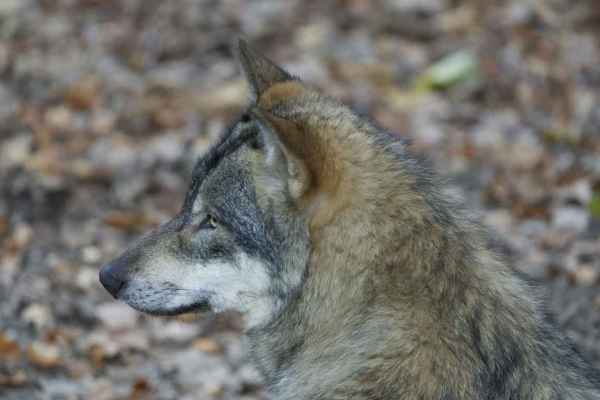
One day before the response, the Office for Forest and Nature announced the DNA results: the wolves M107 and M586 are responsible for the kills in Pfäffikon and Einsiedeln. According to Watson, the lead wolf of the Chöpfenberg pack killed twelve sheep in Pfäffikon on 20 August. This happened within the known home range in which it has resided since 2021 and had previously behaved inconspicuously. In this very incident, the prescribed herd protection measures were, according to the canton, not fully met.
The kill order against the pack is not a reaction to these losses. The cantonal government had already decreed on 18 August the removal of two-thirds of at least six pups born this year, as proactive regulation from 1 September 2026 to 31 January 2027. How controversial these kills are was shown by the case of the young wolf that was shot and disappeared.
Editorial assessment
The cantonal government states that herd protection is «implemented well by a large majority». However, the recorded livestock kills on agricultural land reveal a concrete gap: in three out of four cases, basic protection was missing. This small number of cases says nothing about all herds in Schwyz. But it does show where things fail precisely where the wolf actually strikes: not with demanding special measures, but with a closed, electrified fence.
The reference to regionally typical small-group husbandry explains the extra effort involved. It does not justify open sections of fencing. While the documented weaknesses lie with the fences, a kill order applies to the young wolves of the Chöpfenberg pack. The fact that the canton simultaneously involves recreational hunters in the regulation of predators and that in Schwyz there has even been discussion of bounties for wolf kills shows that the priorities are set wrongly. Non-human animals on both sides of the fence pay the price.
According to the WWF as of 23 September, livestock losses in 2026 have so far declined for the fourth year running. The WWF attributes this to more extensively developed herd protection. We assessed earlier cantonal interim figures in the article «Herd protection works: Fewer wolf kills of livestock in Switzerland». More background is provided in the dossier Wolf in Switzerland.
More on the subject of recreational hunting: In our dossiers on recreational hunting gather fact-checks, analyses and background reports. What the research says about this is shown by Hunting fact-checked: the state of research.
The position of IG Wild beim Wild: IG Wild beim Wild rejects recreational hunting. Our model is the canton of Geneva, which has managed without recreational hunting since 1974: without hunting seasons, without hunting dogs, without driven hunts, without high seats, without the animal cruelty and crime that go hand in hand with hunting season elsewhere. What has worked there for over fifty years disproves every position paper by JagdSchweiz. An association that bases its policy on claims it refutes in its own documents is not a professional organisation, but a factory for misinformation.

All articles are written by IG Wild beim Wild as well as by external co-authors. Research, structuring and editorial processes may be supported by AI-assisted tools.
Support our work
With your donation you help protect animals and give their voice a hearing.
Donate now →