500 francs per wolf: Ticino pays a bounty for every wolf kill
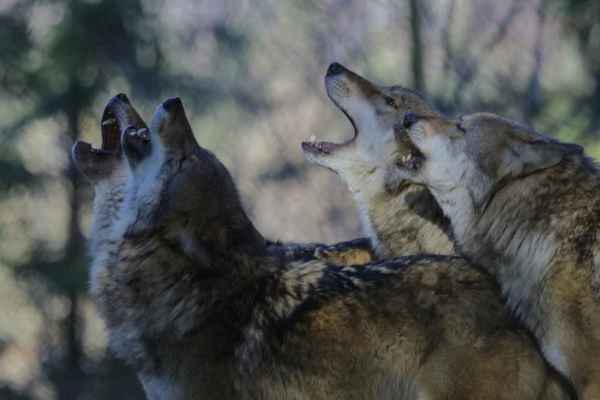
The canton of Ticino pays recreational hunters 500 francs for every wolf killed. The first kill reported this season hit a pup. At the same time, Bern wants to further ease wolf protection.
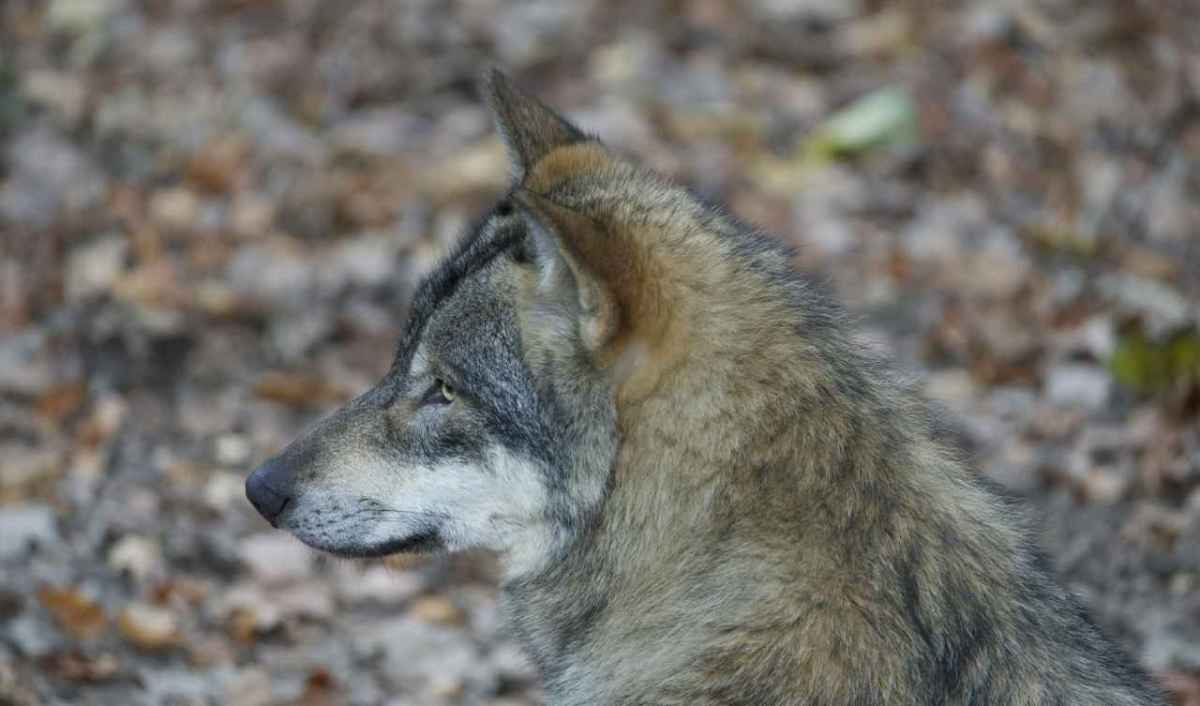
Stock photo: Felix Oertle / Unsplash
“Bounty”
In the Valle Morobbia, a young wolf born in 2026 from the Camoghè pack was killed as part of an authorised regulation measure. Ticino is now also deploying trained and authorised recreational hunters for this purpose, compensating them not only for their time and readiness but also with 500 francs for every wolf killed. While the canton expands this model, further relaxations of wolf protection are under discussion in Bern: kills are to become possible in future also during the breeding season and in federal wildlife refuges.
Young wolf from the Camoghè pack killed
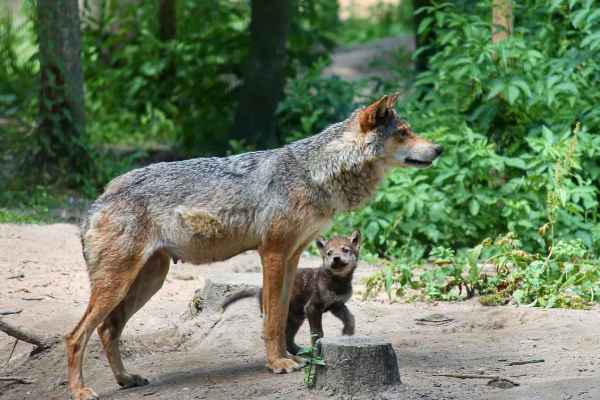
On 2 October 2026, the canton of Ticino reported that, as part of the partial regulation of the Camoghè pack, a young wolf born in 2026 had been killed in the Valle Morobbia. It came from a litter of five pups. The canton does not state the exact date of the kill.
According to the canton, the regulation is carried out with the involvement of "active recreational hunters" who have completed training in wolf regulation and are authorised for this purpose («cacciatori attivi che hanno seguito la formazione sulla regolazione del lupo e dispongono della relativa autorizzazione»). Whether the kill now reported was carried out specifically by a member of this group or by a game warden is not individually disclosed in the publicly available announcements. Likewise, the canton has not publicly specified whether this was the first kill carried out by one of the newly trained recreational hunters. According to the canton's announcements and Ticino media, no earlier wolf kill has been recorded in Ticino since the start of the regulation season on 1 September 2026.
The basis for this is the approval granted by the Federal Office for the Environment (FOEN) on 21 September 2026. For the Peloso pack in the lower Maggia valley, the Vergeletto valley and the lower Onsernone valley, FOEN had already given its approval on 16 September. In both packs, up to two-thirds of the young animals born in 2026 may be killed. The canton does not provide specific figures. In arithmetic terms, this means that for the Camoghè pack, which has five pups, a maximum of three may be killed — meaning two remain following the reported kill. For the Peloso pack, which has three pups, a maximum of two may be killed. In total, nine packs in Ticino currently hold federal authorisation for the fourth period of the so-called preventive regulation (1 September 2026 to 31 January 2027).
500 francs for a successful kill
On 28 May 2026, the Ticino Council of State established the so-called Gruppo Controllo Lupi, a pilot project running for at least two years. Up to 88 selected recreational hunters, four per game warden, support the 22 game wardens in carrying out authorised wolf kills, including at night and outside ordinary hunting times. According to RSI, they are equipped with thermal imaging cameras, and the budget amounts to a maximum of 250,000 francs per year.
The Corriere del Ticino names the compensation: a 300-franc starting fee, 30 francs per hour up to a maximum of 80 hours, and 500 francs for every wolf killed. This success bonus means that, in Ticino, an authorised kill of a predator that is otherwise protected is additionally remunerated. The payment goes beyond a mere compensation for time and equipment, because it is directly tied to success: to the killed wolf.

Recreational hunters take over tasks of the wildlife wardens
The canton describes those involved as authorised auxiliaries of a state-approved regulation. In practice, these are recreational hunters who are called in outside their regular hunting activity for kills and are compensated for doing so. Until now, carrying out approved kills was the responsibility of the professional wildlife wardens, whose pay does not depend on whether they shoot. With the additional premium, a personal financial incentive is created that is tied to the lethal outcome of the operation.
The reason the canton has chosen this route is shown by last year’s results. In 2025, according to RSI, the Ticino wildlife wardens spent around 3,200 hours to kill 6 of the 24 wolves that had been approved for culling. According to Corriere del Ticino, recreational hunters had not shot a single wolf, out of fear of legal risks.
This reticence also had a protective side. Anyone who aims at night with a thermal imaging device at an animal within a pack must be certain that it is a juvenile and not a parent animal. The premium now ties a personal financial advantage to a successful kill. Whether it actually changes the previous reticence can only be assessed once the canton transparently documents operations, missed shots, aborted attempts, kill attempts and compensation paid out.
For comparison, a case from Valais: as the Walliser Bote reported, a recreational hunter there shot a female wolf in the Mattertal and stated that he had mistaken it for a fox. The Oberwallis public prosecutor fined him 300 francs by way of a summary penalty order. In this case, the illegal kill of a wolf cost 300 francs, while the approved kill in Ticino earns 500 francs. Legally, the two cases are not comparable. But they do show what monetary value the state attaches to the life of a fundamentally protected animal in each case.
The budget creates room for success premiums
A simple calculation shows how the budget is structured. The start-up allowances for 88 participants amount to 26,400 francs, the maximum hourly compensation (88 times 80 hours at 30 francs) amounts to 211,200 francs, together 237,600 francs. If all 88 participants were to claim the maximum hourly compensation, 12,400 francs would mathematically remain from the annual budget of 250,000 francs. That would be enough for 24 success bonuses of 500 francs each.
Whether all claims are paid from the same budget, whether hours are actually billed up to the maximum, and whether further costs arise is not publicly documented. The calculation does not prove that the canton has planned for 24 kills. It does show, however, that the bonus is not a merely theoretical side clause in budgetary terms.
Open questions for which there are so far no public answers:
- Is the bonus also paid out if a parent animal is killed instead of a juvenile?
- Who checks on site at night whether a kill complies with the requirements?
- Is it publicly disclosed how many bonuses are paid out?
- How is it documented what consequences the kills have for pack structure and livestock kills?
This gives rise to a verifiable demand: the canton should publish at least monthly how many operations took place, how many people were involved, how many hours were billed, what technology was used, how many operations were aborted, how many missed shots there were, how many wolves were killed, with the age and sex of the animals, whether there were any wrongful kills, how many bonuses were paid out, and how the interventions affect livestock kills and pack structure.
More on this topic: Ticino Trains 88 Recreational Hunters for Nocturnal Wolf Kills, 300 Francs for a Female Wolf: Swiss Justice Problem, What does a wolf kill cost?
Heat, the high hunt and the flight into the night
The day before, on 1 October 2026, the canton had published the results of the Ticino high hunt. 1,882 red deer were killed (2025: 2,163, minus 13 per cent), 501 chamois (463, plus 8 per cent), 167 roe deer (239, minus 30 per cent) and 399 wild boars (284, plus 40 per cent). The authorities' explanation: because of the heat in September, the animals left the forest later in the evening and returned earlier in the morning. A larger share of their activity thus fell into the night, when recreational hunting is prohibited.
Tiziano Putelli, head of the cantonal Ufficio caccia e pesca, sums it up: «Si è cacciato un po' meno, ma meglio» — in other words, hunting was a little less frequent, but better. Davide Corti, president of the Federazione cacciatori ticinesi, the umbrella association of Ticino's recreational hunters, sees the decline as «in linea con la crescita costante delle catture negli ultimi dieci anni».
The report makes visible how the climate crisis and the hunting regime can interact: heat shifts animal activity into the night, while the high hunt increases disturbance pressure during the remaining daytime activity. For wild animals, this means that their already scarce low-disturbance time windows come under additional pressure. The decline in the official report, however, is measured only in terms of missed kills.
Also striking is the 40 per cent rise in wild boar kills. The increase in kill numbers alone proves neither a rise in population nor effective population regulation. In the case of wild boar, intensive hunting can also trigger compensatory effects. Servanty et al. (2009, Journal of Animal Ecology) demonstrated that under high hunting pressure, wild boars reach sexual maturity earlier and reproduce as early as their first year of life. Mazzatenta (2026, Conservation), drawing on official Italian data, concludes that sustained hunting pressure on wild boar triggers earlier and more frequent litters as well as higher birth rates. We collect further studies on this on our page «Hunting Fact-Checked».
The two reports from Ticino are more closely linked than they appear. Wild animals are shifting their activity into the night, and at the same time recreational hunters are gaining new powers with thermal imaging technology precisely there — for now, in the case of the wolf. Whether this logic will be extended to other species in future remains open. The example shows, however, how quickly a technology introduced as an exception can become an argument for pushing hunting boundaries further into the night.
More on this topic: Dossier: The high hunt in Switzerland, Dossier: The wild boar in Switzerland, Dossier: Night hunting and high-tech hunting, Ticino hunt 2026/27: All incidents in the live ticker
Bern opens further protection boundaries
What is being tested in practice in Ticino is being further prepared politically in Bern. The autumn session ended on 2 October 2026. Three developments are decisive:
1. Upper limit for the wolf population.On 23 September 2026, the National Council passed Motion 25.4464 by Fabio Regazzi (Centre, TI) by 116 votes to 73, with 6 abstentions. After the Council of States also gave its approval, the Federal Council must now draw up a legal basis for an upper threshold value. If a value to be set in future is exceeded, kills would become possible in the affected region. A specific figure has not yet been decided, and the motion does not stipulate whether the threshold should apply nationally or regionally. Federal Councillor Albert Rösti announced an amendment to the law. SP National Councillor Hasan Candan criticised the debate as having been conducted « fact-free », according to the Bote der Urschweiz.
2. Interventions during the breeding season.On 24 June 2026, the Federal Council launched the consultation on a revision of the hunting act. It aims to allow the killing of individual wolves from packs under certain conditions, even between 1 February and 31 May. This would not be permitted across the board: the prerequisite would remain repeated circumvention of herd protection measures or a danger to humans. The bill implements Motions 25.3715 (Friedli) and 25.3549 (Broulis).
3. Interventions in federal hunting ban zones.As a protected species, wolves have so far enjoyed special protection in federal hunting ban zones: the kills of pack wolves envisaged in the draft under the new conditions would not previously have been permitted there. The Federal Council intends to lift this restriction.
Taken together, these decisions shift the boundaries of wolf protection in three directions: towards a population-related upper limit, towards interventions during the breeding season against individual wolves classified as problematic, and towards kills even within hunting ban zones. Not all the changes are already in force; in the case of the Regazzi motion, the draft legislation and parliamentary deliberation are still pending, while the hunting act revision is in the consultation phase. How far the relaxations will ultimately go depends on the legislation and its implementing rules. The direction, however, is clear: wolf protection is to be tied less to specific individual cases in future and more closely to political population targets.
Kills: distinguishing observation from causes.According to the cantonal statistics compiled by Gruppe Wolf Schweiz, 183 livestock losses had been attributed to wolves by the end of July 2026, compared with 402 in the same period the previous year. The reports do not make clear whether all cantons, notably Ticino, are included in this dataset. In Vaud, the number fell from 114 to 5, and in Grisons, according to cantonal figures, from 68 to 30. According to data published in summer 2026, around 350 wolves were living in Switzerland in more than 40 packs.
The decline in livestock kills is an observation. Its causes are scientifically and politically contested. According to SRF, the Federal Office for the Environment (BAFU) attributes it to a combination of strengthened herd protection, additional resources and regulation. David Gerke of Gruppe Wolf Schweiz acknowledges local effects from kills, for instance with the Mont Tendre pack in Vaud, but regards herd protection as the most important measure. A temporal decline following kills does not in itself prove a causal effect, and the same applies to herd protection: herd size, alpine pasture organisation, weather conditions, reporting quality and local pack dynamics can all be at play simultaneously. On 25 September, BirdLife, Gruppe Wolf Schweiz, Pro Natura and WWF described preventive kills in a joint statement as «controproducenti e non necessari» (“counterproductive and unnecessary”). According to the organisations, a comprehensive analysis requested by parliament is due in 2027. Precisely because the causes remain unresolved, an independent evaluation is needed before any further relaxations are decided.
More on this topic: Wolf threshold: National Council approves motion, Wolf kills in wildlife sanctuaries: protection without prohibition, Alpine summer 2026: wolf kills halved despite record population
Submit comments by 16 October
The consultation on the revision of the hunting act runs until 16 October 2026. It is not only cantons, parties and associations that may submit comments: under the Consultation Procedure Act, any individual or organisation may express a view. A brief, factual statement is sufficient. Possible points to raise:
- A demand that authorised kills of protected species remain with the professional wildlife wardens and are not transferred to recreational hunters, and that cantons should not pay success-based bounties for the killing of protected species.
- Rejection of kills during the reproduction and rearing period, because interventions in pack structure can have undesirable consequences according to experts' assessments. Long-term US data (Cassidy et al. 2023, Frontiers in Ecology and the Environment) show that human-caused deaths impair the stability and reproduction of wolf packs.
- Rejection of lifting special protection for wolves in federal game reserves, because these areas would lose their purpose as refuges.
- Call for an independent impact assessment of all regulatory kills carried out to date, and for an obligation on the cantons to disclose deployments, kills and costs transparently.
The documents are accessible via the Federal Council media release . Background and context can be found in our article Wolf: Consultation on the Hunting Act until 16 October . All the facts on the predator can be found in the Dossier: Wolf in Switzerland.
Conclusion
The case from the Valle Morobbia reveals more than just a single regulatory kill. It reveals a shift in the system: the canton is delegating the killing of protected wolves to authorised recreational hunters and linking this task to a success bonus of 500 francs. At the same time, the federal government wants to further lower the hurdles for kills, extending them in time into the reproductive phase and in space into federal game reserves. Precisely because damage has declined in several cantons and the causes remain disputed, transparent data, independent impact assessments and protection that is not made dependent on the political desire for ever more regulation are needed before any further relaxation. Anyone who shares this view can submit it in writing to the federal government by 16 October.
Sources
- Corriere del Ticino: «Abbattuto un giovane lupo del branco Camoghè», 2 October 2026
- Ticinonews: «Valle Morobbia: abbattuto un giovane lupo», 2 October 2026
- RSI: «Abbattuto un giovane lupo del branco Camoghè», 2 October 2026
- Corriere del Ticino: «Due branchi di lupi nel mirino: il Ticino ordina la regolazione di Peloso e Camoghè», 25 September 2026
- Ticinonline: «Branchi Peloso e Camoghé, si procederà all’abbattimento di fino a due terzi dei giovani nati», 25 September 2026
- Corriere del Ticino: «Una nuova alleanza per regolare i lupi», 8 June 2026
- RSI: «Ticino: formati 88 cacciatori per abbattere i lupi», 17 June 2026
- Ticinonews: «Lupo: abbattimenti preventivi controproducenti e non necessari», 25 September 2026
- Corriere del Ticino: «Caccia alta, pesa il caldo», 1 October 2026
- Ticino Politica: «Caccia alta in Ticino 2026», 1 October 2026
- Watson / Keystone-SDA: «Swiss parliament demands threshold value for the wolf population», 23 September 2026
- Bote der Urschweiz: «Parliament sets wolf population cap», 23 September 2026
- KORA: «Federal Council launches consultation on revised Hunting Act», 24 June 2026
- Federal Council: Press release on the consultation, 24 June 2026
- SRF: «Did the controversial wolf kills actually make a difference?», 2 August 2026
- SWI swissinfo.ch / Keystone-SDA: «Wolf kills in Grisons more than halved in 2026», 4 August 2026
- Servanty S. et al. (2009): Pulsed resources and climate-induced variation in the reproductive traits of wild boar under high hunting pressure, Journal of Animal Ecology
- Mazzatenta A. (2026): Wild Boar Management and Environmental Degradation: A Matter of Ecophysiology, Conservation 6(1): 9
- Cassidy K.A. et al. (2023): Human-caused mortality triggers pack instability in gray wolves, Frontiers in Ecology and the Environment
More on the subject of recreational hunting: In our dossiers on recreational hunting gather fact-checks, analyses and background reports. The scientific evidence is presented in the overview Studies on the Effects of Recreational Hunting.
The position of IG Wild beim Wild: IG Wild beim Wild rejects recreational hunting. Our model is the canton of Geneva, which has managed without recreational hunting since 1974: without hunting seasons, without hunting dogs, without driven hunts, without high seats, without the animal cruelty and crime that go hand in hand with hunting season elsewhere. What has worked there for over fifty years disproves every position paper by JagdSchweiz. An association that bases its policy on claims it refutes in its own documents is not a professional organisation, but a factory for misinformation.

All articles are written by IG Wild beim Wild as well as by external co-authors. Research, structuring and editorial processes may be supported by AI-assisted tools.
Support our work
With your donation you help protect animals and give their voice a hearing.
Donate now →