Valais: University of Bern study counts 37 lynx instead of the claimed 80
Switzerland's first lynx kill application is based on an extrapolation that researchers at the University of Bern have exposed as flawed.
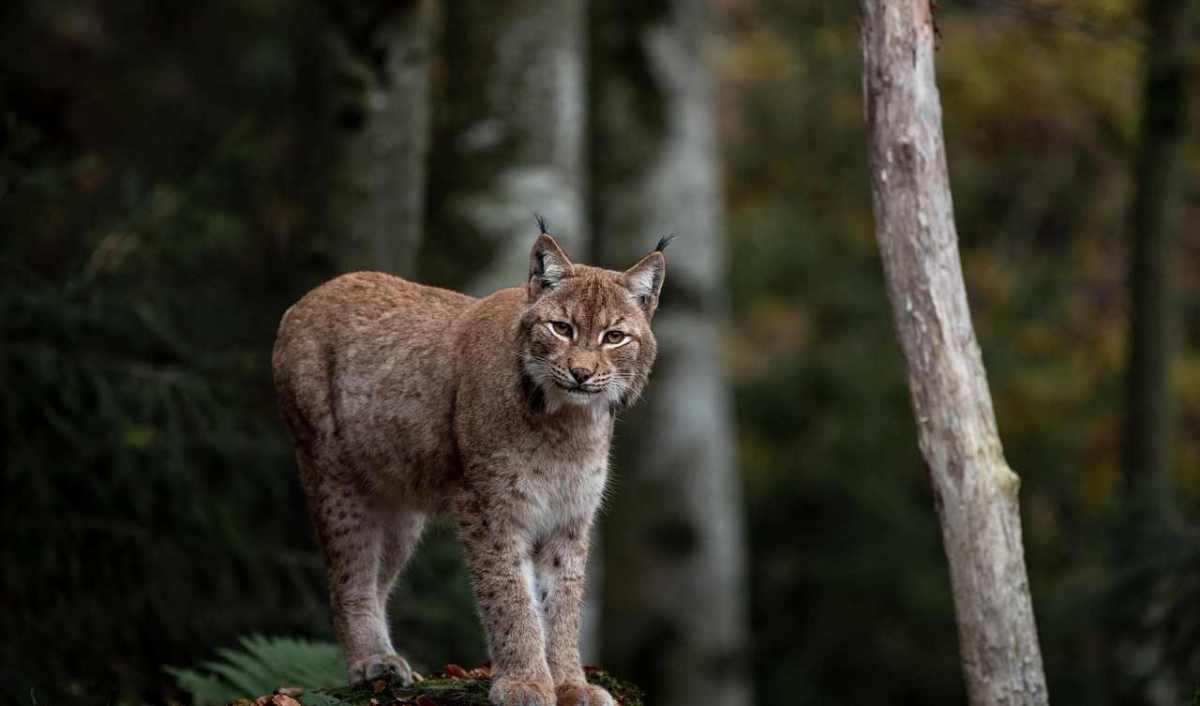
«What Valais Shot»
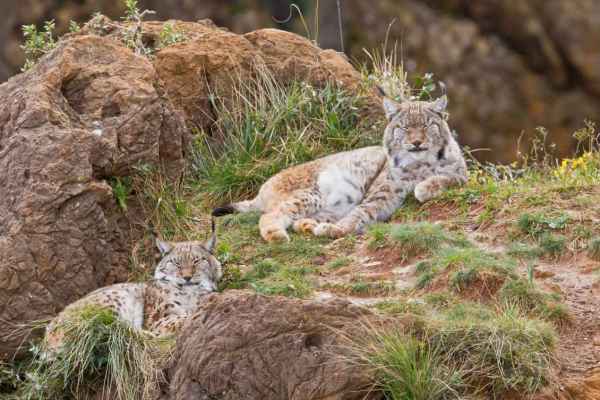
The canton of Valais wants to become the first canton in Switzerland to have lynx killed. The justification given is declining roe deer and chamois populations, along with a supposedly sharply increased lynx population: in the political debate, figures of up to 80 animals were mentioned.
A study by the University of Bern, presented on 25 September 2026, significantly revises this figure downwards. According to the study, 37 independent lynx were living across the entire canton in winter 2025/26. The 95 per cent confidence interval is between 26 and 52 animals, with a canton-wide density of 1.09 lynx per 100 km².
The study is so far available only as a preprint on the bioRxiv server and has not yet undergone independent peer review. Nevertheless, it is central to the ongoing debate, as it is based on a canton-wide, multi-year survey and thus provides exactly the data basis that the canton lacks.
Three winters, around 100 wildlife cameras, an entire canton
The research group led by Raphaël Arlettaz, head of the Division of Conservation Biology at the University of Bern, recorded the population over three winters between 2023 and 2026 using around 100 wildlife cameras across the whole of Valais. In total, the researchers analysed 899 independent lynx recordings and identified 27, 31 and 34 adult animals per winter respectively. The data were collected independently of the official state monitoring; the population estimate was carried out using density modelling based on the capture-recapture principle, the same method used in the official lynx monitoring.
The study also documents a recovery after years of extremely low numbers. Between 2010 and 2018, only five to eight independent lynx lived in the entire canton. In winter 2024/25, researchers confirmed seven females with at least eleven young, and in winter 2025/26, four females with at least seven young.
Almost the entire population is concentrated in the north-west of the canton, where the Valais population is connected to the lynx populations in the Vaud and Bernese pre-Alps. Large parts of Valais, including the Pennine Alps south of the Rhone, remain largely uninhabited by lynx.
How 37 lynx become as many as 80
According to the researchers, the higher figures are based on a methodologically problematic extrapolation. The state lynx monitoring conducted by the KORA foundation divides Switzerland into reference areas. One of the three areas relevant to Valais extends not only over north-west Valais but also over parts of the cantons of Vaud and Bern, where lynx density is significantly higher. If these values are applied to the entire cantonal territory of Valais, the result is inevitably an overestimate. Moreover, the reference data come from different survey years.
The discrepancy is particularly evident in north-west Valais: State Councillor Christophe Darbellay, who oversees recreational hunting in the canton and is himself a recreational hunter, cites a density of 5.2 lynx per 100 km² for this area. The University of Bern calculates 1.7 lynx per 100 km² for the study area strictly limited to Valais territory — around three times fewer. Even this figure is below the densities recorded in other Swiss reference areas.
«Population estimates must correspond to the level at which management decisions are made,» says Arlettaz. If wildlife populations are recorded across large ecological areas, but political interventions are decided along cantonal borders, extrapolations could significantly distort the situation on the ground.
Kill request under scientific pressure
By the end of summer, the Valais Department for Hunting, Fishing and Wildlife intended to submit an application to the Federal Office for the Environment, aiming to be allowed to kill lynx for the first time during the winter window from 16 January to 28 February 2027. Regulating this strictly protected species requires clearing high hurdles: the canton would have to prove that the lynx seriously impairs the hunting regalia. Whether the application has since been submitted is not publicly known.
The new population estimate calls into question the basis of the argument put forward so far. A population of 37 independent lynx, at just under one animal per 100 km², does not indicate overpopulation but rather describes a species that was wiped out in Valais through illegal persecution in the 1980s and 1990s and has only been recovering since 2020. The researchers recommend allowing the population to continue expanding until the carrying capacity is reached across the whole canton. The current concentration in the north-west is no indication that the lynx has reached its ecological limits.
There is no evidence that declining roe deer and chamois populations can be attributed to the lynx. The president of the Upper Valais hunters' association herself admitted to SRF that various factors always play a role together. In Valais, it is primarily recreational hunters, not lynx, who shoot roe deer and chamois every year.
Context
The case reveals a pattern that Wild beim Wild has documented for years: population figures on predators are interpreted in political debates in a way that supports demands for kills. Arlettaz himself is unambiguous in the «Nouvelliste»: the cantonal overestimate is «either incompetence or malice».
This carries particular weight in Valais, where the lynx population was kept small for decades through illegal persecution. A study by the same team, published in 2021 in «Frontiers in Conservation Science», documented a network of 17 snare traps at the Rhône bend in the lynx's most important immigration corridor, concluding that only poaching can explain the strikingly low density in Lower Valais. Anyone who tolerates recreational hunters for decades and then complains of an «overpopulation» is arguing against their own documented record. More on this in our article on suspected lynx poaching in Valais and in the analysis «Valais demands lynx kill: Shoot rather than protect».
Wild beim Wild calls on the canton of Valais to withdraw any kill request that may have been submitted, and on the FOEN to reject any request that has been filed. The petition “No lynx kills in Valais” can still be signed. We are documenting current developments on an ongoing basis in the Tracker for the Valais 2026/27 Hunting Season.
Source:Verschueren, S., Braunisch, V., Debons, V. & Arlettaz, R. (2026): Matching lynx population estimates to management scale: conservation science vs politics in the western Swiss Alps. bioRxiv preprint, doi 10.64898/2026.08.25.747176. Press release from the research group dated 25 September 2026; Keystone-SDA; Le Nouvelliste.
More on the subject of recreational hunting: In our dossiers on recreational hunting gather fact-checks, analyses and background reports. The scientific evidence is presented in the overview Studies on the Effects of Recreational Hunting.
The position of IG Wild beim Wild: IG Wild beim Wild rejects recreational hunting. Our model is the canton of Geneva, which has managed without recreational hunting since 1974: without hunting seasons, without hunting dogs, without driven hunts, without high seats, without the animal cruelty and crime that go hand in hand with hunting season elsewhere. What has worked there for over fifty years disproves every position paper by JagdSchweiz. An association that bases its policy on claims it refutes in its own documents is not a professional organisation, but a factory for misinformation.

All articles are written by IG Wild beim Wild as well as by external co-authors. Research, structuring and editorial processes may be supported by AI-assisted tools.
Support our work
With your donation you help protect animals and give their voice a hearing.
Donate now →