Valais demands lynx kill: shoot instead of protect
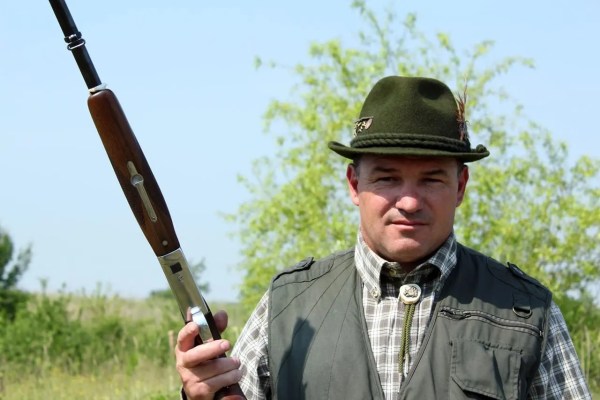
In Valais, recreational hunting associations and politicians are calling for a pilot project to kill the lynx — of all places in the canton in which this strictly protected predator has demonstrably been poached for decades.
For the first time, several interest groups in Valais are openly demanding a regulatory cull of the lynx.
National Councillor Benjamin Roduit (Die Mitte) confirmed to «watson» that at the last meeting of the Cantonal Valais Hunters' Association, the alleged damage caused by lynx was discussed and that the canton, with the approval of the Federal Office for the Environment, intends to carry out a pilot project in a target region. Jean-Frédéric Sierro, president of the hunting association Diana Romande, concedes a «certain wish» to open the discussion, while an anonymous recreational hunter is already saying the area has been «cleared». At federal level, the motion submitted in March 2026 by National Councillor Thomas Knutti (SVP) on «adapting the Lynx Switzerland concept» is adding further pressure.
An endangered species that is only just recovering
What the demand conceals: the lynx has barely returned to Valais. Bern conservation biologist Raphaël Arlettaz documents that in the 2010s only five to eight independent animals existed and just two litters were recorded. Only since 2020 has the trend been reversing; in the winter of 2024/2025, experts counted around 30 independent lynx and eight litters with at least eleven young. Across Switzerland, the KORA foundation, which is responsible for monitoring, continues to classify the lynx as «highly endangered» with very high national priority. Anyone declaring a recovery that has only just begun to be an overpopulation is turning biological reality on its head.
The canton with the documented history of poaching
That the Valais populations sank so low in the first place is man-made. A study by Arlettaz's team already identified, back in 2020, seventeen snare traps along the canton's only lynx migration corridor; the population density was about one third of a lynx per hundred square kilometres, while in comparable Alpine regions it is several times higher. Within the cantonal authority, the maxim that a good lynx is a dead lynx prevailed for years, several game wardens were suspected of poaching, and as recently as 2024 a shot lynx was found near Crans-Montana. It is precisely this canton that is now declaring the tentative recovery to be a problem.
Not livestock, but the competition for roe deer and chamois
The argument of killed livestock does not hold up against the data. According to KORA, roe deer and chamois account for around 88 per cent of lynx prey; attacks on sheep or goats remain locally and temporally limited and accumulate primarily where wildlife populations are already low. When the Knutti motion speaks of a lynx killing a double-digit number of sheep within a few days, it describes a rare exception, not the rule. The actual conflict lies elsewhere: in a licence hunting canton such as Valais, recreational hunters bear no territorial responsibility; they compete directly for the same roe deer and chamois as the lynx. A KORA study in the Bernese Oberland concluded that the impact of recreational hunting on the chamois population is on average greater than that of the lynx.
The same circles that undermine biodiversity
What is striking is that the call for culling comes from precisely those circles that have stood in the way of the lynx's return for decades. The fact that Valais populations have remained artificially low is the result of illegal killings; within the cantonal authority several game wardens were under suspicion of poaching. Yet as a predator, the lynx is not a pest but a stabiliser: it preferentially preys on weakened animals and thereby supports the health of roe deer and chamois populations. According to nature conservation organisations, an intact forest requires exactly this kind of natural selection. Anyone who wants to shoot a strictly protected keystone species is not practising nature conservation but its opposite. The demand sabotages precisely the regulation that recreational hunting otherwise claims for itself.
The law has long permitted interventions
A new pilot project is not legally necessary. The “Lynx Concept Switzerland” and the hunting act already allow the removal of individual animals causing significant damage, as well as, under strict conditions, a reduction of the population, primarily through capture and relocation. Damage to livestock is compensated 80 per cent by the federal government and 20 per cent by the canton. The Federal Office for the Environment (BAFU) states that it currently has no information on possible lynx kills in Valais, and the status of the lynx remained unchanged even after the most recent revision of the hunting act and hunting ordinance. Anyone who nevertheless demands a special regime for an endangered species does not want to solve a sheep problem, but to eliminate a competitor for food.
More on the subject of recreational hunting: In the dossier The Role and Criticism of Recreational Hunters we shed light on the training, power and self-image of recreational hunters. What the research says about this is shown by Hunting fact-checked: the state of research.
The position of IG Wild beim Wild: IG Wild beim Wild rejects recreational hunting. Our model is the canton of Geneva, which has managed without recreational hunting since 1974: without hunting seasons, without hunting dogs, without driven hunts, without high seats, without the animal cruelty and crime that go hand in hand with hunting season elsewhere. What has worked there for over fifty years disproves every position paper by JagdSchweiz. An association that bases its policy on claims it refutes in its own documents is not a professional organisation, but a factory for misinformation.